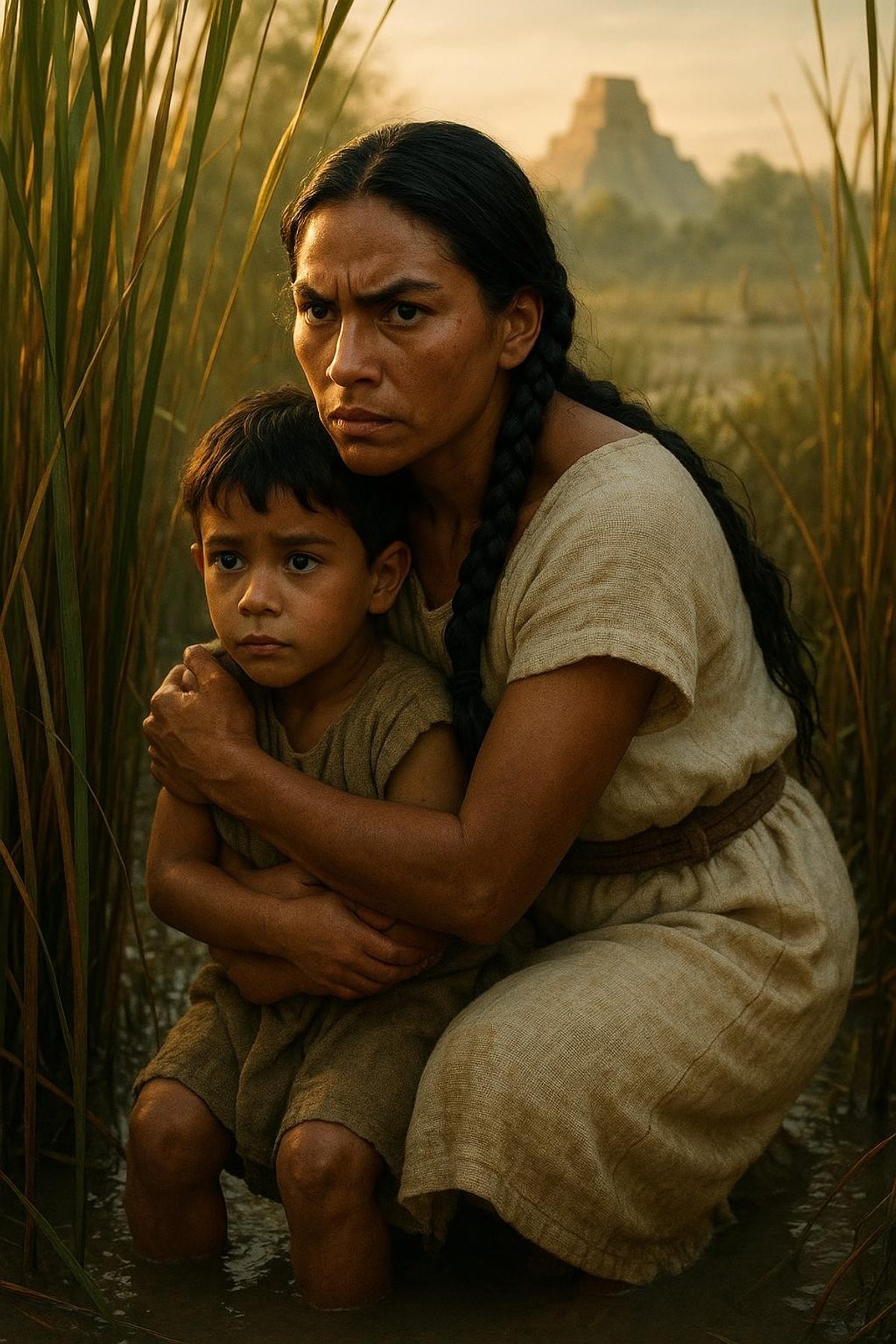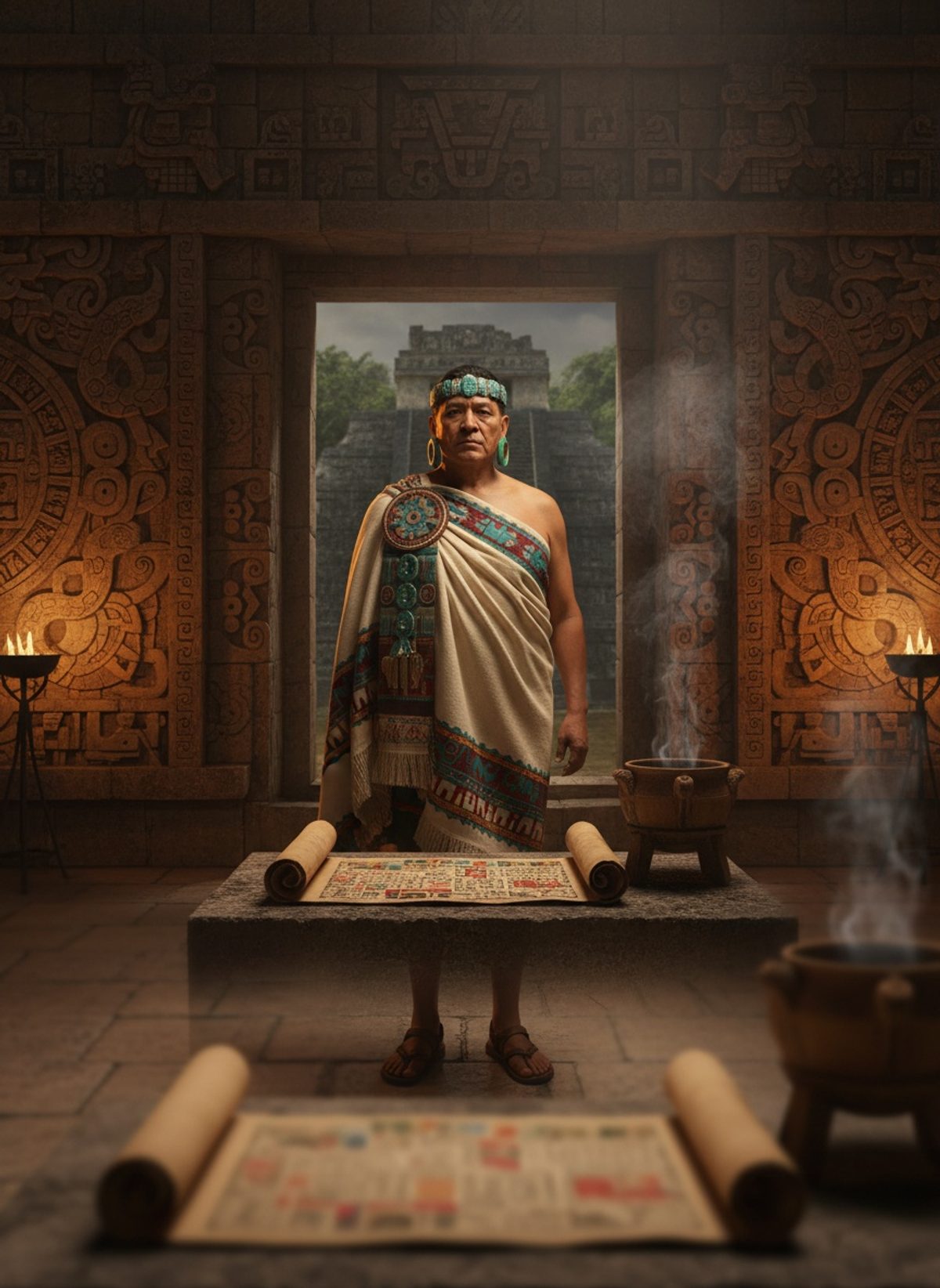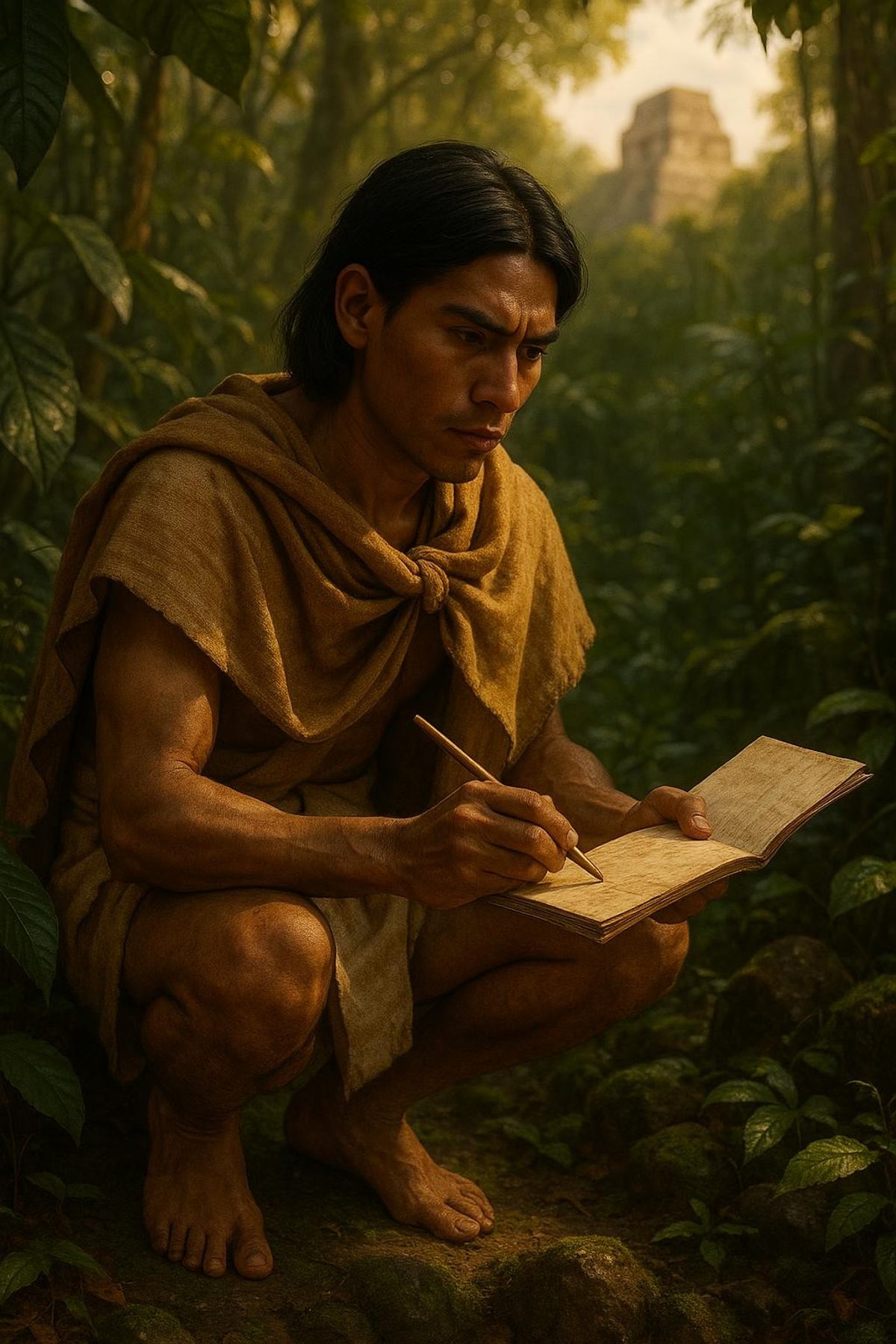
672 AD. The dense canopy of the Guatemalan rainforest shrouds the ruins of a once-vibrant civilization.
The Rise of a Supreme Warlord
Hidden within the sprawling jungle, the ancient city of Waka, known today as El Perú, was once a vital cog in the grand machinery of the Maya civilization. This was a place bustling with life, its landscape dotted with towering pyramids and stone carvings that chronicled the feats of mighty rulers. Among these leaders, one figure emerged in the 7th century who would redefine the power dynamics of the region: Lady K'abel.
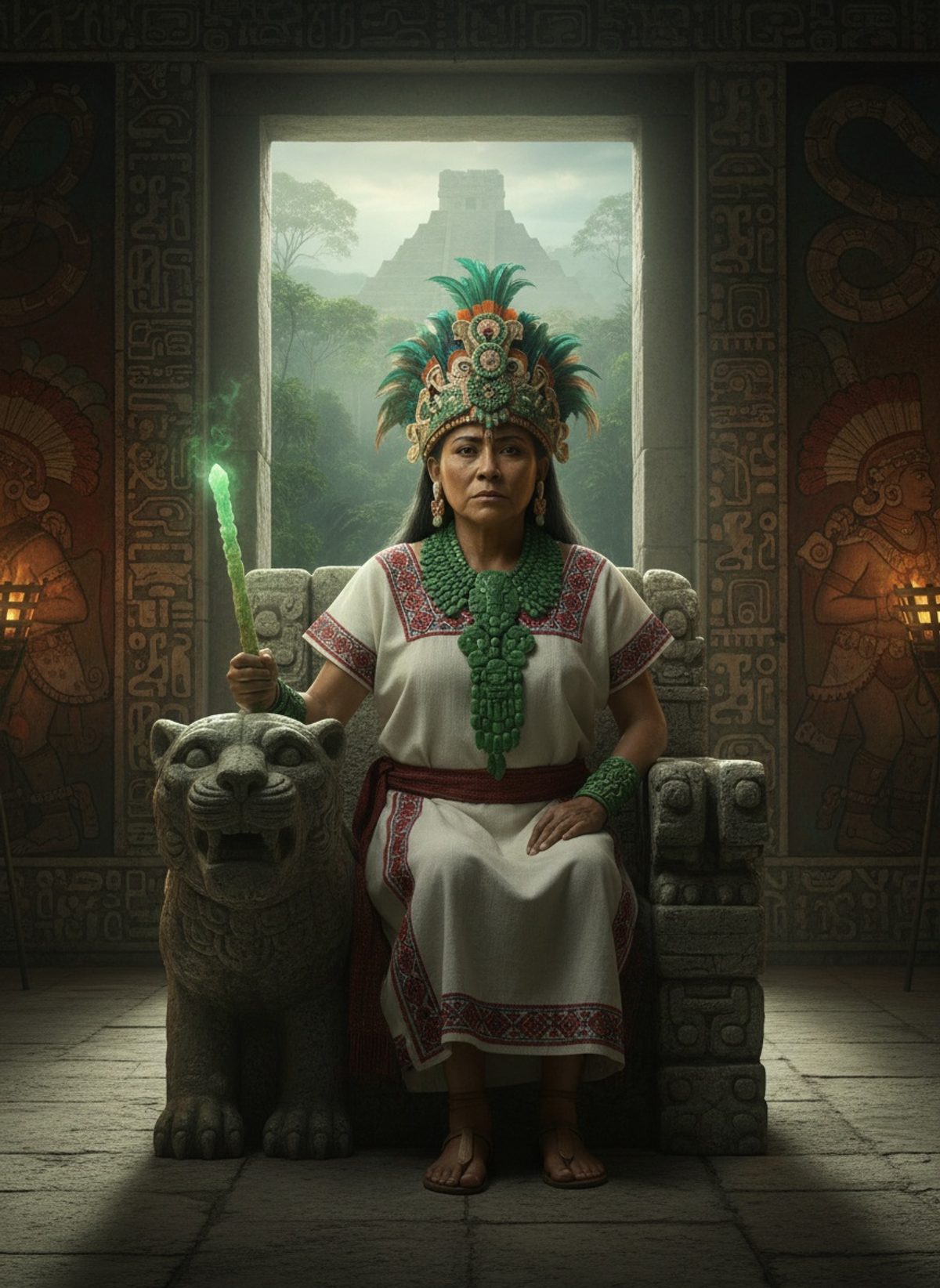
Lady K'abel's ascent to power marked a pivotal moment in Maya history. Though she came from the prominent Snake Dynasty, her marriage to the king of Waka brought with it a title that transcended the traditional roles assigned to women at the time. Lady K'abel became the Kaloomte'—the Supreme Warlord—giving her authority over even her husband, a rarity in an era where patriarchal norms dominated. Her position as the highest-ranking leader set a precedent that echoed through the stone corridors of the Maya world.
Waka was strategically positioned along vital trade routes linking the expansive Maya regions. The city's influence stretched far and wide, and Lady K'abel wielded this power with unparalleled skill. As the Supreme Warlord, she commanded not only armies but also held sway over religious ceremonies, integrating her political and military prowess with spiritual significance. Her rule was a testament to the intricate balance of power and belief that characterized Maya society.
Read next: Itzcoatl Burned the Books. His Nephew Asked One Question.
The titles and monuments proudly bore her name, carved meticulously by the hands of skilled artisans into stelae that dotted the city's landscape. These stone tablets formed a lasting tribute to her extraordinary leadership, preserving the stories of her victories in battle and her role in crafting a legacy that defied convention. Lady K'abel's reign was not merely a footnote in history but a chapter that illuminated the resilience and complexity of Maya leadership structures.
The Eclipse of a Dynasty
For six decades, Lady K'abel's presence loomed large over Waka and beyond. Her influence ensured stability and prosperity, and her accomplishments were celebrated in the sacred texts etched into stone. Yet, as the wheel of time turned, a new chapter unfurled—one where her own lineage would seek to obscure her legacy.
Upon Lady K'abel's death, her son ascended to power. His rise marked the beginning of a deliberate campaign to erase the memory of his mother’s unprecedented rule. The motives behind this erasure remain shrouded in mystery, a puzzle pieced together by archaeologists and historians striving to understand the intricacies of ancient familial and political dynamics. Perhaps it was an assertion of his own dominance, or perhaps an attempt to revert the balance back to more traditional patriarchal structures. Whatever the reasons, her name was buried as decisively as her body beneath Waka's sacred ground.
Monuments bearing her name were strategically defaced, as her son carved his own imprint on the city's storied history. The once-revered stelae echoed a silence that spoke volumes, with gaps where her accolades once stood. Waka's new rulers likely believed that by erasing her name, they could reshape the narrative, making themselves the definitive architects of their era. Yet, Lady K'abel's story resisted complete erasure, concealed within the recesses of time.
The mystery and intrigue surrounding her deliberate obscuring add a layer of complexity to the chronicles of the Maya. Her lost legacy offers a glimpse into the transient nature of power and memory in the ancient world, where stones, though seemingly immutable, could be reshaped with a chisel and a command.
The Rediscovery of Lady K'abel
Fast forward to 2012, when a team of archaeologists, led by David Freidel, unearthed a tomb within Waka's forgotten cityscape. The burial, adorned with jade and ceramic treasures, spoke of high status and reverence. Through careful analysis and a serendipitous alignment of historical clues, they identified the tomb as belonging to none other than Lady K'abel herself. The discovery was a breakthrough, reviving the story of a ruler shuttered away for over thirteen centuries.
The finding of Lady K'abel's resting place was monumental not only for its historical significance but for the incredible insight it provided into the lives of the Maya elite. It painted a detailed picture of the societal roles women could achieve, a narrative that defied the male-centric chronicles often highlighted in ancient civilizations.
As archaeologists meticulously brushed away the soil from her final resting place, they unveiled a tapestry of a queen who broke chains and defied norms, whose legacy was written in the blood and stone of her people's glory days. Her story, masked for eons, finally emerged from the shadows, its resurrection fueled by the relentless pursuit of knowledge.
Lady K'abel's rule and subsequent erasure remind us that history is often as much about the absences and silences as it is about recorded triumphs. Her story challenges modern assumptions about gender and power structures in ancient societies, serving as a potent reminder of the complexities hidden beneath the surface of history. It encourages us to search deeper, to question the gaps left by those who chronicled our past—and who were left out.