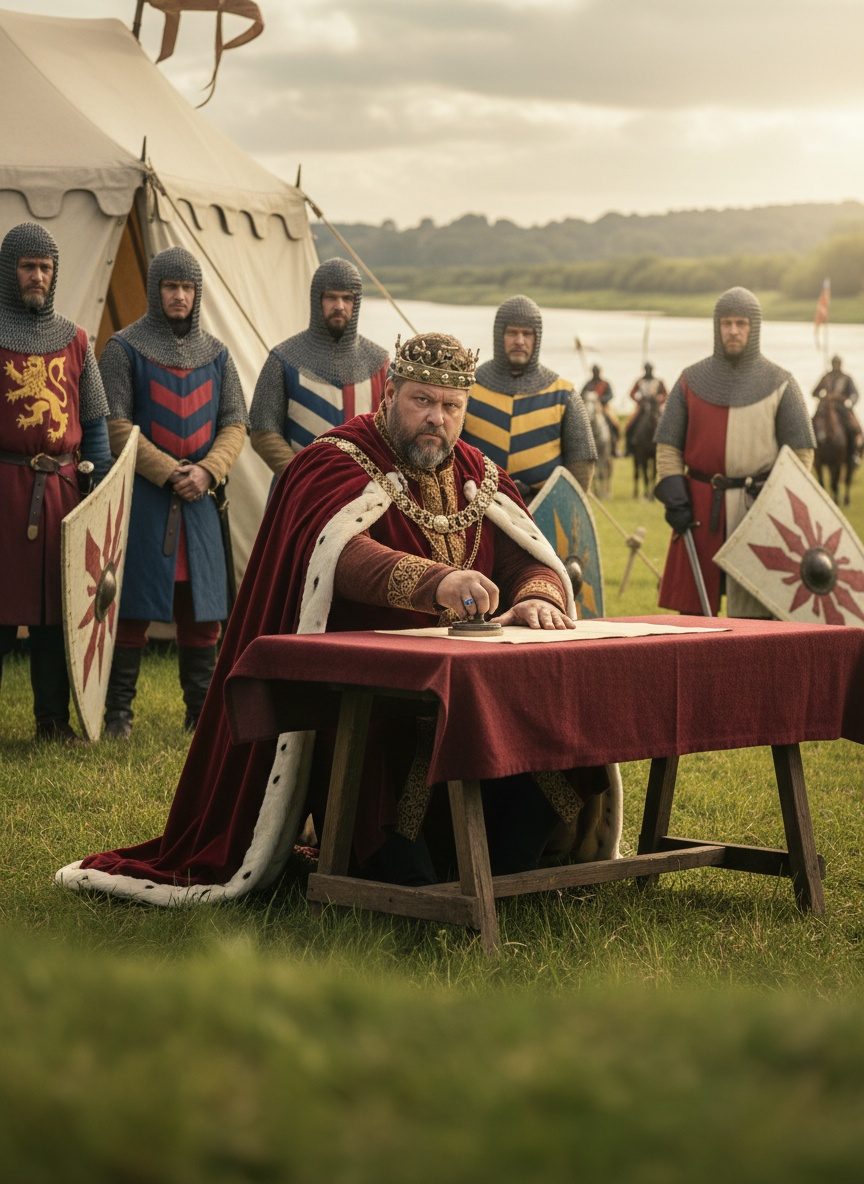
The mist hung low over the green expanse of Runnymede, muting the vibrant colors of late spring. The land sloped gently toward the River Thames, its waters whispering secrets only it would keep. The air was heavy with anticipation and the chill of early morning lingered. Horses snorted softly, their breath visible in the cool air, while the richly-clad barons, who had arrived in a show of stoic defiance, whispered amongst themselves. They were gathered for a moment that would alter the course of history, at last cornering a monarch too often swayed by his whims. On the 15th of June, 1215, King John, the beleaguered ruler of England, was about to give up more than he ever intended, sacrificing royal absolutism for the sake of peace.
The Shadow Over a Kingdom
Thirteenth-century England was no stranger to turmoil. The reign of King John was marred by conflict, both abroad and at home. Tales of his ruthless taxation and erratic governance spread far and wide. His relationships with the barons, those powerful lords who governed large tracts of land, had deteriorated to the brink of rebellion. Discontent simmered as John's unpopularity grew; he had lost the northern territories of France and, in turn, levied exorbitant taxes on his subjects to fund his military campaigns to reclaim them.
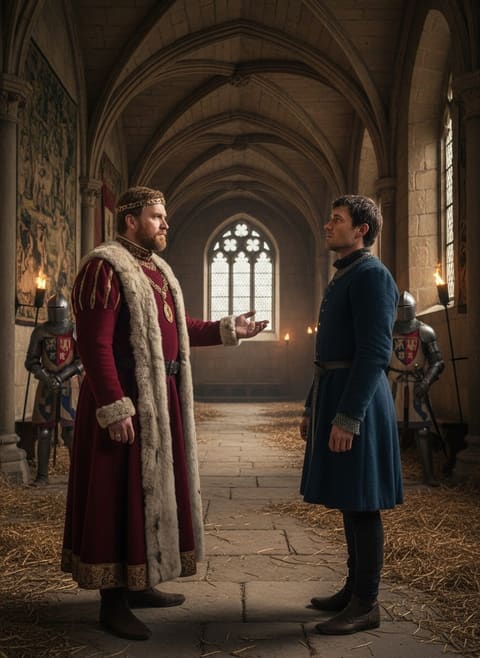
In 1215, this bitterness boiled over. The powerful barons, representing many of the high nobility, allied and marched on London. Their intent was explicit: to coerce a king notoriously reluctant to relinquish any of his formidable power. Seizing London, the capital and heart of trade in England, was tactically shrewd — not only did it cut off King's support, but it served as a stage for the drama that was to unfold. The barons had drawn a line in the sand and King John would have to respond.
A Fragile Accord
The meeting at Runnymede was not a spontaneous affair but a carefully choreographed confrontation. For weeks, diplomats scurried back and forth, attempting to charter an agreement that would stave off war. The barons presented a document that outlined a radical shift in governance, ensuring that even the king was subject to the laws of the land. It was known, and would forever be known, as the Magna Carta.
Read next: The Day a Young Prince Knelt and Refused a Crown
Words were inked upon parchment that day — symptomatic of a shift from 'rule by decree' to 'rule by law'. Among its sixty-three clauses, it stipulated protections for barons from illegal imprisonment, access to swift justice, and limitations on feudal payments to the Crown. These were bold demands, essentially curtailing the monarch’s absolute power. The practical beauty of the Magna Carta lay in its insistence on collective governance and its stand against arbitrary royal authority. For some, it was nothing more than a bargaining tool; for others, a harbinger of democracy. But as King John impressed his seal upon this fledgling charter, the wheels of change were set in motion.
King in Chains
John’s concession was as much about survival as it was about any philosophical transformation. The reality of his position was uncompromising — continue resisting and face certain insurrection from an array of nobles whose power equaled, if not exceeded, his own in military might. But as he sealed the Magna Carta, John’s thoughts veered towards future strategy; he had every intention of repudiating this charter once he'd amassed whatever support he might from afar.
Read next: The Day a Queen Rode Alone Into a Mutinous Army
Despite this duplicity, the immediate outcome was clear — for the first time, a precedent was set. A king consenting to limits on his power was revolutionary. For the barons, that day framed the concept that their relationship with monarchy was neither servile nor subservient but a balance of mutual needs and benefits. The charter affirmed the existence of rights against any sovereign overreach, echoing a sentiment that would reverberate through time.
The Echo Through Ages
In the months and years that followed, the Magna Carta's provisions were renegotiated, redacted, and oft disregarded — the peace it promised was short-lived, seeing further confrontations as John swiftly broke his oath. However, its legacy endured, growing beyond its immediate and practical purposes to become a symbol of freedom and the rule of law, inspiring enlightenment thinkers and democracy architects the world over. Civil wars may have destroyed one king's intentions, but they cemented the notion of accountable governance.
So it was in the misty riverside meadow of Runnymede that history did more than unwind; it unfurled a new cloth for the centuries to embroider. Though at that moment, King John may have seen only the concessions of power as temporary—and the barons viewed it as a momentary advantage—it's clear that this event transmuted medieval tensions into a cornerstone of constitutional thought. It served as a bold reminder that even a ruler, drenched in divine right, is not above the people whom he sways. As we look back on those animated and anxious figures, standing firm so long ago on that damp grass, we remember that they laid the first stones of a mighty bridge between rulers and the ruled, a bridge still being traversed today.