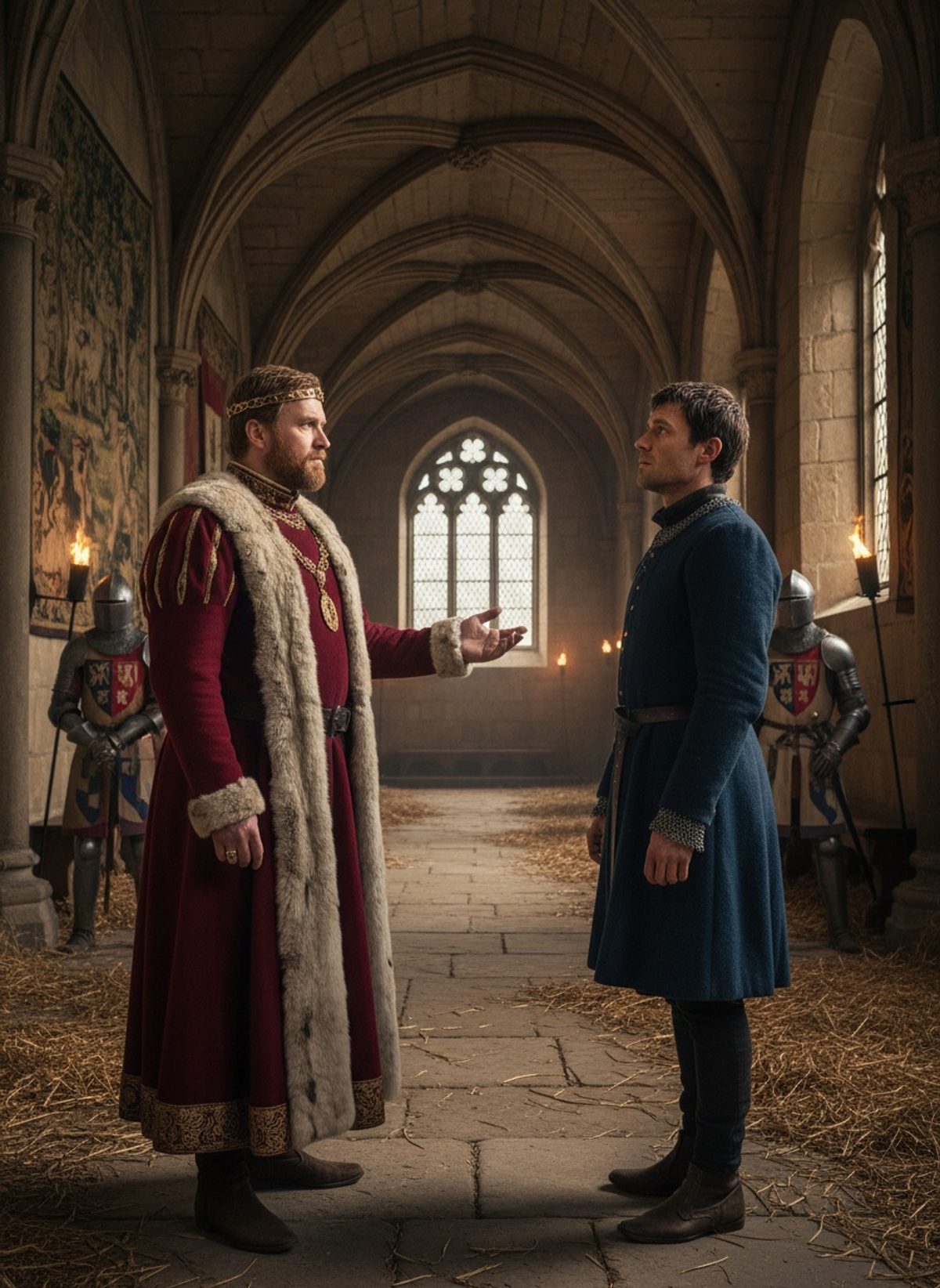
On a cold October day in 1216, England found itself at a crossroads. The land was gripped by civil war, mercilessly torn between loyalties. King John, notoriously nicknamed ‘Lackland’ and vilified as one of history’s cruellest monarchs, was dead. Half the English barons had turned traitor, inviting the French Prince Louis to seize the throne. It seemed like the end—until a daring act at Gloucester shifted England's fate. At the heart of this moment was a boy of only nine years old and a knight with a relentless resolve. This is the untold story of young King Henry III, whose improbable ascent saved a kingdom in despair.
The Kingdom on the Brink: England in Chaos
As 1216 drew its curtains, England teetered on the brink of chaos. King John's reign had been marred by continuous failures. His loss of Normandy in 1204, heavy taxation, and feud with the Church alienated him from his subjects. This discontent reached its peak with the signing of the Magna Carta in 1215, an attempt to pacify rebellious barons. But peace was fleeting. By 1216, England was not just divided; it was fractured into pieces. Many barons went as far as inviting the French Prince Louis to offer him the English crown, taking control of London and large swathes of the kingdom.
This was a precarious time for England, one that could have seen its sovereignty overshadowed by foreign rule. How could one expect a fractured nation to rally behind a king who had failed them? As John’s health declined, so did England’s fortunes. When he succumbed to dysentery on October 18, 1216, it was not just a king who had died but also the unity of a once-mighty kingdom.
A Crown for a Child: The Unlikely Coronation
In the midst of this turmoil emerged a figure unsullied by his father's disgraces—Henry of Winchester, John's young son. His father gone, Henry was thrust suddenly into the spotlight, his tender age making him an unlikely savior. But how would a child’s shoulders bear the weight of such a fractured crown?
Read next: The Day a King Knelt to Wash a Beggar's Feet
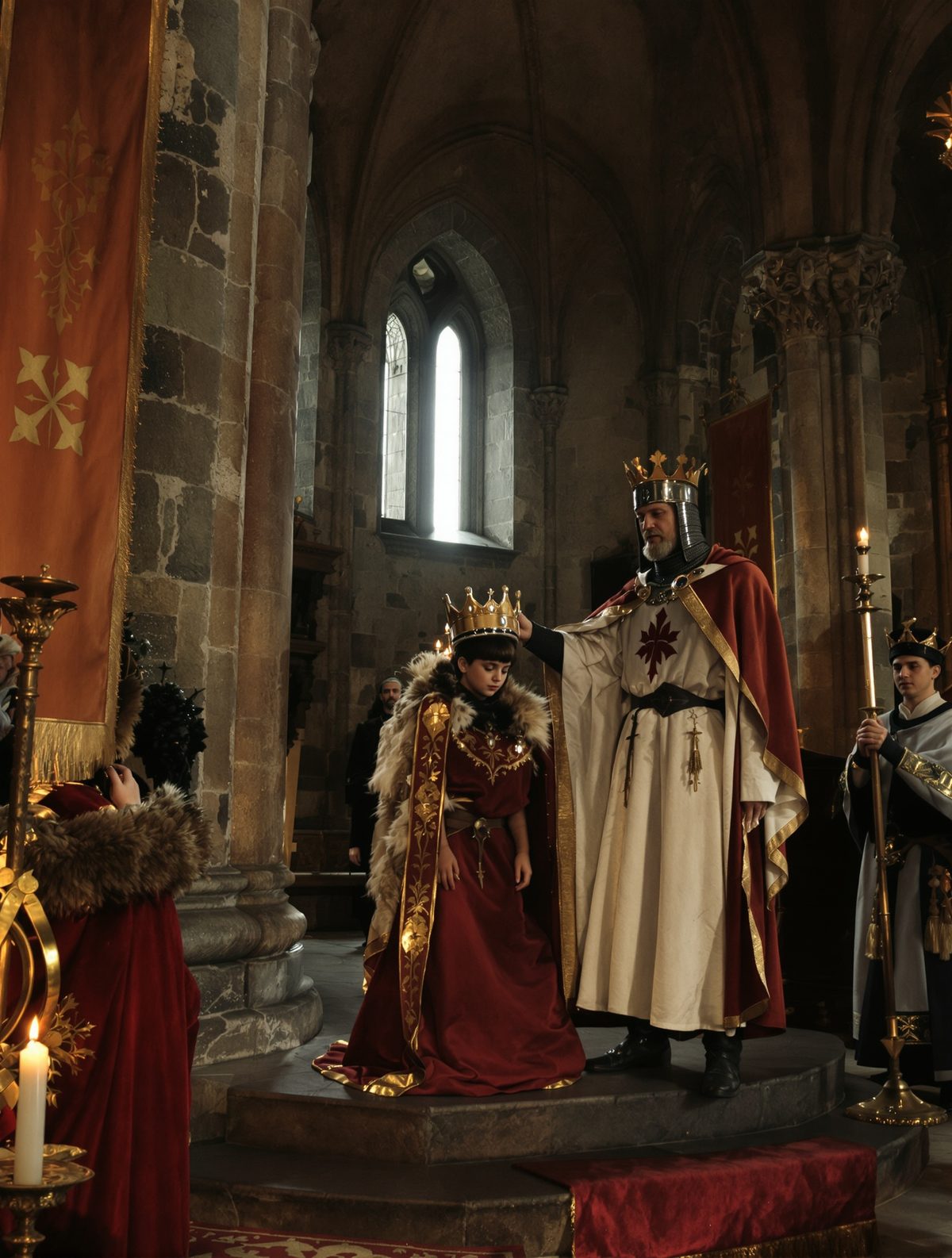
The coronation envisaged for Henry was far from the grandeur traditionally associated with English royalty. On October 28, 1216, amid the sparse confines of Gloucester Cathedral, Henry was crowned in an improvised ceremony. There was no crown—an unknown golden circlet thumbed down by a non-descript bishop had to suffice. The coronation regalia had been lost, and England’s fate was seemingly knotted in hopelessness.
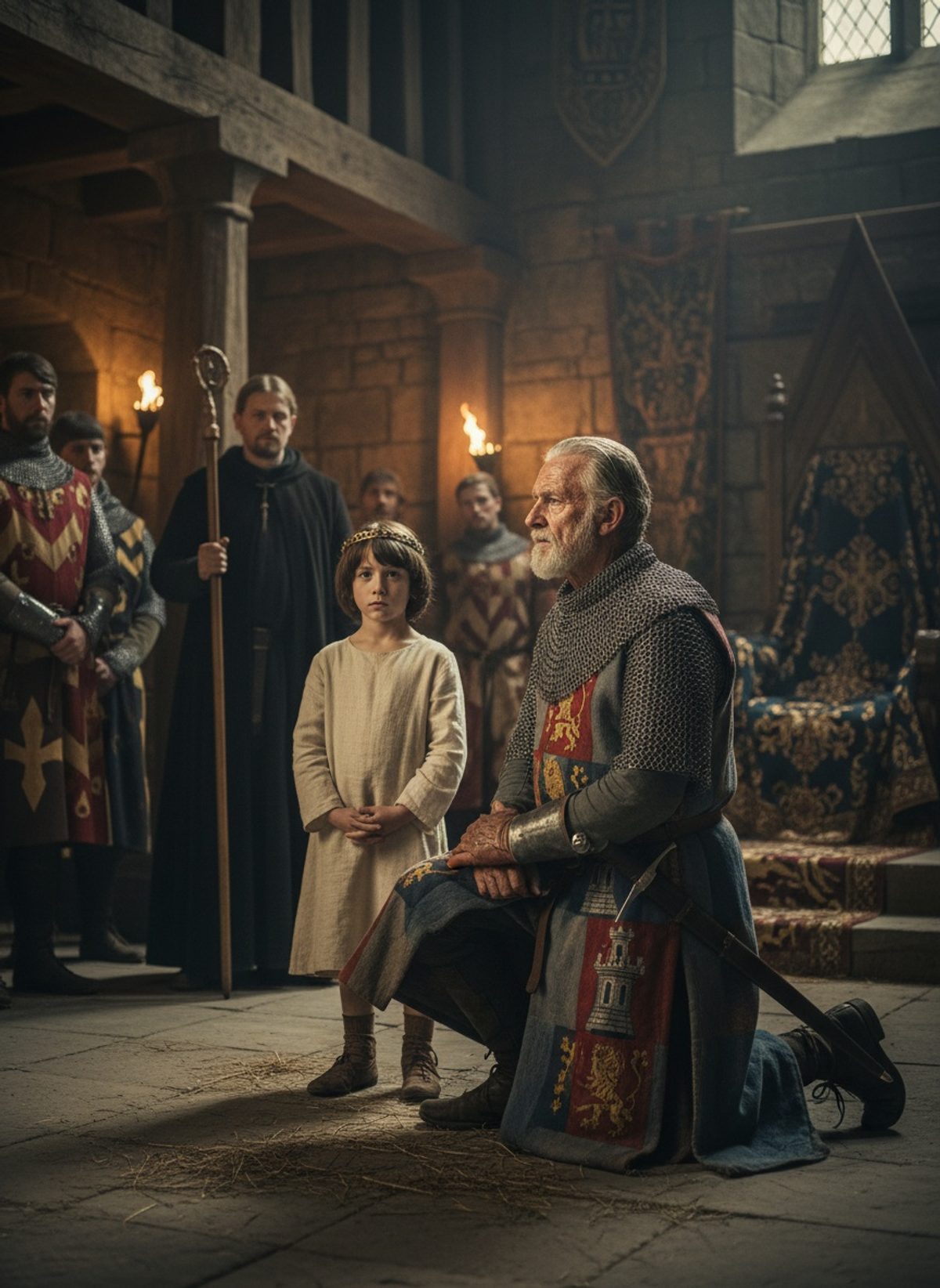
At the heart of this peculiar ceremony stood the steadfast William Marshal, the Earl of Pembroke. At 70 years of age, this seasoned warrior and statesman was England’s last great hope. With a boldness befitting a man of his stature, he proclaimed the boy king as England’s true sovereignty. “Follow him,” he dared the nobles, “or lose everything.” The call to loyalty was a gamble, but one history has rarely seen so decisively played.
The Old Knight's Gamble: William Marshal's Bold Bet
William Marshal was a man of immense character, reputed as the greatest knight who ever lived. His life, a tapestry of allegiance, honour, and undying loyalty to his king. Following King John’s death, he was made the regent and protector, steering England and its nascent king through these perilous times.
Marshal’s calculated maneuver in crowning Henry III was an audacious stroke. Here was a man who could have seen his allegiance shift to Prince Louis like many others had, aligning with the apparent power. Yet, the old knight instead chose to stake everything on a child’s innocent claim to the throne.
Remarkably, this act of conviction began to resonate. The coronation in Gloucester, scant of ceremonial flourish, proved more powerful than earlier grandeur. This single act steadied a nation, turning nostalgia and what seemed folly into a fire that rekindled the loyalty of many barons.
The Ride Heard Around the Kingdom
Now seen as a symbol of continuity and hope, the boy king and his advisors embarked on a ride—a pivotal journey that became legend. An endeavor so audacious it cemented the future of English royalty. Accompanied by Marshal and a modest retinue, Henry III traversed the Kingdom. He moved amongst the people, north to south. A child’s presence bringing solace to those who feared the chaos would never settle.
Henry’s journey was not just about visibility; it was about unity. With each ride, each wave and bowed head, came renewed oaths of loyalty. Barons who once teetered at the edge of defection returned to the fold. People rallied with unexpected fervor around this image of childlike innocence and the seasoned guardianship of Marshal.
As Henry rode the length of the land, he also rode into the hearts of the English subjects. Gradually, power shifted, the boy king’s movement against Prince Louis increasing with every turn of the road. By 1217, the foreign French presence was nearing its retreat, and England was being woven back into the fabric of its destiny as an independent realm.
Reflections on a Rider’s Legacy: Why This Matters Today
Henry III’s unlikely inheritance and Marshal’s decisive actions carry echoes that resonate through the corridors of time to our present day. The saving of England by a child king reminds us of resilience in adversity and the potential for renewal against all odds. In those difficult years, the roots of a more centralized authority and a cohesive nation began to determine the path forward, leading to the eventual development of a constitutional monarchy.
This story stands as a testament to the profound power of leadership in its purest form—unsoiled by cynicism, bolstered by loyalty, and tempered by wise counsel. It’s also a reminder that in history, as in life, the most unlikely heroes can emerge from the unlikeliest of circumstances.
So, next time you think of courageously unsung moments in England’s past, spare a thought for the boy king who rode into history and for the knight whose unwavering fidelity helped save a throne. They may not appear in every textbook, but their legend is one England will never truly forget.