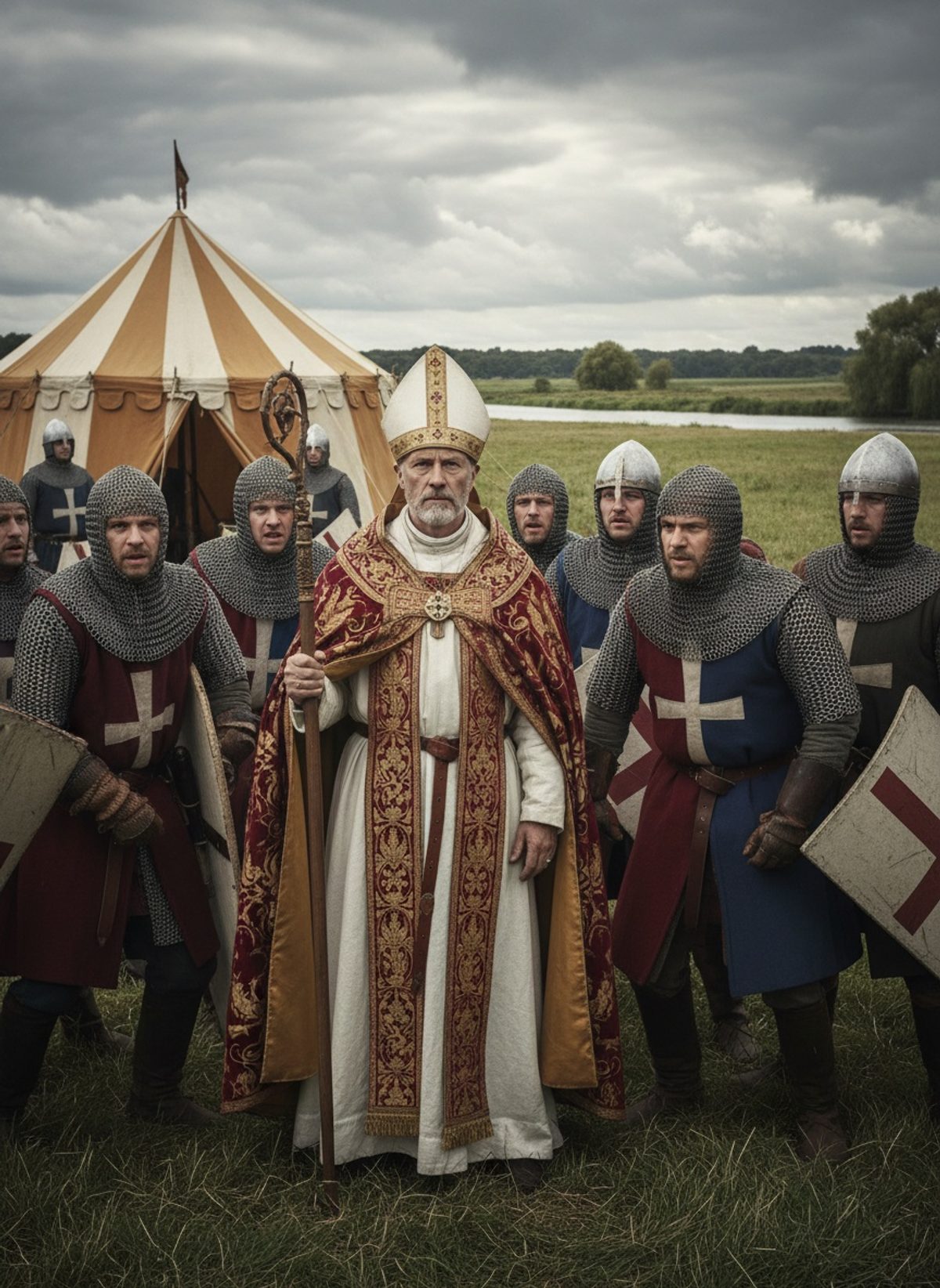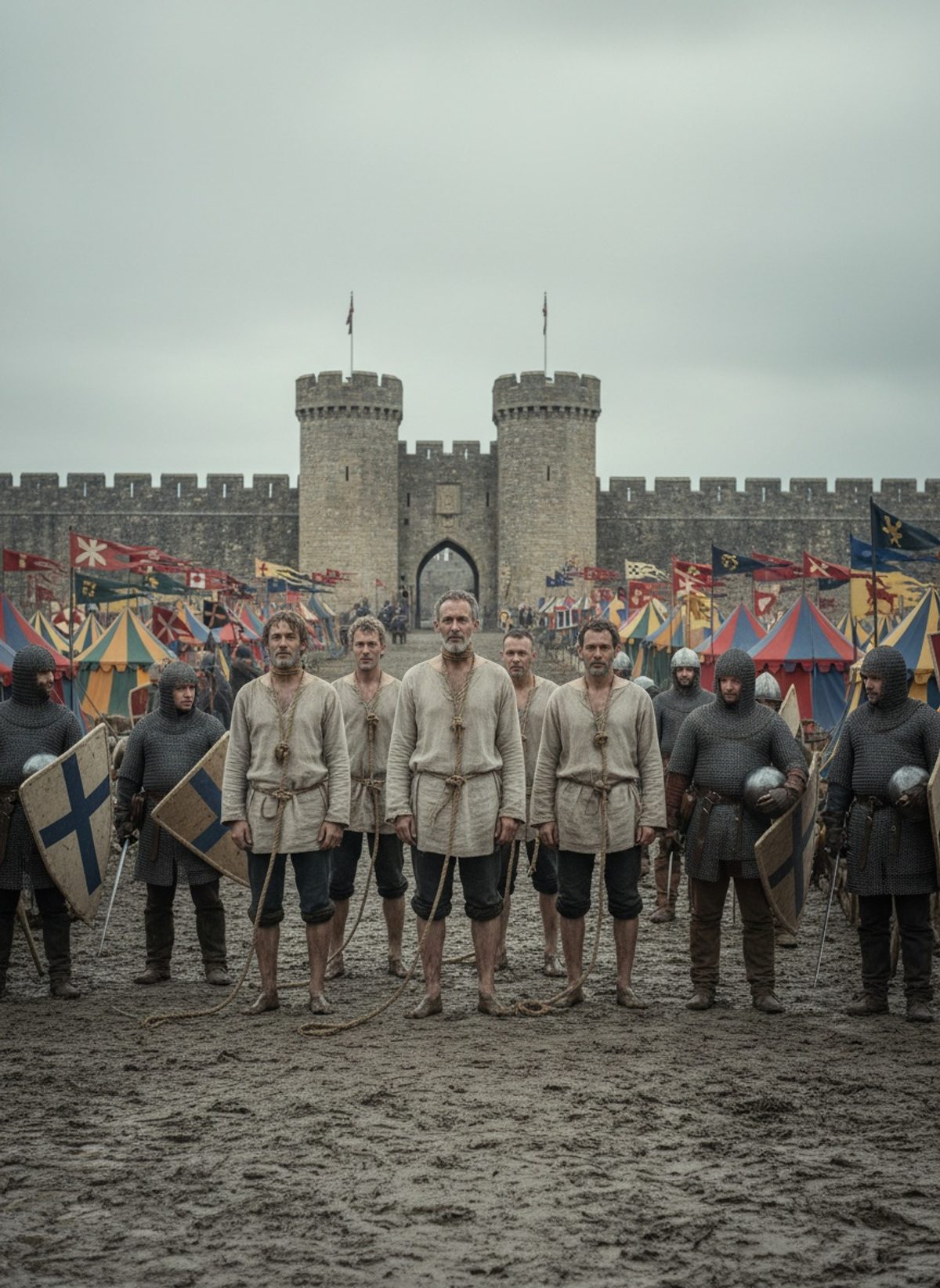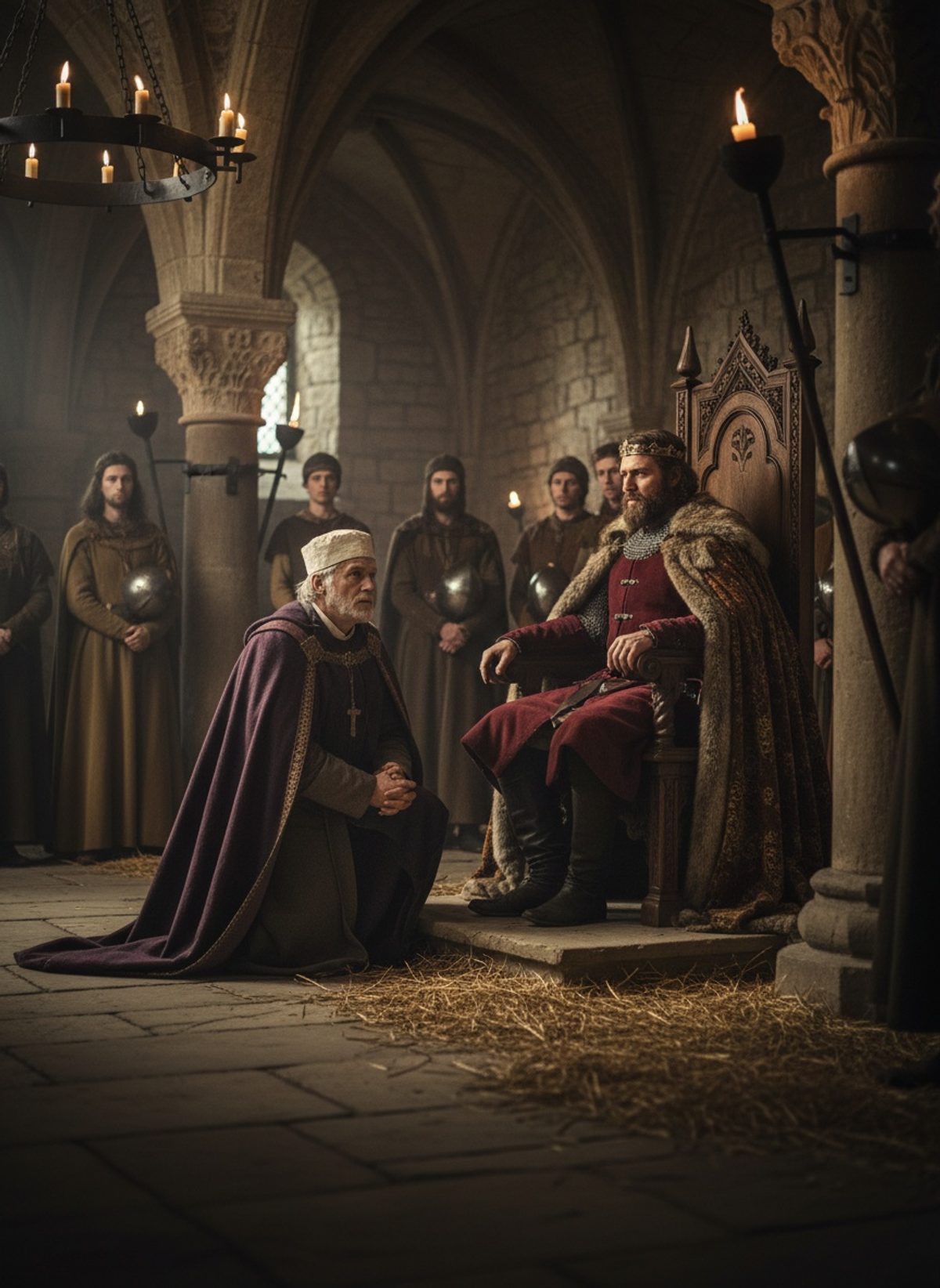
In the year of our Lord 1346, in a muddy field near the small village of Crécy in northern France, a clash unfolded that would herald the twilight of one era and the dawn of another. Here, the English army, commanded by King Edward III, faced an overwhelming force of French knights, glittering in their armour and embodying the essence of medieval chivalry. As the French nobility charged, hoping to vanquish their foes with sword and lance, they encountered an unexpected and devastating opposition: the Welsh and English longbowmen. In a fierce rain of arrows, the very fabric of medieval warfare was transformed forever.
An Underdog Army in a Foreign Land
The summer of 1346 saw King Edward III of England leading a daring invasion of France, part of the protracted and brutal conflict known as the Hundred Years' War. The English army, despite its smaller size of approximately 15,000 men, was a blend of hard-bitten infantrymen, clever tactical leaders, and, crucially, the much-hyped longbowmen, hailed from regions like Wales and the Marches. They were joined by a cavalry force and small contingents from allies, yet they faced overwhelming odds.
The French army, under King Philip VI, was notably larger, with numbers estimated to be close to 35,000. The strength of their force lay in the famed French cavalry, considered the finest in Europe, each knight armored and trained for combat. However, as history would soon reveal, numbers were about to be trumped by the empiric power of innovation and strategic fortitude.
The Secret Weapon: The Longbow
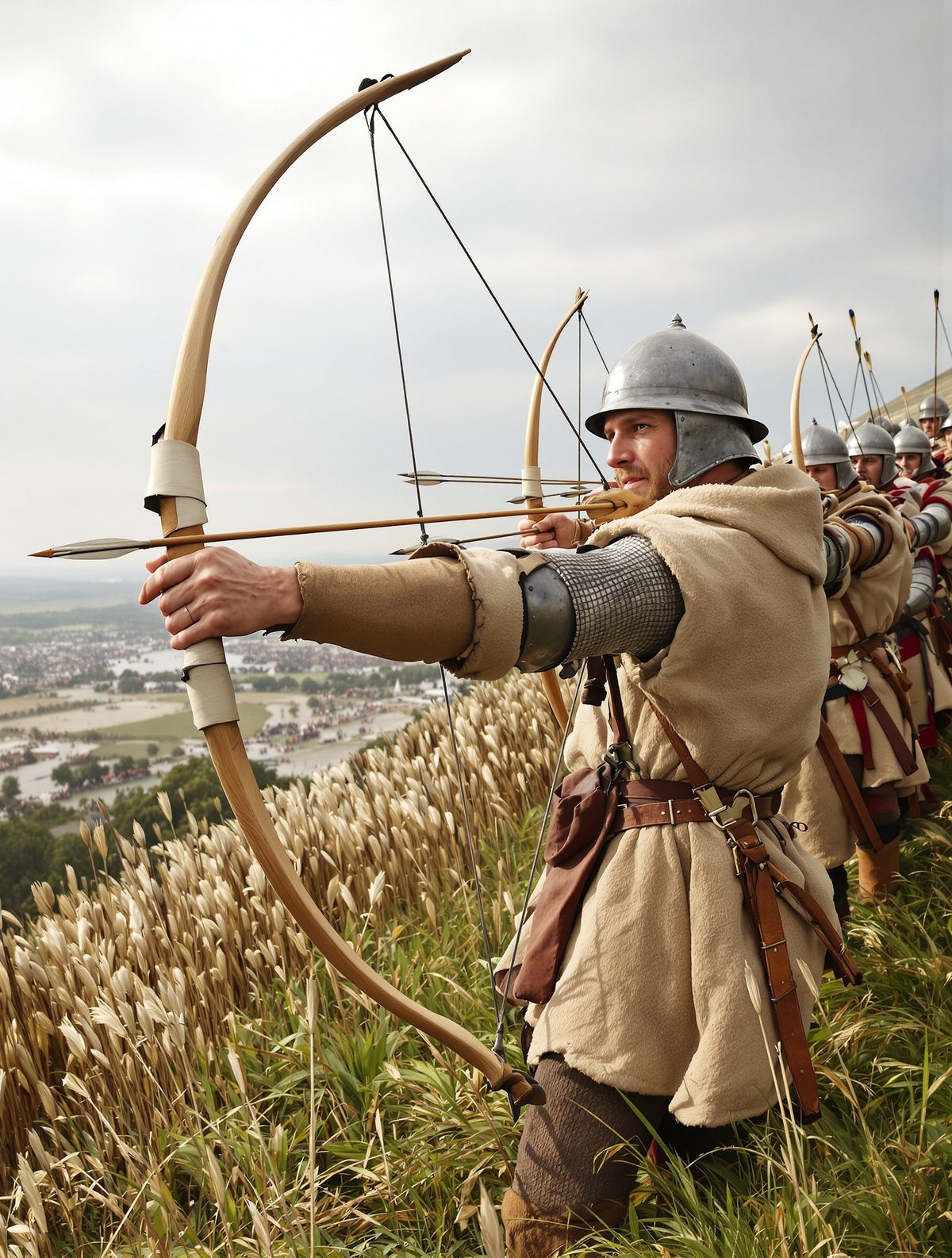
Standing almost as tall as a man, the English longbow was an instrument of astonishing efficiency. With a draw weight of up to 180 pounds, a skilled longbowman could fire six arrows a minute, each capable of piercing armor from 240 yards away. It was both a weapon and a symbol — emblematic of new military thinking that depended not on noble blood but on training and skill.
Read next: The Day a Queen Walked Into a Rebel Camp Alone
The longbow's origins were deeply rooted in Welsh tradition, but its elevation to a military staple was among King Edward's greatest tactical innovations. Understanding its potential to devastate heavily armored knights allowed the English forces to harness its power on grand scales at battles like Crécy. At the heart of this army stood perhaps the most pivotal, yet unnoticed, figure in medieval martial history — the medieval longbowman who changed the course of the war through skill and precision.
The Battle Unfolds
As the armies faced off on 26th August 1346, the English positioned themselves strategically upon a slope. Their vision was clear — engage the approaching French head-on while maximizing the advantage of their elevated position, and protect their flanks with makeshift fortifications. King Edward directed his forces cautiously, keen to exploit all tactical advantages.
The French, confident in their vast numbers and the prowess of their knights, made several frontal assaults. But each charge met with brutal resistance. As the cream of French nobility charged up the hill, they met not the clang of steel but the terrifying hum of arrows slicing through the air. Witnesses likened the scene to a deadly hailstorm. Another surprise: the English knights stood dismounted, choosing the defensive resilience of foot soldiers and archers over reckless attacks.
A Triumph Paved with Arrows
In a matter of hours, the battlefield was littered with the bodies of French knights, many still mounted but wounded by the arrows that had torn through chain mail and pierced visors. The psychological effect was monumental. As the French engaged once more with what remained of their pride and forces, it became clear — they had met their match not from might, but from a precision-based paradigm of warfare.
The English battle strategy was further enhanced by clever support tactics — the Welsh spearmen provided defensiveness against mounted charges, and the rough terrain worked as an ally, bogging down heavy cavalry. The once-unassailable French chivalry lay shattered, a military tradition as much a relic of the past as those knights themselves would soon become.
A New Era of Warfare
The outcome of Crécy was not merely a victory for England. It marked the eclipse of the knightly dominance that had ruled battlefields for centuries. The strength of English arms now lay not in the sword, but in the string and arrow, and the battle established new tactics that prioritized nimbleness and ingenuity over martial pomp and pageantry.
Ironically, the defeat at Crécy became the crucible of change for European warfare, pushing other nations to reconsider the balanced inclusion of infantry technologies and tactics. King Edward's success with integrated forces of various ranks and backgrounds signaled a move toward more egalitarian structures within armies.
The battle, therefore, was more than an anecdote of medieval glory; it was an inflection point, a clarion call heralding the evolution of warfare itself.
What Crécy Means for Us Today
The Battle of Crécy carries profound lessons for our modern era. It teaches us that technological innovation, combined with strategic adaptation, can shift the balance of power dramatically. The once-invincible French knights were succeeded by innovations not founded in strength of arms but in a deeper understanding of a shifting world.
Moreover, in our rapidly evolving societies, the spirit of Crécy reminds us to move beyond tradition and custom, embracing flexibility and tactical acumen. Just as in 1346, success often lies not in the path well-trodden, but in the innovative stride forged anew.
In the end, the day a Welsh longbowman stood his ground and aimed true marked not just the fall of chivalric combat, but the rise of an age where insight and learning began to eclipse lineage and heritage. It's a legacy that's very much alive, reminding us how a few well-aimed strategies can change the trajectory of history itself.