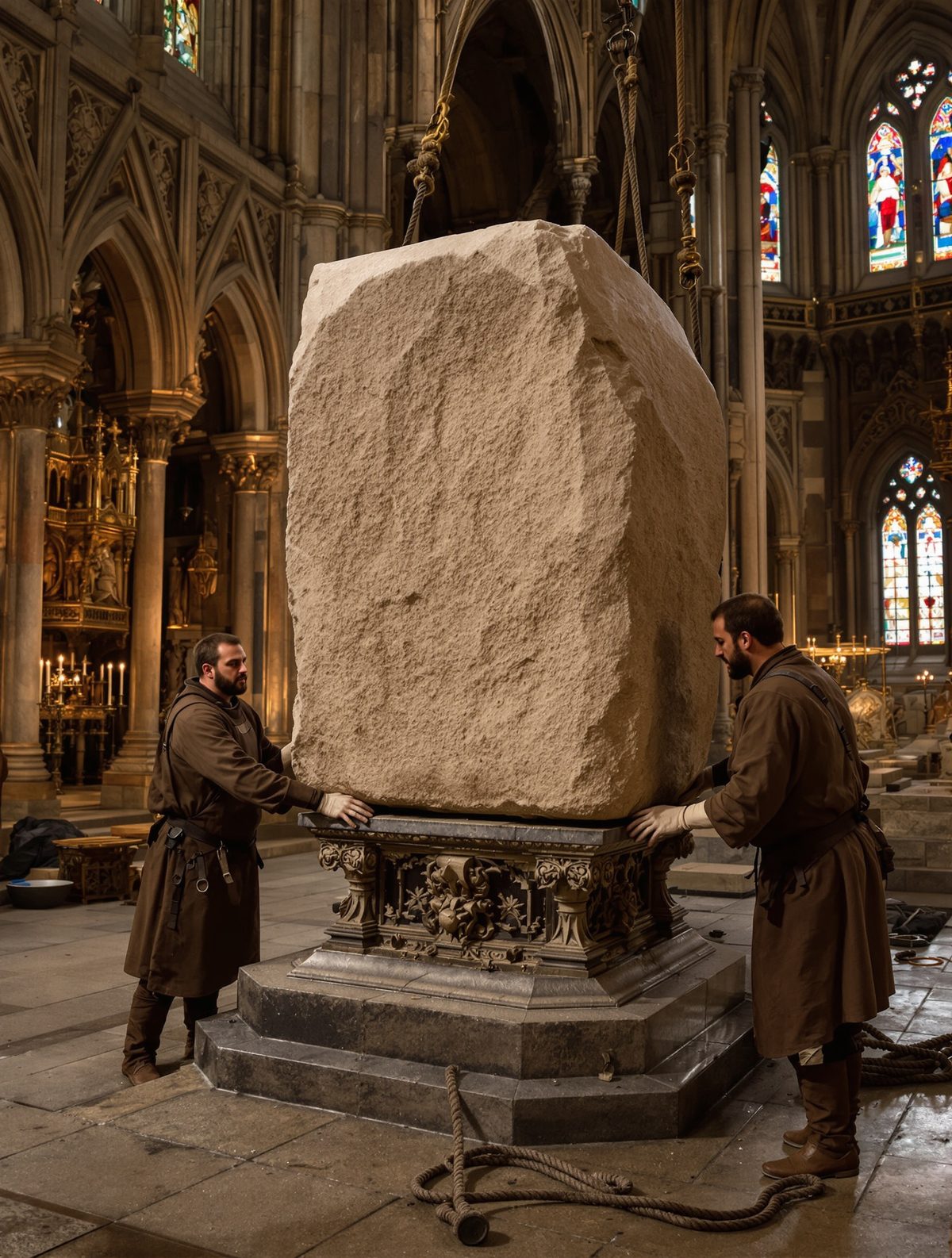
The sound of chisel on stone echoed through Westminster Abbey as craftsmen carved a cavity beneath the wooden seat of a grand oak chair. It was 1308, and they were creating what would become the most famous throne in English history—not for its golden ornaments or velvet cushions, but for the ancient block of reddish sandstone they were installing beneath it. This wasn't just any stone. It was Scotland's most sacred relic, torn from its home and transformed into the ultimate symbol of English dominance.
For the next seven centuries, every English monarch would be crowned sitting above this captured stone, their weight pressing down upon the very symbol of Scottish kingship. It was perhaps the most audacious act of cultural theft in British history, and it began with one man's obsession with crushing Scottish independence forever.
The Ancient Crown of Kings
Long before Edward Longshanks ever cast his covetous eye northward, the Stone of Destiny held a place of mystical reverence in Scottish hearts. Known in Gaelic as Lia Fàil, this rectangular block of red sandstone—measuring roughly 26 inches long, 16 inches wide, and 10 inches deep—carried legends that stretched back into the mists of Celtic mythology.
According to ancient lore, the stone had traveled an impossible journey through time and space. Some claimed it was Jacob's pillow from the Bible, brought to Scotland via Ireland by way of Egypt and Spain. Others insisted it was the coronation stone of Irish kings, carried to Scotland by the legendary Scots princess Scota. The truth was perhaps less exotic but no less significant—geological analysis suggests it originated from the very hills around Scone, making it quite literally a piece of Scotland itself.
Read next: The Day a Young Prince Knelt and Refused a Crown
For over four centuries, Scottish kings had been crowned upon this stone at Scone Abbey, just north of Perth. Kenneth MacAlpin in 843, Malcolm III in 1058, Robert the Bruce's predecessors stretching back through generations—all had felt its cold surface beneath them as they accepted the crown of Scotland. The ceremony was sacred theater: the stone would supposedly cry out in recognition when touched by a true king of Scotland, though history records no accounts of anyone actually hearing such supernatural approval.
But what made the Stone of Destiny truly powerful wasn't any magical property—it was what it represented. In an age when symbols held immense political weight, the stone embodied the unbroken line of Scottish kingship, the divine right to rule, and the independence of the Scottish nation itself.
The Hammer Falls
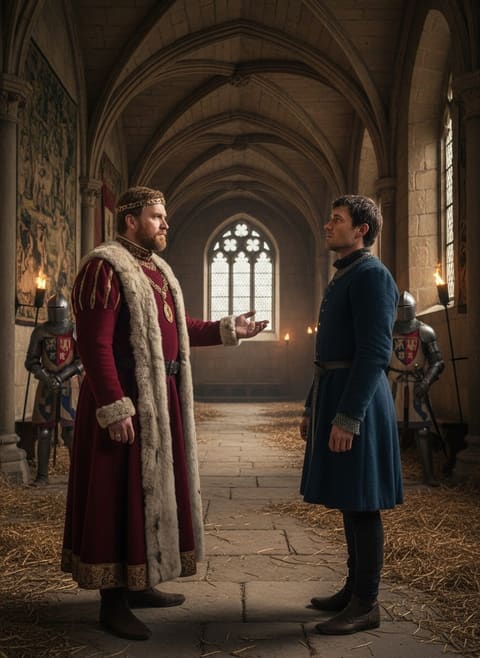
Edward I of England had earned his fearsome nickname "Longshanks" from his imposing six-foot-two frame, but "the Hammer of the Scots" proved far more prophetic. When the Scottish succession crisis erupted in 1290 following the death of young Queen Margaret, Edward saw his chance to assert English supremacy over Scotland once and for all.
Initially playing the role of arbitrator between competing claimants to the Scottish throne, Edward extracted a crucial concession: whoever became king would acknowledge him as overlord. When John Balliol emerged as his chosen candidate in 1292, Scotland effectively became an English client state. But Balliol proved less pliable than expected, and when he dared to form an alliance with France in 1295, Edward's patience evaporated.
The English king's response was swift and brutal. On March 30, 1296, Edward's army crossed the River Tweed and subjected the prosperous border town of Berwick to a massacre that shocked even medieval sensibilities. Contemporary chroniclers claimed that English soldiers slaughtered inhabitants for three days straight, with bodies piling so high in the streets that carts couldn't pass.
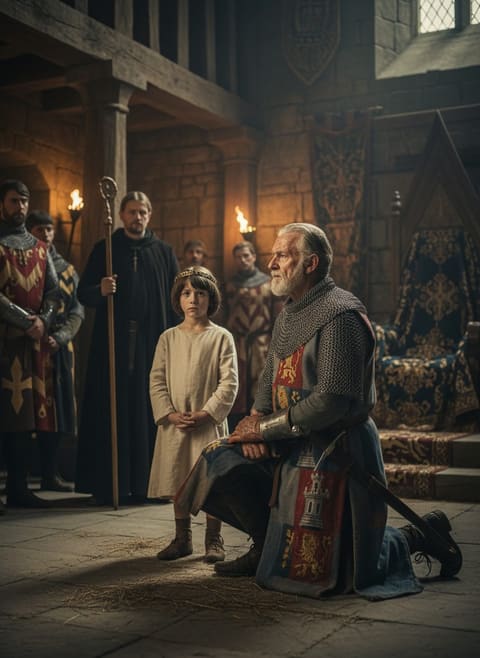
This was just the beginning. Edward's forces swept through Scotland like a destroying wind, capturing castle after castle. At Dunbar, the Scottish army suffered a catastrophic defeat. John Balliol, the "Toom Tabard" (Empty Coat), was ceremonially stripped of his royal regalia and imprisoned in the Tower of London.
But Edward wasn't content merely with military conquest. He understood that to truly break Scottish resistance, he needed to capture their very soul.
The Sacred Theft
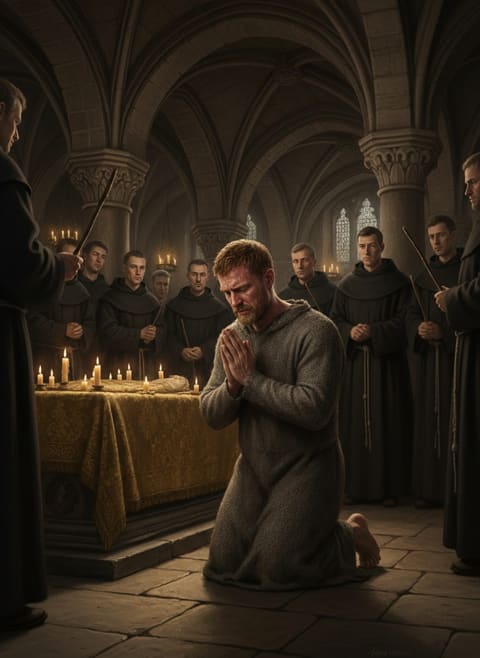
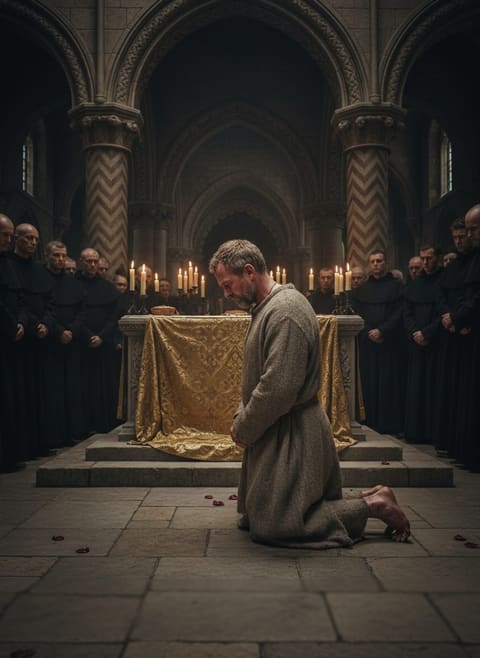
On a gray morning in July 1296, Edward I stood before the altar of Scone Abbey, gazing down at the Stone of Destiny. Here was the physical embodiment of everything he sought to destroy—Scottish independence, Scottish dignity, Scottish hope itself. What happened next would echo through seven centuries of British history.
The stone was surprisingly heavy for its size, weighing approximately 335 pounds. It took several of Edward's men to lift it, and contemporary accounts suggest they may have damaged it in the process—iron rings were attached to help with transport, leaving permanent scars in the ancient sandstone. As the stone was loaded onto an ox-drawn cart for the long journey south, Edward was already planning how to maximize its symbolic impact.
The removal wasn't just theft—it was psychological warfare of the highest order. By seizing the Stone of Destiny, Edward was declaring that there would never again be a Scottish king, because the very instrument of Scottish coronation now belonged to England. It was a masterstroke of medieval propaganda, as devastating to Scottish morale as any military defeat.
But Edward didn't stop there. He also seized other symbols of Scottish nationhood: royal documents, religious relics, and most famously, the Black Rood of Scotland—a fragment of what was believed to be the True Cross. Scotland was being systematically stripped not just of its independence, but of its identity.
The stone's journey to London must have been a bitter procession for any Scots who witnessed it. Here was their heritage, trundling south on a common cart, destined to serve their conquerors for generations to come. Edward had the stone taken first to Westminster Abbey, where it remained for several months as he decided its ultimate fate.
Throne of Conquest
Edward I possessed a politician's instinct for symbolism that would impress modern spin doctors. Simply keeping the Stone of Destiny locked away in a vault wouldn't serve his purposes—he needed every English coronation to be a visible reminder of Scottish submission. His solution was breathtakingly audacious: he would build the stone into England's coronation throne itself.
Master carpenter Walter of Durham was commissioned to create what became known as St. Edward's Chair, a magnificent oak throne that would house the captured stone in a specially carved compartment beneath the seat. The chair itself was a work of art—originally gilded with gold leaf and decorated with paintings of birds, foliage, and kings. But its true purpose was to serve as a prison for Scotland's most sacred relic.
When completed around 1308, just in time for Edward II's coronation, the throne achieved Edward I's vision perfectly. Every future English monarch would literally sit upon Scotland, their authority quite physically resting on the subjugation of their northern neighbor. It was perhaps the most eloquent statement of dominance ever crafted by an English king.
The first monarch to be crowned on the stone-throne combination was Edward II in 1308, followed by Edward III, Richard II, and an unbroken line of successors. Each coronation was a reminder that Scotland's sacred heritage now served English power. For seven centuries, this would continue—through the Hundred Years' War, the Wars of the Roses, the Tudor dynasty, the English Civil War, two world wars, and into the modern era.
The stone witnessed some of the most dramatic moments in English history. It was there when Henry VIII's daughter Mary Tudor was crowned in 1553, when Elizabeth I received her crown in 1559, and when Charles II was restored to the throne in 1661. During World War II, both the chair and stone were moved to safety in Gloucester Cathedral, protecting them from German bombs that might have destroyed centuries of history.
The Stone Strikes Back
But Scotland never forgot its stolen heritage. For seven centuries, the absence of the Stone of Destiny remained an open wound in the Scottish psyche, a constant reminder of subjugation and loss. This resentment would eventually explode in one of the most daring heists in British history.
Read next: The Day a Queen Rode Alone Into a Mutinous Army
On Christmas morning 1950, Westminster Abbey's guardian made a shocking discovery. St. Edward's Chair sat empty—the Stone of Destiny had vanished. Four Scottish nationalist students, led by Ian Hamilton, had pulled off what seemed impossible: they had stolen the stone back.
The operation had been months in the planning. The students had visited the Abbey multiple times, studying the guards' routines and the stone's placement. On Christmas Eve, when London was distracted by holiday celebrations, they struck. The theft went awry when the stone broke in two during removal, but the determined students managed to smuggle both pieces back to Scotland in separate cars.
The British government's response bordered on panic. Police roadblocks appeared at the Scottish border, and rumors swirled that the Royal Navy was patrolling Scottish coasts. The stone's disappearance became an international sensation, with newspapers around the world covering the audacious heist. For the first time in 654 years, the Stone of Destiny was back in Scotland—albeit illegally.
After four months, the stone mysteriously reappeared at Arbroath Abbey, wrapped in a Scottish flag. The students were eventually identified but never prosecuted—perhaps because the British government feared making martyrs of them. The stone was quietly returned to Westminster Abbey, but the symbolism was unmistakable: Scottish nationalism was far from dead.
The Journey Home
The 1950 theft proved to be a harbinger of changing times. As Scottish nationalism gained political momentum in the latter half of the 20th century, pressure mounted for the stone's permanent return. Finally, in 1996—exactly 700 years after Edward I's original theft—Prime Minister John Major announced that the Stone of Destiny would return to Scotland.
On November 15, 1996, the stone crossed the Scottish border for the first time in seven centuries as part of an official ceremony. Crowds lined the route as the stone traveled to Edinburgh Castle, where it would be displayed alongside Scotland's other crown jewels. The symbolism was profound—after 700 years of captivity, Scotland's most sacred relic was finally home.
The return wasn't entirely unconditional. The stone would travel back to Westminster Abbey for future coronations, ensuring continuity with centuries of tradition. When King Charles III was crowned in 2023, he too sat above the ancient Scottish stone, maintaining a link to Edward I's original act of dominance even as Scotland's political relationship with England continued to evolve.
Today, visitors to Edinburgh Castle can see the Stone of Destiny in its specially designed display, no longer a symbol of conquest but of heritage reclaimed. The iron rings that Edward's men attached over 700 years ago remain visible—permanent scars that tell the story of theft, resistance, and ultimate return.
The stone's journey from sacred relic to symbol of oppression to reclaimed heritage reflects the broader story of Scottish-English relations across seven centuries. In stealing the Stone of Destiny, Edward I believed he was ending Scottish independence forever. Instead, he created a symbol that would inspire Scottish nationalism for generations, proving that while you can steal a nation's symbols, you cannot ultimately crush its spirit. The stone that once crowned Scottish kings, then sat beneath English monarchs, now stands as a testament to the enduring power of identity and the ultimate futility of trying to erase a people's heritage—no matter how long it takes to come home.