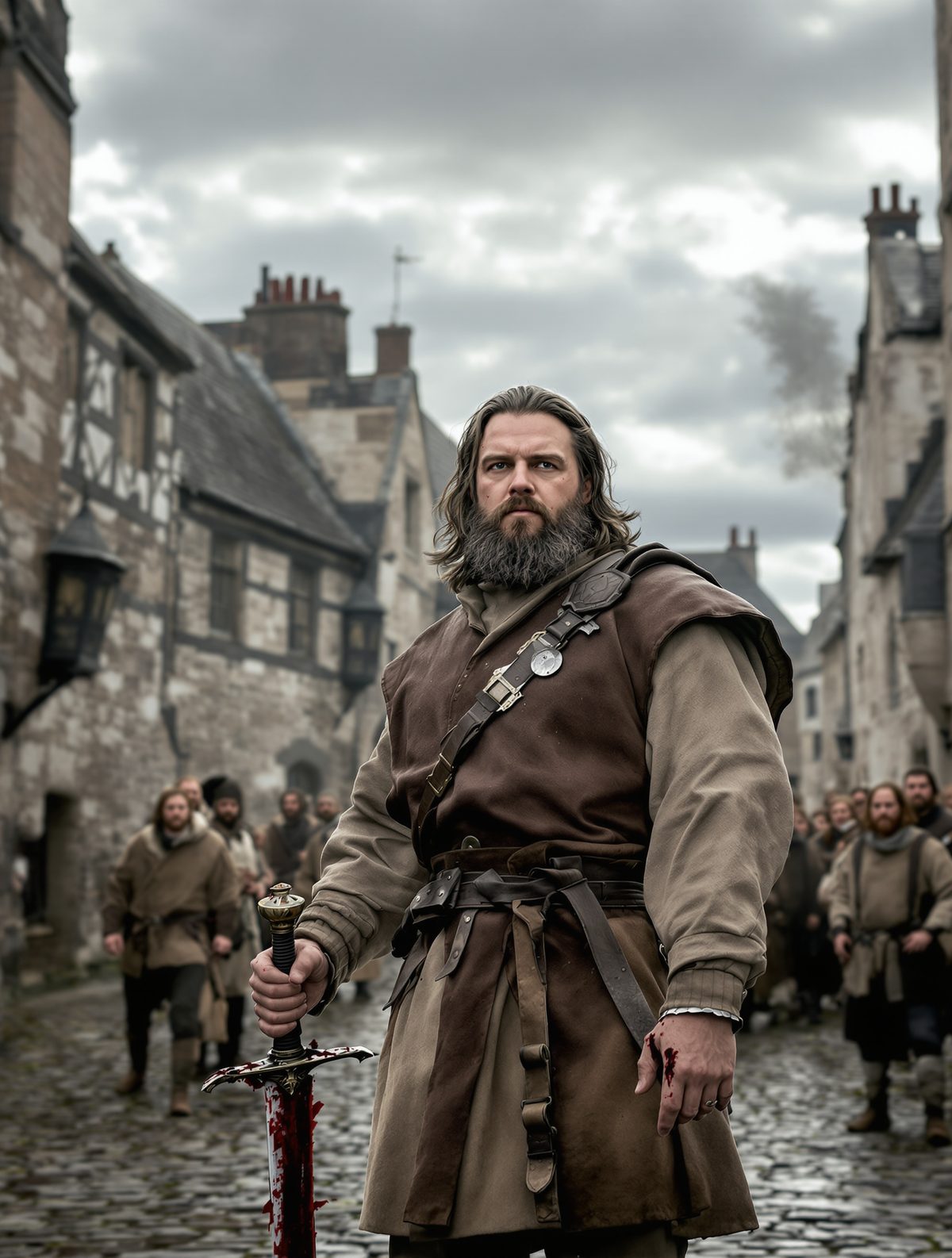
The morning mist hung thick over Lanark's cobblestones on that fateful day in May 1297, muffling the sound of hoofbeats as Sheriff William Heselrig and his English soldiers rode into the market square. The sheriff's purse jingled with freshly collected taxes—coins wrung from Scottish merchants and farmers who could barely afford bread, let alone tribute to a foreign king. But one young Scotsman watching from the shadows had already decided he would pay nothing more to Edward Longshanks' brutal occupation.
Within the hour, Heselrig would be dead, his blood pooling between the ancient stones. And William Wallace—a minor knight from Renfrewshire whom history had barely noticed—would become the most wanted man in Scotland. That single sword stroke in a dusty market square didn't just kill an English sheriff. It severed the chains of submission and unleashed a revolution that would echo through the ages.
The Making of a Moment
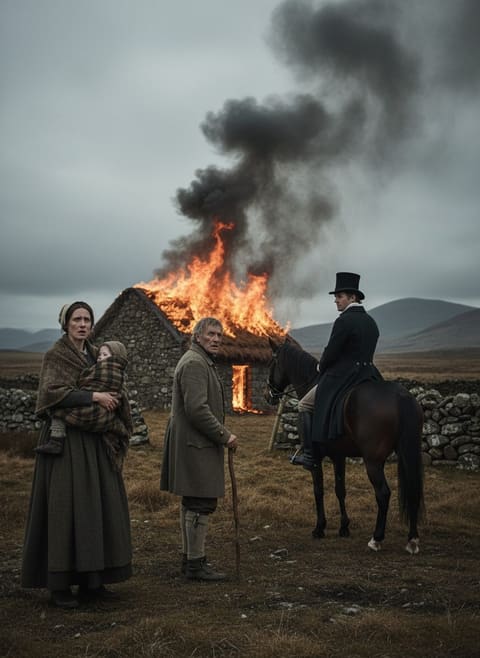
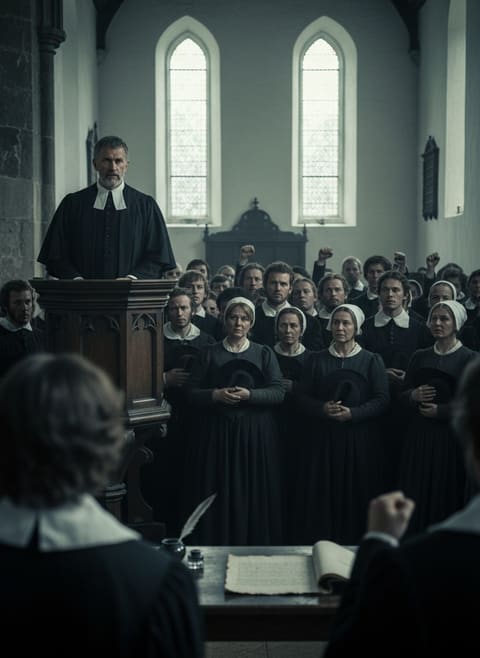
To understand why Wallace's blade found its mark that day, we must first grasp the suffocating reality of Scotland under English rule. Edward I—"Longshanks" to his enemies—had crushed Scottish independence in 1296 with the systematic brutality of a man who believed might made right. The Stone of Destiny, Scotland's ancient coronation stone, sat in Westminster Abbey like a trophy. Scottish nobles had been forced to sign the "Ragman Roll," acknowledging Edward as their overlord, their signatures a public humiliation that burned in their hearts.
But it wasn't grand politics that brought Wallace to Lanark that spring morning. According to the most reliable accounts, he had come to the town on personal business—some say to secretly marry his beloved Marion Braidfoot, others suggest he was simply conducting affairs as a minor landholder. What's certain is that Sheriff Heselrig, a Yorkshire knight rewarded with Scottish lands for his loyalty to Edward, had marked Wallace as a troublemaker.
Read next: The Clan That Was Declared Outlaw by Name Alone
The young Scotsman's reputation preceded him. Unlike the great nobles who had bent the knee to Edward, Wallace had refused to swear fealty to the English king. At around twenty-seven years old, he possessed the dangerous combination of noble blood, common sense, and uncommon courage. Standing nearly six and a half feet tall in an age when most men barely reached five feet six inches, Wallace cut an imposing figure that matched his uncompromising spirit.
Steel Meets Flesh in the Market Square
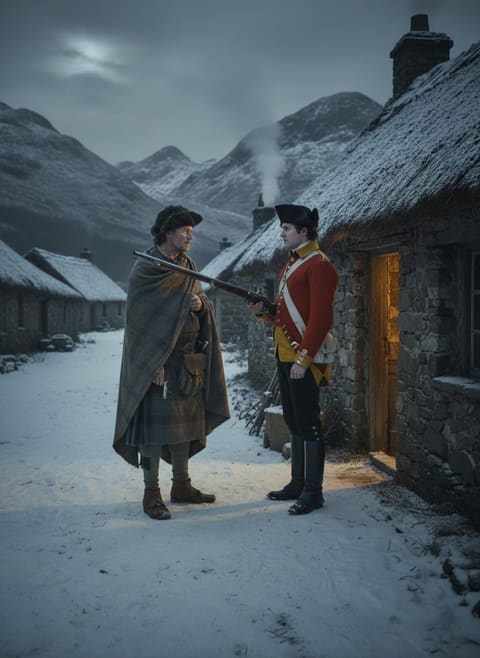
The confrontation began like countless others across occupied Scotland—with demands for taxes and tribute. Heselrig had spotted Wallace in the marketplace and decided to make an example of the defiant young knight. Flanked by English soldiers, the sheriff approached Wallace with the arrogant confidence of a man who had never known defeat on Scottish soil.
"You owe taxes to King Edward," Heselrig reportedly declared, his hand resting on his sword hilt. The exact words spoken that day are lost to history, but the tension was palpable. Around them, Scottish merchants and townsfolk watched nervously, knowing that such confrontations rarely ended well for their countrymen.
What happened next shocked everyone present. Instead of backing down or negotiating, Wallace drew his sword in one fluid motion. The blade—likely a Scottish claymore, the devastating two-handed sword favored by Highland warriors—swept through the air with lethal precision. Heselrig had barely begun to react when Wallace's steel found its mark, striking the sheriff down with a single, devastating blow.
The marketplace erupted in chaos. English soldiers lunged forward, but Wallace was ready for them too. What had begun as a tax dispute became a fierce skirmish as Scottish onlookers, inspired by Wallace's audacity, joined the fray with whatever weapons they could find. By the time the dust settled, Sheriff Heselrig lay dead, and several of his men had joined him.
From Outlaw to Icon in a Single Day
News of Heselrig's death spread through Scotland like wildfire. In an age when communication traveled at the speed of horseback, the story reached Edinburgh within days and London within weeks. Edward I, campaigning in Flanders, reportedly flew into one of his legendary rages when he learned that a "minor knight" had dared to kill one of his sheriffs.
But Edward's fury paled beside the electric excitement that crackled through Scottish communities. For the first time since the disasters of 1296, someone had struck back—and lived to tell about it. Wallace became an instant folk hero, his name whispered in ale houses and shouted from hilltops. The psychological impact cannot be overstated: he had proven that English officials could bleed and die just like any other man.
Here's what makes this moment even more remarkable: Wallace had no army, no treasury, and no official authority. He was not a great earl or a royal claimant with hereditary rights to press. He was simply a man who had decided that enough was enough. Yet within weeks of killing Heselrig, hundreds of Scots flocked to his banner. By summer's end, he would command thousands.
The transformation was extraordinary. Medieval warfare typically belonged to the aristocratic elite—knights with expensive armor, extensive training, and inherited obligations. But Wallace's rebellion drew its strength from common folk: farmers, craftsmen, and minor gentry who had never expected to challenge kings and empires. They came armed with whatever they could find—agricultural tools converted to weapons, hunting bows, and fierce determination.
The Ripple Effect Across a Nation
Wallace's success in Lanark triggered uprisings across Scotland. In the northeast, Andrew Moray—a young nobleman whose family had also refused to submit to Edward—began his own rebellion. The two movements would eventually unite, combining Wallace's popular appeal with Moray's strategic brilliance and noble connections.
But perhaps the most surprising aspect of Wallace's early rebellion was its sophisticated organization. This wasn't a mindless peasant revolt, but a calculated campaign of liberation. Wallace understood that killing Sheriff Heselrig was just the beginning—he needed to capture and hold territory, establish alternative governance, and convince wavering Scottish nobles that resistance was possible.
By August 1297, Wallace controlled most of southwestern Scotland. He had captured strategic castles, driven out English officials, and begun collecting taxes in the name of John Balliol, Scotland's deposed king. The young knight who had struck down a sheriff in a market square now commanded a army that made English commanders genuinely nervous.
The momentum built toward the stunning victory at Stirling Bridge in September 1297, where Wallace and Moray's combined forces destroyed a much larger English army. But that triumph, which made Wallace a household name across Europe, began with a single sword stroke in Lanark four months earlier.
The Legend That History Almost Forgot
Here's the most startling fact about that pivotal moment in Lanark: contemporary English chronicles barely mention it. To Edward I's chroniclers, the killing of Sheriff Heselrig was simply another act of Scottish "banditry" to be suppressed. They couldn't imagine that this minor incident would spawn a rebellion that would frustrate English ambitions for centuries.
Read next: The Mountain Hollowed Out to Power a Nation's Lights
Even Scottish sources from the period are frustratingly vague about the exact details. The most vivid accounts come from later ballads and stories, passed down through generations of Scots who understood the moment's significance even when their rulers preferred to forget it. These folk memories, dismissed by some historians as unreliable, may actually preserve truths that official records deliberately obscured.
What we do know is that Wallace's rebellion fundamentally changed the nature of Scottish resistance. Before Lanark, opposition to English rule had been largely aristocratic and diplomatic. After Wallace drew his sword, resistance became popular, visceral, and uncompromising. He proved that ordinary Scots could fight and win against the most powerful military machine in Europe.
Why One Sword Stroke Still Matters Today
Seven centuries have passed since William Wallace killed Sheriff Heselrig in that Lanark marketplace, yet the moment continues to resonate with startling power. Not just in Scotland—where Wallace remains a national icon—but wherever people struggle against overwhelming odds and oppressive authority.
The lesson of Lanark isn't about violence or even nationalism in the modern sense. It's about the moment when someone decides to stop accepting the unacceptable, regardless of consequences. Wallace could have paid his taxes, kept his head down, and lived comfortably as a minor knight in occupied Scotland. Instead, he chose to draw his sword and change history.
That choice transformed him from a footnote into a legend, from a minor knight into the symbol of Scottish independence. But perhaps more importantly, it proved that great movements often begin with small acts of individual courage. Empires may seem invincible, but they can be shaken by a single person willing to say "no"—and mean it.
Every time someone stands up to a bully, challenges unjust authority, or refuses to accept oppression as inevitable, they echo Wallace's sword stroke in that dusty medieval marketplace. The names and circumstances change, but the fundamental choice remains the same: submit or resist, bow or fight, accept the world as it is or demand the world as it should be.
That's why Sheriff Heselrig's blood still stains the stones of history, and why William Wallace's rebellion continues to inspire rebels and freedom fighters around the world. Sometimes, everything changes with a single sword blow.