It's easy to dismiss the notion of saving a life with a simple exchange of blood, yet that very idea seemed impossibly risky in 1818. But one day in London, risk was the only option left.
The Bleak Room
The scene was grim. A young mother lay gaunt and pale, her life ebbing away after childbirth. As the light in the room dimmed with each beat of her weakening heart, so too did hope. In early 19th-century London, childbirth was a perilous ordeal, often marred by complications that left doctors as helpless witnesses to unrelenting tragedy. This woman was not a singular tale of misfortune; she was one among countless others who faced this mortal trial. The medical practices of the day offered scarce solutions, always lagging behind nature’s ruthless course.
Yet, standing in the room with a resolve forged from years of struggle against conventional wisdom was a young surgeon named James Blundell. His gaze was not that of the defeated. He saw the woman as more than a patient; she was a testament to his years of dedication to a radical idea. Blundell had dedicated his life to overturning the stagnant medical norms that dictated life and death, driven by the conviction that life-saving solutions must be developed for these heartbreaking situations. Now, it was time to act.
The Pursuit of the Impossible
James Blundell was not a man to tread conventional paths. His fascination with transfusion was sparked during his studies, but he was aware that nothing meaningful had yet been achieved in humans. His unorthodox vision was not without precedence; animal-to-animal transfusions had captivated medical curiosities but had never translated into human treatments. For most surgeons of his time, laying hands on such a risky procedure was tantamount to courting disaster, risking both their careers and their patients’ lives.
Read next: The Day a Baronet Stood Up in Court and Freed His Slaves
Undeterred, Blundell’s quiet determination set him apart. He immersed himself in his laboratory, meticulously studying blood’s role in life and how its loss meant certain death. He experimented diligently, understanding that reliability and safety were paramount if blood transfusion was to be more than just another tragic misadventure. He believed that the safest and most beneficial transfusions would require donor and recipient to share the same species—a radical belief at the time.
When Morality Meets Medicine
The decision to perform a transfusion was fraught with both ethical dilemmas and technical challenges. Blundell had to navigate a maze of medical skepticism and social pressures. The idea of taking something as precious as blood from one person to give to another seemed utterly foreign, if not taboo. Donor compatibility, clotting issues, and the technique of the transfusion itself were formidable barriers. His peers scoffed, deeming the task unachievable and Blundell’s persistence misguided at best.
Yet, there was no turning back when the young woman’s husband volunteered his blood. His plea—a desperate one, holding nothing but love and trust for this man's madcap gamble—was a catalyst. Contributors of blood must contend not only with the physical discomfort but also with the moral contemplation of risking one's own health for another. The husband’s act wasn't merely an offer; it was a leap of faith that Blundell knew must be met with precise science and steady hands.
The Moment of Truth
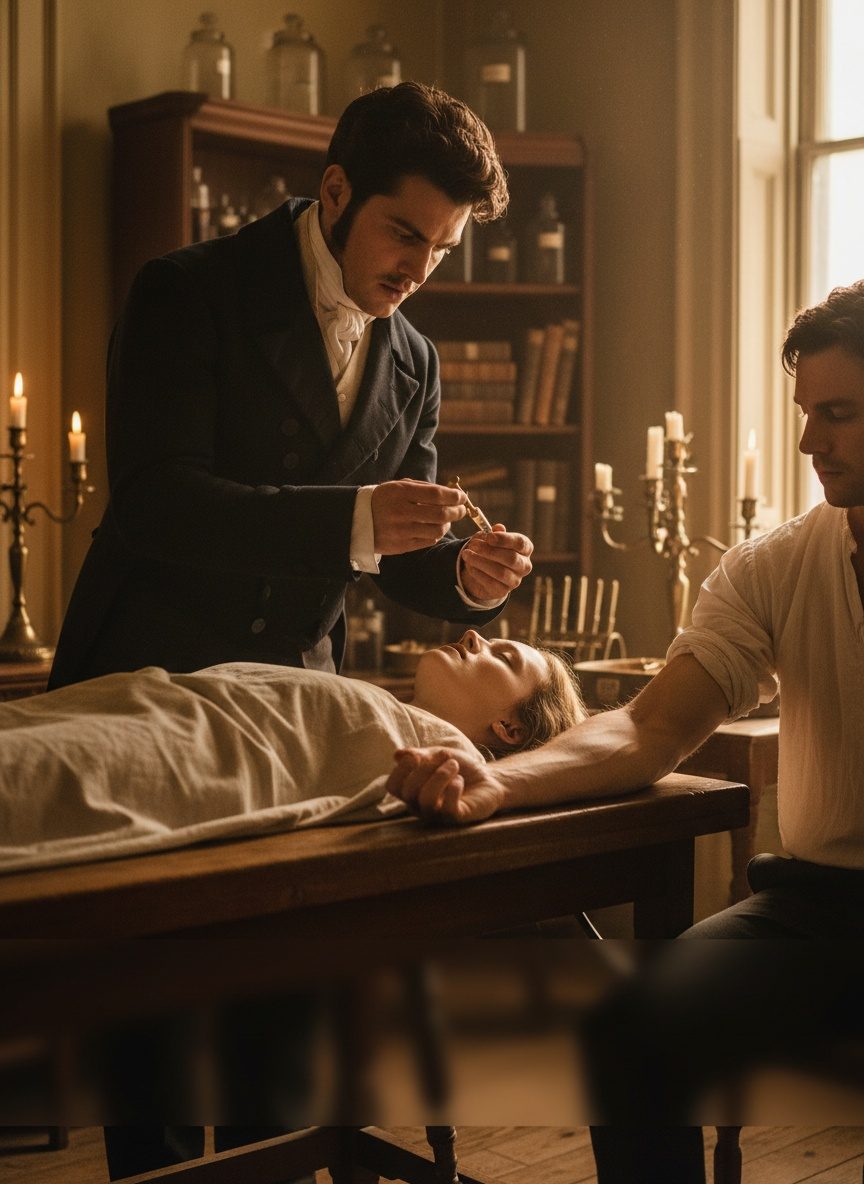
The room hummed with anxiety as the blood was drawn from the husband, its journey into the waiting veins of his wife a moment suspended in dramatic tension. Through a primitive contraption designed with pipes and syringes, Blundell enacted his procedure as methodically as he might give life itself. The seconds ticked by with unbearable slowness as he monitored each subtle gasp of breath from his patient, every thoughtful moment poised for an outcome either dire or miraculous.
For an agonizing stretch of time, there was no clear indication of success. The room held its collective breath. And then—as if rejuvenated by some unseen force—there was movement, color returning to cheeks once ashen, life's promise flickering anew. Though the procedure wouldn't solve all the complications of childbirth, it provided a crucial lifeline when none had existed before.
The Ripples in Medicine
This singular event in 1818 was more than an insertion of a needle into a vein; it was the penetration of bold new thinking into the musty corridors of established medical practice. Although perfected techniques and broader practical uses would take time, Blundell's courageous act in his quest for solutions set off a new era in medical science.
His pioneering work on blood transfusion would gradually inspire others to refine the process, leading to the life-saving techniques in hospitals worldwide today. The tendrils of Blundell’s legacy can be traced through time, culminating in the advanced medical miracles many of us rely upon without a second thought.
This moment behind closed doors in a London room highlights the power of courageous innovation, the unyielding commitment to envisioning future possibilities, and the brave gestures of love that enhance humanity's bond. In overcoming skepticism and fear, both James Blundell and a desperate husband found that sometimes, the gamble to connect and to nurture life is the only path forward—a lesson for us all that, though born in a gamble, became one of humanity's enduring successes.