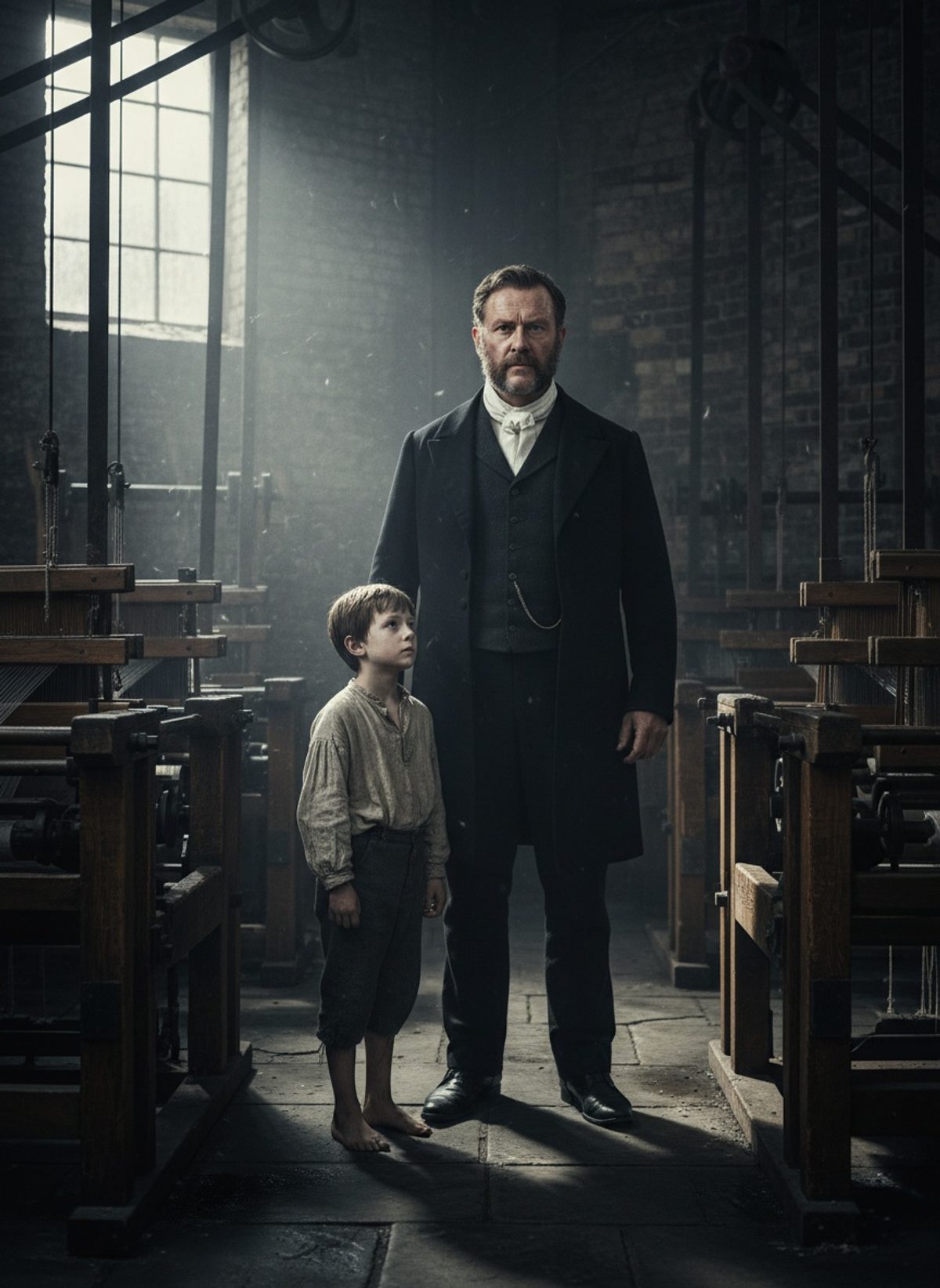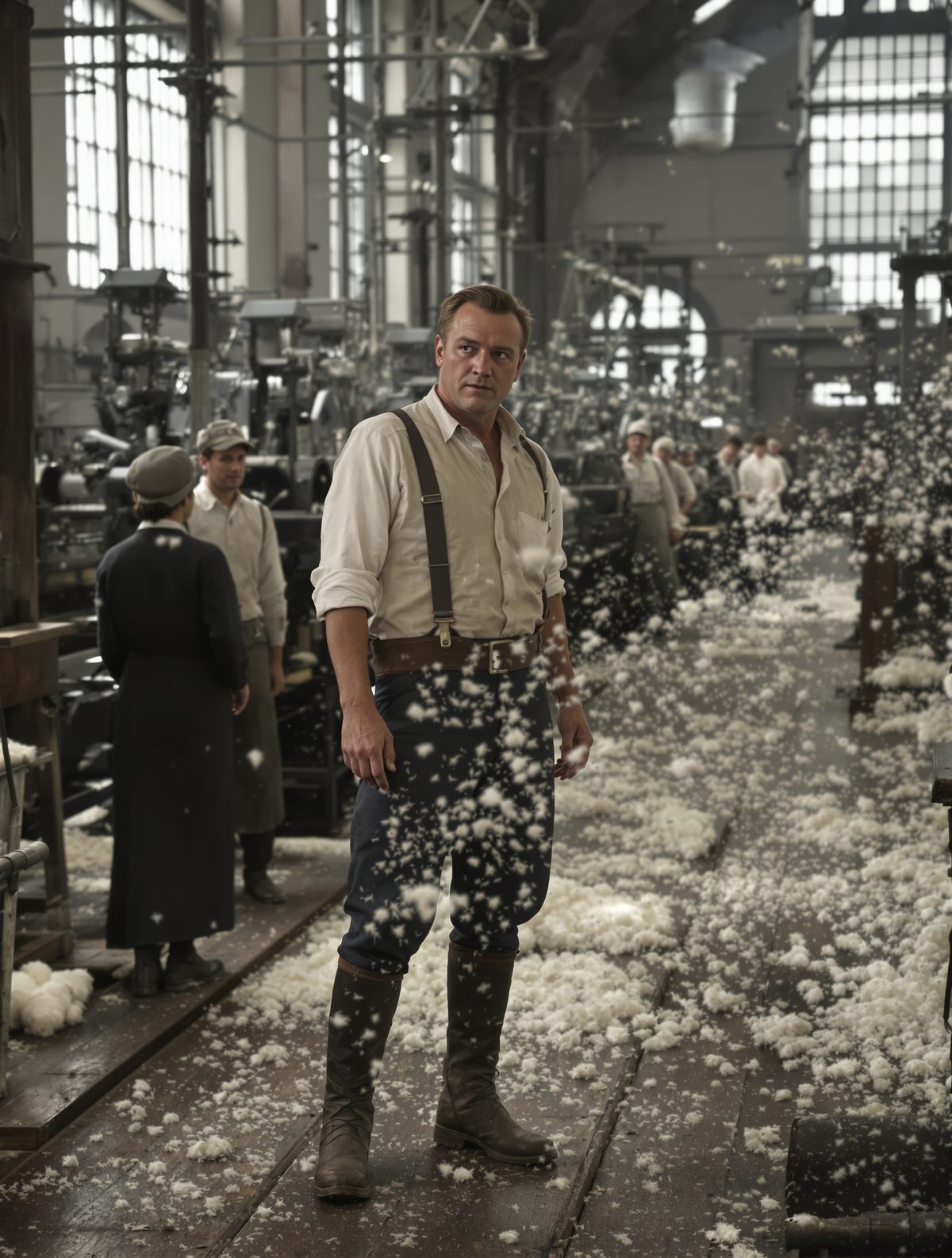
In the shadowy labyrinth of Manchester's mills, a symphony of clattering looms and rattling bobbins filled the air with an unrelenting din. Here, amid the cacophony, men and women toiled from dawn until dusk, their lives measured out in threads and hours. Most resigned to this fate, barely raising their heads above the deafening machine roar. But in 1812, one man dared not only to lift his head but also his voice. John Doherty, a defiant presence amidst the whirring chaos, forever altered the course of labor history despite the obstacles life had thrown his way.
The Deafening Silence of Hardship
The early 19th century was not kind to those whose lives were bound to the spinning wheel. The Industrial Revolution, with all its promises of progress and prosperity, had a darker side that remained largely unseen by the burgeoning middle class. For the workers in the mills of Manchester, life was a ceaseless grind against poverty and despair. In 1812, the average workday spanned a grueling fourteen hours, a stark reality that even the most vivid Dickensian tale might struggle to capture fully.
John Doherty, an Irishman by birth, was among the many who migrated to England seeking a better life. Despite being blind in one eye, Doherty's zeal and resilience shone brightly amidst the grim conditions. As he worked tirelessly in the deafening mills, he set his sights on something extraordinary—not simply better working conditions but a unified voice for the laboring class.
The Birth of a Movement
While others railed against machines following the Luddite movement—a futile uprising to smash mechanization—Doherty took a different path. By 1828, his efforts crystallized into something remarkable: the Grand General Union of the Operative Spinners of Great Britain and Ireland. It was a name that, while a mouthful, represented a landmark achievement—the first national trade union of its kind.
Read next: The Day a Mill Owner Kept Paying Wages He Could Not Afford
Doherty's union sought solidarity through peaceful means, advocating through organization rather than destruction. With remarkable foresight, Doherty recognized that the collective bargaining power of organized labor could demand better conditions, fair pay, and the respect that each worker deserved. The union quickly swelled with thousands of members, spreading its influence far beyond the boundaries of Manchester.
The Man Behind the Vision
Why did Doherty succeed where others failed? The secret lay in his remarkable ability to communicate and inspire. Though blind in one eye, Doherty had a vision that few could match. His rallies were not filled with rabble-rousing rhetoric or incendiary demands, but with carefully crafted messages that appealed to both the heart and the mind. With the gift of eloquence, Doherty painted a picture of a future where laborers stood shoulder to shoulder, their voices echoing through the corridors of power.
One of Doherty's most daring moves was his publication of the 'Voice of the People'. This publication not only disseminated union agendas but also chronicled the plights and victories of workers across Britain. It captured the nation’s attention and recruited sympathy from unlikely quarters, causing ripples that would eventually swell into waves of change.
The Struggles and Triumphs
Life’s challenges continued to hound Doherty even as he led this burgeoning movement. He faced imprisonment in 1829 after a controversial strike, yet his imprisonment only added to his legend. Far from deterring him, the experience solidified his resolve, proving he was undeterred by personal sacrifice. His fervor inspired others to continue the fight in his absence, rooting the labor movement deep in British soil.
Despite facing substantial opposition from mill owners and the government, Doherty's persistent advocacy laid the groundwork for future labor reforms. The 1830s saw significant improvements in workers' rights, including reductions in working hours and incremental increases in pay. These gains, while modest then, were monumental for a disenfranchised workforce that had previously held little bargaining power.
The Legacy We Live By
John Doherty’s impact resonates even today. His efforts forged the path for the establishment of trade unions not just in Britain, but worldwide, signaling the birth of structured labor rights movements that continue to shape modern employment laws and practices. From the ashes of his tireless work arose the foundations for the protection we now take for granted—the eight-hour workday, fair wages, and safe working environments.
In this era of global economic uncertainties, Doherty’s story reminds us of the enduring power of collective action and the importance of representation in the workforce. It illustrates that change can be wrought not by force but through unity, perseverance, and an unwavering belief in justice—the principles that turned one half-blind Irishman into a torchbearer of transformation.
John Doherty may not have been immortalized in the textbooks, but his legacy endures in every worker who dares to dream of a fairer world. His tale is a poignant reminder that, in the symphony of human progress, even the quietest voice can inspire a resounding anthem for change.