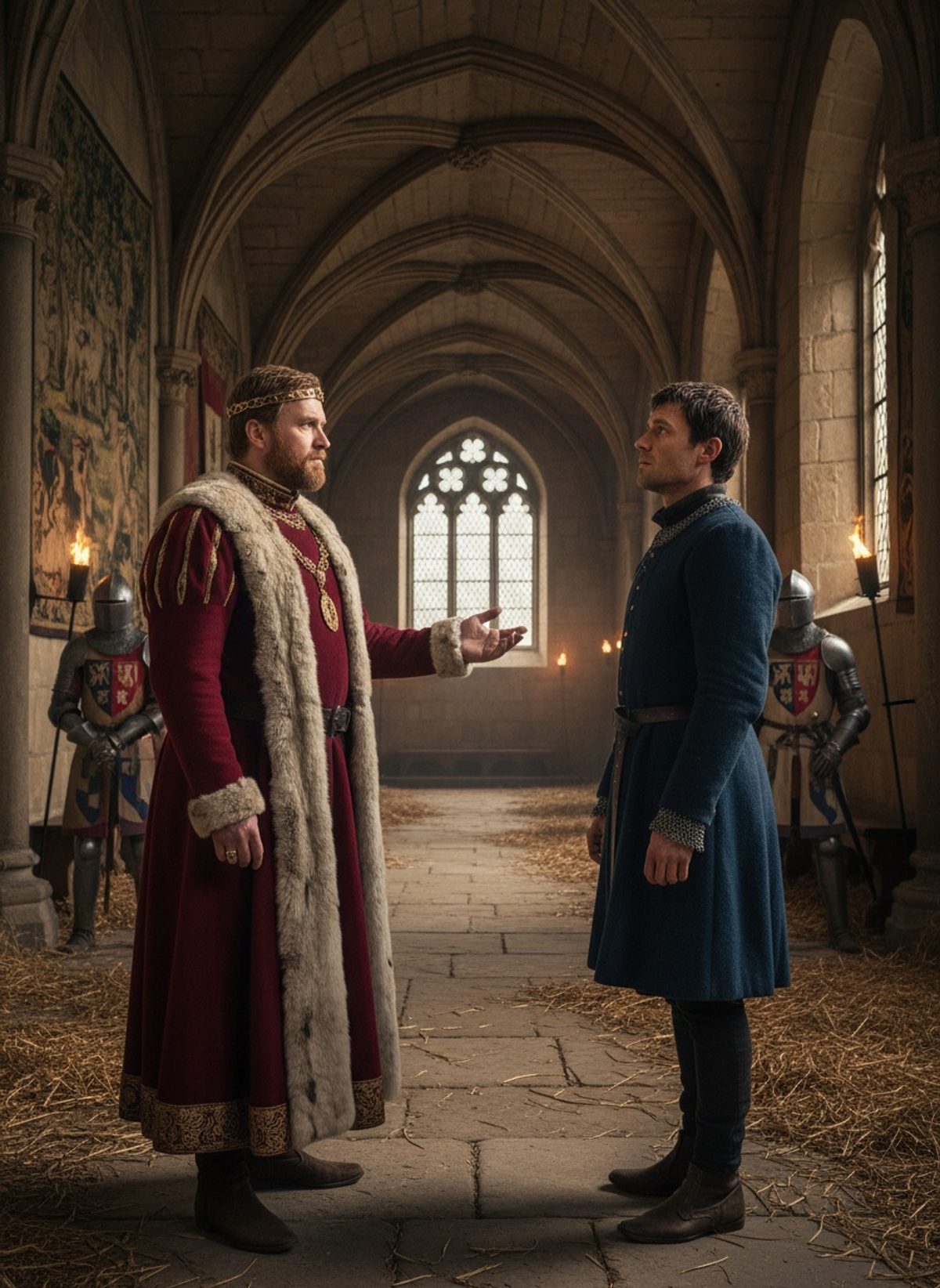
He was crowned in gold and glory, yet he barely spoke English. Richard I, known to history as the Lionheart, was still every inch a Frenchman when he ascended the English throne on that fateful September day in 1189.
Westminster and the Weight of a Crown
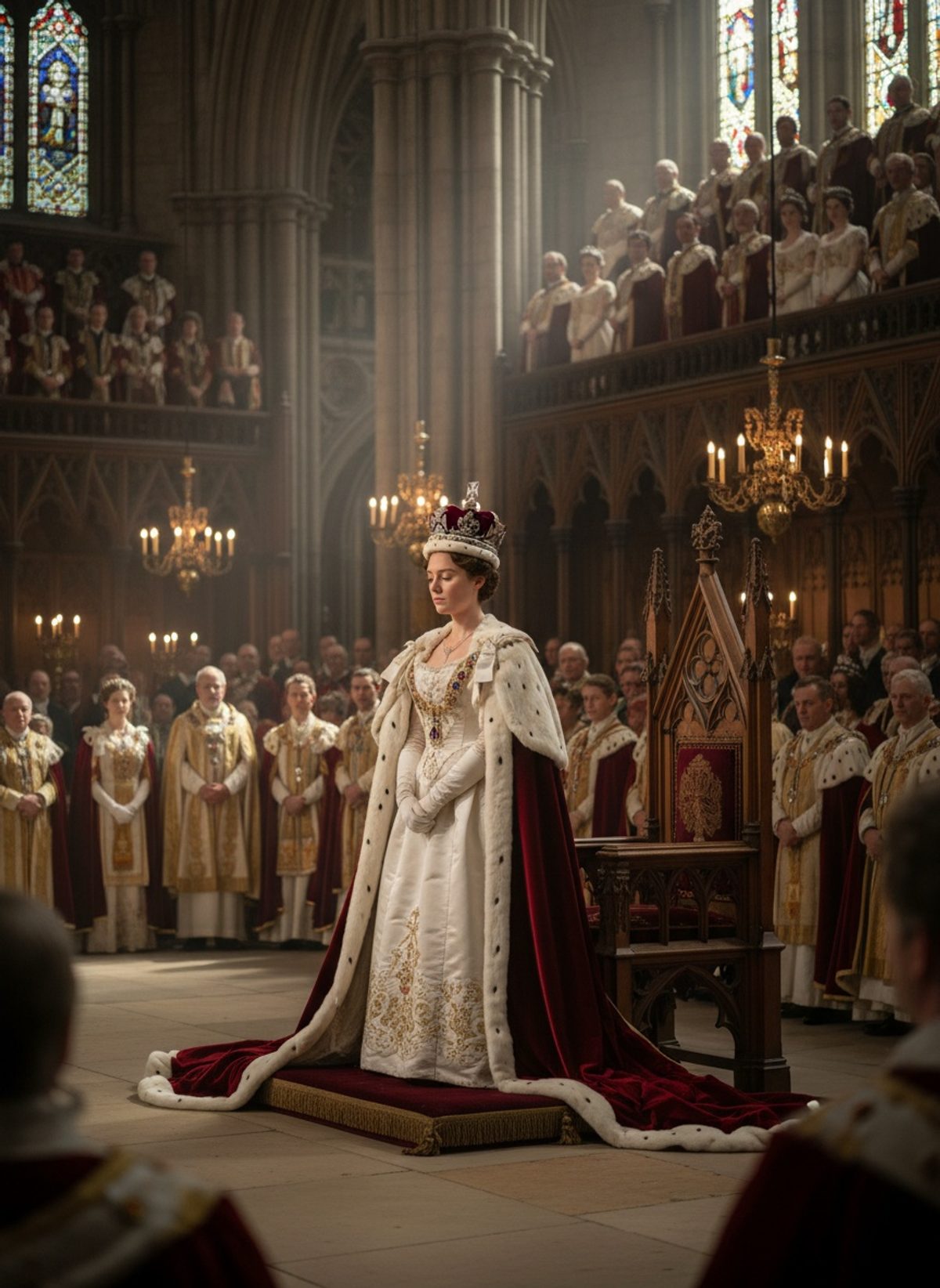
As the sunlight streamed through the ornate stained glass windows of Westminster Abbey, an air of solemn grandeur hung over the proceedings. Richard I, already a legend in his time, was about to be crowned King of England, his heart set on grand visions of crusades and conquests far from the English shores. Yet, unbeknownst to him, the seeds of discord were beginning to sprout beyond the ancient stone walls of the abbey.
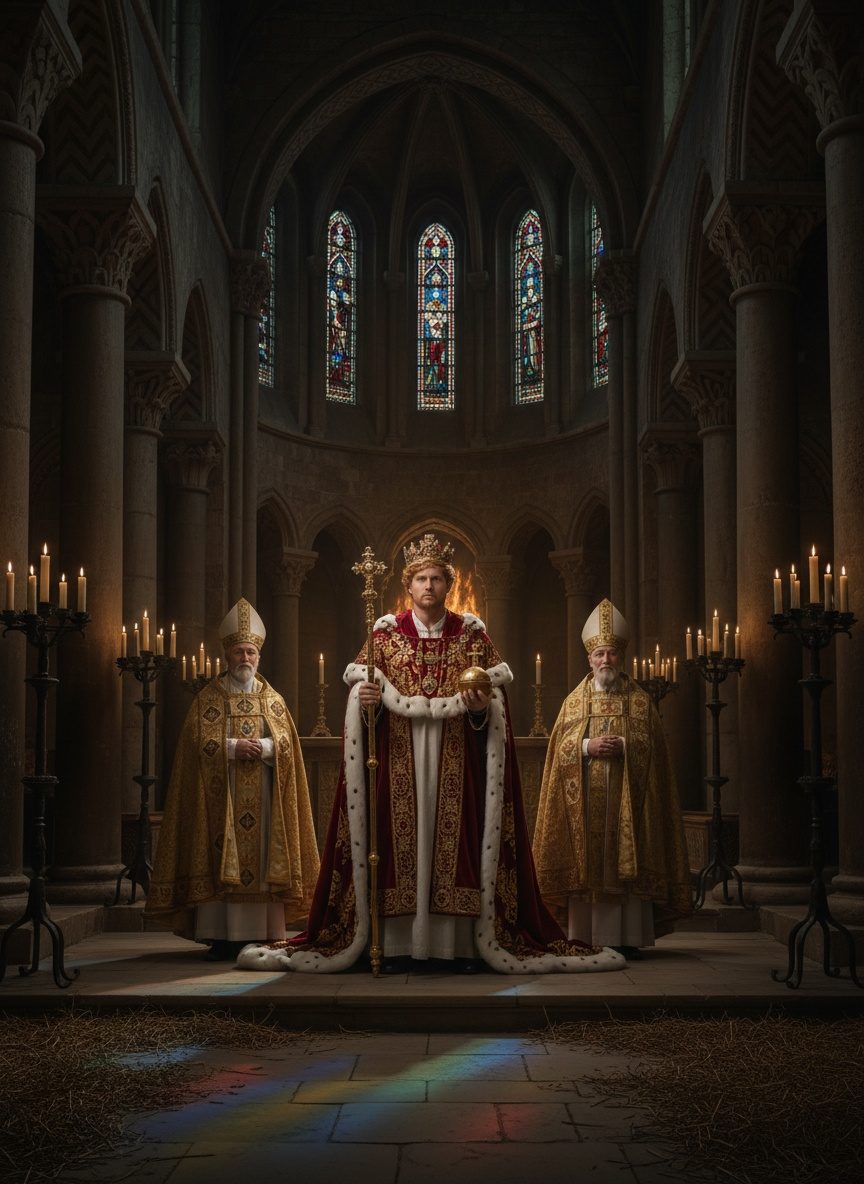
The coronation itself was a spectacle of medieval pageantry, with noblemen and clergy resplendent in their ceremonial garb. Richard stood tall, his hands touching the sacred anointing oil that consecrated him as God’s chosen leader on earth. The Latin chants echoed through the hall as the crown was placed upon his head. At that moment, in the eyes of the assembled onlookers, Richard became England's focal point of hope and ambition.
However, Richard’s focus was not on the burgeoning responsibilities of kingship over England. His eyes were set eastward, toward the glittering possibility of reclaiming Jerusalem. Many in the assembly feared the moment might prove ominous, for even the most glorious crown could not bind a restless king or contain a distracted heart.
Read next: The Day a King Knelt to Wash a Beggar's Feet
Smoldering Tensions in the Streets
Outside, beyond the heavenly echo of sacred rites, a very different scene was unfolding. The streets of London were swollen with people, throngs of spectators eager to witness their new king. Among them moved an undercurrent of animosity and fear, exacerbated by years of religious fervor and social prejudice.
It was to be a turning day for England's Jewish community, though not in the way they hoped. Jews were officially invited to join the coronation in a gesture of inclusivity and feudal coexistence—one that had become customary over time. Yet miscommunication and distrust turned gesture into tragedy. As rumors spread that Richard had specifically barred Jewish leaders from attending, the crowd's mood soured quickly.
Some believed — wrongly — that the new king had endorsed hostility towards Jews. Such assumptions ignited an old flame of anti-Semitic sentiment, a dangerous spark in a city already dry with discontent. Mobs formed, fueled by age-old prejudices and the thrill of commotion. In a short span, the seat of crown celebration was transformed into a scene of chaos. The Jewish quarter was set upon with violence that would send shockwaves far beyond the cobbled streets of medieval London.
Fire and Blood: The Reality of Fear
The chaos escalated with frightening speed, overriding any sense of common decency. Homes and synagogues in the Jewish quarter were attacked and set ablaze. Flames licked the sky, their fiery tongues consuming wood and thatch, turning cherished lives into desperate struggles. The city's cries of jubilation morphed into screams of terror.
Efforts at protection faltered in the frenzied melee. The mob’s unabashed savagery exposed the vulnerability of the Jewish community, leaving them to face wrath rooted not in this day's events but in centuries of ingrained animus. London — the heart of a land supposedly graced by divine service that day — burned, its ominous flare lighting up the night.
Richard had not even stepped out of the abbey's safety when the carnage unfolded. Whether aware or willingly ignorant of the unfolding tragedy, his first ignorant silence laid a precedent that would haunt Jewish communities across his domain. The flames kindled that day would take far more than a king’s decree to douse.
The Unhallowed Part of a New Reign
The coronation of Richard I, expected to be the commencement of a mighty reign, was scarred at its inception. Richard's crown might have gleamed with gold, but it inherited a shadow that followed him throughout his kingship. His ambition abroad had already blinded him to pressing issues at home, symbolizing the perpetual distraction that would characterize his rule.
Little did England realize how this day would serve as a portent. London’s Jews, caught in a tempest not of their creation, became emblematic of how spiral violence could thread itself into the very tapestry of kingdom politics, shaping histories unspoken and often neglected in mainstream dialogues.
As Richard embarked on his crusades, the consequences of the fateful day of his coronation lingered, reshaping communities and influencing policies in his long absence. The tale of September 1189 reveals that legends are not carved solely by swords and crowns, but also by the hidden scars of tumult and the legacies of those history often chooses to forget.