June 1381. The oppressive summer heat clung to the cobblestones of Smithfield.
The Gathering Storm
Amidst the sweltering temperatures and growing tension, the air in medieval London was crackling with an almost tactile electricity. Three years past his eleventh birthday, King Richard II sat as the young figurehead of an England in turmoil. The Plantagenet dynasty had seen its share of turmoil, but never a day like this. Now, sixty thousand rebels who had shaken the kingdom to its core were amassed at Smithfield, driven by anger, hunger, and the dream of justice.
The rebels—peasants, townsmen, and disenchanted soldiers alike—had flocked from the rural heartlands, emboldened by years of oppressive taxation and a socio-economic system tilted irrevocably in favor of the aristocracy. The Black Death had ravaged England just a few decades prior, a pandemic that had not only taken lives but irrevocably changed the tapestry of medieval society. The survivors found themselves in a vastly altered world, with labor shortages giving them leverage that had, until then, seemed impossible.
Led initially by the charismatic and fiery Wat Tyler, the rebels had seized their chance to push for reform, confronting their sovereign with visceral demands. They ransacked the homes of royal councillors, claimed the Tower of London, and executed several detested figures of authority. Fear rippled through the power structures of the kingdom like a cold wind before a storm.
Read next: The Day a Young Prince Knelt and Refused a Crown
The death of Tyler, who had risen to mythic status among the insurgents, marked a turning moment. He had been the embodiment of their hope, and now lay bleeding out in the cobbled square of Smithfield, struck down by William Walworth, the Lord Mayor of London. The howls of betrayal and loss reverberated like rolling thunder among the crowd. In an instant pregnant with potential violence, the fate of England hung by a thread.
The Boy King Steps Forward
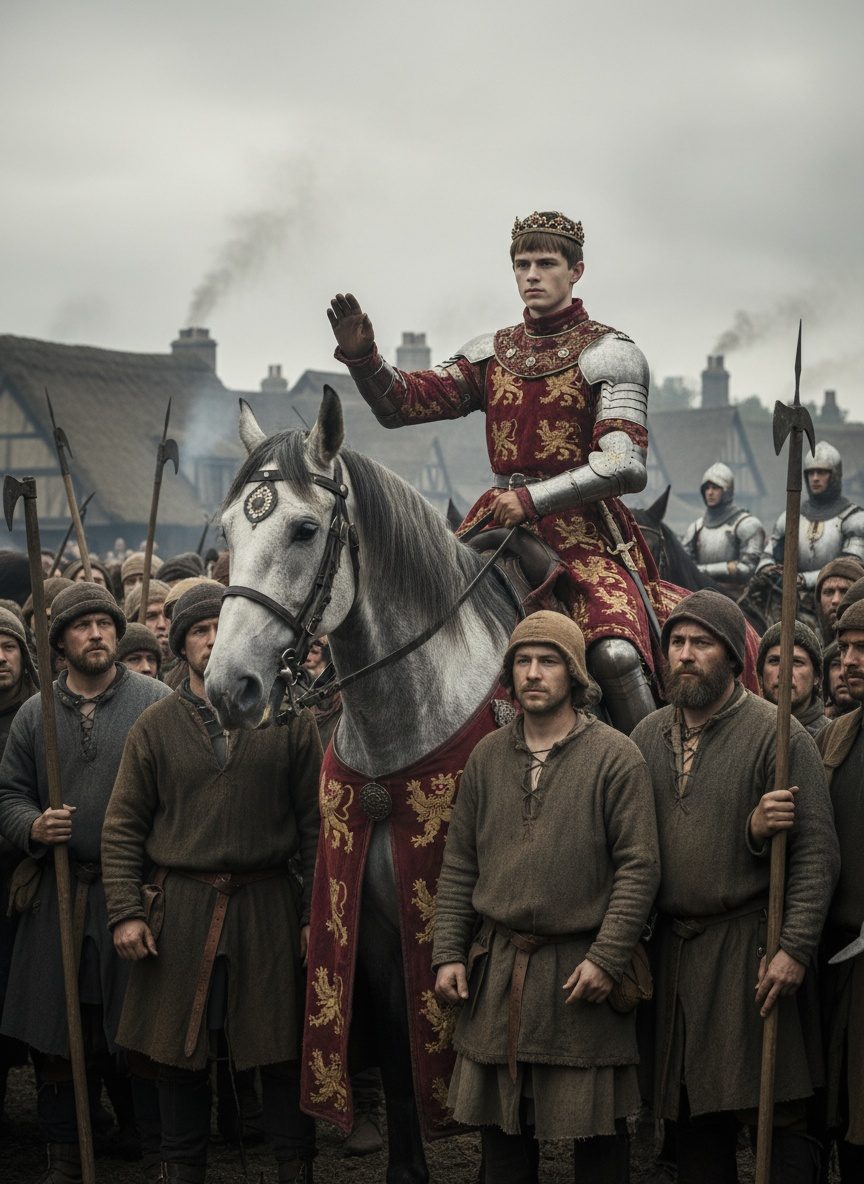
The afternoon sun hovered indifferently over Smithfield as the tension swelled like the tide against the bulwarks of order. Fear and anticipation were etched on faces as the teenaged monarch prepared to confront the simmering fury of the gathering. Though only fourteen, Richard II had seen the breadth of human emotion in the faces of those around him—love, ambition, treachery. But nothing would prepare him for this.
Against all advice, Richard chose the simplest, yet bravest course. As the murmurs of agitation mounted to a cacophony, he spurred forward with nothing more than his determination. The rebel army, a sea of muddied rags and sharp implements, fell silent, their eyes fixed upon this boy king who dared to approach them without a guard at his side.
Raising his hand—a simple gesture heavy with regal authority and youthful defiance—Richard spoke with an unexpected strength. In those moments, words had the power to shatter or heal, and the young king offered peace as he appealed to their sense of justice and future prosperity. While the exact words have been lost to time, the chronicles recount a pledge for reform, a promise that their grievances had not only been heard but would be addressed under his rule.
Read next: The Day a Queen Rode Alone Into a Mutinous Army
It was a moment as unpredictable as the roll of the centurial wheel. Silence wrapped the square as the crowd, the fires of their wrath still flickering, contemplated the commitment given by a king little older than some of their own sons.
From Defiance to Diplomacy
That fateful day in Smithfield did not signal an immediate end to the unrest rippling through the land, yet it marked the transformation of boyhood to leadership. Richard’s encounter with the rebels was not a panacea but a beginning—a critical juncture where defiance was met with diplomacy. In the aftermath of that gripping standoff, steps were set into motion that would eventually see the peasant demands tackled in legislation, even if countless reformations required decades and generations to fulfill.
Despite the promises made under duress, the subsequent royal backtracking exposed both the power and limitations inherent in his adolescent throne. The events catalyzed heightened awareness of the socio-political divide, setting a precedent that saw kings and parliament grapple with the growing consciousness of the common classes. Richard himself would later become known for his complex reign, marred by conflicts and controversies, yet it was this day at Smithfield that showcased, in stark relief, the indomitable spirit of a king forged in the crucible of crisis.
Reflecting on that day, it's not only the raw courage of a young monarch that captivates, but the way history can pivot on a single moment. In the annals of time, where triumphant wars and royal intrigue often dominate, the quiet strength demonstrated under the London sun provides a poignant illustration. It reminds us that leadership sometimes demands riding out to face the impossible, guided by little more than the ideals of justice and enduring grace.