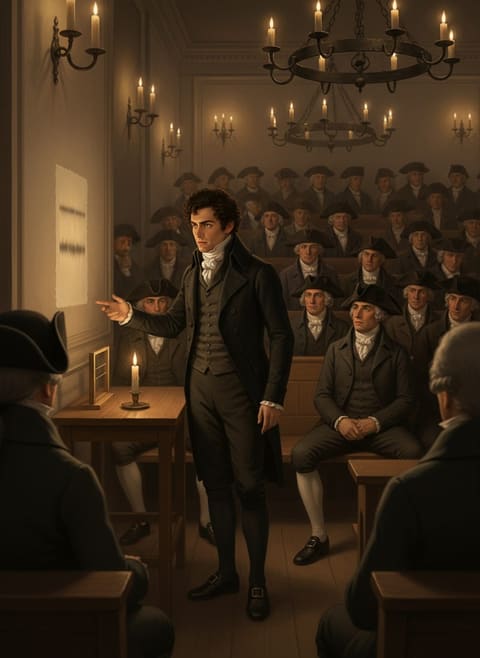
He had never intended to be a surgeon. James Blundell was once more interested in philosophy than in blood.
The Plight of the Bleeding Mothers
In the early 19th century, the streets of London echoed with the cries of women in labor and their beleaguered husbands hoping for a miracle. Blood loss during childbirth was a grim reaper lurking in the shadows of every maternity ward. It was a cruel fate for many, and one that young Dr. James Blundell witnessed firsthand at Guy’s Hospital. While advances in surgical techniques and medical understanding had surged forward in leaps and bounds compared to centuries past, this silent killer remained largely unconquered. For Blundell, a man of profound empathy, these deaths were more than statistics; they were personal tragedies that haunted his waking thoughts.
Eighteen Marianne Jacksons, Sarah Browns, and Anne Darnleys painted a somber pattern in Blundell’s mind. Each pale face and each mourning family fueled his scientific fervor. He realized that the problem was not unsolvable; it was merely an enigma waiting for a resonant answer. Within the walls of his modest lab, he pondered a procedure fortune might deny him, yet whose reality he was determined to craft.
Conceiving an Instrument of Hope
The idea was simple enough—move life-sustaining blood from a donor to a recipient using a mechanical apparatus. But simplicity in concept is often complexity in practice. The notion of transfusing blood wasn't entirely new; ancient civilizations had experimented with such ideas, albeit with little success. Yet no established practice, no sophisticated device existed in medical circles of Blundell’s time.
Read next: The Day a Weaver's Son Mapped the Invisible World
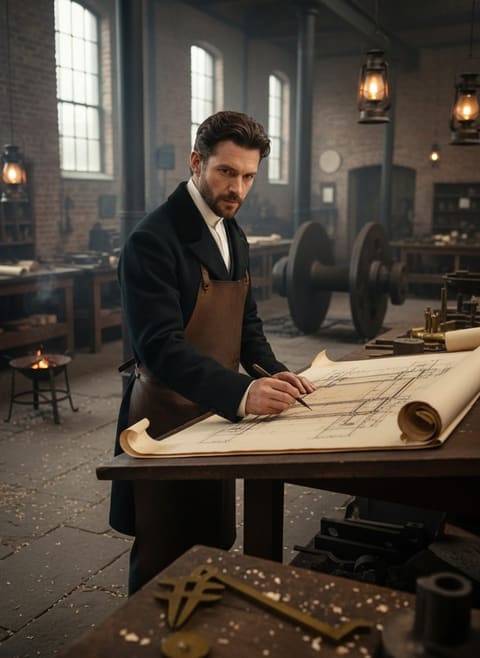
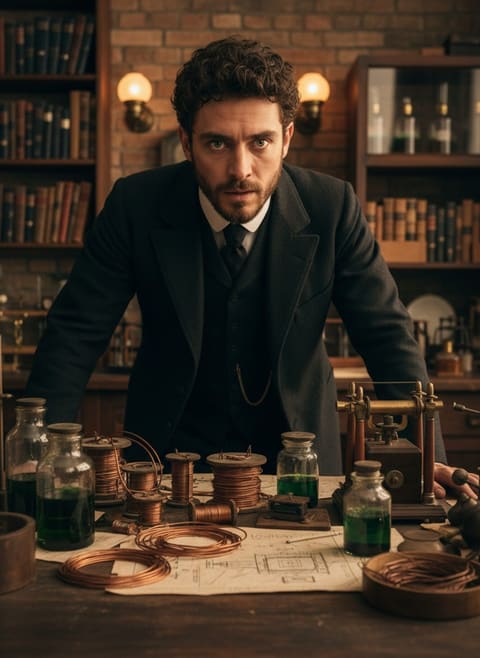
Driven by desperation masked as inspiration, Blundell crafted a rudimentary, yet ingenious apparatus that became the precursor to modern transfusion devices. Using tubing, syringes, and meticulous calibration, he designed what could only be termed the world’s first blood transfusion machine. Blundell was not merely a man with a scalpel; he was an inventor, a pioneer walking a foggy precipice between ingenuity and madness.
As his contraption took shape, it bore the weight of not just medical possibility but human hope. It was a device born of necessity, sculpted by desperation, and destined for triumph.
A Momentous Procedure in the Shadows
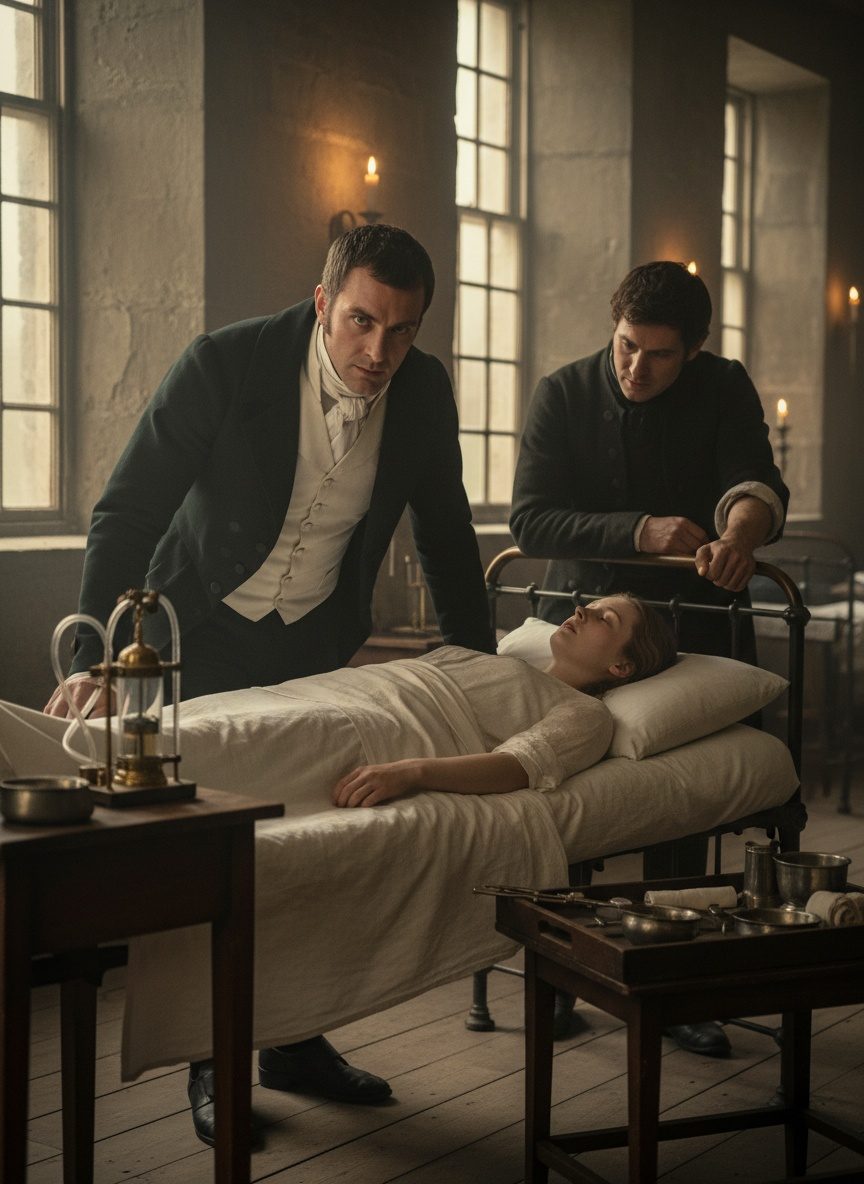
The day came in 1818 when necessity met innovation. Blundell stood poised over his patient, a young woman on the precipice of life and death due to postpartum hemorrhage. The atmosphere in the room was tense, pregnant with anxiety and expectation. Watchful eyes of assistants, equally hopeful yet apprehensive, bore witness to what they secretly wished would not become a posthumous procedure.
Everything relied on the machine that looked more like a monstrous relic than a savior—its tubes like wraiths, keening through the shadows of the dimly lit room. Blundell calmed his shaking hands. He had only a modest reserve of donor blood, but enough, he hoped, to pull back the curtain of death that threatened his patient.
With the precision of a watchmaker and the heart of a crusader, he connected the veins, drawing life from the donor and pushing it through the contraption into the pale, clammy arms of the woman fading before him. Those who watched barely breathed, fearing that even the smallest disturbance could unravel the delicate tapestry of hope being woven before their eyes.
The Quiet Revolution Begins
In the aftermath of that pioneering endeavor, there was no fanfare, no noisy celebration. The woman opened her eyes, weary yet alive, and Blundell’s heart soared with silent triumph. Medicine had turned a hidden corner that day, though few could have foreseen the profound significance of what had transpired in that hushed hospital ward.
Word of Blundell’s success trickled through the medical community with the stealth of an underground river slowly carving a new path. Young doctors nodded in acknowledgment, skeptics appraised with renewed interest, and quietly, the paradigm began to shift. The idea that blood, the essence of life, could be shared so directly and effectively was a revolutionary concept not just in terms of medical technology but also in the broader scope of human empathy and connection.
Read next: The Day a Clockmaker's Son Rewired How We See the Stars
Over time, as advances built upon his breakthroughs, the procedure became ubiquitous, saving countless lives. Blundell’s work was the seed from which grew a forest of understanding and innovation, one that saw humanity itself as the grandest beneficiary.
A Legacy Written in Blood
James Blundell’s quiet, monumental act that day did more than save a life; it issued a clarion call that reverberated through the ages. Today's medical marvels—heart transplants, organ donors, sophisticated fusion surgeries—all owe a debt to that dimly lit room in London where one man dared to do what medical textbooks could not yet imagine.
His story is a testament to the idea that even the smallest, humblest of lights can illuminate the path for generations to come. It speaks to the enduring nature of human curiosity and the relentless spirit of ingenuity that lie at the heart of medical progress.
In an age where technology and science march forward at a dizzying pace, Blundell’s trailblazing, albeit understated attempt, is a powerful reminder of the human stories woven into the fabric of scientific advancement. His work did not merely push the boundaries of what medicine could achieve; it redefined them.