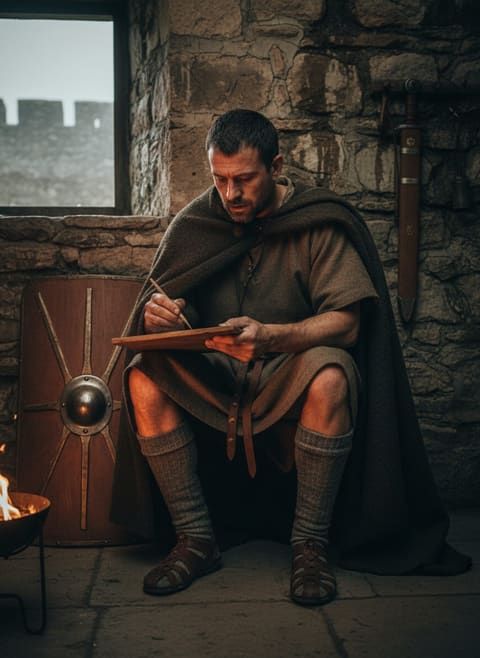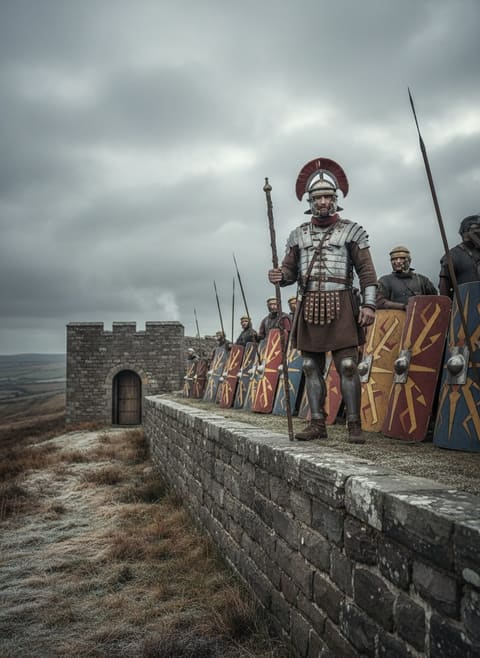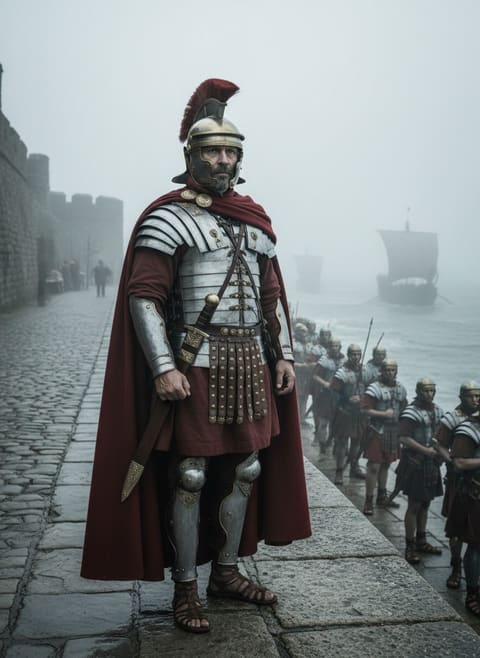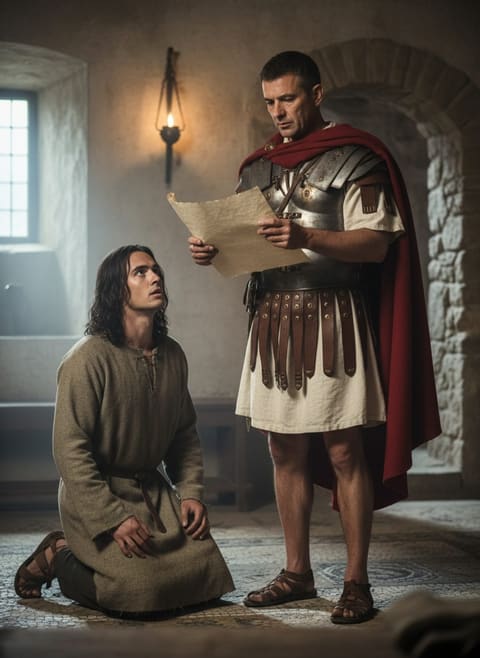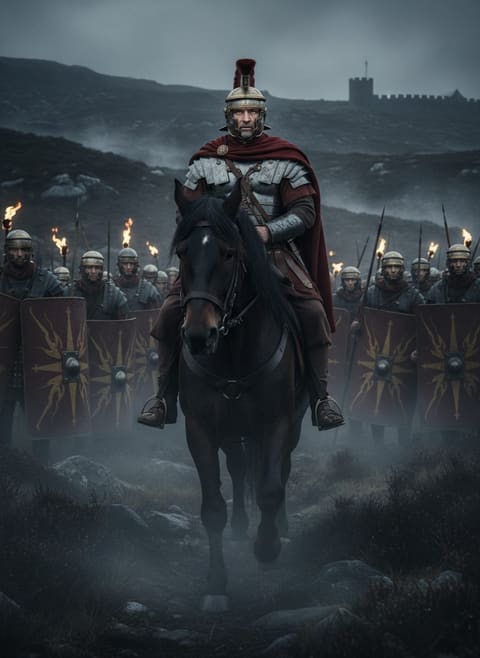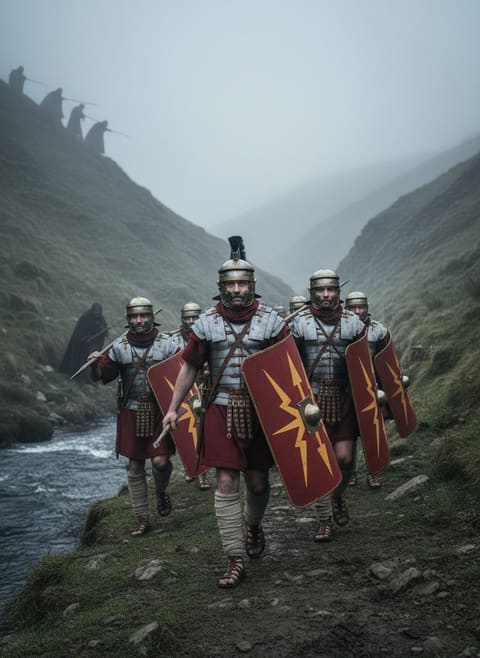
Summer, 43 CE. The faint cries of seagulls blended with the restless whispers of the sea.
The Day the Earth Stood Still
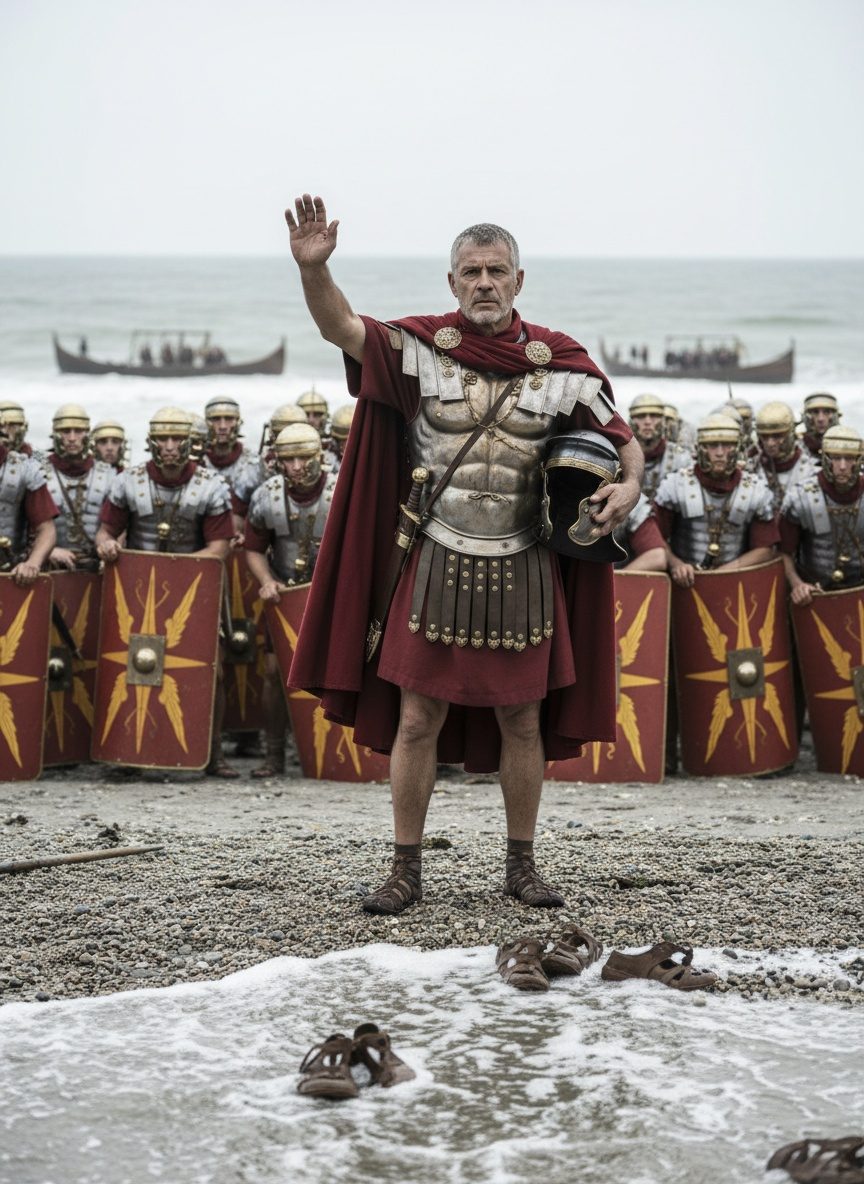
On that summer's morning, the coastal stretch of Gaul was alive with the smell of salt and anticipation. Thousands of Roman soldiers, the polished brass of their armor reflecting the early sunlight, stared at the heaving waves that would carry them to the legendary yet foreboding isle of Britannia. For Rome, conquering lands was an expression of power and a spectacle of imperial might. Yet, here, at the edge of the civilized world, the legions faltered. The men, veterans of campaigns from the Danube to the Euphrates, stood resolute in their defiance. They refused the orders to embark. The British waters, the final frontier, were shrouded in the unknown, home to tales of barbaric tribes and mystic Druids practicing human sacrifice.
Aulus Plautius Takes the Helm
Upon the shore stood Aulus Plautius, a general with a reputation for both cunning and prowess in warfare. Yet, even his seasoned command struggled to reignite the courage of his soldiers. Plautius knew that the threat of mutiny was real. Unlike other provinces, Britannia was the edge of the world, and fear gripped his men like a vice. As the soldiers' murmurs grew into a chorus of protest, the moment demanded more than mere command; it required tact and inspiration.
Plautius did not counter his soldiers' reluctance with threats from the whip or sword. Instead, he made appeals to their identity as conquerors, recalling Rome’s destiny and tales of legendary heroes, the burdens and honors they bore. Perhaps more critical was invoking the long arm of Emperor Claudius, whose political expectations hinged upon the success of this campaign. Were his troops to refuse battle, it would not merely be an affront to their general, but mutiny against the very heart of Rome itself.
Read next: The Day a Roman Slave Left a Message That Outlasted an Empire
The Mortal Spirit Transcended
In an epoch where gods were as real as the roar of the sea, a peculiar, almost mythical event unfolded. Seizing the moment, the soldiers hoisted Plautius onto their shields, an age-old sign of acclamation for an emperor. The act, suspended between the tangible and the ephemeral, marked Plautius as more than a man. The men acknowledged him as their leader, their deified commander, the one chosen to navigate the convergence of courage and destiny. Plautius played along with the spectacle — he accepted the honor but wisely steered them back to their mission. His acceptance was not of an earthly crown but of divine guardianship over their fates. Empowered, the legions finally embarked upon their vessels, faces turned to the northwest, their eyes locked on the enigmatic horizons of Britannia.
What followed was a campaign etched in both bloodshed and resilience. The landing marked not just a military incursion but a symbolic confrontation between two worlds. Facing tribal warriors who wielded both might and mysticism, the Romans carved their way through dense forests and mist-covered hills, landscapes that seemed to breathe with the tales of ancient gods. Roman discipline clashed with Celtic zeal. Despite the initial terror, the campaign unfolded with calculated ferocity and strategy, with every victory forging the path toward the eventual Romanization of the island. Yet, beneath each clash of sword and shield lingered the electrifying memory of that day's uprising—when men became more than soldiers, and a general, for a fleeting moment, transcended into the divine.
Read next: The Day a Roman Officer Freed His Captive and Walked Away
The Continuing Echo of Defiance
The significance of that day on the shore transcends its singularity. It was not the mere act of a legion’s defiance or the deification of a general that made it memorable, but the implications it unfurled for future generations. Rome's conquest of Britannia was slow, marred by guerilla warfare, rebellions, and infamous uprisings. The echoes of defiance whispered through the windswept moors and rugged Scottish Highlands for centuries to come, fueling stories of leaders like Boudica, who would stake their claim against the empire’s might.
Why does this moment endure in the collective memory? Perhaps it's the understanding that the endeavor for conquest is as much a battle against internal fears as it is against foreign enemies; or that leadership transcends authority when entwined with belief and comradeship. The ephemeral transformation of a general into a deity represents more than mere myth. It captures the intoxicating blend of courage, loyalty, and the human need for symbols that inspire and bind. It hints at the underlying truth of Britannia's place in history, a land that tamed the lion and never truly yielded its spirit.