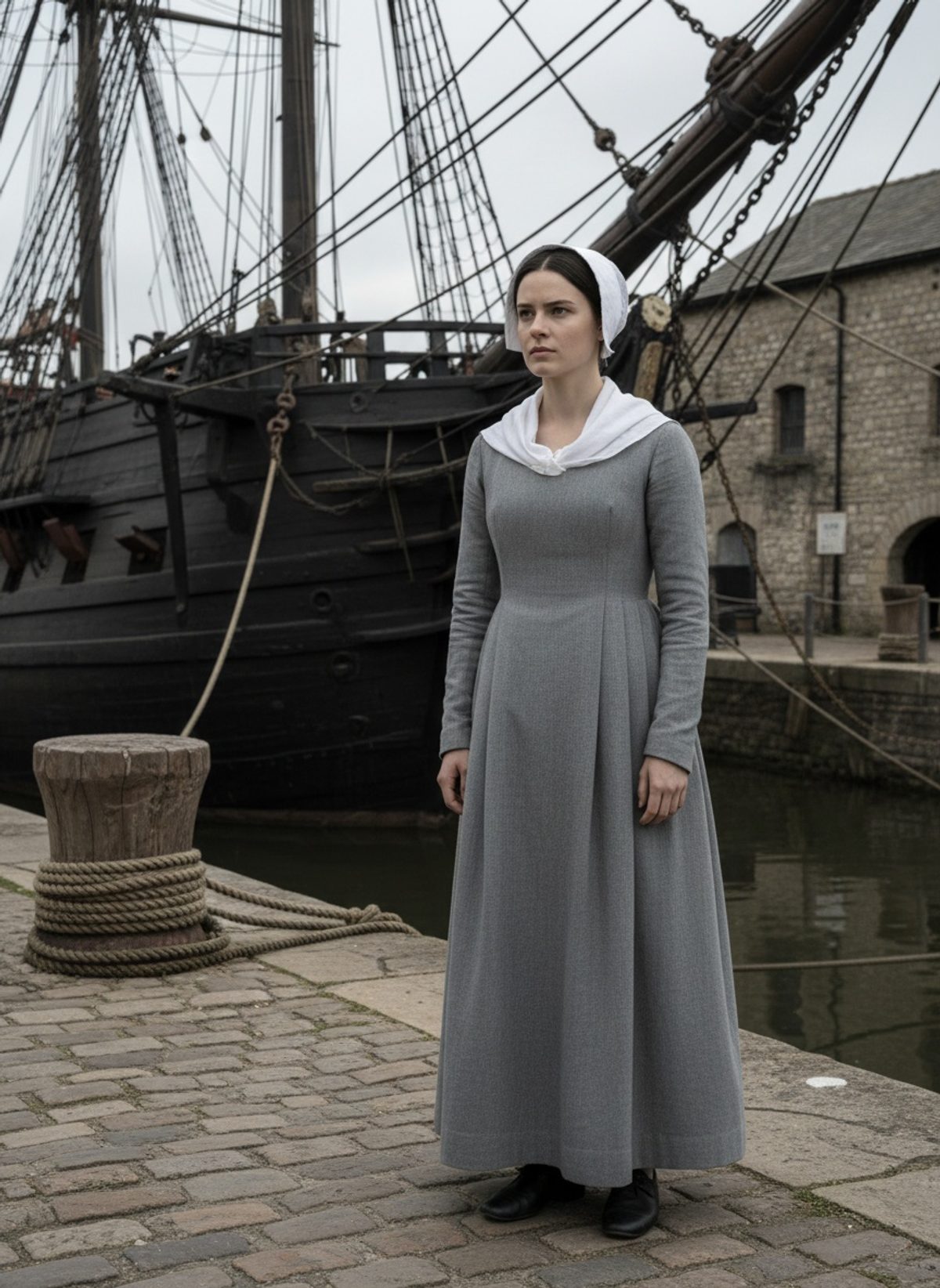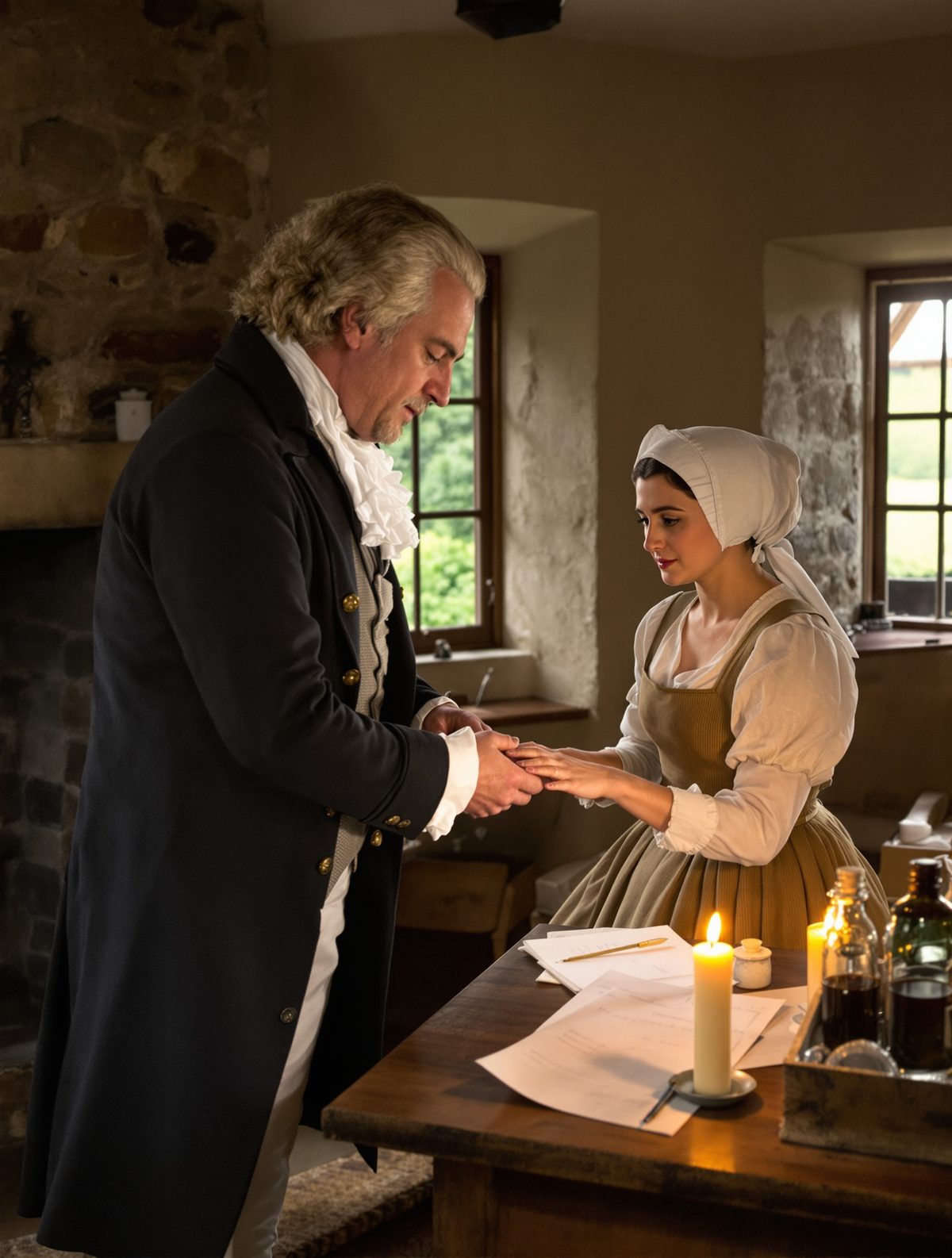
The year was 1796, and London buzzed with the sounds of market stalls, the shouts of street vendors, and the ever-present clatter of carriage wheels over cobblestones. But amidst the cacophony and color of Covent Garden, an unsung heroine stood with an unremarkable blister on her hand and the weight of an extraordinary secret. She was a flower girl named Mary Reilly, and little did she know, her connection to a Gloucestershire milkmaid and a determined country doctor would change the course of medical history forever.
The Cowpox Clue
In the rustic air of Berkeley, Gloucestershire, Dr. Edward Jenner observed something unusual. Sarah Nelmes, a young milkmaid, presented herself with a peculiar sore on her hand. It wasn't the painful, dreaded pustule of smallpox, the scourge of nations, but a much milder affliction: cowpox. Village lore held a whisper of hope — that those with cowpox never succumbed to smallpox. Jenner, a curious physician known for his unconventional approaches, saw potential where others saw only rural superstition.
For years, Jenner devoted himself to the study of cowpox and its mysterious immunity against smallpox. His medical peers dismissed his ideas, bound by the rigid skepticism of the era. But Jenner's theories would find their proving ground not in lofty universities, but in the hands of a flower girl and a set of unlikely circumstances.
The Flower Girl's Fateful Encounter
On a crisp day in April, Mary Reilly, known for her vivid wildflower arrangements, was plagued by news of smallpox's relentless march through London. It seemed as though every breath carried the threat of contagion. Her only comfort lay in her regular trips to buy milk from a cowpox-infected dairy, recently advised by Jenner himself, through word of mouth spreading from Gloucestershire to London.
Read next: The Day a Blind Pauper Boy Sang Before a Queen
A part of Jenner's ongoing studies, Mary was chosen as a passive participant — an everyday city dweller unknowingly part of a life-saving experiment. Her routine, seemingly mundane, was the unlaced stitch in a grand tapestry of medical innovation. As Jenner closely monitored her progress, Mary remained blissfully unaware of the silent revolution coursing through her bloodstream.
Jenner's Controversial Experiment
May 14, 1796, marks a date scarcely remembered by the masses but eternally etched in the chronicle of medical breakthroughs. Jenner made a bold decision to inoculate James Phipps, the son of his gardener, with material taken from Sarah Nelmes's cowpox blister. The calculated risk was monumental; James had never contracted smallpox before. His fate teetered precariously between symptomless wellness and the mercy of a fearsome disease.
The experiment's outcome rippled through the medical community and beyond. James only experienced mild symptoms, and when directly exposed to smallpox weeks later, his body revealed no signs of infection. Jenner's cowpox inoculation method — or vaccination, as he coined it — was a success.
Mary Reilly: An Unwitting Icon
Mary Reilly continued her days in Covent Garden, unaware of how her milkmaids' talks and trips with cowpox had secured her place in history. Covent Garden, synonymous with theatrical flair, held on its stoops an even greater drama: the quiet revelation that immunity could be derived from a less deadly relative of a frightful disease.
It wasn't until decades later that the extent of Mary’s unknowing influence became apparent. As Jenner's findings gained traction, the once-dismissed physician garnered acclaim and validation, crediting not only his own relentless inquiry but also the unwitting contributions of ordinary folk like Mary and Sarah.
Why This Matters Today
As we look back upon this tale with a modern eye, it's important to recognize that the roots of monumental change often lie in the unassuming endeavors of those society overlooks. The discovery that transformed and saved countless lives was not made by a singular, celebrated intellect alone, but rather through the interconnected lives of many — a doctor, a milkmaid, and yes, even a flower girl.
Today, with vaccines at the forefront of public health initiatives worldwide, we pause and remember the unheralded heroes of history. We consider Mary Reilly, who sold her flowers at Covent Garden, unaware that her routine paths of daily life quietly disrupted the terrors of epidemics. Her life, ordinary yet integral, is a poignant reminder that innovation often springs from the most unexpected and seemingly mundane threads of human experience.
Let Mary's story inspire us to embrace the collective potential of everyday actions. In a world where we often search for heroes in capes, remember the lives changed by a blister, a child's immunity, and an ordinary flower girl who unwittingly contributed to one of the greatest medical breakthroughs of all time.