The footfalls of a thousand years of history echo in England’s past, but perhaps the loudest strides belong to a man who never set foot on English soil: Saint George. His was a name chiseled into the very bedrock of English identity, and yet his life played out under a faraway sun, in lands where the Union Jack was yet to be dreamt. George was not English, but when you follow his tale—the rebellion, the courage, the saint beyond the saint—you begin to understand why England claimed him with such fervor. Welcome to the story of Saint George, the Roman soldier who stood alone, and why the English lived by his legend.
The Soldier and the Emperor: A Defiance In Blood
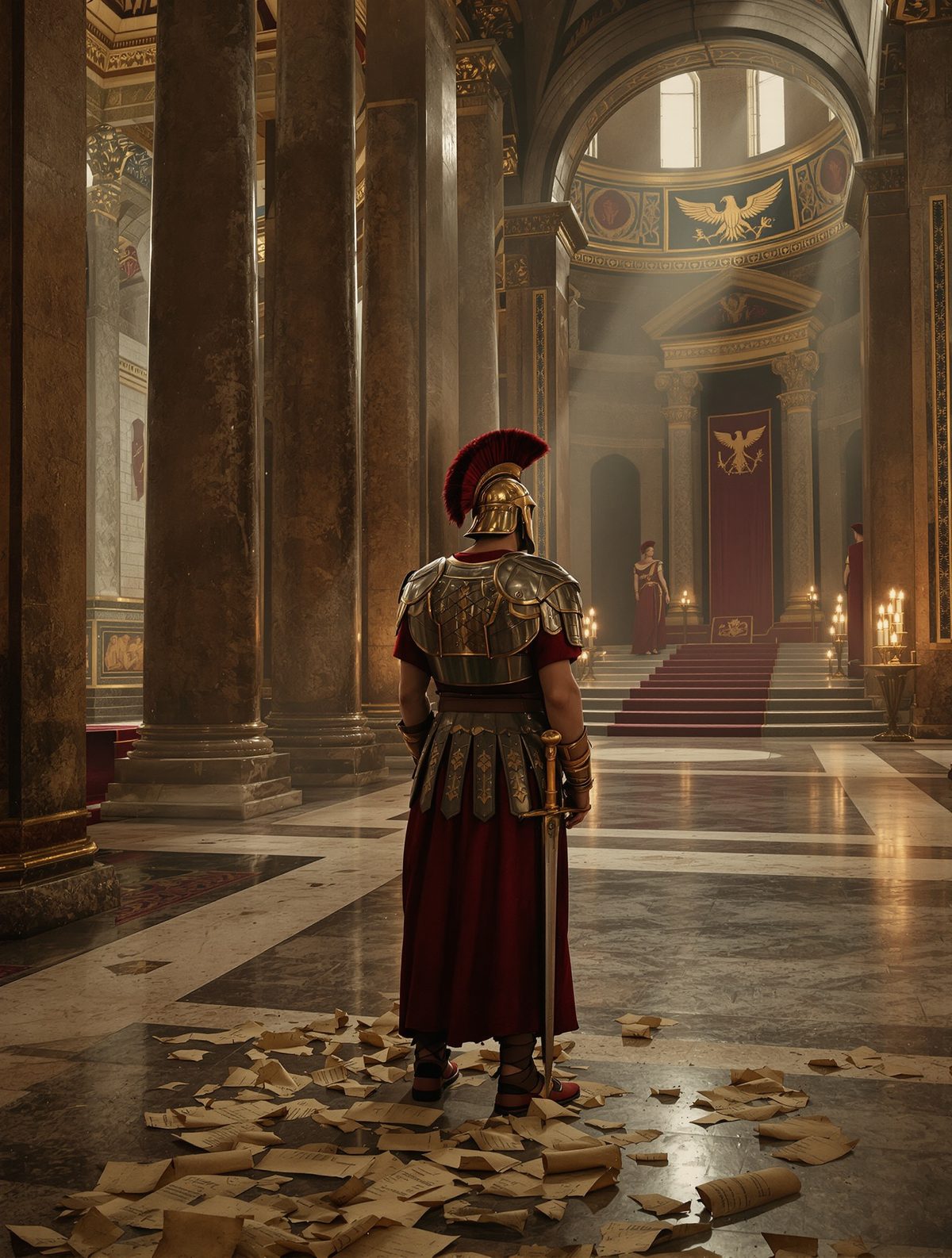
Imagine the year 303 CE. The Roman Empire, a civilization known for its unrelenting control and order, was under the rule of Emperor Diocletian. A man of supreme authority, Diocletian had the power to rip the earth asunder with a mere command. In this thick atmosphere of fear and absolute power strode George, son of a Greek-speaking noble from Cappadocia, what is now modern-day Turkey. Despite traveling paths Euclidean in nature and language, George was driven by a truth as unyielding as his grip on a soldier's sword.
Under Diocletian's empire, Christianity was less a religion and more a scourge. Its followers were persecuted, its symbols destroyed, and yet, amidst this chaos, stood George—a Christian in a Roman soldier’s armor, yet bound to his faith with a chain stronger than steel. Diocletian's edict to suppress Christianity forced George into an impossible confrontation. In a spectacular display of courage, George refused to renounce his beliefs, choosing instead to speak against the emperor's orders. For this defiance, he was arrested and tortured, but he would neither flinch nor falter.
The Legend Forged, The Dragon Born
George's martyrdom did not pass quietly into the annals of obscurity. Within years of his death, stories of his unwavering faith spread like wildfire across the Roman world, but it was in the crucible of folklore that George truly transformed. By the medieval era, George had become more than a martyr; he was a mythic dragon-slayer. This fantastical leap from reality to legend is not as wide as one might think. The dragon, a symbol of chaos and evil, was vanquished by George, the righteous knight—the visual metaphor for his real-world confrontation with tyranny.
Read next: The Day a Queen Walked Into a Rebel Camp Alone
The legend grew in dramatic flourish when artists began to depict Saint George as a chivalrous knight in shining armor, mounted on a noble steed, heroically confronting an enormous dragon. This imagery, though far more mystical than factual, solidified George's status not just as a saint, but as a symbol of courage and defiance. England, with its burgeoning tales of Arthurian knights and chivalry, saw in George a figure that encapsulated the bravery and moral fortitude that the nation aspired to.
Patron Saint of England: A Battle of Icons
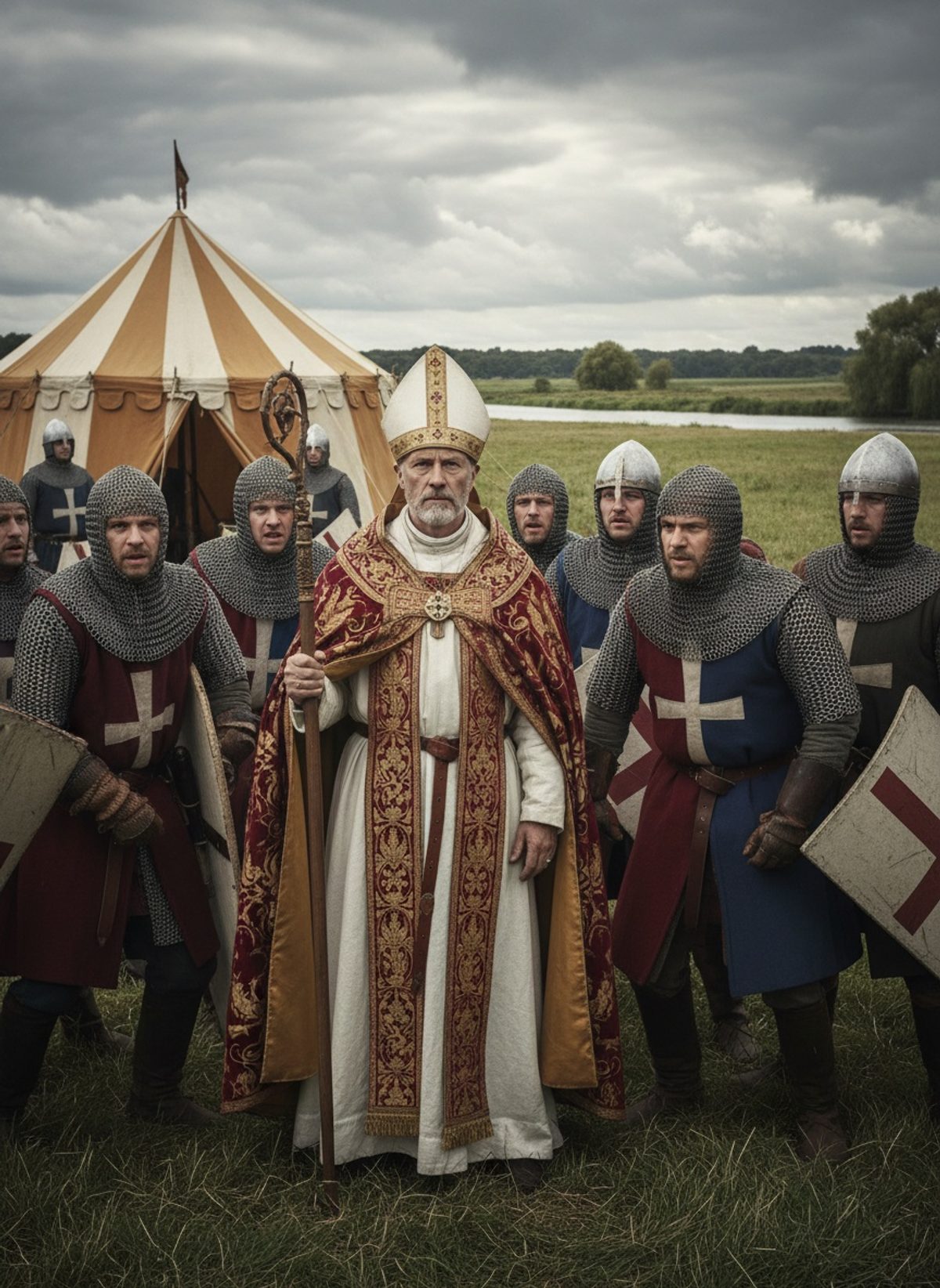
By the High Middle Ages, George's legend had woven itself into the fabric of medieval Europe, and it was during the Crusades that he captured the English heart. Crusaders returned home with tales of George appearing to lead armies into noble battles. But why George, when England had its own Christian martyrs and saints, like Edmund or Edward the Confessor? The answer is less about the canvas of origin and more about the contours of identity.
In 1348, the Georges' red-crossed banner was adopted by King Edward III when he established his Order of the Garter, and Saint George was declared the order's patron. Edward's choice was both symbolic and political. The emblem of George—a character whose legend was synonymous with chivalrous virtue and victory over chaos—was the perfect narrative for a kingdom on the verge of empire. It encapsulated the values of chivalry, valor, and unyielding faith—principles that could unify and inspire a nation emerging as a powerful entity.
The Timeless Symbol: Dragon and Cross
By the 15th century, during the victory at the Battle of Agincourt in 1415, English soldiers shouted "Saint George for England!" This rallying cry was more than a battle hymn; it was the sound of an emerging national consciousness. George had become an icon that transcended time and place. His legend, with its vibrant mix of historical truth and embellished narrative, provided a mythical mirror in which England saw its idealized image—a steadfast refusal to kneel in the face of adversity.
The imagery of George slaying a dragon extends beyond the tangible battlefield, representing an ongoing struggle against tyranny. It is a narrative that resonated through centuries and continues to do so. For an England constantly striving against adversities both internal and external, invoking George was—and still is—a call to unite and resist under his symbolic leadership.
What We Once Were, What We Aspire To Be
Today, the tale of Saint George reminds us that identity is often the tapestry woven from influences beyond our borders. His legend transcends the physical boundaries that once defined him. In adopting George, England didn’t erase his origin; England embraced a universality in George's myth—the audacity to challenge, the courage to stand alone, and the vision to defy the draconian.
George's story remains a powerful reminder of the virtues worth fighting for. In an age where the "dragons" of modernity take different forms—inequality, oppression, and injustice—George stands eternally steadfast. The saint England claimed was cherished not because of where he was born, but for the ideals he represented. This legend marks a narrative arc from ancient Cappadocia to modern England, a relentless beacon urging us to persist—not despite our challenges, but because of them.
In claiming Saint George, England chose not just a saint, but an ethos—a perennial testament that refuses to fade, much like the echoes of England's past that guide the future.