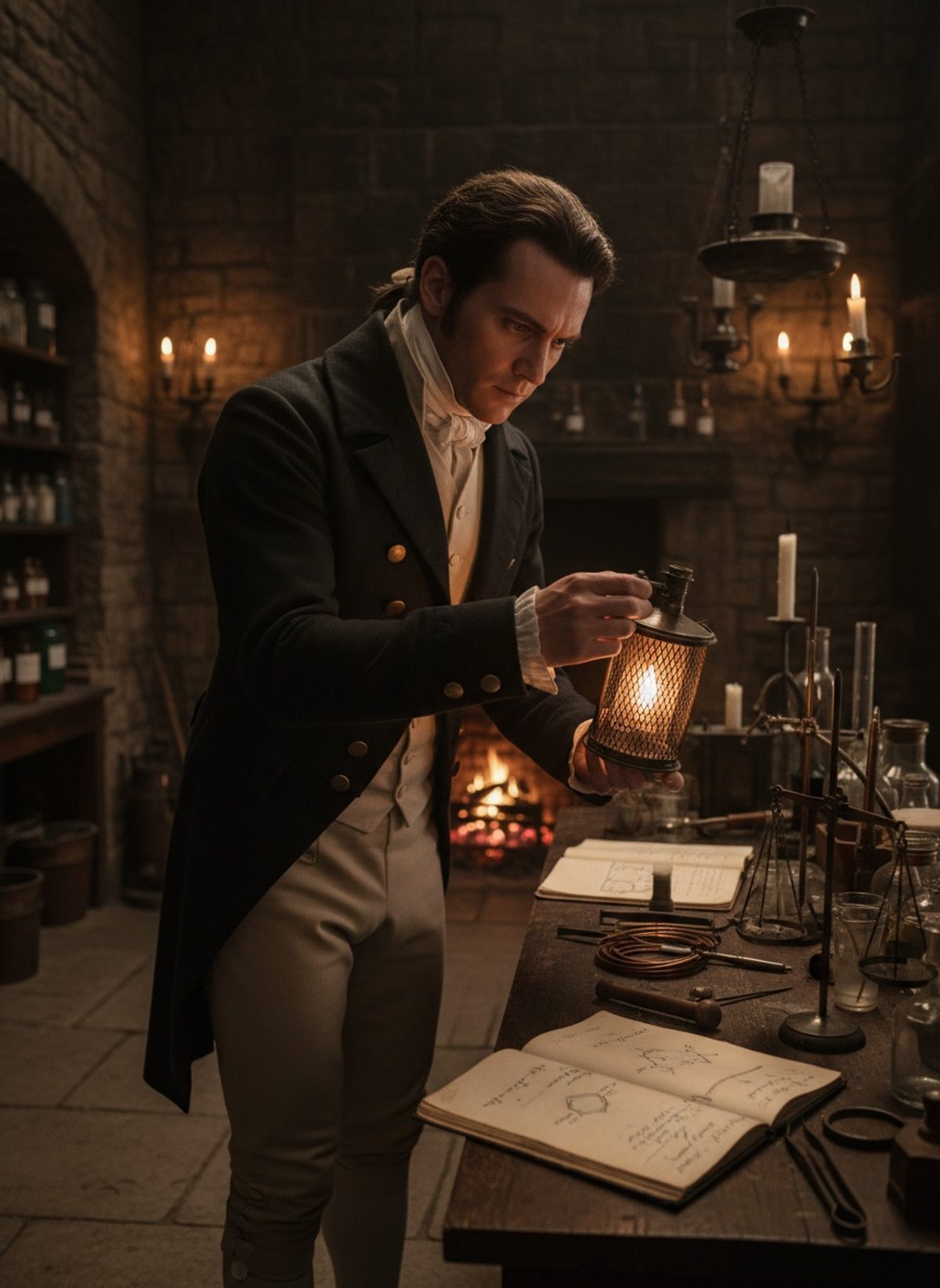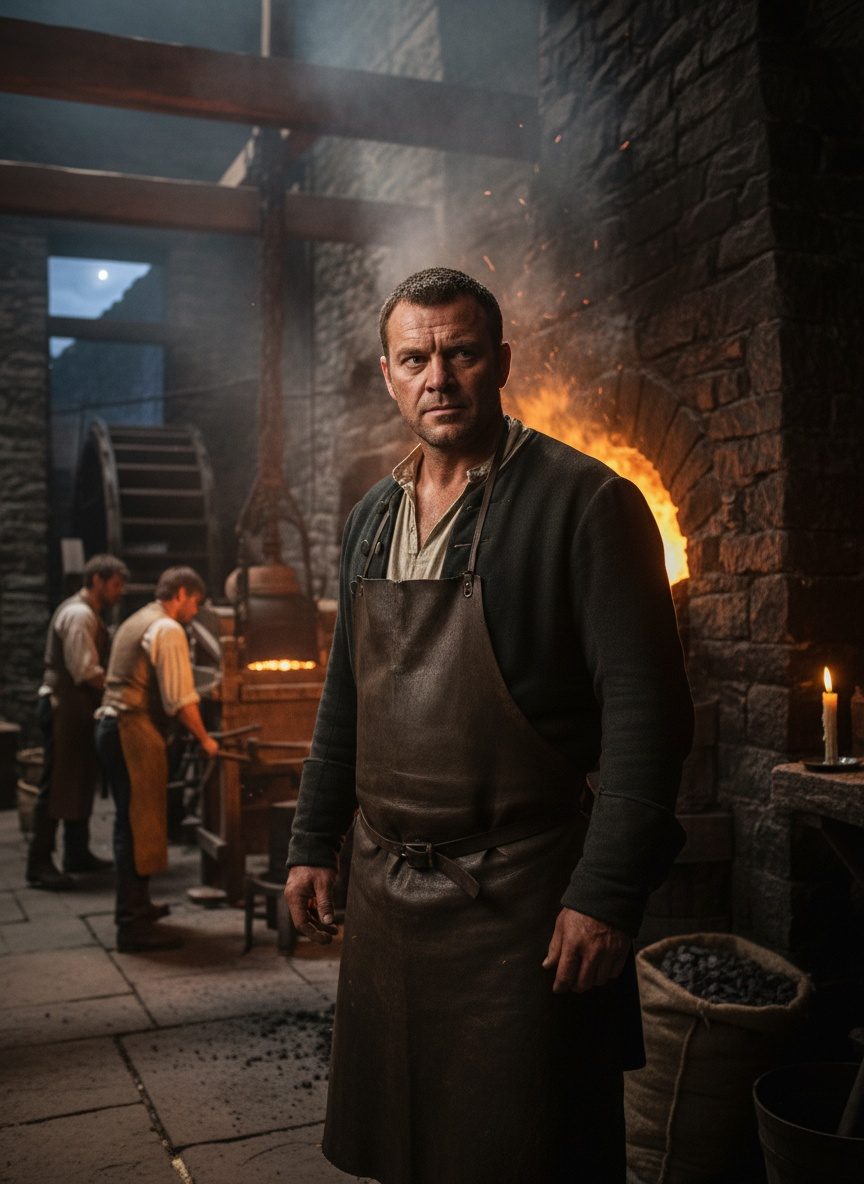
The sharp crackle of the match striking against the flint resonated through the chill air of the Shropshire night. Sparks flew, bursting into a tiny, flickering flame that immediately began its dance upon the kindling nestled within the cold iron maw. Abraham Darby leaned closer, his breath visible in the icy air, his eyes fixed intently on the burgeoning glow. Around him, the silence was both profound and anticipatory; all other workers waited, holding their collective breath, each one a stalwart witness to an act of untold defiance on this Christmas Eve of 1708.
A Deaf Ironmaster's Dream
In the heart of Coalbrookdale, the Shropshire valley was hushed under a thick blanket of winter snow, yet at the foundry, the atmosphere crackled with tension. The diminutive figure of Abraham Darby stood in stark contrast against the massive structure of the blast furnace he had pioneered. A Quaker and an ironmaster, Darby was not a man given to traditional constraints—either by society or by the limits of existing technology. It was this audacious spirit that led him to challenge the centuries-old method of smelting iron with charcoal, determined instead to use coke—a substance similar yet starkly different from the tried and tested.
Darby was not only a visionary; he was also pragmatic. The dense forests needed for charcoal production were rapidly dwindling, their loss stoking the fires of industrial paralysis. Meanwhile, the nascent coal mining industry held vast potential that few dared to exploit for iron production. Many labeled his experiment foolhardy, yet Darby moved ahead, unwavering in his conviction. In the shadows of the valley, the muted clang of hammers and the coarse whispers of workers formed a risky symphony, an ode to exploration and fervent hope.
Undeterred by past failures—his own and others'—Darby trusted in his methodical tweaks to ordinary procedures. The secret was to roast the bituminous coal until it became a solid carbon-rich form ideal for fuel. Tonight, his radical idea faced its ultimate test: would this "coked" coal defy historical skepticism and birth a new era of metalworking efficiency? The air was thick with both chill and anticipation, the moment weighted with the potential to redefine an age.
Read next: The Day a Mill Owner Kept Paying Wages He Could Not Afford
Flames of Innovation
As the kindling caught and the furnace's innards began to warm, an orange glow spread through the hearth's recesses. An anxious group of workers and apprentices, their faces ruddy from the glow and brisk night air, watched. Darby remained still, emphasis for the play of light and shadow upon his features, highlighting his patience and acute focus. Conversations in cautious tones touched upon the enormity of their endeavor—the mingling of minerals, elemental and unyielding, manipulating raw ore into a versatile slate for human enterprise.
Inside the furnace, the coke's characteristic properties began to reveal themselves. The flames, robust and enduring, consumed with a vigor foreign to charcoal. As temperatures rose, minute interactions between the coke and the iron ore unfolded, each molecule telling its own story of transformation. Would the reaction become a rebellion against convention, transforming iron ore into malleable metal as Darby staunchly believed?
The night stretched on, enveloping these pioneers in a cocoon of unrelenting focus. Now and again, the winds sliced through the dale, piercing, yet invigorating as if nature herself was testing the mettle of both men and machinery. Darby, deaf since birth, existed in a world silenced of ambient racket but filled with the vivid impressions of light and shadow, hot and cold, trust and doubt.
As the inaugural hours of Christmas dawned, a climactic crescendo cast its glow across the foundry. Molten iron gushed from the furnace's base—a ribbon of glowing orange liquid more pristine and viscous than anything Darby had ever witnessed. It was iron unlike any before it, born from the alchemy of mind and mineral, a testament to human ingenuity. In that first silvered drop, the potential for railways and skyscrapers, engines and empires, shimmered, effacing doubt with the heat of innovative force.
Shaping an Industrial Age
As the sun ascended on Christmas morning, its rays multiplied by thousands of crystals stitched into the Shropshire landscape, Abraham Darby appreciated the culmination of his gamble. It was groundbreaking not just for its scientific breakthrough but as an egalitarian catalyst, democratizing technology. No longer confined by the limits of depleting forests, the specter of scarcity was dispelled. The introduction of coke not only proved viable but marked a pivotal realignment in iron production.
Where skepticism had stood like a stalwart wall, possibilities now stretched unbounded. Within the hearts of those who witnessed it, a fire was kindled that would ignite a revolutionary change not just in industry but within society itself. The refinement of iron production sowed the seeds for what would bloom into the Industrial Revolution, an era defined by steam engines, mechanized looms, and unprecedented urban growth. Underlying these achievements was the silent yet resonant presence of Darby, whose success was also a social equalizer.
Coke-driven ironmaking spread like wildfire through Europe and beyond, its transformative power transcending the geography where it was born. It was a testament to the resilience of human spirit and the iron-willed bravery of a man who heard only the whisper of progress in the flames. From that day onward, steel's siren song called to new generations of engineers and dreamers, weaving history from the lattice of their ambitions and innovations.
The moment at Coalbrookdale wasn't just a technological achievement; it was a profoundly human triumph. Abraham Darby's success reminds us that barriers to progress often exist only in perception. We are continually challenged to redefine the possible, to find heat in the crucible of desperation and hope, stoking the fires not of furnaces but of humanity itself.