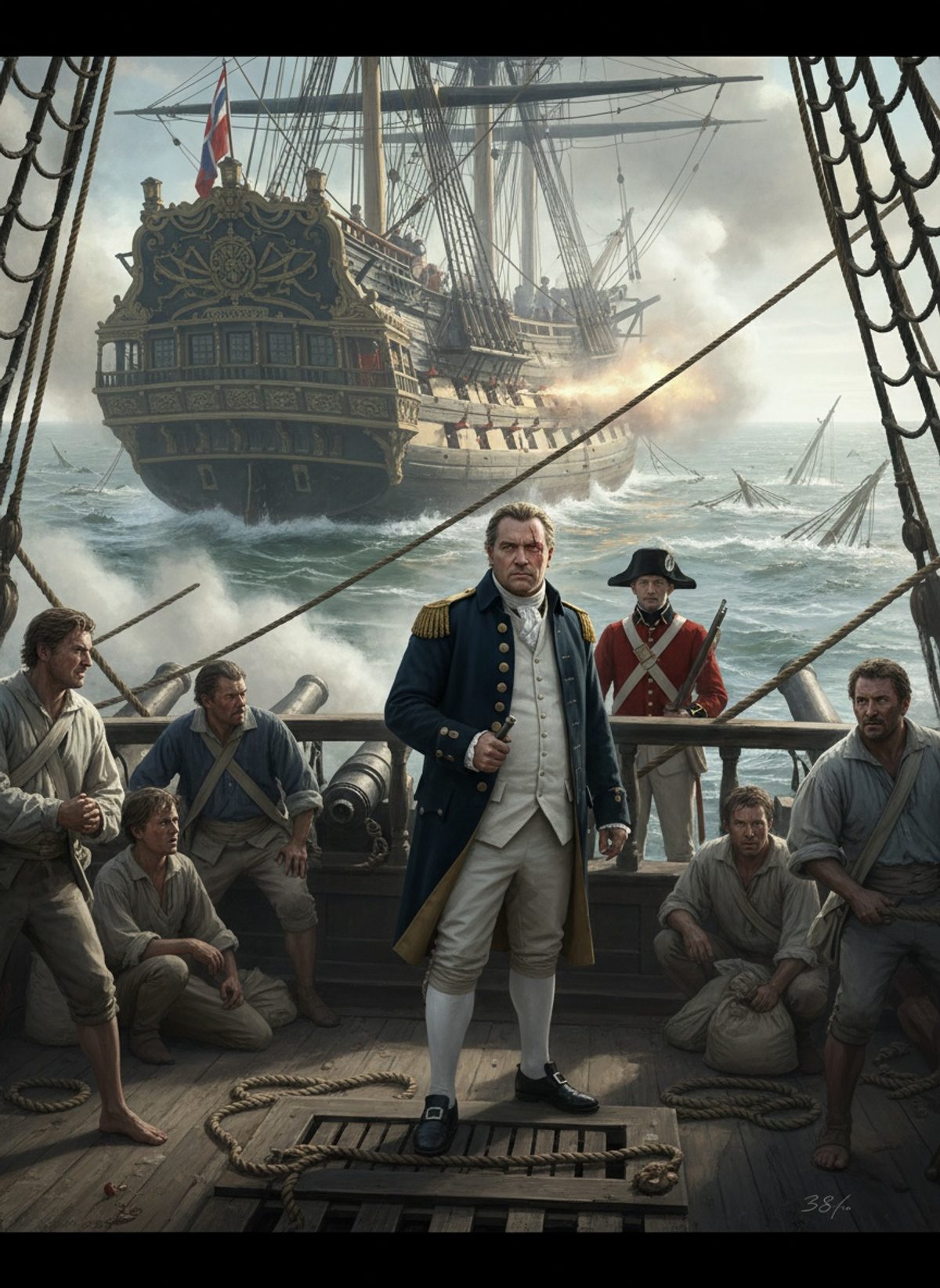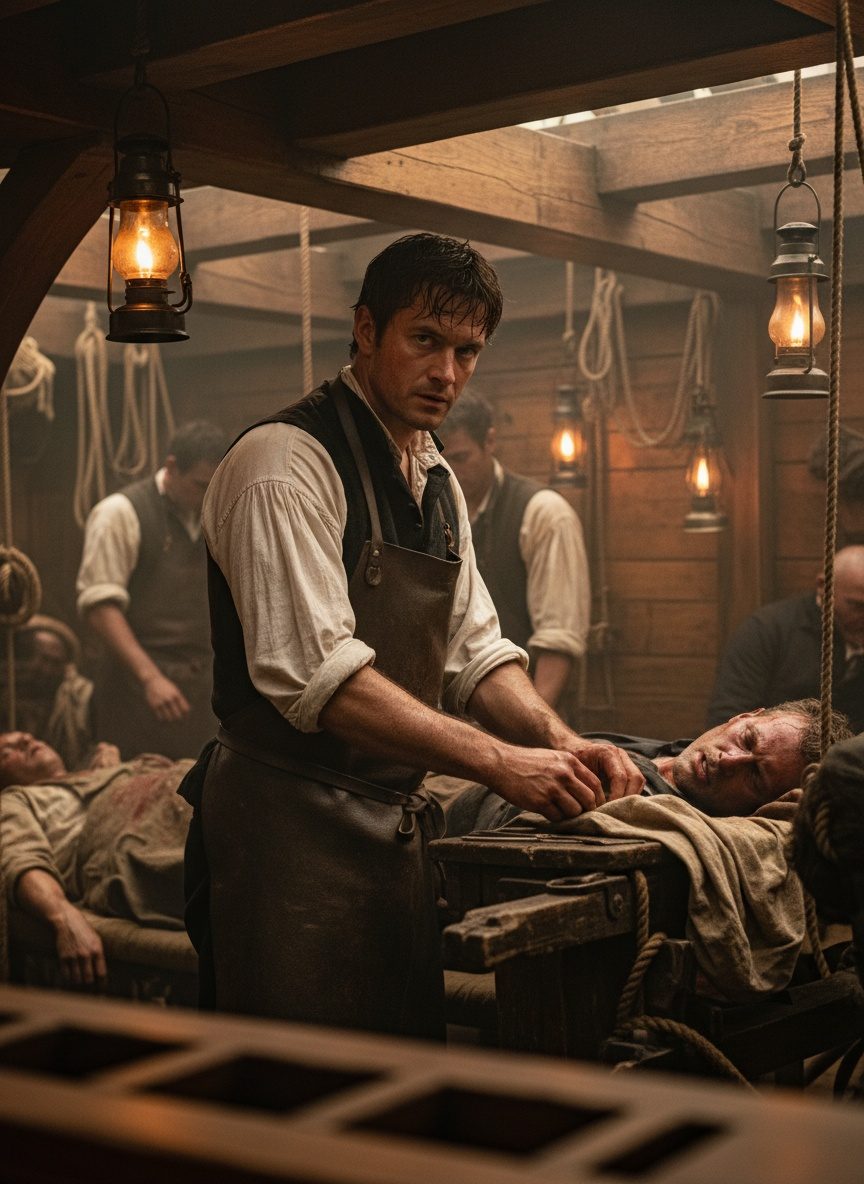
The air below decks was thick with smoke and the acrid tang of gunpowder. The deck pitched sideways beneath his feet, but Surgeon William Beatty barely noticed the chaos as he worked by the dim glow of ship's lanterns. Wounded men came in waves, their cries echoing off the ship's timbers. The cannon fire from HMS Victory above was deafening, a constant reminder of the battle raging on the seas above.
The Theatre Under the Gun Decks
Below the gun decks of HMS Victory, the surgeon's quarters were a scene of controlled panic, a theatre of war in its own right. Beatty, a figure of calm in the storm, wielded his instruments with precision honed from experience, his hands working swiftly even as the ship shuddered with each enemy barrage. It was a battle against the clock—a race to save lives as the bloodied men streamed in, each telling a tale of the ferocity above.
The room was a cacophony of splintering wood, moans of pain, and shouted commands. Beatty's assistants moved with haste, fetching scalpels, tourniquets, and buckets of water, while trying to maintain their balance on the swaying deck. Every wave threatened to send their makeshift operating table crashing, every swell of the sea seemed eager to add to the chaos. Yet amidst the tumult, Beatty maintained his focus, his hands steady as he performed amputations and extracted shrapnel by the meagre light.
Holding Back the Tide of Death
Amidst the multitude of wounded, there came one case that would forever mark the day. A young sailor, whose leg had been shattered by a cannonball, was brought in on a stretcher. There was no time to lose; infection was an ever-present threat in the squalid conditions. Beatty swiftly assessed the damage, the mangled flesh and bone a grim testament to the brutality of war. Without hesitation, he prepared to amputate, his mind a whirl of calculations even as he reassured the sailor with quiet words.
Read next: The Day a British Captain Stood Between Slaves and the Sea
The amputation took place with daunting urgency. Beatty's hands moved with a surety that belied the precarious circumstances. In that cramped, blood-slicked room, his skill was matched only by his resolve. The operation was completed in scant minutes, an exercise of grim efficiency that was both salvation and horror. The sailor lived, saved by the surgeon's expertise, the hope of a future outweighing the loss of a limb.
The Arrival of a Legend
As the battle above roared on, Beatty barely had time to breathe before his next challenge appeared—this time in the form of a man whose presence would elevate this day to historic proportions. Admiral Horatio Nelson, the hero of the seas, was carried down the steps amidst hushed and urgent whispers. Hit by a musket ball, Nelson bore a wound that would decide his fate and enter history.
Nelson, despite his grievous injury, was calm. His eyes met Beatty's with the steady gaze of a commander making peace with his end. Beatty worked tirelessly, though in his heart he knew the prognosis was dire. As the battle's crescendo reached its peak, he spoke with Nelson, offering words that were both necessary and futile in face of the inevitable. Each breath Nelson took was a reminder of time slipping away, of duty fulfilled against all odds.
A Moment Beyond Victory
Victory at Trafalgar would soon be theirs, but in those hushed shadows below deck, another kind of victory unfolded. Beatty’s efforts that day were not just about survival—they were about humanity, about holding fast to decency and hope in the violent heart of war. As Nelson lay dying, he spoke of a legacy, of unfinished dreams for his country’s greatness. His passing was a testament not only to his leadership but to the tireless endeavors of those like Beatty, who fought a different but no less vital battle.
The Battle of Trafalgar marked a turning point in naval history, securing British naval supremacy. Yet, beneath the decks, where the true costs were tallied not in ships but in human lives and suffering, Surgeon William Beatty carved his own mark upon history. His work was done in blood and darkness, yet each life saved was a light against tyranny, a beacon for the wounded, and a silent reminder of the price of victory.