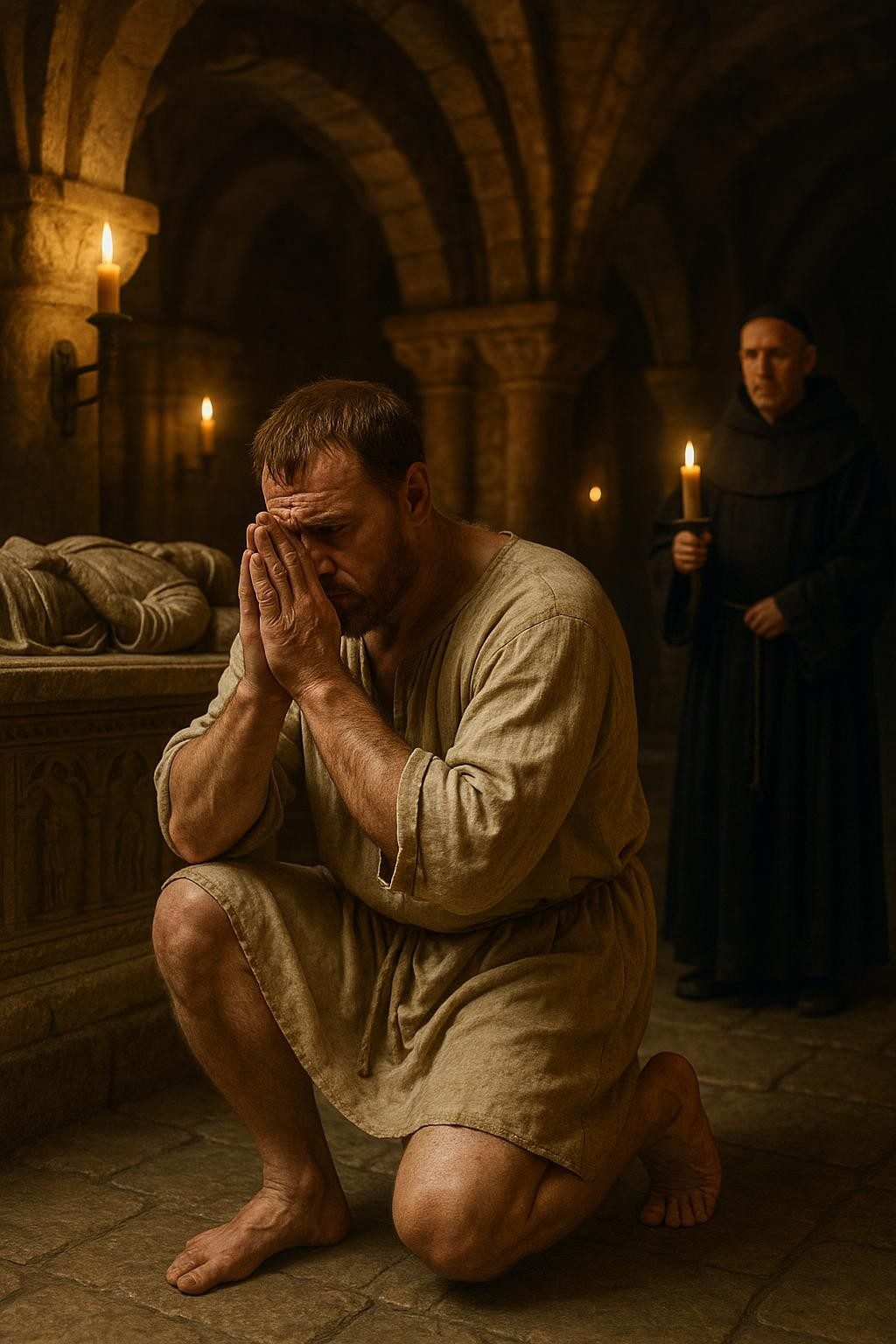
The rain fell in relentless sheets, drenching the earth and turning the cobblestone streets of Canterbury into a river of mud. The sky, heavy and nearly indistinguishable from the dank, grey cathedral stones, seemed to press down upon the city. Yet through this bleak mire, a solitary rider approached, his presence stark and commanding. Stripped to his shirt and barefoot, this man was not just any pilgrim — he was Henry II, the most powerful king in Christendom. Four years had passed since his tempestuous words led to the bloody murder of Thomas Becket. Now, the king came to honor the man he had once called friend, publicly seeking forgiveness in an act of humility so profound it echoes through the ages.
The Shadow of the Crown
Few could have predicted the bright reign of Henry II would darken with such unforeseen tragedy. Born to a powerful lineage, Henry married Eleanor of Aquitaine, expanded his territories, and consolidated royal authority over England and parts of France. As ambitious as he was shrewd, Henry’s reign started with promise, but his relationship with Becket, his confidant-turned-adversary, became a thorn in his throne.
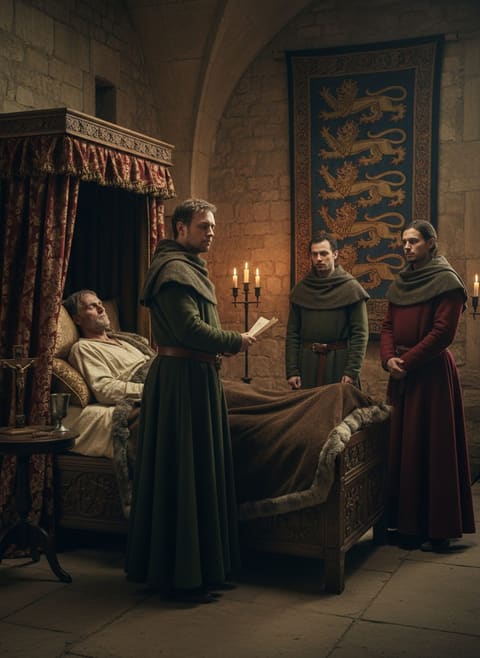
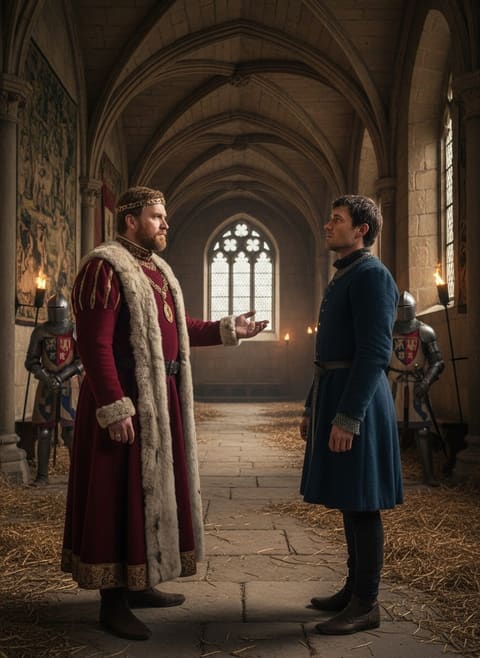
In 1162, anticipations ran high when Henry appointed Becket as Archbishop of Canterbury to extend his control over the church. Initially, Becket was a staunch ally, his convivial nature and sharp mind making him a favored presence at the king’s court. But ecclesiastical power transformed Becket, steering him towards a life of ascetic rigor and fervent defense of clerical privileges. Conflict brewed, fueled by Henry’s frustration over jurisdictional disputes and Becket’s unyielding stance, straining their friendship to the breaking point.
The fatal words, a king’s exasperated exclamation — “Will no one rid me of this turbulent priest?” — were whispered, then carried to knights intoxicated with loyalty. On December 29, 1170, within the sacred walls of Canterbury Cathedral, they felled Becket, spilling holy blood on the altar steps. Becket’s martyrdom sent shockwaves across Europe, turning him into a saintly beacon and leaving Henry shadowed by guilt and political peril.
Read next: The Day a Young Prince Knelt and Refused a Crown
Penance for a Broken King
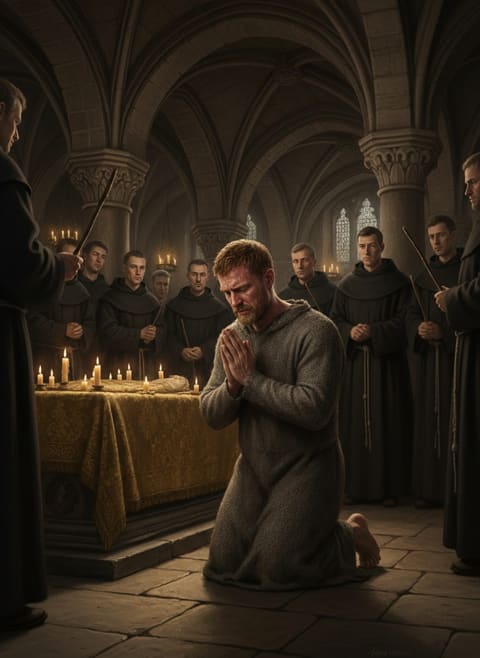
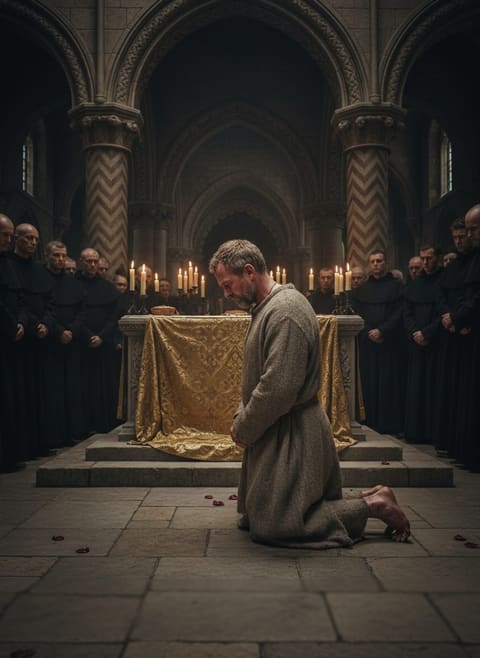
As the rain-soaked streets welcomed him that August day in 1174, Henry stepped into the looming silhouette of Canterbury Cathedral. The air within was hushed and scented with incense and candle wax, each echoing footfall a reminder of the sanctified space he entered. Stripped of regalia, the monarch was merely a mortal before his maker, a penitent at the feet of his once-friend’s tomb.
The monks of Canterbury, themselves witnesses to the violent upheaval in their midst, awaited the solemn presence of a king burdened by remorse. Henry fell to his knees, feeling the chill of the crypt seep through the fabric of his penitential shirt. The sound of the scourge — symbolic, ritualistic — swished in rhythm, each lash echoing both the absolution sought and the penance accepted.
His acts of contrition were manifold. Henry spent the night in vigil at Becket’s tomb, immersed in prayer and reflection under the flickering candlelight. The flogging, an arcane tradition reflecting medieval beliefs in personal penance and public confession, was a symphony of submission. Through it, the king sought spiritual solace and hoped to silence specters of insurgency born from his former friend’s sanctified martyrdom.
The Weight of Redemption
Henry’s public penance was not a mere ritual; it played a critical role in restoring his political fortitude. Outside Canterbury, his kingdom simmered with rebellion. His sons, spurred by perceived injustices and manipulated by foreign interests, eyed his throne with ambition. Eleanor, once his queen and partner in power, was now a prisoner due to her own machinations against him. The act was meant not only for divine clemency but also to pacify turbulent baronies and reassert his moral authority.
Read next: The Day a Queen Rode Alone Into a Mutinous Army
Though immediate unrest confronted his legacy, dealings with Becket’s sainthood attuned to Henry's advantage. Pilgrims flocked to Canterbury, their ardent devotion mingling with the divine mystique surrounding Becket’s shrine. This newfound pious zeal created a compelling counter-narrative, where Henry's humble act of penance seamlessly transitioned to political savvy and restored Kirwan cooperation. He had mended England’s rupture with the Church, not through edicts or might, but through profound personal gesture.
Bearing the Folly of Kings
In a world where regal might dictated terms and authority reigned without question, Henry II’s act of kneeling at his enemy’s tomb stands as an extraordinary testament of humility and humanity. The ripples of his knelt penance on August 1174 extend beyond the boundaries of time and politics. It was a public recognition of human frailty and the indomitable need for redemption.
The story of Henry and Becket transcends its historical context, speaking to the age-old struggle between power and piety, the thorny path from friendship to enmity, and the insensible costs associated with unfettered authority. Such tales serve as a sobering reminder to cherish humanity above hubris. Our modern quest for legacy and leadership still echoes with this medieval lesson: it is not the infallibility of kings that endures but their capacity to acknowledge and bear their own follies.