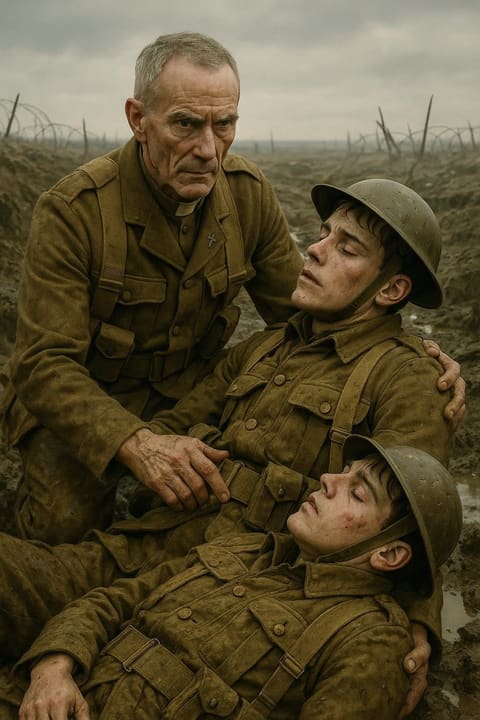
He was twenty-one years old. His world, and the future he imagined, lay in the mud of the Somme.
The Prelude to Disaster
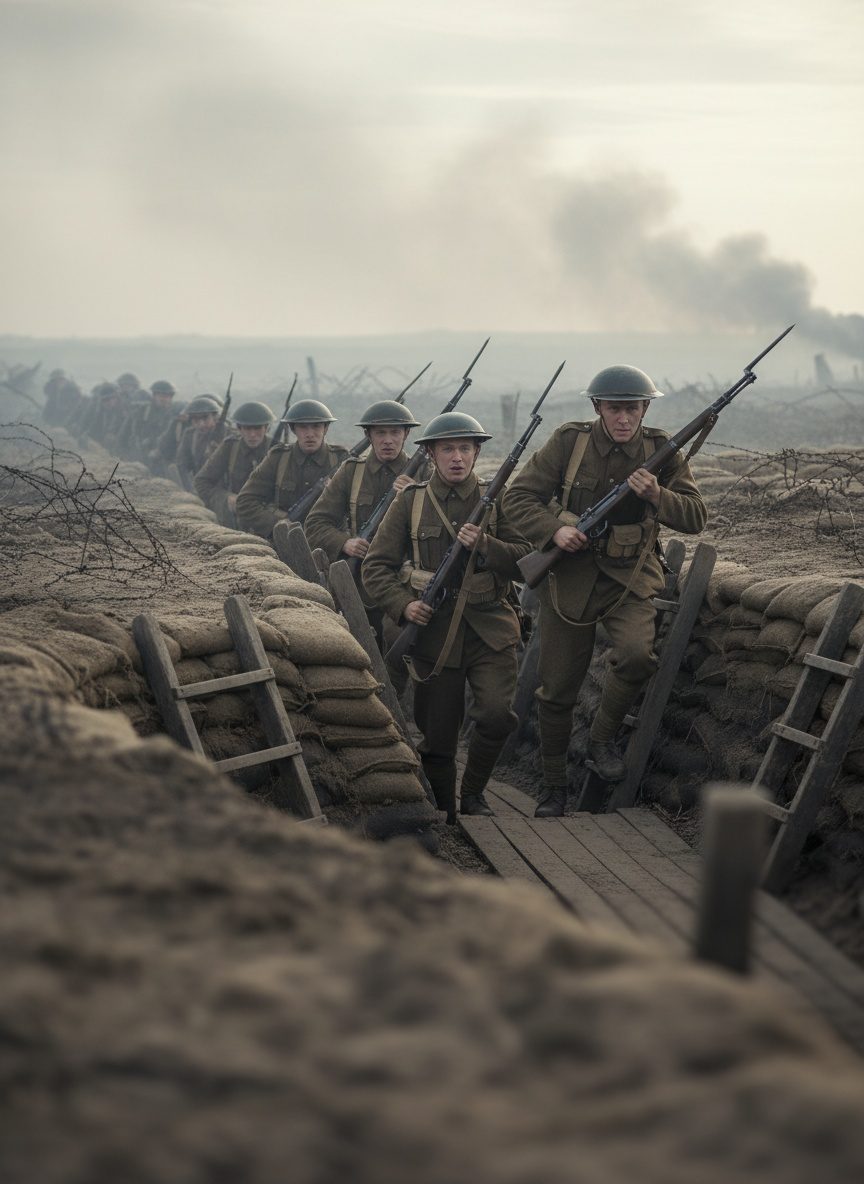
The summer of 1916 was supposed to mark a turning point in a war that had, by then, already devoured nearly two years of European youth and hope. On the morning of July 1st, the dawn was marked not by the peaceful chorus of birds, but by the frantic shuffling of 100,000 young men preparing to climb out of the safety—or as much safety as a trench could offer—into a realm defined by uncertainty, fear, and death. Across a line spanning twenty miles along the River Somme, whistles cut through the morning air, signifying a collective surge forward, a meticulously planned offensive designed to shatter enemy defenses in mere hours.
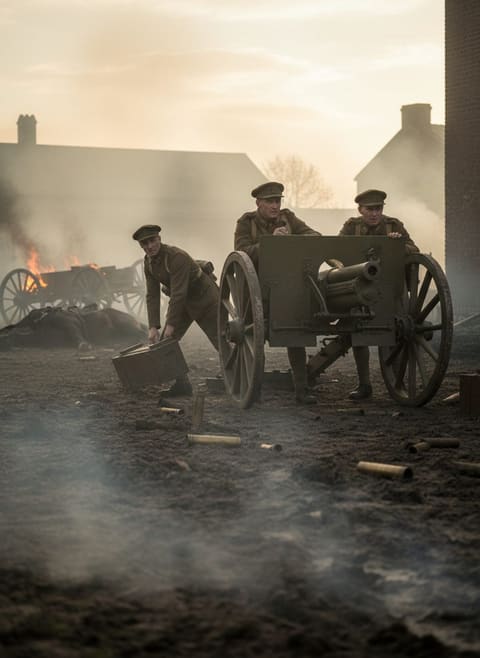
The plan was ambitious, even audacious. For a week prior, British artillery had pounded German lines—1.7 million shells sent hurtling through the skies in the belief that few German soldiers could survive such a barrage. This was to be the grand orchestration of modern warfare's potential for swift, decisive victory.
The Reality of War
What awaited the British soldiers was a grotesque juxtaposition to the optimism of their pre-battle briefings. As the troops began their ascent from the trenches at 7:30 AM, they encountered not a weakened enemy, but a German force entirely prepared for the assault. The preliminary bombardment had failed to destroy deep-set German emplacements. Instead of yielding, the German forces emerged from their dugouts almost unscathed, with machine guns and artillery at the ready.
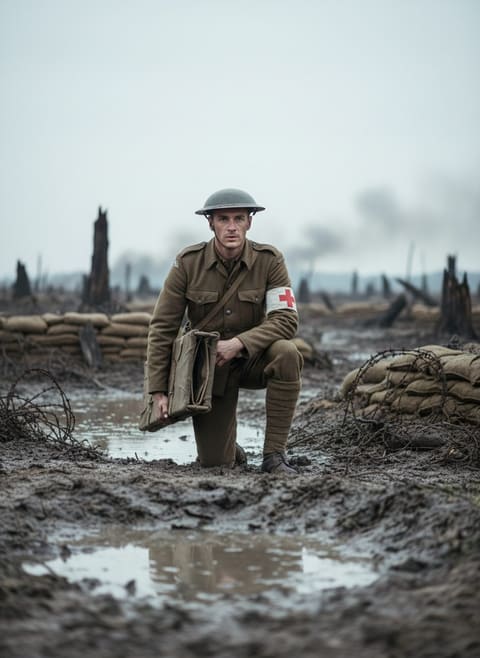
Read next: The Day a British Stretcher-Bearer Refused an Order to Save Lives
The sight of tens of thousands of men advancing, as their officers had instructed, in straight lines across No Man's Land is near unimaginable today. Yet, it was conceived as strategy, a method to organize the masses and prevent chaotic retreats. The strategic vision missed the mark; the value placed on order overshadowed the need for agility and adaptability. As soldiers fell in droves to merciless machine-gun fire, the plans unravelled.
By midday, the tragic scope of the day's operations began revealing itself. Inexperienced soldiers thrust into the chaos found themselves confronting the horrors of modern warfare for the first time, while seasoned veterans faced the grim realization that survival was a matter of sheer luck. Men who had dreamt of a grand offensive suddenly understood they were part of a terrible miscalculation.
The Individual Tales Amidst the Madness
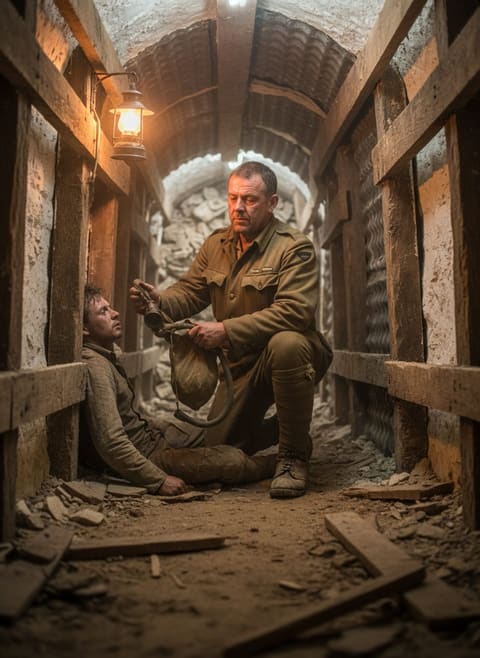
Amid the grand narrative of strategy and numbers, personal stories threaded across the battlefield like whispered secrets in a deafening storm. There was the tale of the unnamed stretcher bearer who, despite the hail of gunfire, refused to abandon his wounded brothers, tirelessly dragging them back to safety at great personal peril. Legends tell of a soldier who, separated from his unit, played dead for hours amidst the corpses of friends and foes alike, cunning his only survival shield.
Such stories, though minor threads in the tapestry of the battle, reveal a human resilience that defies comprehension. For all their terror, the trenches were also scenes of unexpected gallantry and fleeting moments of humanity. Shared rations, whispered conversations, and the occasional shared cigarette created bonds that bullets would often sever but never entirely obliterate.
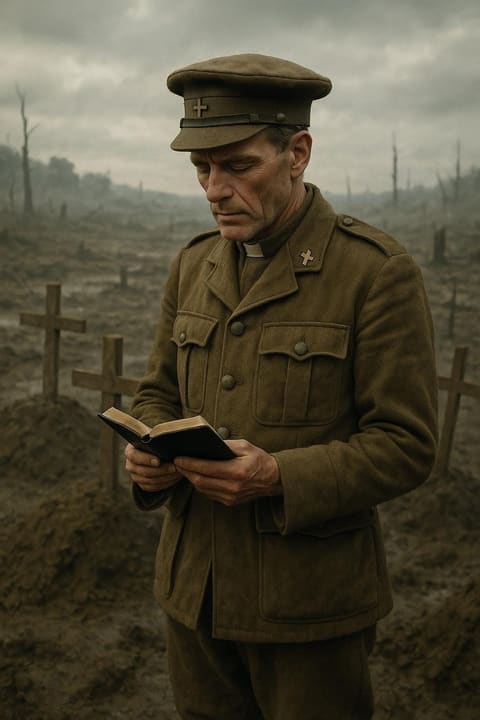
Read next: The Day a Army Chaplain Gave His Coat to a Dying Stranger
Yet, for many of the men, the day would end in silence that no comrades' words could fill. The evening count revealed the grim price paid within the span of daylight: 19,240 British sons lost, their dreams buried in the mud of Picardy. It remains a number that echoes through history, as much a testament to human bravado as to the failings of human foresight.
The Legacy of a Sombre Day
By the time dim dusk settled reluctantly over the landscape, the Battle of the Somme had rewritten the vocabulary of warfare. The notion of honor and glory, once so eagerly championed alongside military endeavors, could never again be held as unblemished truths. The sun setting on July 1st, 1916, cloaked not just a battlefield, but a nation in mourning—a mourning marked by a somber realization that war’s brutal truths often escape the confines of strategic blueprints.
The losses of that single day continue to cast long shadows over military history. The very scale of human cost challenges modern readers to reflect on the interplay between the promise of technological prowess and the reality of human folly. As we cast our gaze back a century, the resonance of that day urges us to cherish peace, question authority, and remember those whose lives were so oft reduced to mere statistics.