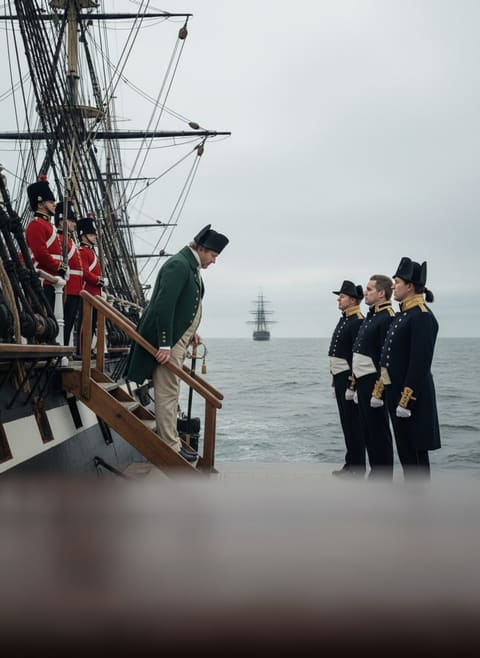
He was asked to leave several times. Horatio Nelson refused every single one. The admiral who would stand firm against the tides of battle demanded the same bravery from himself as he did from his men.
Duty Bound Amidst the Roar of Guns
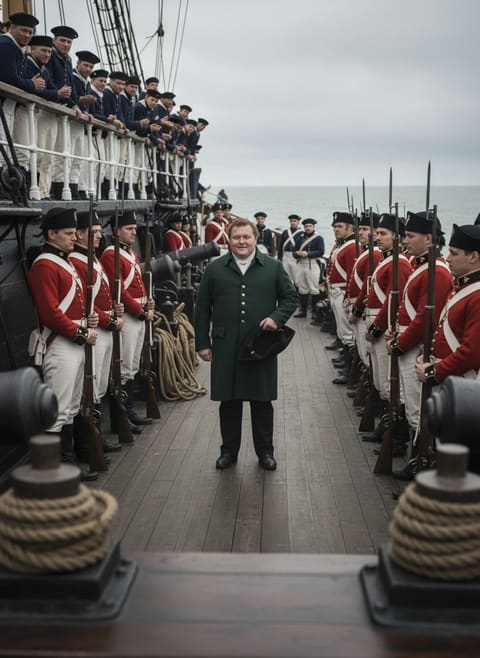
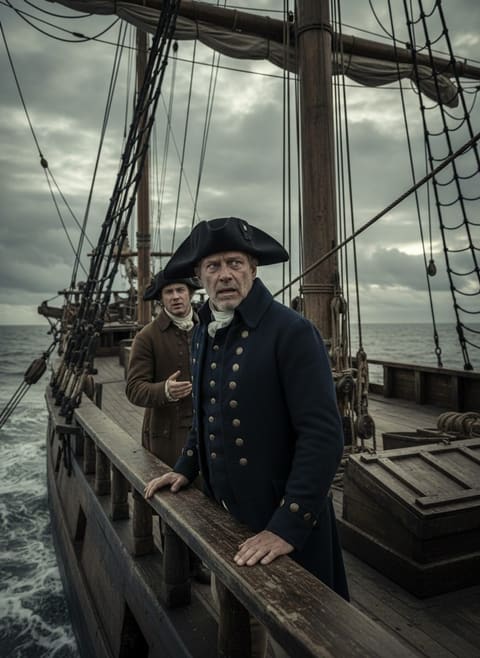
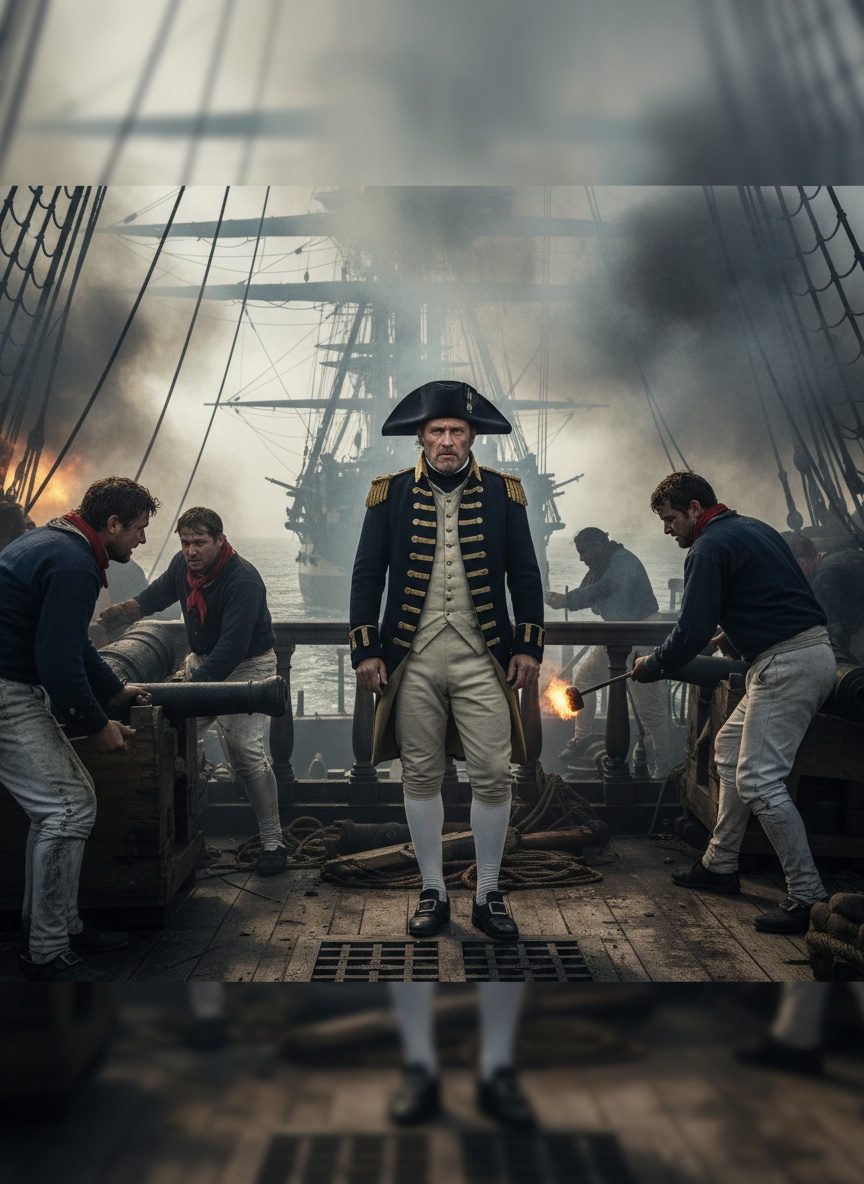
On the morning of October 21, 1805, the weather was clear, a deceiving calm nesting over the Atlantic, as Horatio Nelson prepared to change the course of history aboard HMS Victory. The British Royal Navy had long relied on its legendary commander's strategy and daring. With a combined French and Spanish fleet nearly twice the size of his own bearing down, Nelson faced the challenge without flinch or falter. His strategy was bold and unconventional — a direct assault into the enemy's line, aiming to break their formation and sow chaos. As the commander of the fleet, Nelson donned his full uniform adorned with shining medals, seemingly inviting the enemy's mark. In this, Nelson defied not only the potential lethality of the battle itself but also the sensibilities of his own officers who urged him to remove such blatant symbols of his rank and importance. Yet, duty for him was non-negotiable. He planned not for retreat, for it never entered his mind.
The sight of the 27 British ships, sails unfurled and flags waving boldly against the sky as they bore down on the enemy, was enough to stir the heart of any man. Yet, for Nelson, the roar and thunder of cannon fire were secondary to the quiet confidence he held. This was a world where courage found its truest test not in flamboyant posturing, but in the silent resolve of a commander, standing amidst the chaos, inseparable from the fate he carved for his nation.
The Unyielding Heart
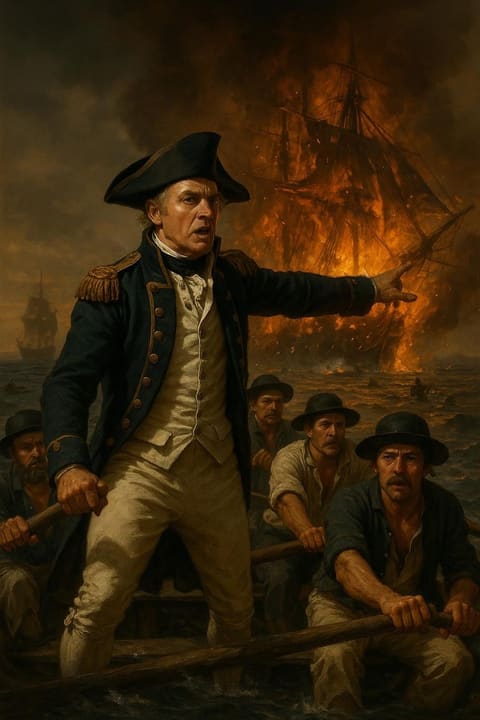
As the battle ignited with fury, the air was torn by the cacophony of cannon balls and the cries of men. Nelson's strategy was working; the enemy's line was splintered, their ships were thrown into disorder. HMS Victory cut directly into the fray, leading from the front. It was a literal gamble of life and death upon which Britain's future rested. But for Nelson, death held no fear. His heart was steadfast in purpose. He believed firmly in authority by example, and there he stood, exposed upon the quarterdeck, while the battle below played out as a brutal symphony of destruction. Grenades punctured the decks, splintering wood and ending lives in heartbeats. Smoke hung over the sea like a curtain — thick, obscuring, but also telling a story of defiance in how it clung to the air.
It was from the rigging of the French ship Redoubtable that a marksman aimed with deadly precision. The single shot that struck Nelson carried with it an unfortunate certainty. The ball cut through his shoulder, tore through his lung, and lodged in his spine. He fell, acknowledging the wound, yet never relinquishing command. His officers gathered in disbelief, urging him to receive medical attention far below. Yet, he resisted almost to the end, embodying the spirit of unwavering duty that would echo through history. His directions, his composure, remained until his final breath.
Read next: The Day a One-Eyed Admiral Sailed Into the Line of Fire
The Legacy of Defiance
The battle raged on with Britain's fleet tackling the greater adversary — a testament not just to Nelson's tactical genius, but to the indomitable spirit he instilled in his men. As news of the victory and his passing spread, the world came to understand a new measure of heroism: one that does not flinch from danger, but rather stands defiantly amidst it. Victory at Trafalgar shattered Napoleon’s dreams of invading Britain and fortified the will of an island nation determined to remain unyielded.
In those hours, on the deck of HMS Victory, Horatio Nelson hadn’t merely commanded a fleet, he had inspired a legacy. The guns may have fallen silent, and the seas returned to their unyielding rest, but the implications of his sacrifice reverberated far beyond the horizon. Nelson’s death was not just an end — it was a beginning of enduring narrative, a story that would be whispered in classrooms, quoted in leadership manuals, and woven into the fabric of naval lore the world over. It confronted each person with an unavoidable truth: true leadership isn’t about the rank or the medals gleaming under the sun. It’s about standing for one’s beliefs, courageously, when every gun in the world is aimed at you.