Kingly power echoes through history. But one summer day in 1174, all the trappings of power were discarded at the feet of a saint.
The Shadow of a Martyr
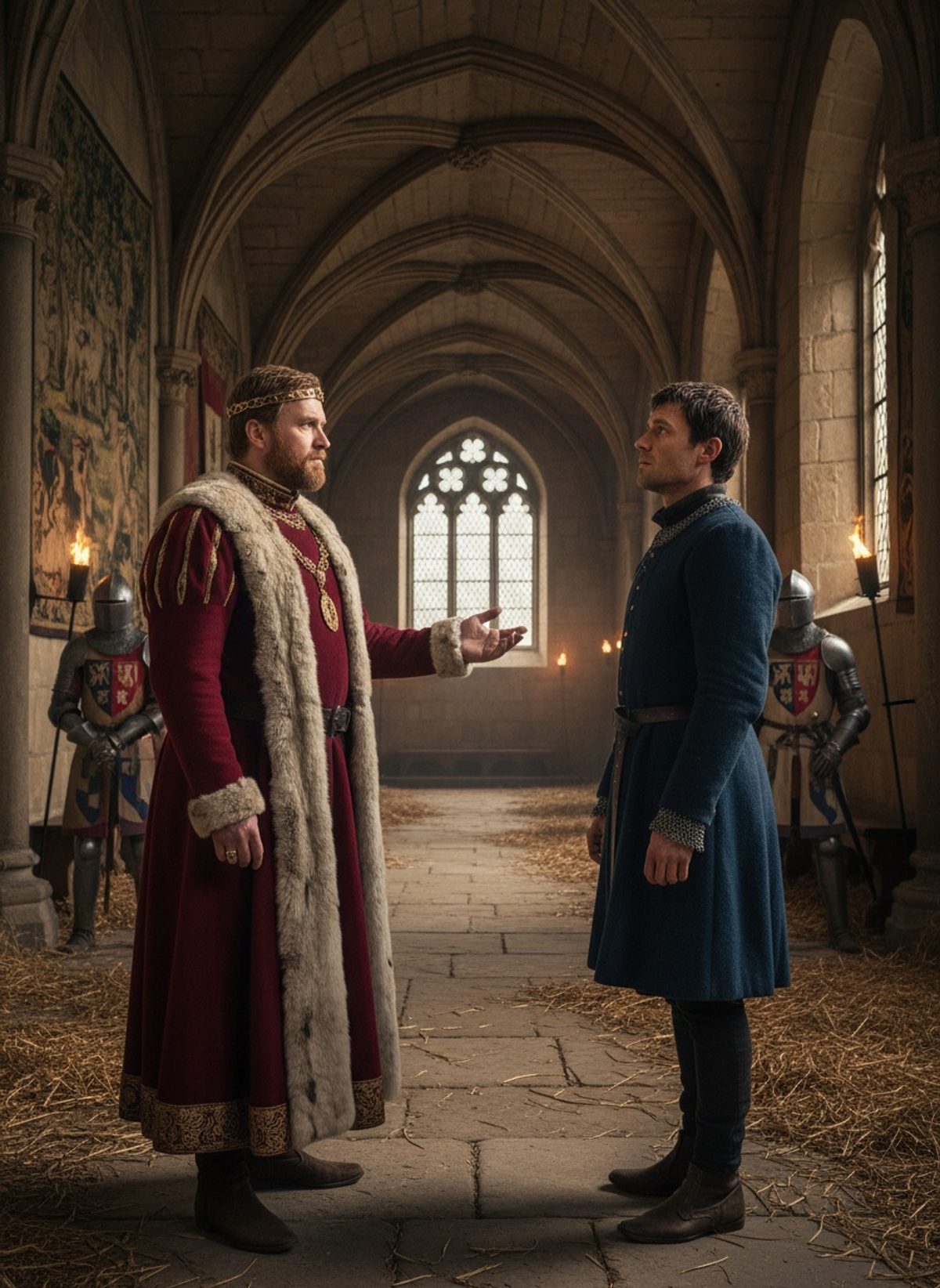
King Henry II, a lion among the Plantagenets, had once ruled an empire stretching from the Scottish borders to the Pyrenees. Yet his heart and mind were forever shadowed by the towering figure of his former friend and adversary, Thomas Becket. As Archbishop of Canterbury, Becket's steadfastness had threatened Henry's authority, culminating in the king's fateful outburst: "Will no one rid me of this turbulent priest?" Those words, as simple as they were impulsive, unleashed a tide of violence—a quartet of knights, loyal yet blind, cut Becket down within Canterbury Cathedral, and thus the martyrdom of Thomas Becket was born.
The murder sent ripples of horror through Christendom. Becket's blood—literally and metaphorically—stained Henry's reign. Devout believers whispered among themselves about curses and divine retribution. Henry might have controlled lands and armies, but he could not control the tide of sainthood that swept over Becket's name. The murdered archbishop became a symbol of resistance against tyranny—a symbol Henry would be forced to confront.
Penitence on Bare Feet
On a July day in 1174, King Henry II undertook a pilgrimage like no other. Stripped of fineries, his once-splendid feet kissed the cobblestones of Canterbury's streets. Each step he took was a testament, a demonstration of humility before the heavens. The urban stones cut into his vulnerable skin, marking a physical manifestation of his penance. Sackcloth replaced his regal garb—thin, rough, a reminder of the monkish humility he sought to emulate.
Read next: The Day a King Knelt to Wash a Beggar's Feet
His procession was not a solitary march. Eighty monks from Canterbury Cathedral accompanied him, their eyes fixed upon him, both inquisitive and stern. They bore witness to a king's sorrow and submission, an unheard-of spectacle that sent silent shockwaves through the city. Those who knew Henry as a figure of defiance and vigor now saw a man nearly broken under the weight of his own remorse.
The Whips that Sang Repentance
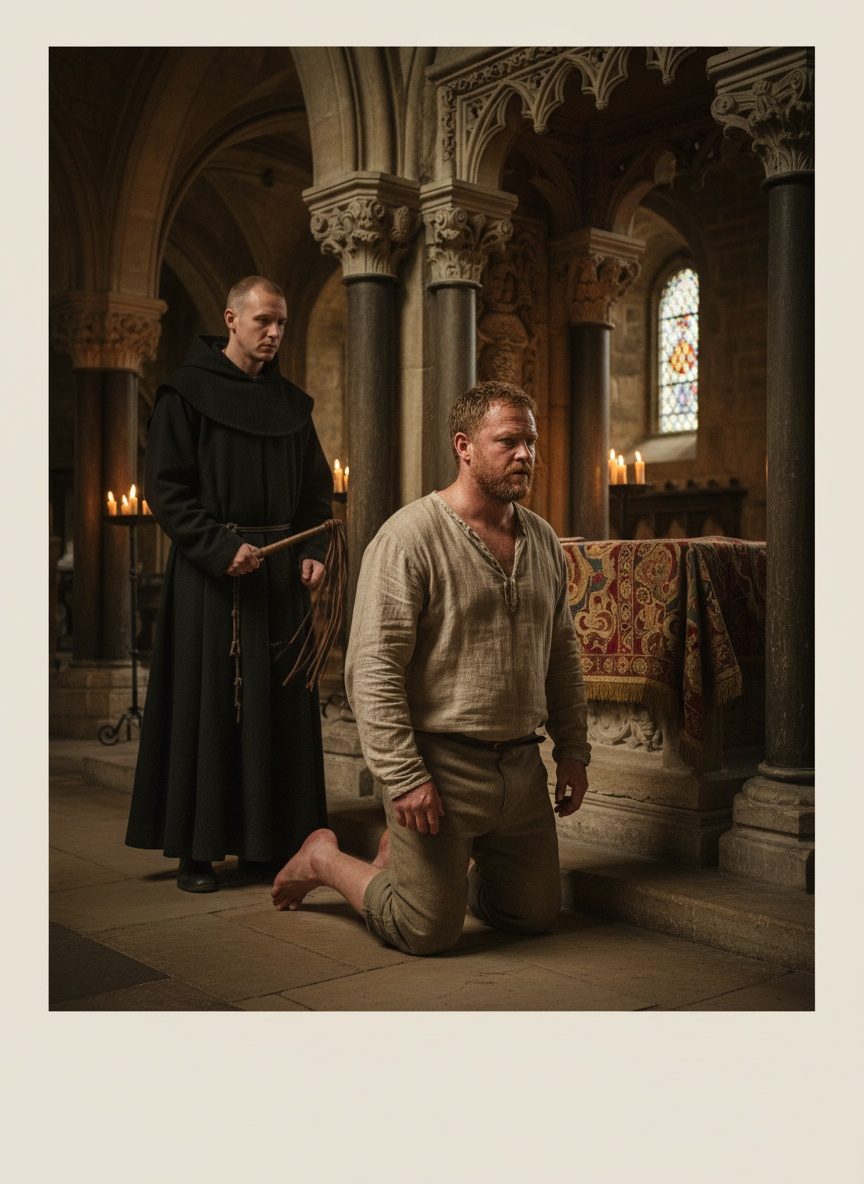
The very heart of this solemn voyage was to reach Becket's tomb, nestled in the sacred confines of Canterbury Cathedral. Once there, the king did the unthinkable—he knelt. The silence of the sacred space was disturbed only by the faint echoes of whispered prayers and the labored breathing of the monarch. It was here that Henry bared his back to the world, seeking absolution through pain.
Eighty monks held the responsibility for administering the floggings. The hissing of whips sliced through the air, each strike a purgation of the past transgressions, a tip of the scale away from the hellish fate Henry feared. His skin bore the lashings with stoicism, each welt a reflection of his determined quest for reconciliation. Witnesses would recount later how, through it all, the king did not flinch.
It was a penance that spoke both to God and man. The message was clear: the king had bowed not only to the spirit of Becket but to the greater moral order he had disrupted. It was a profound act of humility, rare in its execution and precedence.
The Aftermath's Quiet Power
Henry's penance was more than just a single day of contrition. Word of his humility spread rapidly, altering perceptions and pacifying his embattled legacy, at least in part. Though it could not resurrect Becket or undo the knights' violence, it soft-pedaled the discontent, laying a soothing balm over his strained relationship with the church and his subjects.
In the wake of these events, Henry found himself in a position to mend his ties with the papacy and reassess his tight grip on ecclesiastical affairs. The church, newly vindicated by Henry's public act of contrition, would continue to play its formidable role in shaping the social and political landscapes of medieval England.
A Lesson Etched in Time
More than eight centuries later, the image of a king humbled in penitential pilgrimage endures. Henry II's journey through Canterbury remains a vivid reminder that even the most powerful must sometimes kneel. It was a symbolic act that pierced through the layers of temporal authority, touching on a truth more profound than mere governmental decree: a heart weighed down by guilt and consequence must, sooner or later, seek redemption.
In today's world, where power often seems untouchable and accountability is elusive, Henry's penance at Canterbury serves as a historical beacon. It offers a reflection on the nature of authority and spiritual repentance, urging us, perhaps, to think beyond our own eras—asking where the intersection of power and responsibility lies, and reminding us that our past, however messy, is always ripe with lessons yet untold.