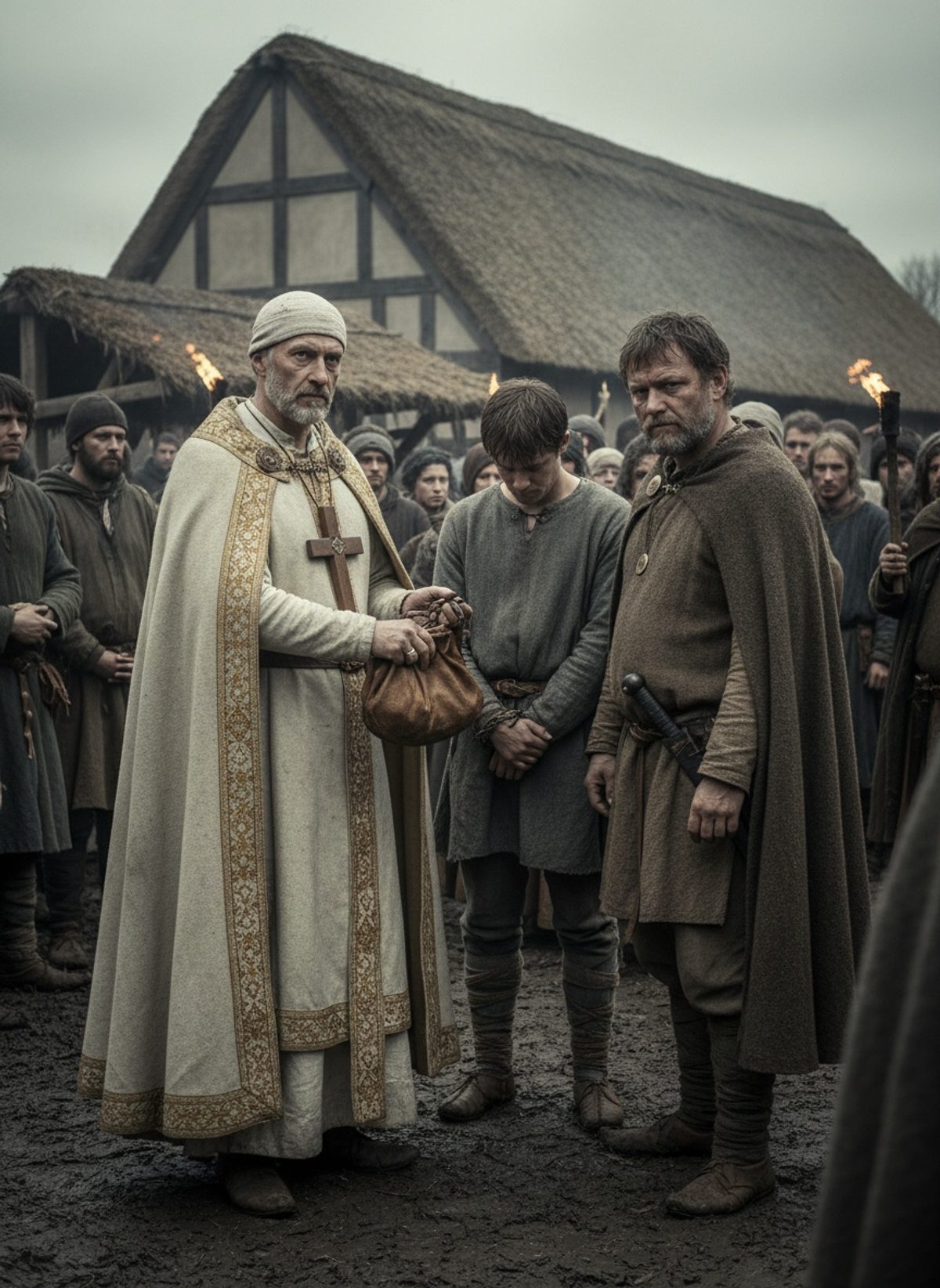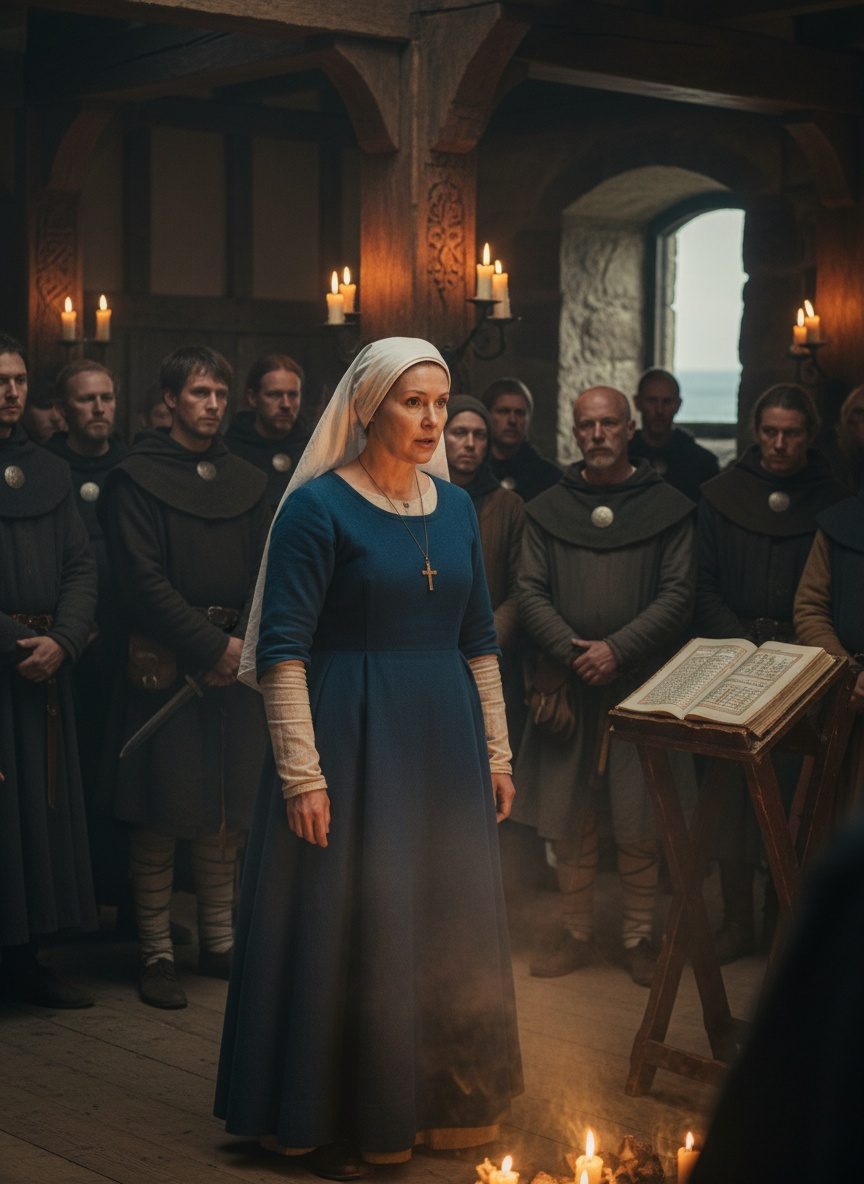
The cold wind off the North Sea bit through the chamber, swirling around the austere stone walls of the hall in Whitby. The king’s advisors, bishops, and noblemen clustered together, murmuring under their breath, their words half lost in the relentless howl of the gale outside. The hall was charged with tension as Northumbria’s king, seated sternly, prepared to make a decision that would echo through time. Amid the scattering of hushed voices and rustling robes, Abbess Hild of Whitby stood, her presence commanding silence. Her words would soon reverberate, changing the destiny of an emerging nation.
The Clash of Calendars
The Synod of Whitby in 664 AD was not just a meeting; it was a battlefield for the soul of English Christianity. At the heart of this urgent debate was the calculation of Easter, a seemingly mundane detail that masked a deeper struggle between tradition and reform, between Celtic and Roman practices. The Celtic Church, blossoming from the rugged monastic environs of Iona and Lindisfarne, held fast to its distinctive calendar and customs. Meanwhile, the Roman Church, with its grand edifices like St. Peter’s Basilica, called for uniformity, urging acceptance of its ecclesiastical norms.
King Oswiu of Northumbria, tasked with maintaining both spiritual and political unity, presided over this historic council. He faced not just a matter of religion, but a challenge to his authority and vision for his kingdom’s future. To favor one church over the other was to realign Northumbria’s place in the Christian world, a world that stretched across empires. As the two factions presented their cases, the tension was palpable, the air thick with the potential repercussions of his choice.
Hild of Whitby: A Woman of Authority and Influence
Amid these towering figures and grand stakes stood Hild, Abbess of Whitby. Born a princess, she had renounced royal privilege in favor of spiritual leadership and emerged as a paragon of wisdom and guidance. Her establishment, the double monastery at Whitby, was a beacon of learning and piety, attracting scholars and pilgrims from across the land. Hild’s influence extended far beyond her immediate community. Her monastery cultivated poets, future bishops, and even kings, shaping broader English society with education and faith.
Read next: The Day a Saxon Abbot Walked Into a Slave Market Alone
In a time when women were seldom seen in positions of power, Hild commanded respect and admiration. Her voice was not only welcomed but expected, an integral part of the council’s deliberations. As she rose to speak, all eyes turned to the abbess known for her shrewd intellect and profound spirituality. It was her moment to sway hearts and minds, to advocate for a path she believed best for her beloved Northumbria and its people.
A Decision Rooted in Unity
Abbess Hild leaned into the silence of the room, channeling both calm authority and the deep resonance of her faith. She urged the council to see beyond immediate divisions of practice to grasp the greater unity offered by a single, cohesive tradition. Her words reminded those gathered that while traditions differ, faith should stand undivided. Her appeal to both reason and unity did not aim to diminish the Celtic heritage but instead sought to embrace a broader fraternity with the wider Christian community.
The synod was not merely deciding a date; it was redefining its identity. Hild understood the profound implications of the choice — a choice between isolation and integration. The Roman method she supported was not just about Easter, but about aligning Northumbria with the broader tides of Christianity, enhancing its role and influence in a united Christendom. Her conviction and clarity turned the tide, and Oswiu chose to step into unity, marking a watershed moment in British ecclesiastical history.
The Echo of Whitby
The decision at Whitby was a defining pivot in the religious evolution of England. By aligning with Rome, the church fortified its connections across Europe, laying the foundations for a unified Christian practice that would shape the continent for centuries. Abbess Hild’s role underscores the often-overlooked influence of women in early medieval church politics, echoing through time as a testament to the complex interplay of faith, culture, and leadership.
Hild’s advocacy at Whitby invites us to reflect on the profound impact of wise and courageous voices in moments of great transition. Her story is a reminder that while history may often emphasize kings and crowns, the influence of a principled mind can alter the course of a nation. As we consider the complexities of our own time, the courage of an abbess on a wind-battered cliff offers both guidance and inspiration to pursue unity amid diversity.