The rising sun cast a pastel glow on the Normandy coast's silken sands, a deceptive calmness hiding the storm to come. The air was tense with anticipation, a sharp contrast to the delicate colors of dawn. 6 June 1944 was about to become a blood-soaked legend, forever etched into the annals of history as D-Day. Each lapping wave brought the hour closer when men would engage in an epic struggle against tyranny on Sword Beach.
The Unlikely Warrior
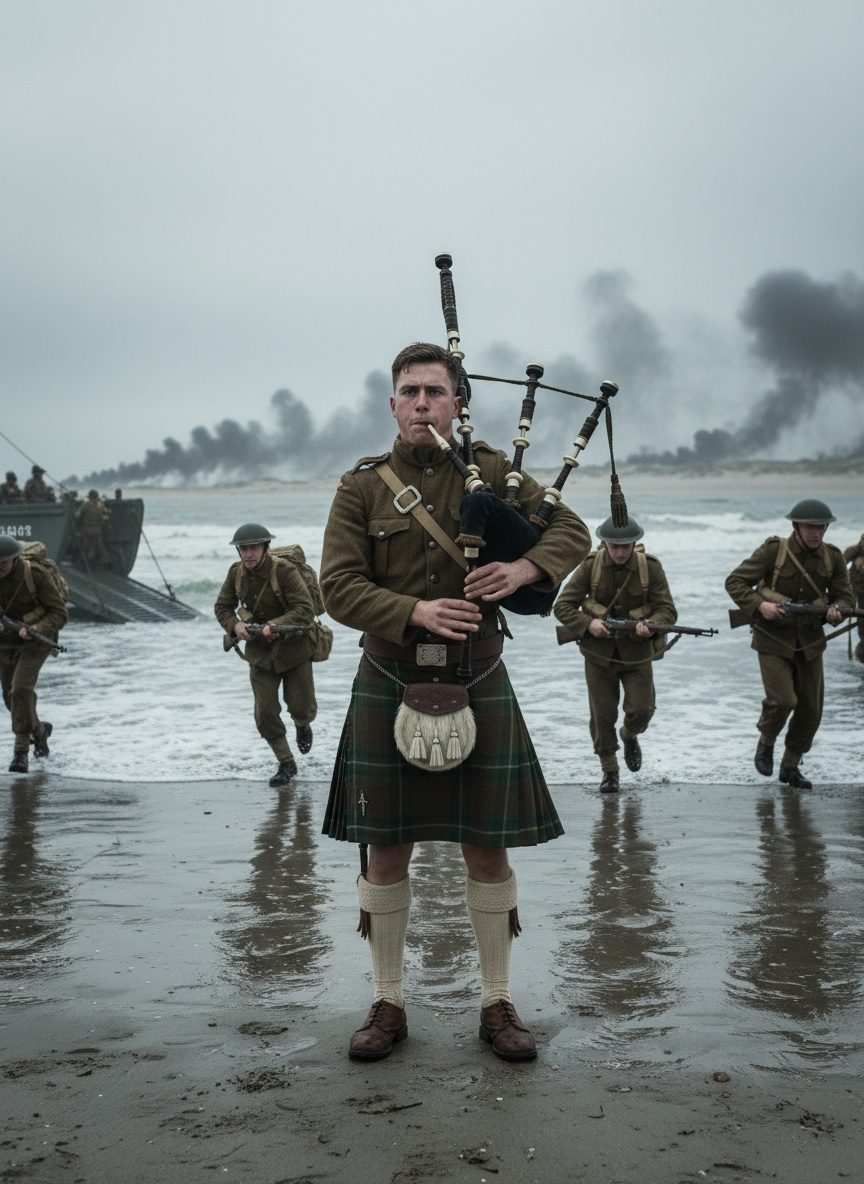
Ordinarily, the garb of a soldier is defined by its utilitarian purpose—camouflage, armor, assault rifles. But on this fateful day, Bill Millin was clad in a form of battle dress not seen on the beaches of Normandy: his father's kilt from the prior war, a skean-dubh nestled in his stocking, and most conspicuously of all, a set of Great Highland bagpipes. Millin, a piper in the 1st Special Service Brigade under the command of Brigadier Simon Fraser, Lord Lovat, carried no conventional weapon. This was the legacy of the Scottish Highlands, an ancient tradition brought to assault Hitler’s dreaded Atlantic Wall.
The scene was perplexing, yet inspiration took root amidst the chaos. Piper Millin's task was to stir spirits and maintain rhythm with melodies from another age. His repertoire, resounding through the din of warfare, transformed an eerie landscape into a theater where courage and fear played their violent duel.
A Walk Through Hell
As the ramp of the landing craft fell and the men spilled into the frigid waters off Sword Beach, chaos unfolded. Bodies met the icy embrace of the English Channel, life vesting in ambivalence between survival and doom. But there he was, Millin, already in the surf, playing the clarion call of the "Highland Laddie" as fear clung to every sinew of those still alive. His playing offered a rhythmic anchor amidst the turbulence—a symphony of defiance in A-flat minor, bitten each note by the salt-bitter wind.
Read next: The Day a British Padre Carried the Dying From No Man's Land
The German gunners watched, confounded by this musical anachronism, and a strange phenomenon unfurled; their fingers eased, their weapons sleeping. Perhaps it was an ancient respect for those who fought without a shield. Or perhaps—in the depths of their trenches—Millin struck them as a symbol of invulnerability, echoing tales of legendary heroes.
The Power of Tradition
Detached from the frenetic pace of combat, Millin played on, imbuing the battlefield with audacity steeped in Scottish tradition. It was 1944, yet the notes summoned legends of Culloden and Bannockburn, battles where the skirl of bagpipes led clansmen to peril and glory alike. Lord Lovat had dismissed existing British Army prohibitions against pipers at the front line. "Ah, but that's the English War Office," he had replied laughingly when Millin expressed concern.
Though the landings on Sword Beach saw relatively low Allied casualties compared to Omaha, the beach itself was a deadly tapestry of mines, machine-gunners, and fortified bunkers. Still playing, Millin's presence served as a compass—an audible symbol that bore a lineage far older than the conflict itself. As the battle unfolded, progress was hindered not just by German fire but also by traffic congestion—men and machines bottlenecked on the sands in the chaotic advance toward the epicenter: Caen.
A Lingering Melody
As the hours passed, Millin's bagpipes proclaimed not only pride but camaraderie blossoming amidst peril. When the clamor of battle faded into the sigh of the sea and the murmurs of the wounded, Piper Millin became more than an enigma. He was the living embodiment of resolve, a wraith walking across time's tapestry, mixing war's despair with its eternal hope.
The notes he played knotted such ties—sentiments indefinable by conventional victory or defeat. Primordial, vast, an aural testament that resonated deep within each soldier who heard them. They reverberated, too, in the hearts of future generations, a symbol of a rare and unique courage that defies rational explanation.
The Echoes of Bagpipes and Bravery
Perhaps it was fitting that the landplains of Sword Beach, then littered with chaos, provided the stage for one man's march to legend. Millin proved that in the theater of war, there are battles confined to neither bullet nor blade. His performance on those sands created mythos within a mythology—the story of a man who walked unharmed through gunfire, wielding music as his weapon.
In today's fraught times, stories like his resound with significance, inviting introspection on courage and the roles we choose in adversity. On the beaches of Normandy, where the wind still whispers secrets carried from Highland moors, Bill Millin's legacy endures—a reminder that sometimes the power of belief and tradition can lead one to walk unharmed through the flames.