Llywelyn ap Gruffudd became the first to be recognized as Prince of Wales by the English. His triumph was both a soaring victory and a prelude to inevitable tragedy.
The Rise of a Prince
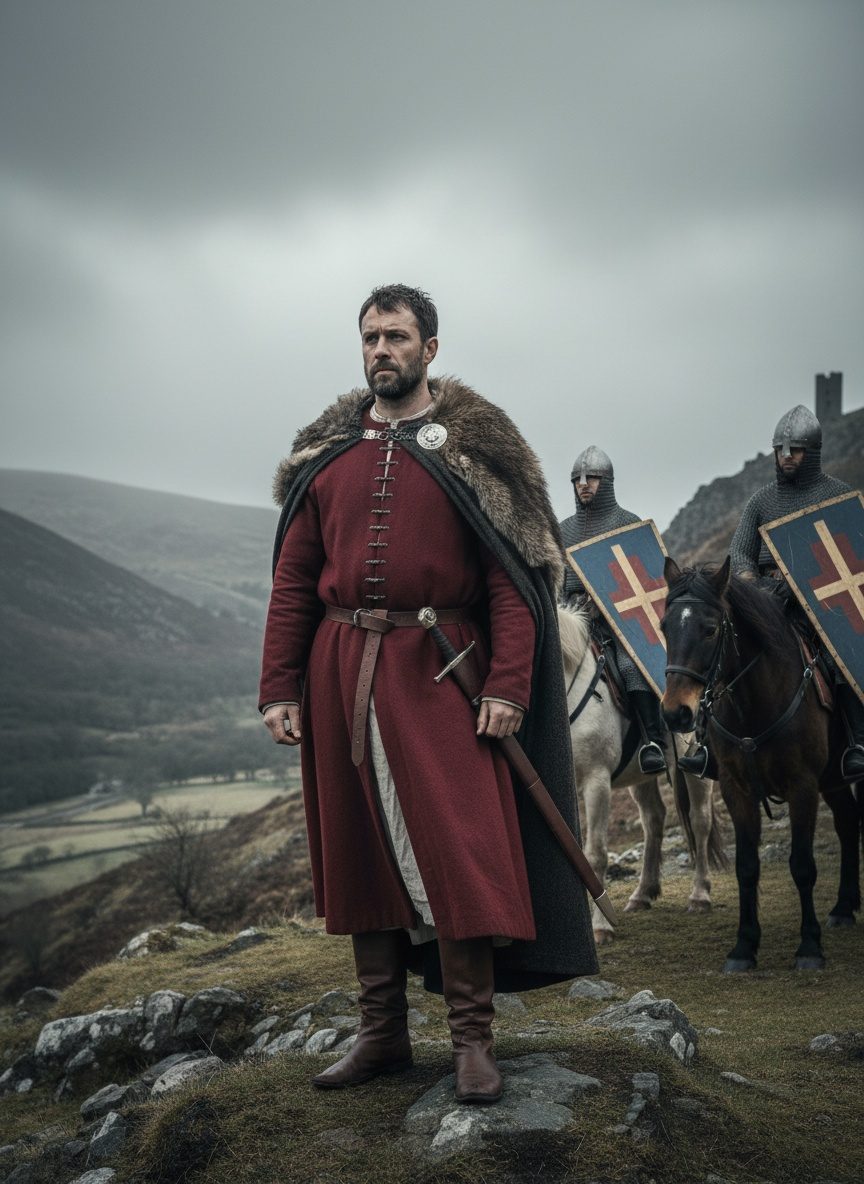
Amidst the rolling hills and wild landscapes of medieval Wales, Llywelyn ap Gruffudd's ascent was nothing short of remarkable. Standing firm amidst the tempestuous politics of the 13th century, he outmaneuvered three English kings, emerging as the undisputed leader of the Welsh people. For a moment, he was the embodiment of a nation's hope, casting a long shadow over a turbulent land. Yet, the road to his recognition as Prince of Wales was paved with blood, strategic marriages, and relentless negotiations. Llywelyn was a man driven by ambition and a vision for a united Wales, a goal that seemed perpetually within his grasp yet maddeningly elusive.
His journey was fraught with peril and promise. Llywelyn's rise was deeply intertwined with the fortunes of the House of Plantagenet, which had its own chaotic intrigues. His initial struggles against the likes of King Henry III positioned him as a stalwart defender of Welsh autonomy; the English monarchs saw Wales as a hinterland to be subdued. Yet, Llywelyn was not a man who would bend to the gusts of political storm. He brokered alliances with other Welsh lords and, in a rare moment of mutual accord, reached the Treaty of Montgomery in 1267 with Henry III. It was this treaty that saw him named Prince of Wales, a title that recognized him as not just a regional chieftain but as a sovereign ruler in his own right.
Such a designation was unprecedented—an imprimatur of Welsh autonomy under the ostensible overlordship of the English crown. To many, it seemed an impossible dream materialized; the Welsh prince had forced the king of England to acknowledge his domain. However, for all its triumph, the treaty was but a fragile paper wall against the thunderous tide of English ambition. The English crown and its successors were never ones to allow Welsh independence without contest, a reality that drew an ever-darkening cloud over Llywelyn's reign.
Read next: The Day a Queen Walked Into a Rebel Camp Alone
The Shadow of Edward
While Llywelyn basked in his hard-won recognition, clouds gathered on the horizon in the form of a formidable adversary: Edward. Known to history as Edward I, his ambitions stretched beyond reclaiming lost English influence; he sought unequivocal dominion over Wales itself. Edward's accession to the English throne in 1272 marked the onset of a relentless campaign that would strain the seams of Llywelyn's carefully constructed realm.
The relationship between Llywelyn and Edward was fraught with tension. Edward, though initially bound by his father's treaties, was a monarch with a martial ardor and a vision of a united Britain under English hegemony. His approach was uncompromising, marked by a strategic acumen that matched Llywelyn's over a gameboard where the stakes were nothing less than a nation’s soul. Under Edward's watch, any notion of seeing Wales as a vassal to England was an affront he could not abide. While Llywelyn initially sought to navigate these troubled waters through diplomacy, wedding his hopes to Eleanor de Montfort (related to the English nobility) as a means of solidifying ties, the acts of union were frail sutures for a widening wound of distrust.
The relationship soured into outright hostility, with Edward determined to bring Wales to heel. Llywelyn, once a prince lauded for his bold defiance, was now ensnared in a battle against time and resources. The very land that once provided sanctuary and support became a theater of war. Castles were razed, towns threatened, and the Welsh gentry faced the specter of a nation shattered by external conquest. In his struggle against Edward's incursions, Llywelyn's resourcefulness was tested to the utmost.
A Kingdom's Heart and Soul
By 1277, the situation deteriorated into a full-scale conflict. The peace of Montgomery was undone, and Edward waged a campaign with military precision and overwhelming force. Under siege, Llywelyn’s defiant resilience became a rallying symbol for Welsh nationalism, though the pragmatic reality depicted a grim tableau. One by one, alliances faltered as chieftains were swayed or coerced by English power; Llywelyn’s kingdom was besieged both without and within.
The culmination of Edward's campaign came with a fateful encounter. Faced with diminishing support and an insurmountable foe, Llywelyn knelt at Rhuddlan, acknowledging Edward’s authority in a gesture immortalized in Welsh lore as both a moment of dignity and desperation. This kneeling, a cistern where pride and submission coalesced, was a symbolic fracture in the Welsh heart, casting echoes through the annals of history. It was not merely the fall of a prince but the subduing of a national identity; the Welsh dream of self-governance came crashing down with heartbreak.
Yet, Llywelyn's story transcends defeat or dismay. It is a narrative of a man who almost saved a nation—not through the lenses of conquest but through the lens of a spirit unwilling to yield. In Llywelyn's fight, there lies a profound truth about the perennial struggle for identity and autonomy. As Wales eventually fell under English domination, Llywelyn ap Gruffudd's tale endures as a steely reminder of a past where one man, against overwhelming odds, dared to unite a people. Although the title of Prince of Wales has been transformed over centuries, often wielded in context far removed from its original bearer, the tale of Llywelyn ap Gruffudd serves to ensure that the echoes of medieval Wales linger still, through memory and myth alike, a testament to enduring resistance in the face of obliteration.