May 26, 735. The River Tyne flowed gently by the ancient monastery, mirroring the tranquil rhythm of the monastic life that bustled within its stone walls.
The Boy from Monkwearmouth
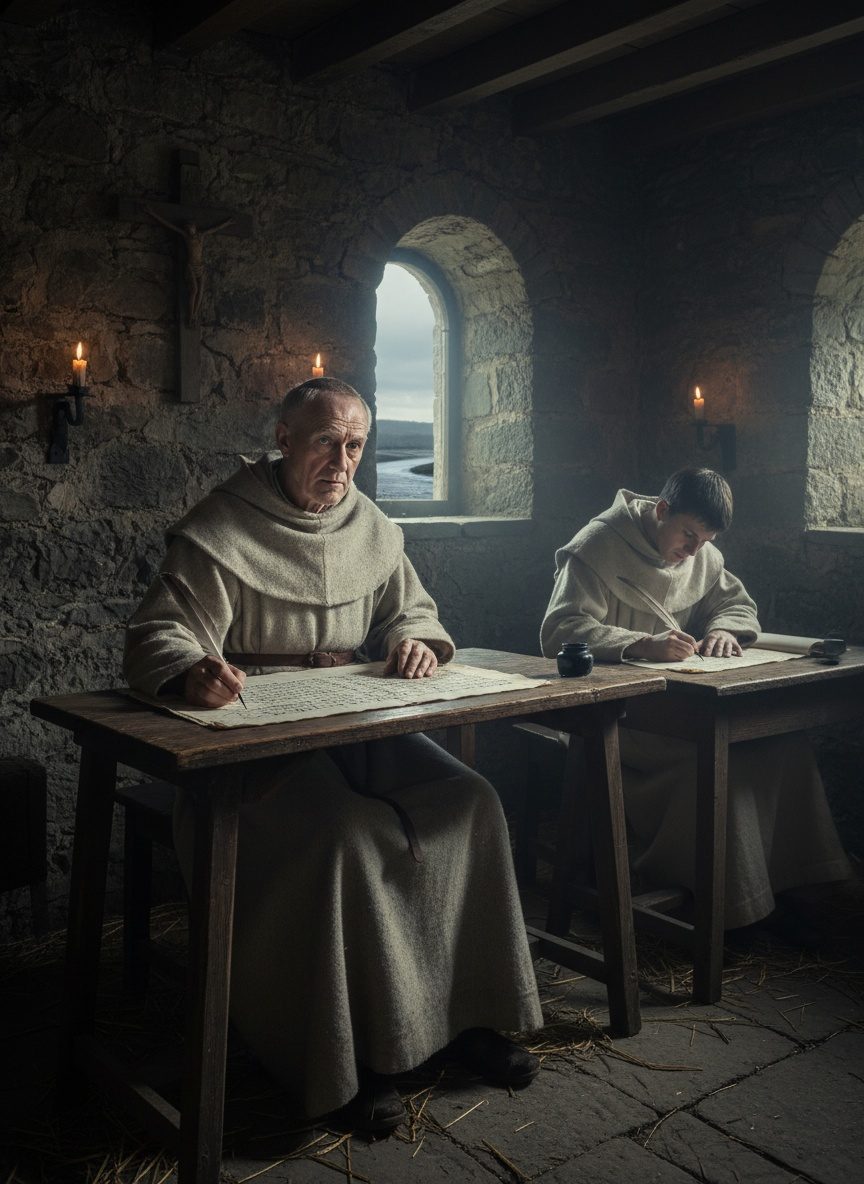
Picture this: a boy of merely seven years, stepping through the arched doorway of Monkwearmouth Abbey, never to venture far beyond its confines again. This boy, Bede, would grow to become a scholar whose insights reached far beyond the fields of Northumbria. Though his footsteps rarely tread past the riverbanks, his mind voyaged through vast landscapes of knowledge. Educated under the watchful eye of Benedict Biscop, the founder of the monastery, Bede immersed himself in the library, which was among the largest in England at the time. With texts on theology, science, and history at his fingertips, he began constructing the narrative not only of his own nation but, indeed, the very method by which the world would count the passage of time itself.
Echoes of the Past: Bede's Scholarly Pursuit
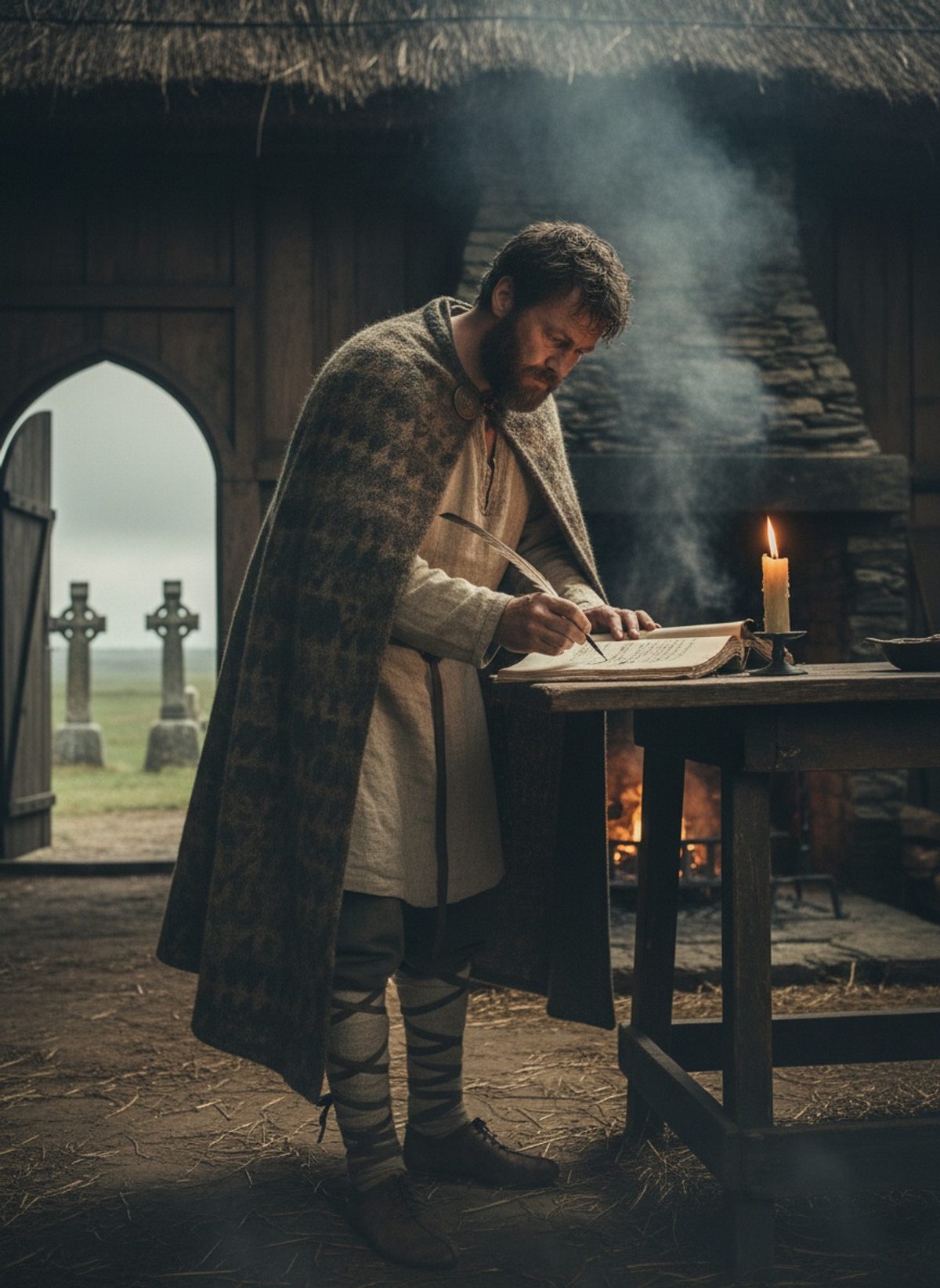
Under the flickering light of candle flame, Bede meticulously transcribed ancient texts and recorded oral histories, determined that the stories of Anglo-Saxon England not fade into oblivion. His greatest work, *Historia ecclesiastica gentis Anglorum*, or *Ecclesiastical History of the English People*, was a monumental task. In it, Bede chronicled the post-Roman history of Britain, from the mission of St. Augustine to the pivotal Christian conversions of Anglo-Saxon kings. Without ever leaving the quiet walls of his monastery, Bede painted a vivid mosaic of his land’s history, preserving the stories of a time many would otherwise forget.
A Measure of Time: The Invention of Anno Domini
While Bede’s robust historical accounts are reason enough to secure his place in history, his most enduring influence was his work on the calendrical system itself. Prior to Bede, there was no standardized way to reckon years across Europe. Bede popularized the Anno Domini method of dating years, starting from the birth of Christ. This system, conceptualized by the monk Dionysius Exiguus, was adopted and disseminated widely through Bede’s writings. His integration of this chronology into historical analysis effectively tied future generations to a universal timeline.
The Northumbrian Chronicle: More than Myths and Kings
Bede’s approach to history was as rigorous as it was insightful. He crossed the threshold from myth to verifiable fact, distinguishing his account from mere legends by applying a methodical analysis to his sources. He verified events, contrasted reports, and carefully distinguished between witnessed history and hearsay. In doing so, Bede’s work became a template for future historians. His narrative was not merely a collection of events, but a sophisticated chronicle that intertwined human endeavors with divine influence, offering a balanced view as he saw it.
Why Bede's Legacy is Our Own
Bede's life, encapsulated in the span of a handful of miles along the River Tyne, underscores a profound truth: one's impact is not always measured by physical distance but by the depth and breadth of one's ideas. Today, when we glance at a calendar and recognize the year as 2023 CE, we owe a nod to that contemplative monk from Northumbria whose quiet, diligent life shaped how we understand time and history. Bede connected the past to the present, illustrating that history is a tapestry woven from the voices of those who came before. In his chronicles, we find a reminder of the power of the written word to preserve, enlighten, and inspire generations anew.