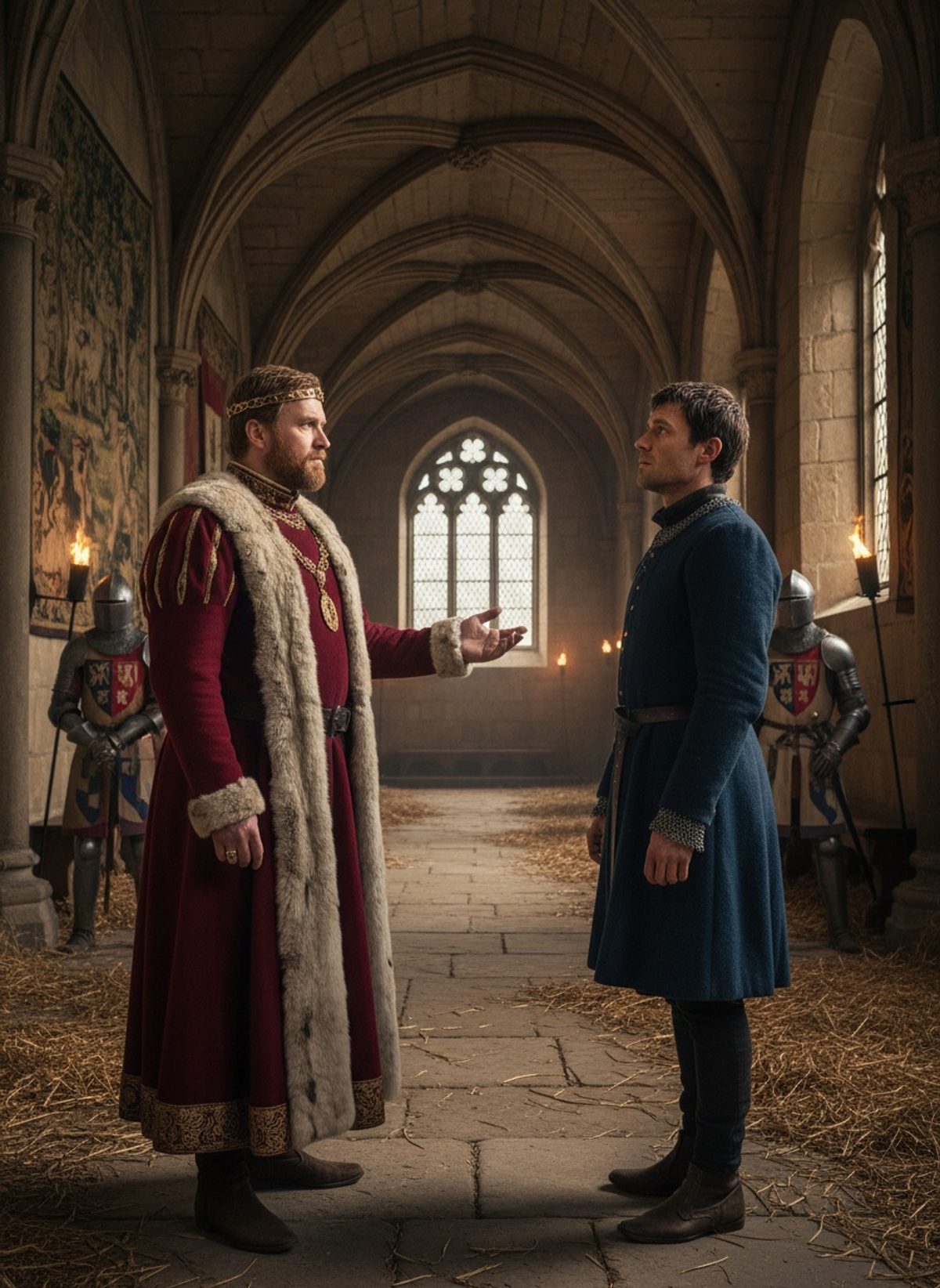
Imagine a king trudging barefoot through the gray, mist-laden streets of medieval Canterbury, a city echoing not with the trumpeting joy of his subjects but with the penitent murmurs of penitence. This was King Henry II, monarch of England, yet for that day, a mere supplicant at the mercy of memory and divine grace. It was August 1174, and Henry was not just riding to his own funeral in spirit but performing an act of remorse so profound that it seemed to transcend the ages.
The Conflict That Led to Penance
The seeds of this extraordinary act of humility were sown eight years earlier in 1166, a year that history would not easily forget. It marked the beginning of the tumultuous conflict between Henry II and Thomas Becket, Archbishop of Canterbury. Once fast friends, the relationship had soured like unripe grapes left too long in the sun when Becket, seeing the ecclesiastical office as more sacred than royal friendship, defied Henry over issues of church versus crown authority.
Becket's murder in December 1170—an event that shocked the Christian world—occurred following Henry's fateful utterance, "Will no one rid me of this turbulent priest?" Though Henry didn't explicitly command the murder, four of his knights interpreted it as royal assent. They traveled to Canterbury and struck down Becket at the altar. Thus, the cathedral, once a serene bastion of faith, became the bloodied stage for the beginning of Henry's travails.
A King in Crisis
By the summer of 1174, Henry's troubles had grown alarmingly. From rebelling sons to a rebellious nation, his sovereignty seemed as threatened as the evening stars obscured by twilight clouds. Most pressing was the revolt led by his sons, supported by his adversary, King Louis VII of France. The fate of his realm teetered precariously, and with every day the noose of rebellion seemed to draw tighter around his crown.
Read next: The Day a King Knelt to Wash a Beggar's Feet
On July 12, 1174, Henry decided to take the unprecedented step of public penance to seek divine intervention. He donned a sackcloth robe, renounced his kingly sandals, and began the pilgrimage to Canterbury. This was not vanity but a deep need, like a sailor tossing cargo overboard to salvage his ship amidst a storm. It was this pilgrimage that brought him face to face with his own legacy—and mortality.
The Night of Contrition
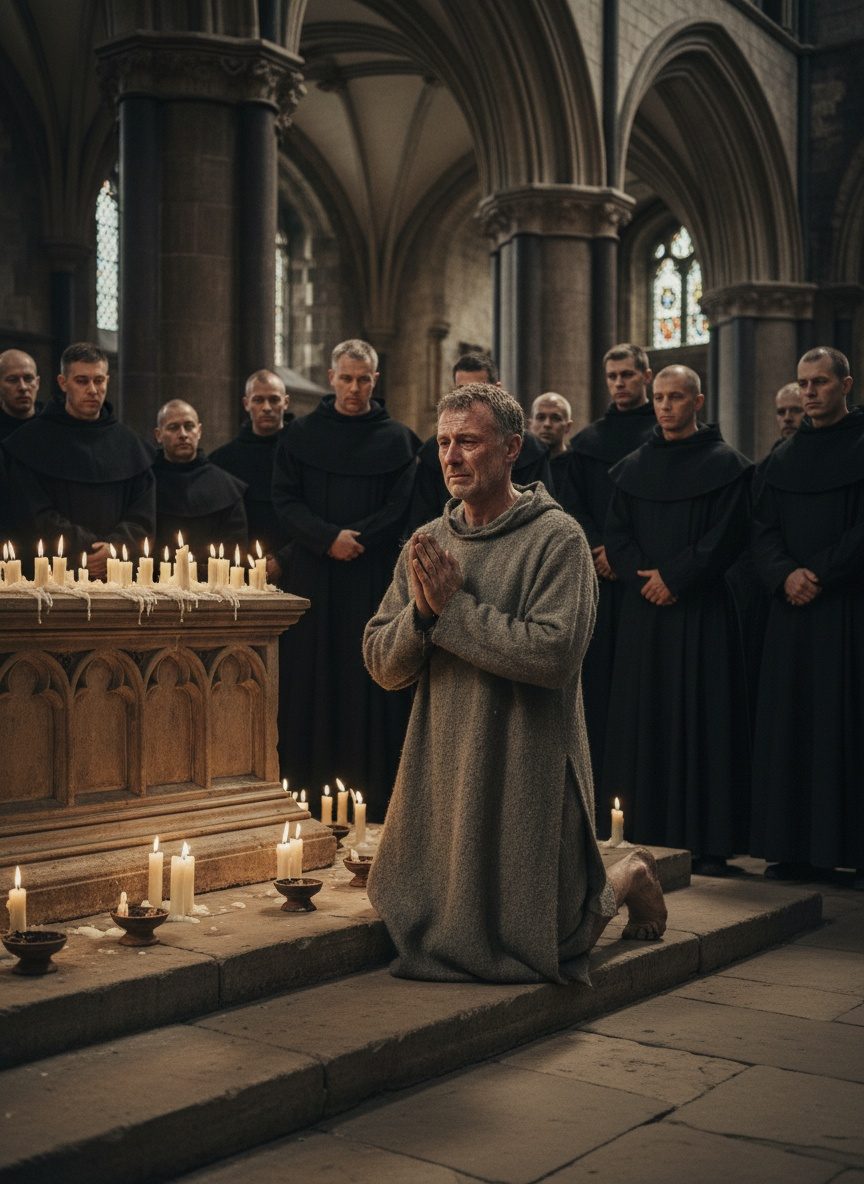
The spectacle that unfolded in the streets of Canterbury on August 12 was akin to a tableau vivant, vivid and wrenching. Henry reached the burial site of Thomas Becket at dawn, a place still redolent with incense and damp from mourners’ tears. The stones around the shrine were polished smooth by the touch of pilgrims, yet fraught with the blood-drenched memory of Becket's martyrdom.
In an act of profound abasement, Henry presented himself to the monks—80 strong—and submitted to their floggings. Striking him a symbolic three to five times on the bare back as he knelt and wept, the monks echoed an ancient ritual of penitents seeking absolution. It was as if England held its breath at every stroke, wondering if they might undo the sins of nation and king alike.
The Turn of Fortune
Amidst this tableau of suffering and humility, a messenger arrived with news both startling and surreal, like a benevolent apparition brought forth by the saint himself. Instead of the rebels choking his kingdom, Henry heard that his enemies had inexplicably faltered. His son, the Young King, fled back to France, the rebellious barons seeking leave to reconcile, and Louis's efforts foiled by an unforeseen delay. It was an uncanny turnaround on the night of Henry's procured redemption—drawing forth whispers of miraculous intervention.
Henry returned to his court with not just his crown intact but with a newly garnered reservoir of pious public support. Pilgrims began flocking to Becket's tomb in numbers, cementing the Archbishop not just as a symbol of sacred resistance but as the divine patron of England's deliverance.
The Legacy of Penance and Power
Was Henry's penance an act of genuine contrition or shrewd political maneuvering masked in humility? Perhaps it was both—an ingenious intertwining of kingly and devout aspirations. The drama in Canterbury would ripple through English history, echoing in teachings of the inevitable ties between penance and power, humility and sovereignty.
The tale might be as medieval as its cobbled streets, yet it resonates with timeless loudness about authority's dance with accountability. Henry's procession to his own perceived fatalism and back again to life reorients how we understand power surrenders to grace—not as weakness but as enlightenment. It serves as a reminder that even the mightiest can embrace humility toward redemption.
Today, leaders across the globe might glean from Henry's pilgrimage the wisdom bound in the act of acknowledgment and rectification. In a world where few strip themselves of power publicly, the kneeling step of a king could yet again inspire, urging those on high to reflect before the altar of their own making and perhaps find peace not solely in conquest, but in reconciliation.