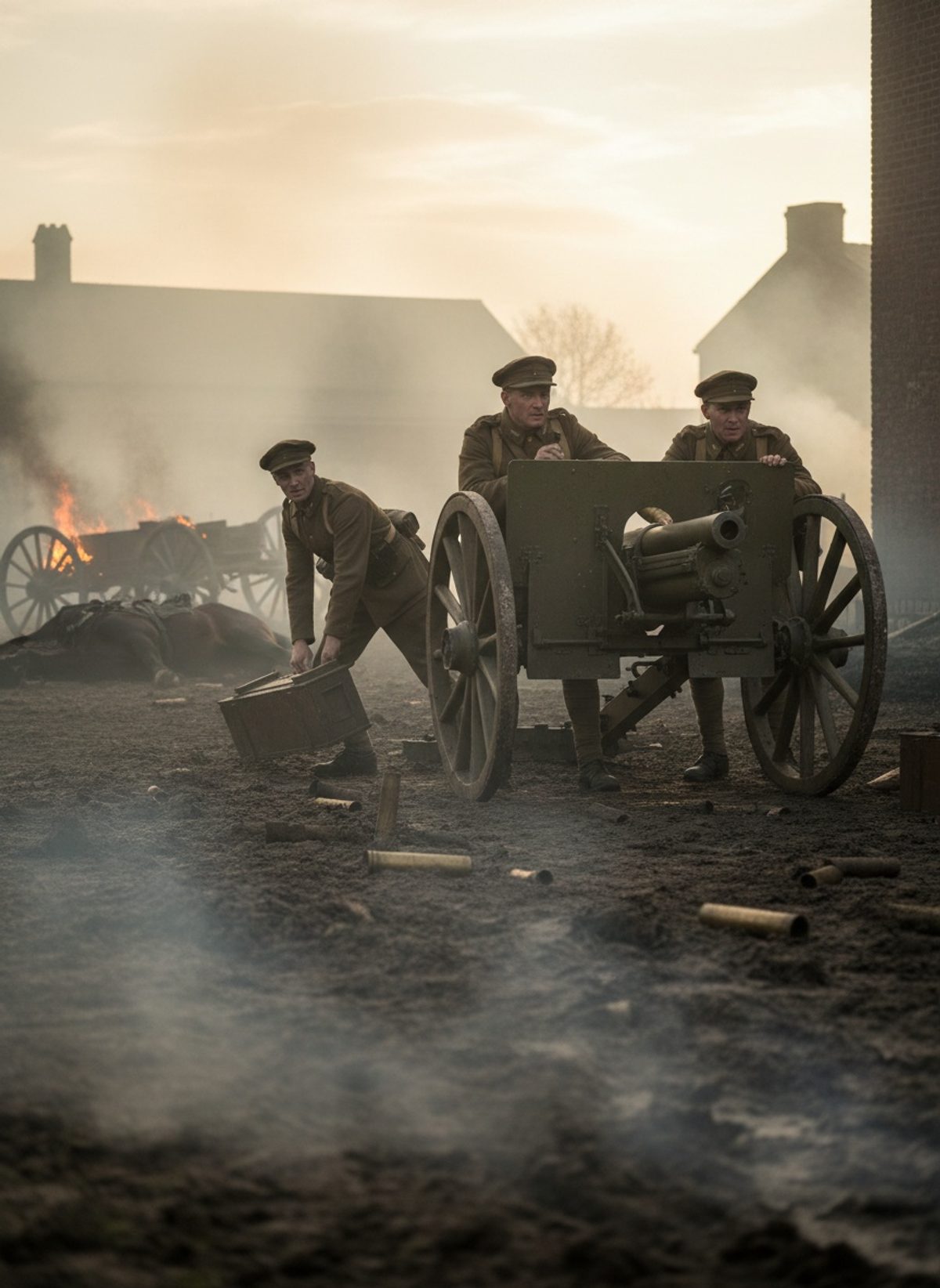
The echoes of World War One still resonate across the fields of Europe, where battles once thundered ceaselessly. But on one extraordinary night, a different sound filled the air—a sound that crossed the lines of conflict and touched hearts with a reminder of shared humanity. It was the voice of a Welsh tenor, rising unwaveringly from the trenches of the Western Front. This is the story of that poignant moment, the night a Welsh soldier sang for peace.
The Unexpected Ambassador
It was Christmas Eve, 1914, and along the front lines, the weary soldiers on both sides huddled in their mud-streaked trenches. The war was still young, only months old, but already its brutal reality had suffocated the hope of a swift resolution. The night sky was cold and clear, fringed with the breath of men and the smoke of conflict. Somewhere along the line, likely near Ypres, a Welsh soldier named Private Benjamin John stood shivering amidst the clamor of war.
Private John was a coal miner from the valleys of South Wales before the war called him to a soldier’s duty. Amidst the mud and despair, he was known for one thing—his voice. Singing had been a solace, a way to transcend the daily grind of coal dust and daily labor, and now it served as a balm to the soul amidst fear and hardship.
Crossroads of Humanity
The trenches were a stark divide, a line carved through Europe by the machinations of conflict. On the other side, German troops faced similar trials, men equally entrenched in sorrow and longing for a home that seemed increasingly distant. Communication across the trenches was rare, and the sound most commonly exchanged was the harsh report of rifle fire.
Read next: The Day a British Padre Carried the Dying From No Man's Land
Yet, on this sacred night, following the long hours of cold and darkness, something unexpected stirred. Rather than dread and fury, there was a pulsing curiosity. There had been rumors echoed in whispers between enemy lines—a Christmas ceasefire. Could it be true, these fleeting tales of fragile truces and shared humanity on this holiest of nights?
A Voice Through the Darkness
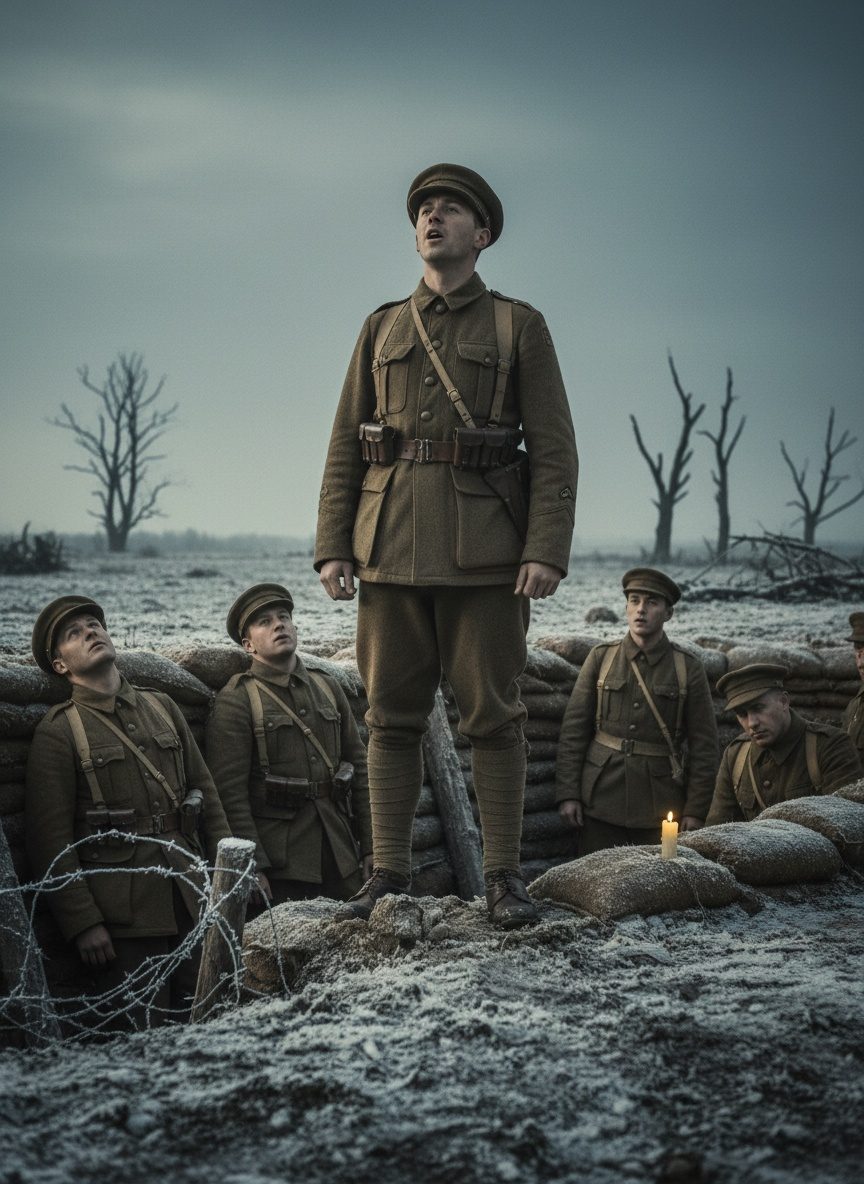
As the chill night descended, Benjamin John climbed the muddy ladder of his trench, unarmed, his heart pounding—not with fear, but with anticipation. He stood exposed in No Man's Land, a figure etched against the frozen landscape.
And then, breaking the dense silence, he sang. With perfect clarity, his rich tenor filled the night. He chose “All Through the Night,” a Welsh lullaby, its lilting melody weaving a thread of peace. The sound floated above the frost-covered ground, echoing across the silence. Tears welled up in eyes hardened by war; British and German soldiers did not understand each other’s language, yet understood the song’s intent—a momentary reprieve.
The guns fell silent. All along the trench lines, soldiers stood quiet, listening, hearts softened by the shared beauty of one man's voice.
The Unofficial Armistice
Across the front, pockets of calm mirrored this remarkable moment. In many places, soldiers laid down their weapons, emerged cautiously from their trenches, and met their foes in the no man’s land they had feared to venture into hours before. An estimated 100,000 soldiers participated in informal truces along the Western Front.
Men who only days before had aimed to kill each other now shook hands, exchanged gifts, and even sang together. The language of music transcended the barriers of nationality and animosity, becoming a bridge of humanity amidst the wreckage of war. They shared stories, photos of loved ones, and small tokens of goodwill—the bitter chocolate rations of soldiers shared like Christmas stockings hung by the fireplace. Football matches sprouted impromptu, relationships kindled under the star-studded tapestry of that silent night.
A Legacy of Memory
Though these pockets of peace were brief, they left an indelible mark. The Christmas Truce of 1914 remains one of the most symbolic and touching episodes of the war, a stunning illustration of the human spirit enduring in adversity. This night, featuring our unsung hero, Benjamin John, exemplified how a single voice could unite where allies and governments had failed.
The high command on both sides did not look favorably on these fraternizations; they feared the erosion of fighting spirit and ordered punishments to avert further spontaneous truces. Yet, Benjamin John and countless others who shared these moments knew they had participated in a profound act of resistance, an assertion of humanity.
A Song for Our Times
Why does this matter today, you might ask? In current times, when divisions often appear insurmountable, and antagonism is but a keystroke away, the courage of one Welsh soldier reaches across time. It reminds us of our shared humanity—an invaluable lesson in empathy and connection.
When Benjamin John stepped from the trenches that night, he did more than sing a song; he delivered a powerful message—one of peace, unity, and hope. Even amidst the greatest conflicts, there lies a desire for harmony, turning conflict into concord. Our greatest weapon, in the end, may not be one forged in fire, but one born in the silence of a simple, human melody.