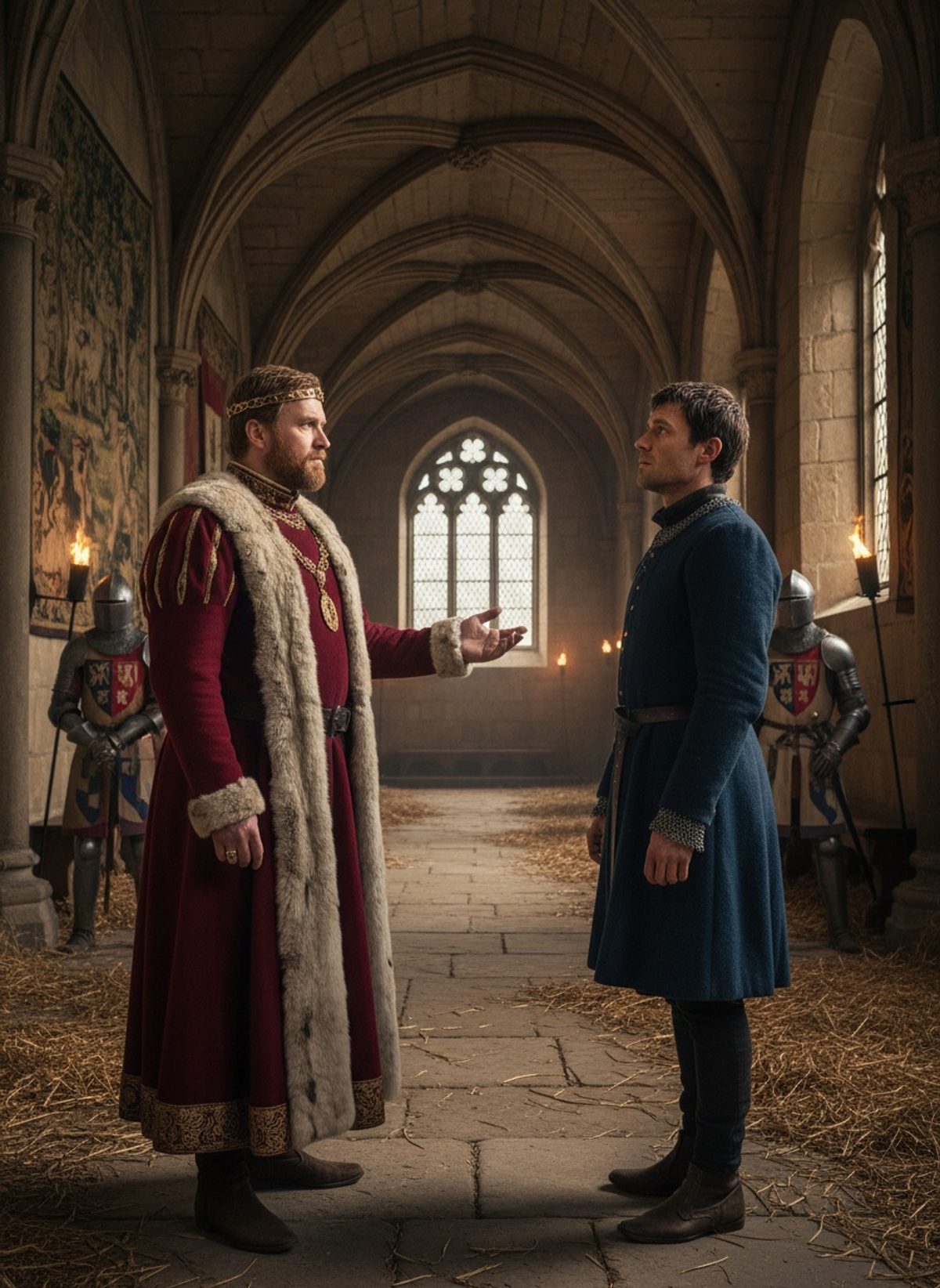
Picture a powerful king, his realms stretching from the Scottish borders to the sunlit vineyards of Aquitaine, descending from his regal steed. The sun is high in the July sky of 1174, and he stands alone by the roadside just miles from Canterbury. He removes his fine leather boots, the companion of many a battle and royal procession, and sets his bare feet on the sun-baked, pebbly path. By the time he reaches his destination, his feet will be raw and bloodied. What could drive King Henry II, master of half of Europe, to take such a penitent journey? This is a tale of power, penance, and the ghosts that walk beside kings.
The Specter of Becket
The resonance of a martyred saint can shake the mightiest thrones. Henry II learned this when his heated words, quivering with the fury of a monarch who realized he had lost control of his church, echoed across the halls of history to bring about the assassination of Thomas Becket, Archbishop of Canterbury. It was December 1170, when four knights, perceiving the king's fateful cry — "Will no one rid me of this turbulent priest?" — as a command, slaughtered Becket inside Canterbury Cathedral. Henry was miles away in Normandy, but the blood on the cathedral floor stained his hands nonetheless.
Becket had once been Henry's closest confidant, an ally whom he elevated to the spiritual heights of England. Yet, friendship soured as allegiance to faith clashed with royal authority. After Becket's death, news of miracles and cures at his tomb spread far and wide, casting Henry in the shadow of a saint deemed by many as performing God’s work from beyond the grave.
The Monarch in Chains
The year 1174 dawned with rebellion. The Great Revolt against Henry, led by his once-loyal sons and powerful allies in France, threatened to unravel his illustrious Angevin Empire. Meanwhile, Holy Church stubbornly persisted in recognizing Becket as both martyr and saint, a divine reproach hanging over the king. To triumph in flesh and spirit, Henry realized he needed heavenly favor, and for that, the mercy of an old friend turned nemesis.
Read next: The Day a King Knelt to Wash a Beggar's Feet
A journey was born in that moment of desperation and gravity. On July 12, 1174, a humbled Henry began his barefoot pilgrimage to the tomb of Thomas Becket. Stripped of the regalia that signified his vast power, he donned a hair shirt beneath his cloth of gold, a physical torment to mirror the remorse in his heart.
A King's Punishing Path
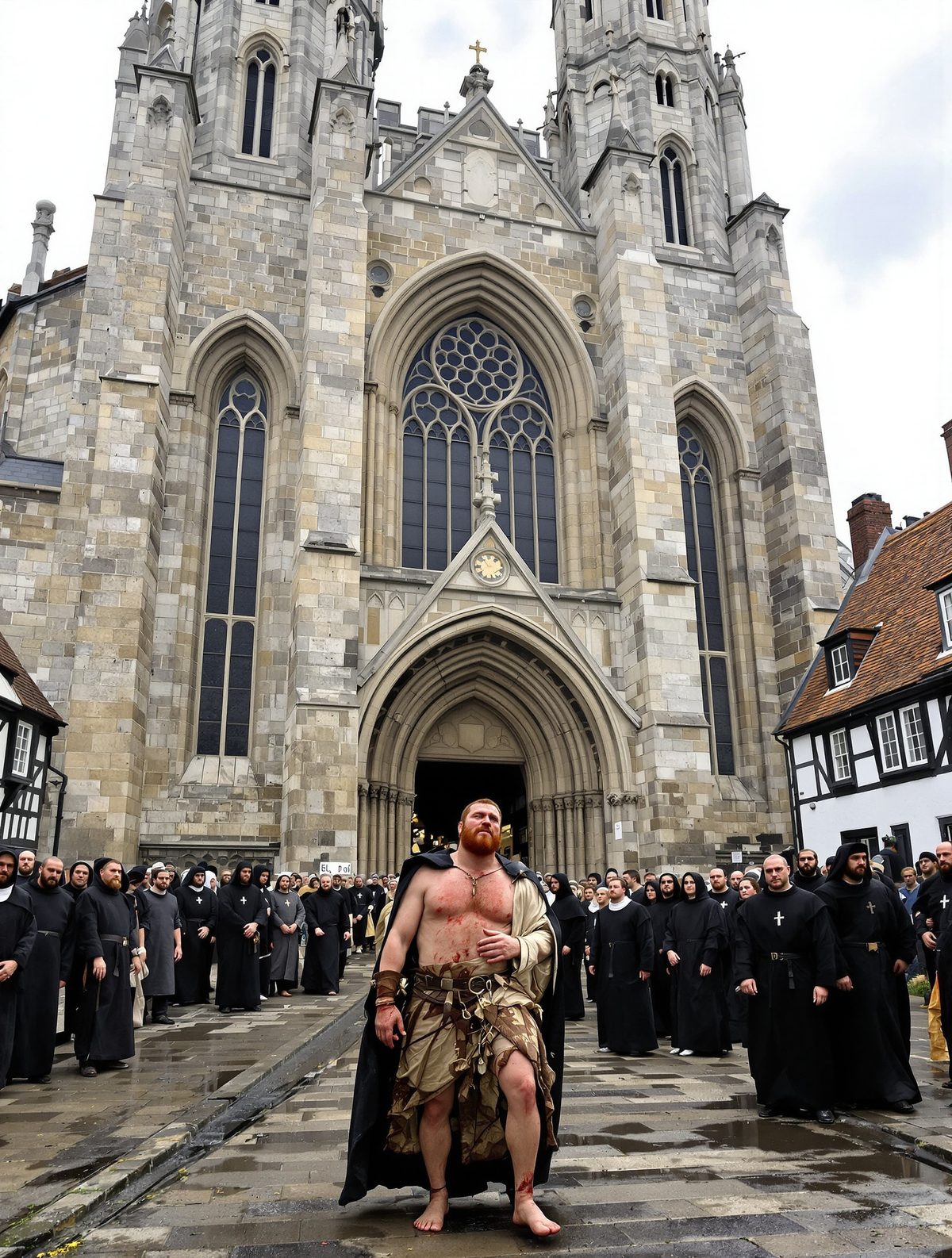
It was no ceremonial walk. Witnesses described Henry’s steadfast march, his feet betraying their weariness and pain with each step across sharp gravel and thrusting thorn underfoot. The road to Canterbury was watched by many, peasants and houses alike lining the route to behold a king's abasement. They marveled, some murmuring prayers for him, others whispering of Becket’s justice.
As the king entered Canterbury, the streets bore witness to a sight unprecedented: iron crowns of thorns pierced regal skin, unprotected feet trampled mud and stone in search of redemption, and a ruler—conqueror of nations—prostrated himself in an act of ultimate humility. Before Becket’s tomb, he lay, waiting for the scourges of the monastic brothers.
Thunder After the Silence
Inside the solemn cathedral, Henry submitted to eighty lashings, each thud a penance to honor the canonized memory of the priest he wronged. As blood mixed with sweat, the penitent king shed tears not just of man but of monarch, shaken by the keen weight of his past.
Yet, the miraculous echoed in the days that followed. As swiftly as his penance was endured, fate turned her eyes: shortly after his pilgrimage concluded, Henry quashed the rebellion. Becket’s intercession, historians would say, as both an apology accepted and a decree from the heavens.
A Legacy Carved in Contrition
For generations, tales of King Henry II’s barefoot pilgrimage to Canterbury became a parable of penance and power, a sobering reminder that no ruler—regardless of titles and armed might—could fully escape divine justice or the consequences of their demons.
Why does this resonate today, readers may ask? In a world still shadowed by the struggles between moral integrity and power, forgiveness and retribution, Henry’s barefoot walk reminds us of the burdens leaders carry, the confessions we all bear, and the healing sometimes found on unshod paths of humility.
In the echoes of history, a king’s contrition treads quietly, whispering the verses of remorse and redemption that all, powerful or humble, are fated to write.