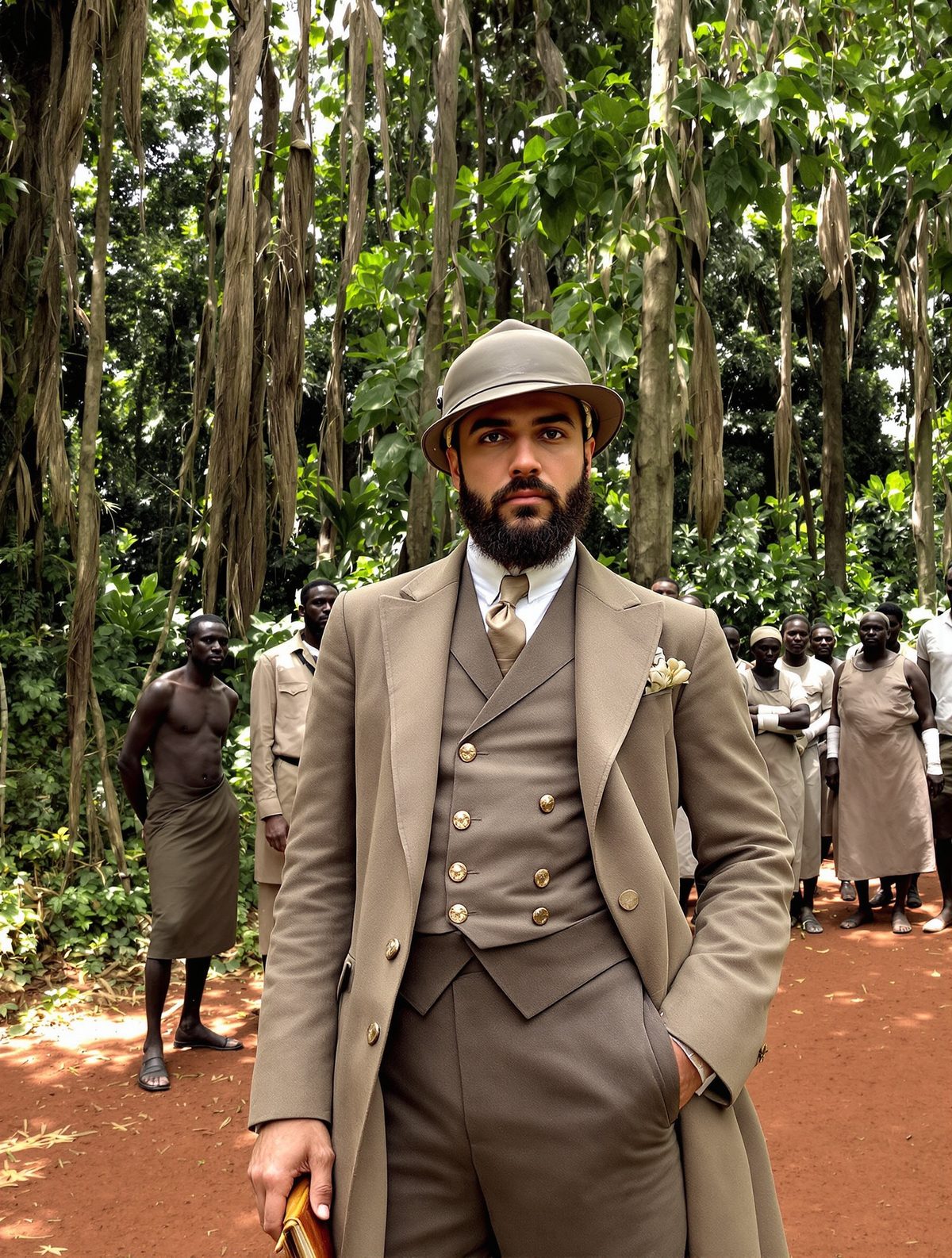
It is July 1903, and a solitary figure trudges into the heart of Africa's shadowed secret. Beneath the oppressive canopy of the immense Congo jungle, British consul Roger Casement embarks on a mission that will reverberate across continents. Armed with little more than determination, a notebook, and a camera, he sets out to expose the grim reality hidden behind the gleaming facade of King Leopold II's so-called civilizing mission. As you delve into the chilling account of Casement's findings, brace yourself for an unforgettable journey into the heart of darkness — an account that would unravel a tyrant's empire and redefine the world's conscience.
Into the Heart of Darkness
By 1903, the Congo Free State was an ill-kept secret. Established as the personal possession of Belgium's King Leopold II under the guise of philanthropy, it was a place where darkness festered behind the promise of progress. Even the term 'free state' belied its grim reality: a land subject to a brutal regime hidden from the prying eyes of the world.
Roger Casement, then 39, was a British consul known for his humanitarian spirit and tenacity. Hearing whispers of horrifying abuses, he struck out into the impenetrable Congolese wilderness, uncertain of what awaited him. What he found was a sprawling operation of exploitation and terror. In a matter of months, Casement documented a system so shockingly brutal, it seemed unreal even to a world well-versed in colonial cruelty. In villages along the River Congo, Casement uncovered tales that would later stain the pages of history: forced labor camps, men and women reduced to back-breaking toil under a pitiless sun, and children mutilated as appalling markers of quotas.
The Devil's Workshop
The kingdom of Leopold II was essentially a vast plantation run on rubber — and blood. To coerce indigenous people into tapping rubber, agents of the regime extracted quotas through unimaginable cruelty. Whole families were taken hostage; hands were lopped off as punishment for unmet quotas.
Read next: The Day a Widow's Son Lit Up the Victorian Night
Casement's first account of such horrific practices was recorded in the village of Bolobo. Here, and in countless villages that dotted the Congo, Casement discovered ghastly symbols of the brutality: mutilated appendages, severed hands scattered among abandoned plantations. These grotesque "trophies" were collected by the Congolese militia, the infamous Force Publique, paid not in currency, but in ammunition. An estimated 10 million lives were extinguished in what can only be described as an inferno of human suffering, a staggering figure that represents nearly half of the Congo's population at the time.
The Forgotten Chronicle
In the face of systemic oppression, the indigenous Congolese had few allies. Casement's meticulous descriptions and haunting photographs brought clarity to their plight in a time when the power of the photograph was just beginning to inform public opinion. With undeniable evidence in hand, he returned to Europe in early 1904, determined to end the silence.
The result was the Casement Report, a searing indictment of not just Leopold's deceptive benevolence but of colonialism's darkest edges. It was a document that burned through the corridors of power, sparking international outrage and forcing governments to confront their complicity. Casement did not work alone; his findings were buttressed by testimony from missionaries and traders, whose voices similarly clamored for justice and helped frame a narrative too potent to ignore.
Turning the Tide
In September 1905, Casement's report, coupled with public furor, compelled the British government to demand action. Leopold had spent years cultivating influential allies; yet even they could not shield his regime from the ethical storm that Casement unleashed. His tenacious crusade managed to bring the plight of the Congo's enslaved to international pulpits, stirring institutions to action.
By 1908, the tide had turned irrevocably. Under international pressure, Leopold was finally compelled to relinquish his grip, transferring control of the Congo to the Belgian government. Although far from perfect, the new administration promised reforms that echoed a burgeoning recognition of human rights.
The Echoes of Yesterday
Over a century later, Roger Casement's journey still resonates, serving as a stark reminder of how one individual's perseverance can alter the arc of history. His dedication brought awareness to an undercurrent of atrocity, foreshadowing today's global human rights movements.
As we reflect on Casement's tenacity, it prompts a key question: Who, in our modern age, is responsible for holding power to account? The tale of the Congo under Leopold II warns of what becomes possible when unchecked ambition marries indifference.
As readers of history and custodians of the future, let Casement's expedition ignite within us a continuous flame of vigilance. For it is only through the illumination of truth that the shadows of tyranny recede, and the world steps closer to a future that acknowledges the dignity of all humanity.