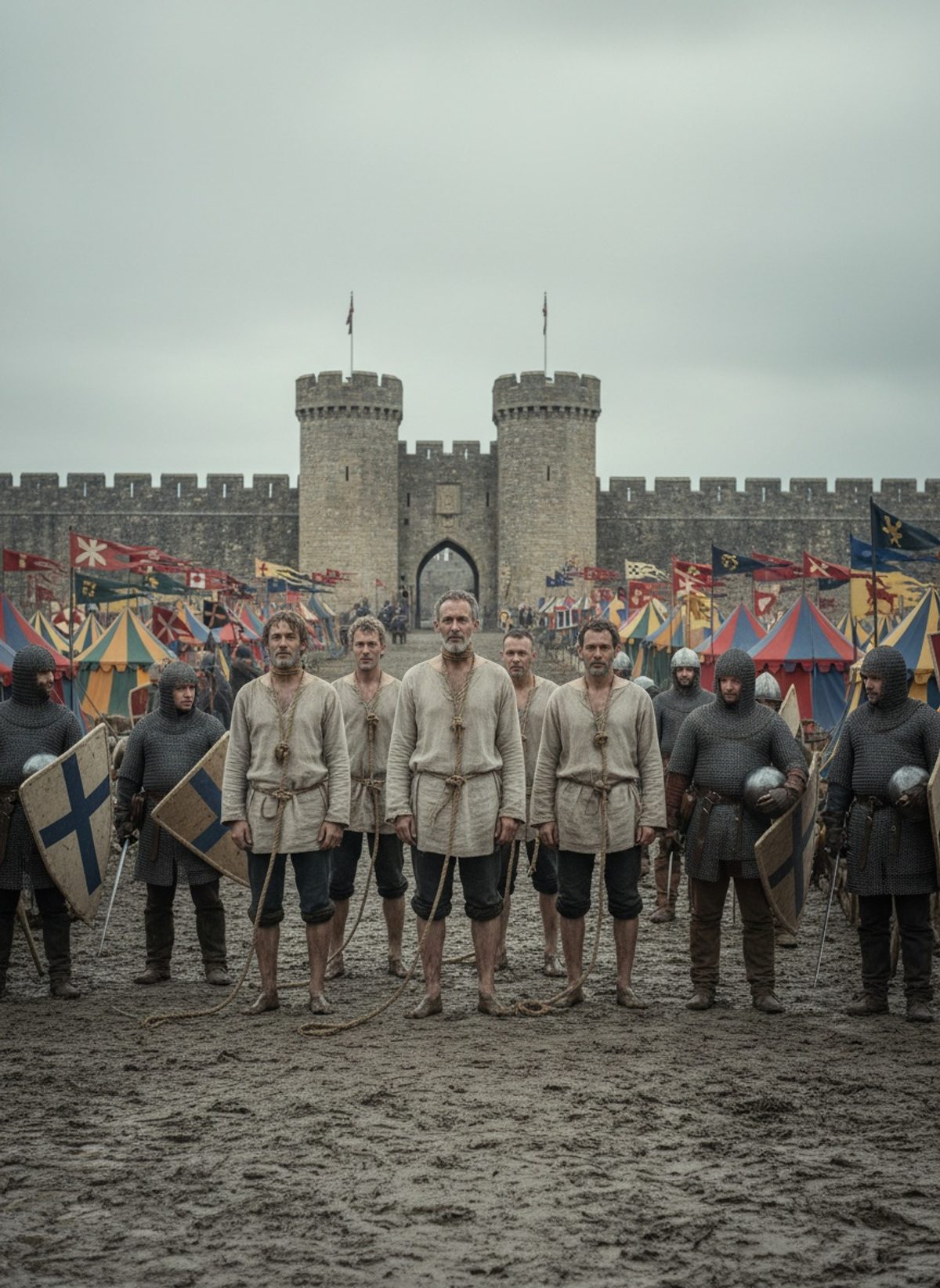
The air was thick with the scent of desperation and mud as Eustache de Saint-Pierre stepped forward, the heavy noose rough against his neck. Thousands of eyes bore down upon him from outside the besieged walls of Calais, all knowing that he stood there to die on their behalf. If any felt gratitude, it was tinged with the bitterness of knowing their own survival bought with his impending death.
The Fall of Calais
By 1347, the Siege of Calais had ground on for almost a year. Edward III's forces had encircled the strategic port city, determined to claim it as a gateway for launching further campaigns into France during the Hundred Years' War. Calais, starved and worn, had become a shell of its once proud self. Gardens that thrived in peaceful years were now barren ground. Disease ran rampant through the crowded streets, which echoed with the whispers of citizens too weak to carry more than a murmured prayer.
Inside the city, decisions were made with the weight of mortality hovering over each one. When envoys from King Edward arrived with an ultimatum — to spare the city from complete destruction and mass slaughter, six of its leaders must be surrendered for execution — the mayor and council faced a seemingly impossible choice. Yet amidst the despair, one man’s resolve shone like a beacon through the heavy, suffocating fog of war.
Six Martyrs, One Heroic Act
On that fateful day, as fear gripped the stomachs of those gathered, Eustache de Saint-Pierre's resolve never faltered. With deliberate steps, he moved towards his fate, the first among six citizens. Beside him, his fellow burghers followed: Jean de Fiennes, Pierre de Wiessant, Jacques de Wiessant, Andrieu d’Andres, and Jean d’Aire. The scene was a tapestry of raw emotion woven with steely defiance; they walked barefoot, clad in simple robes, each carrying the weight of their city’s suffering.
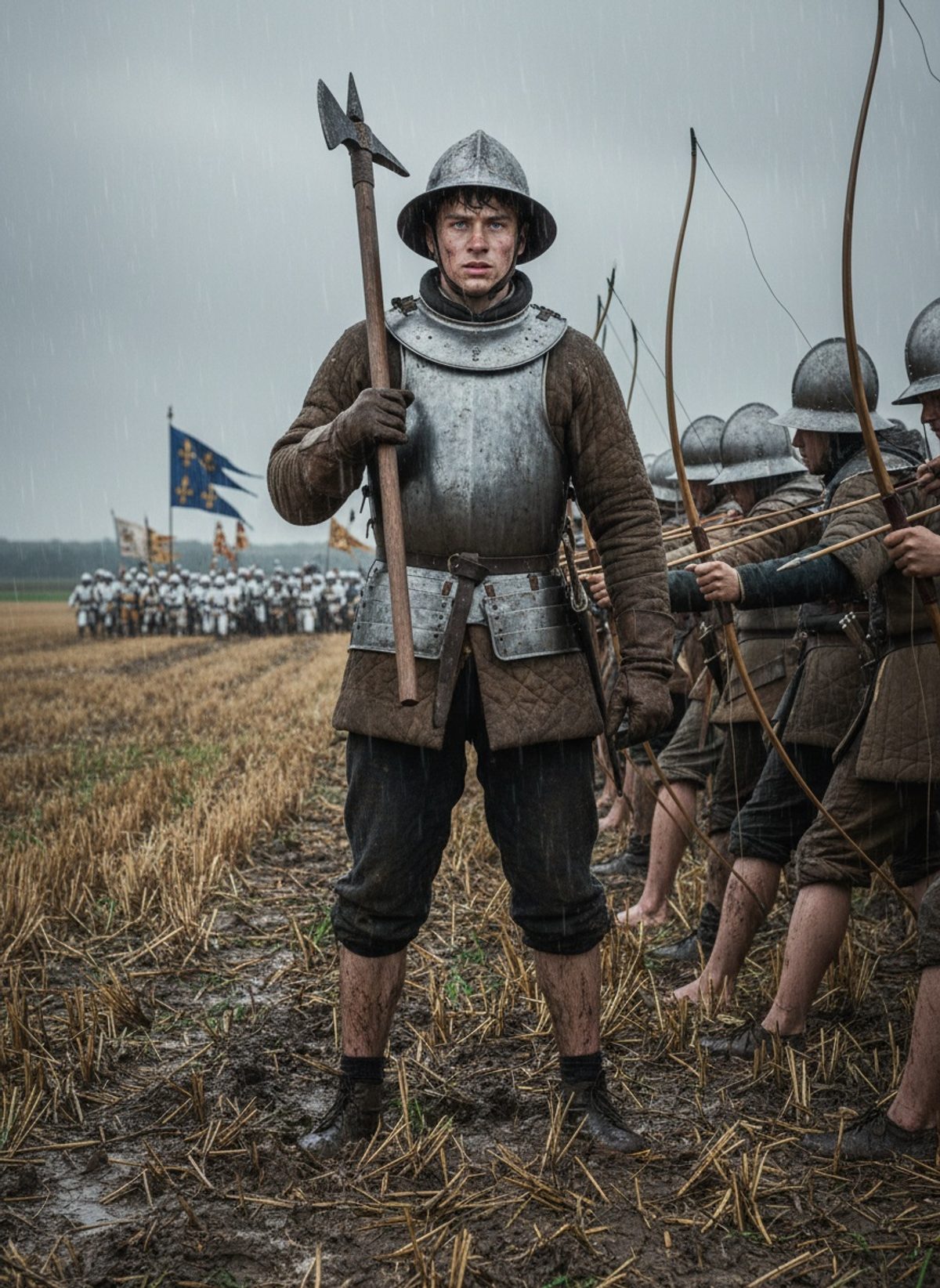
Read next: The Night a Sixteen-Year-Old Prince Held the Line at Crécy
These men, representative of honourable citizenry, embodied Calais in a way no wall or cannon ever could. With every step, they carried the hopes of thousands upon their shoulders. As they emerged from behind the gates, toward the gleaming Royal Pavilion where Edward and his court awaited, it wasn't the grim spectre of death that held them upright; rather, it was the lives left behind that fuelled their courage. It’s a poignant truth often overshadowed in discussions of tactics and territory.
The Queen's Intercession
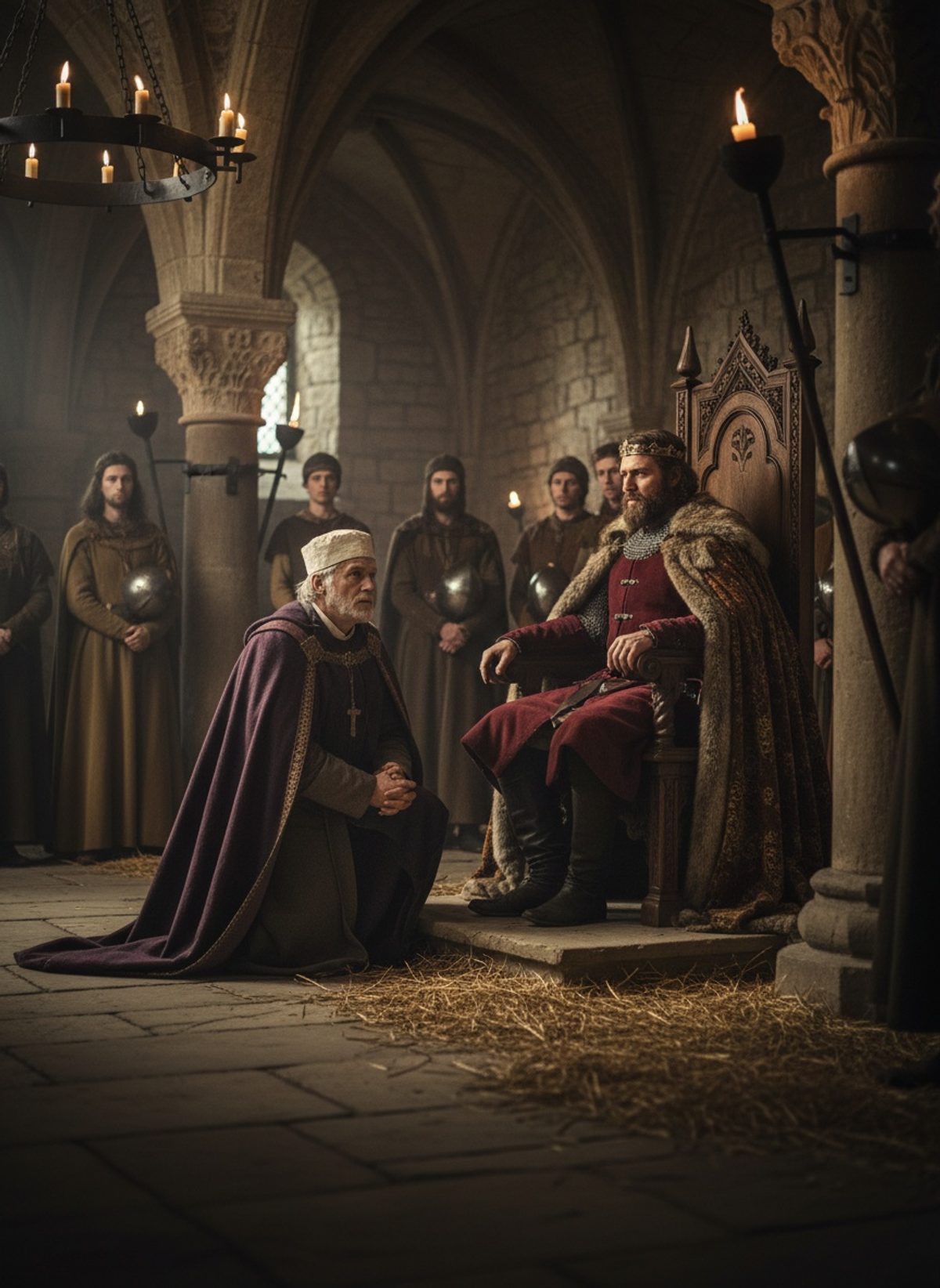
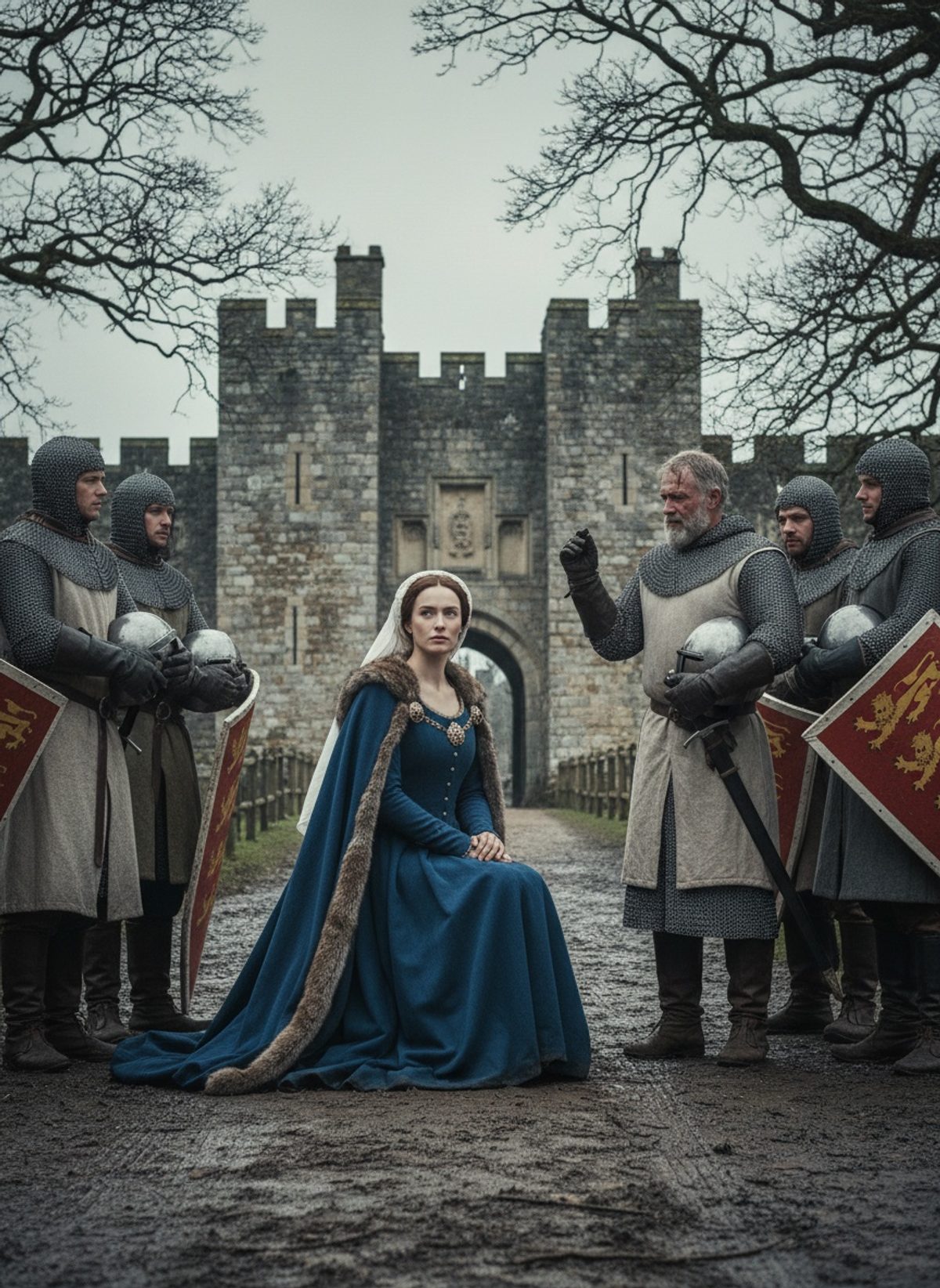
It is said that fate bends at the hands of the compassionate, and this moment in time was no different. Among the gathering of nobles and knights, an unexpected advocate stepped forward. Philippa of Hainault, Queen Consort of England and wife to Edward, had accompanied her husband, despite the discomfort of her pregnancy. Legend recounts how the queen, moved to compassion by the sight of the six noble souls, pled with the king for their lives.
Philippa’s words pierced the tension-filled atmosphere, leaving Edward caught between royal decree and consort’s plea. Her argument was simple, yet profound, as she invoked the chivalric ideals of mercy. The spectacle of the six brave men was a testament not only to loyalty but also to the power of humanity amid inhuman conditions. The queen’s intervention, bearing the emotional weight of the moment, swayed Edward's resolve to mercy, and he granted her request to spare the burghers' lives, freeing them back to a city that would forever hail them as heroes.
The Enduring Legacy of Sacrifice
The act of kneeling in the mud saved six lives, but it breathed life anew into Calais. It allowed for a chapter of devastation to close and a regenerative peace to begin. Edward's grip on Calais held firm, but the memory of the burghers' sacrifice lingered long in the annals of Europe’s turbulent history. Their deeds etched into the collective memory as an emblem of selflessness, standing as silent yet powerful reproach to the rancor of war.
What can we learn from Calais, besieged but not broken, and from a queen’s intercession that resonates through the centuries? That compassion holds the unique power to reframe the harshest of human encounters. In moments darkened by ambition and conflict, the kindness of a few can alter the course of many. Those who dared step forth from the gates of Calais taught us that the greatest courage often lies in acts not of aggression, but of sacrificial peace.