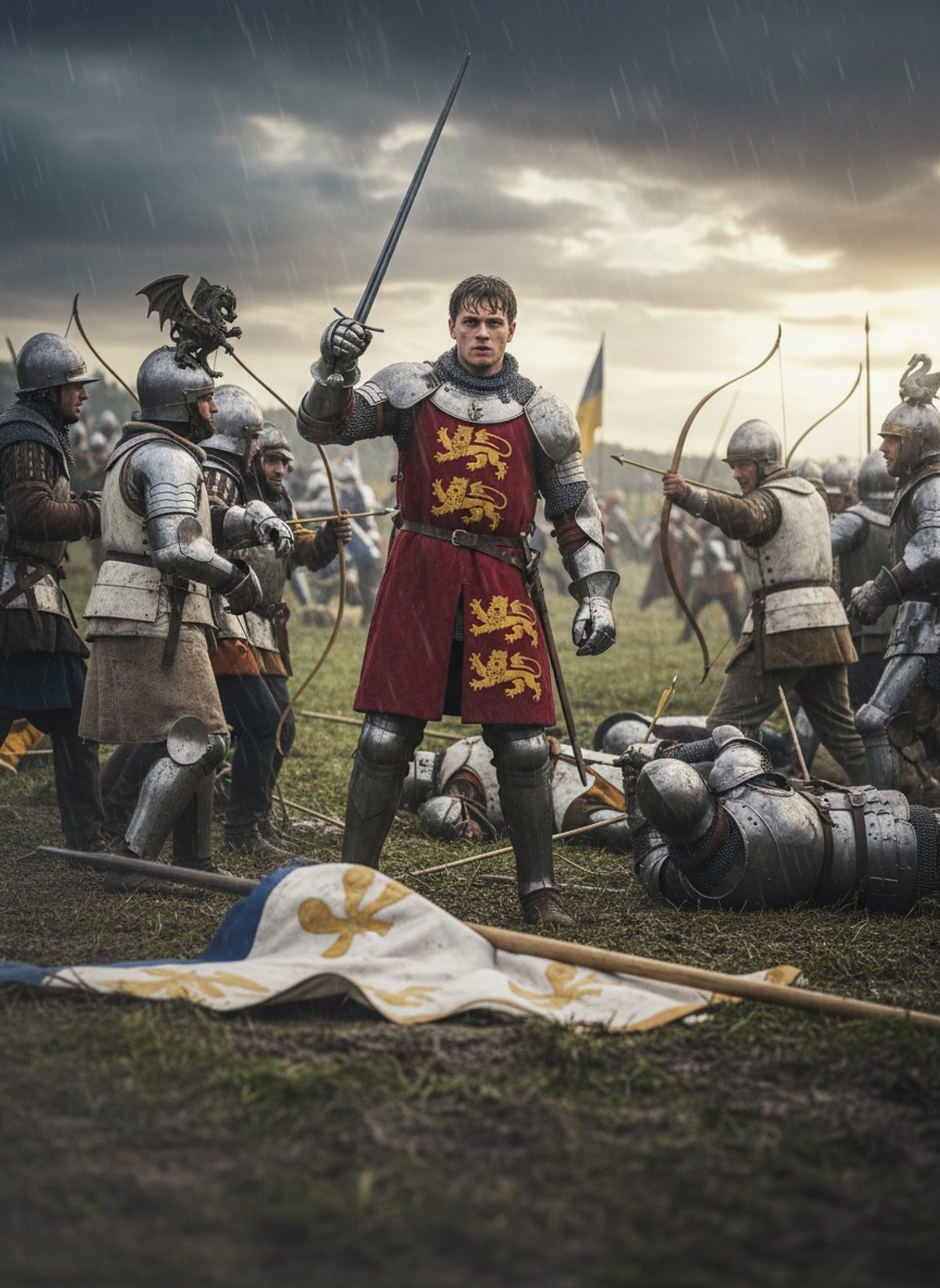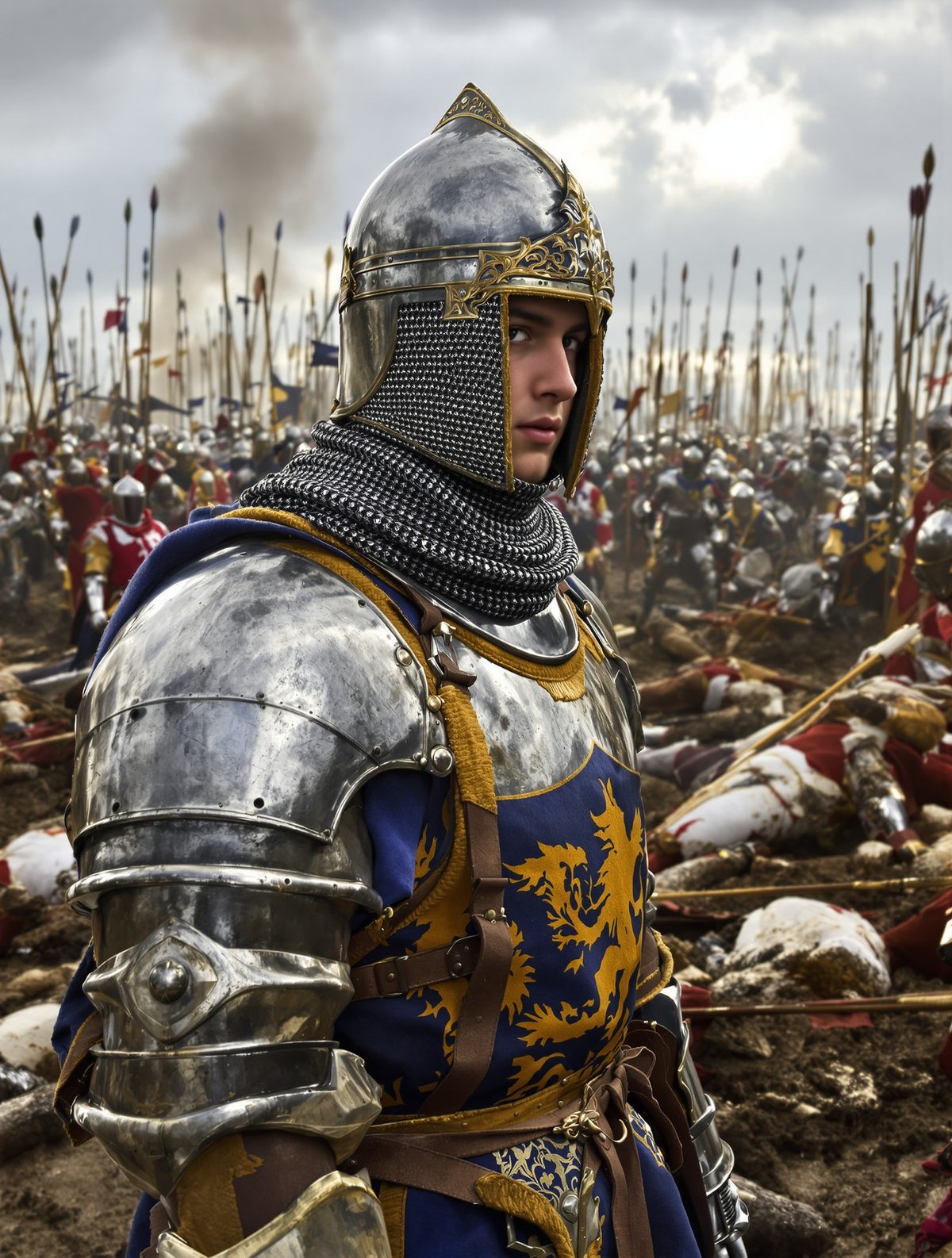
The morning air was thick with the scent of wet earth, and a steady drizzle pelted the muddied fields of Agincourt. Grey skies clung low over the horizon, obscuring the sun from the weary faces of men huddled together for warmth and solace. The sound of rain mingled with the murmured prayers of soldiers cloaked in desperation. Here, amidst the soggy terrain of northern France, a decisive chapter of English history poised precariously on the edge of a sword. As the dawn crept over the horizon on October 25, 1415, King Henry V of England prepared to stake his nation's future against seemingly insurmountable odds. Outnumbered six to one by the French, he had fewer than 6,000 of his battle-worn and dysentery-stricken men. Yet, it was on that drenched field, out in the cold and bleak, that a boy's courage would forever entwine with the annals of legend.
Kings and Commoners
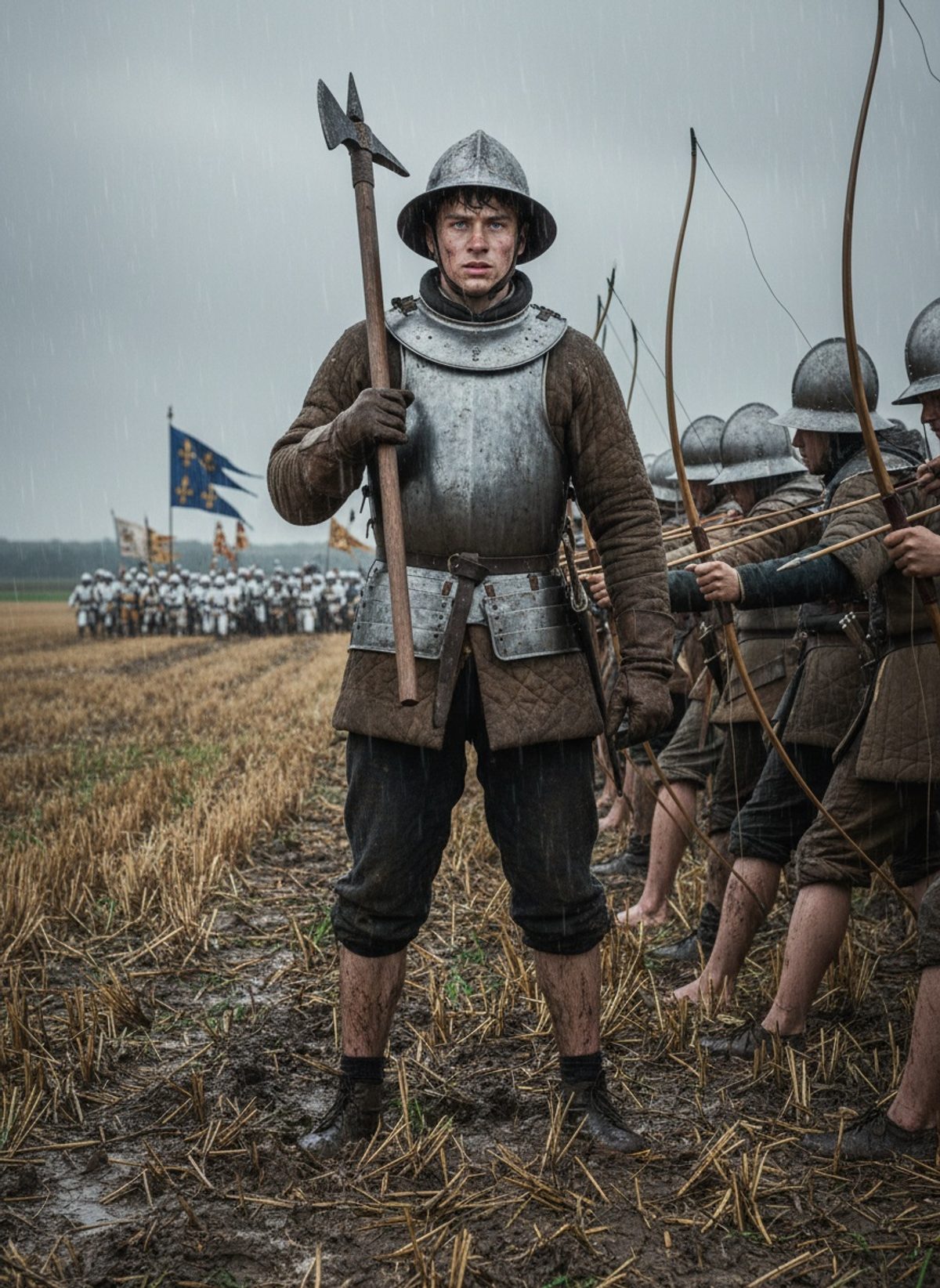
The spectacle of war was nothing new to young Thomas, a sixteen-year-old squire. Adorned in a ragged patchwork of plate and chain, his unpolished armor spoke less of glory and more of necessity. Unlike the nobility who decked themselves in elaborate heraldry, Thomas was merely one among many of the common sort, thrust by circumstance into the grim reality of medieval warfare. As the first light of day outlined the haunted remnants of the English camp, King Henry's stature loomed among his men, a figure both noble and utterly resolute. He had assembled this force with singular ambition, but the sight of myriad banners snapping in the distance hinted at the sheer might arrayed against them.
Yet as daunting as it was, the English were bolstered by an unconventional advantage—a battlefield precision born of necessity rather than choice. With the rain transforming the turf into a quagmire, the archers were positioned to maximize the devastating volleys of their longbows. Despite their relative anonymity, these longbowmen had earned their place in the halls of legend through harrowing campaigns past. They were the backbone of Henry’s forces and, down to the last man—young Thomas included—understood the weight of their role. In the trenches of history, rank took second place to survival.
As lines formed and the drums of war sounded their ominous cadence, the elements themselves seemed to conspire in favor of the English. The treacherous mud sapped the vigor from the advancing French cavalry, devolving their noble charge into a tangled mass. It was in this mire that Thomas, gripped by the fire of youthful temerity, surged forward with the first arrow release, joining the chorus of doom that descended upon the charging foe.
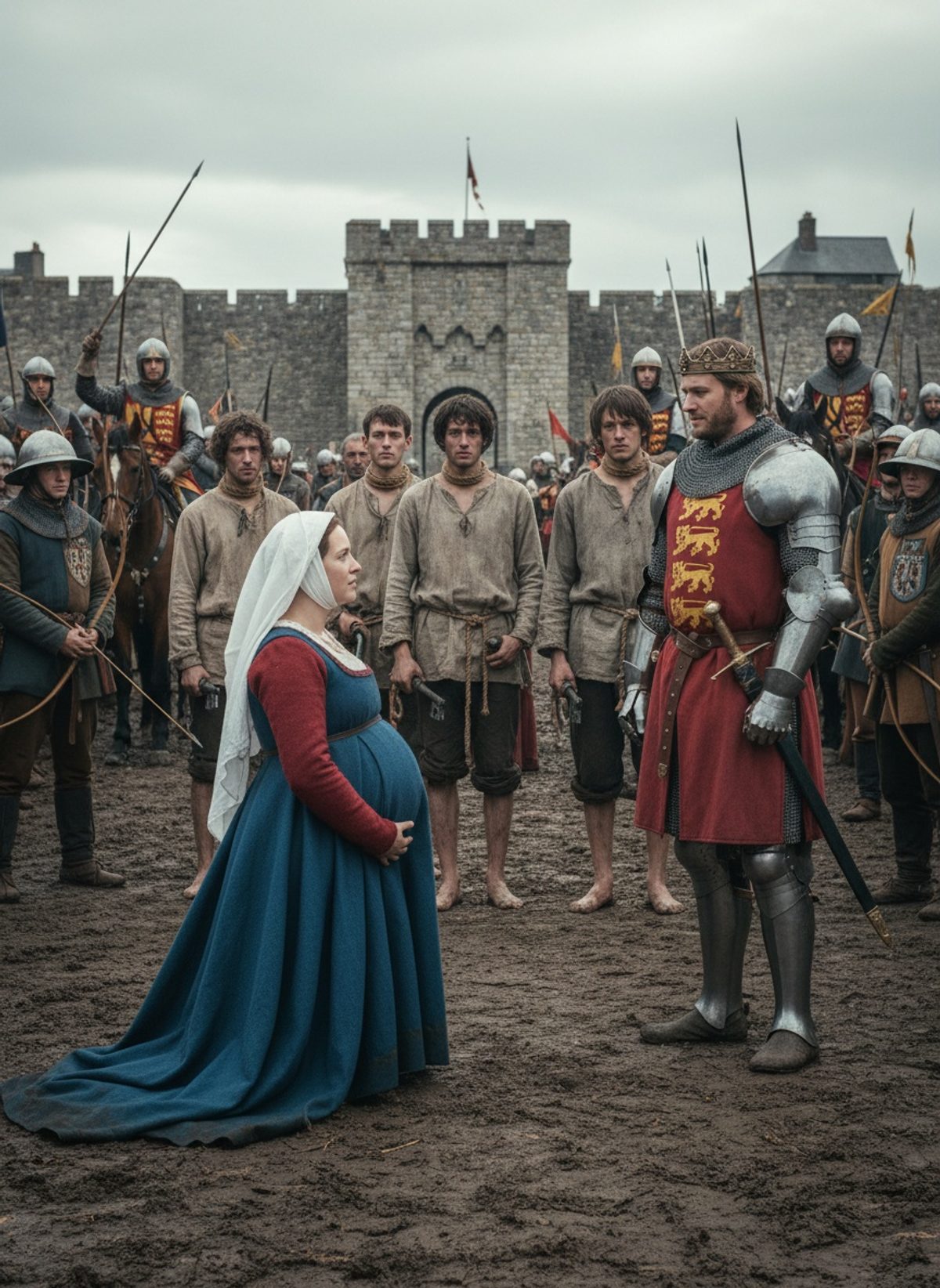
Read next: The Day a Starving City Offered Six Lives for Its Own
The Charge of Youth
In the chaotic blur of battle, moments stretched into eternity. The incessant pounding of rain provided a percussive counterpoint to the din of steel meeting flesh, a constant reminder of the harsh reality that engulfed them. The English arrows cut through the air with a sharp whisper, raining down upon the French host in deadly arcs. Amidst this storm of iron was Thomas, heart thundering, eyes wide, fueled by adrenaline and something undiscussed—hope.
Charged with the duty of serving his knight—perhaps even with the command to advance—Thomas’s actions belied his tender years. In that rush towards the forces of France, he was not a mere boy but a harbinger of his king's will. The muddy battlefield claimed its toll as foot found no purchase on the sodden earth, accentuating every misstep as another brush with mortality. Yet through it all, Thomas moved with a singular purpose: to strike his blow in the name of the weary but unyielding souls beside him.
Emboldened by the scarcity of choices, King Henry himself was said to wade into battle alongside the ranks, a king among his people in every sense. This mingling of king and common folk forged a potent camaraderie, both an inspiration and an assurance to the men in the line. For Thomas, witnessing his sovereign fight emboldened him in equal measures of duty and awe. More than just a mere clash of arms, this battle was carved out by the character of its warriors, young and old alike.
Although young Thomas’s tale ends there upon the field, his charge remains eternally entwined with Henry's triumph. For by nightfall, though Thomas lay among England’s slain, the day yielded a victory immortalized in the annals of history.
A Legacy in Mud and Memory
As daylight waned and silence reclaimed the field, the echoes of the battle at Agincourt lingered in the air like the last vestiges of a fading storm. Henry V’s gamble had granted him not only a victory but a place in the mythos of a nation—and a tale that, even now, whispers through the corridors of time. The boy who charged forward and was lost in the chaos of war is remembered by those who understand that beneath every storied triumph are the countless acts of bravery and sacrifice, often unheralded and unsung.
The body of Thomas lay among the ranks of nameless heroes, joined by nobles and peasants who perished in the mud. In defeat, the French nobility mourned the fall of a chivalric order that had been forever altered. Yet the young squire’s intention was larger than self; it was part of a broader tapestry woven by the resilient spirit of an army determined to endure. While scholars dissect the political ramifications and military strategies of the day, the soul of Agincourt resides in the deeds of those who simply answered their call to arms, oblivious of fame, and aware only of the moment and their part in it.
In recounting the courage of a sixteen-year-old squire, mere threads in the fabric of a great victory, we find the echoes of remarkable history. It serves as a reminder that beyond strategic genius and statesmanship lies a human element no less pivotal—a truth enshrined in muddy fields, lasting emblems of what valor under duress truly means. Thus, in the charged atmosphere of Agincourt, we find intertwined the destiny of empires and the soul of one brave youth who set forth with no certainty but a steadfast heart. The world moved on, but these echoes, silent yet potent, refuse to fade.