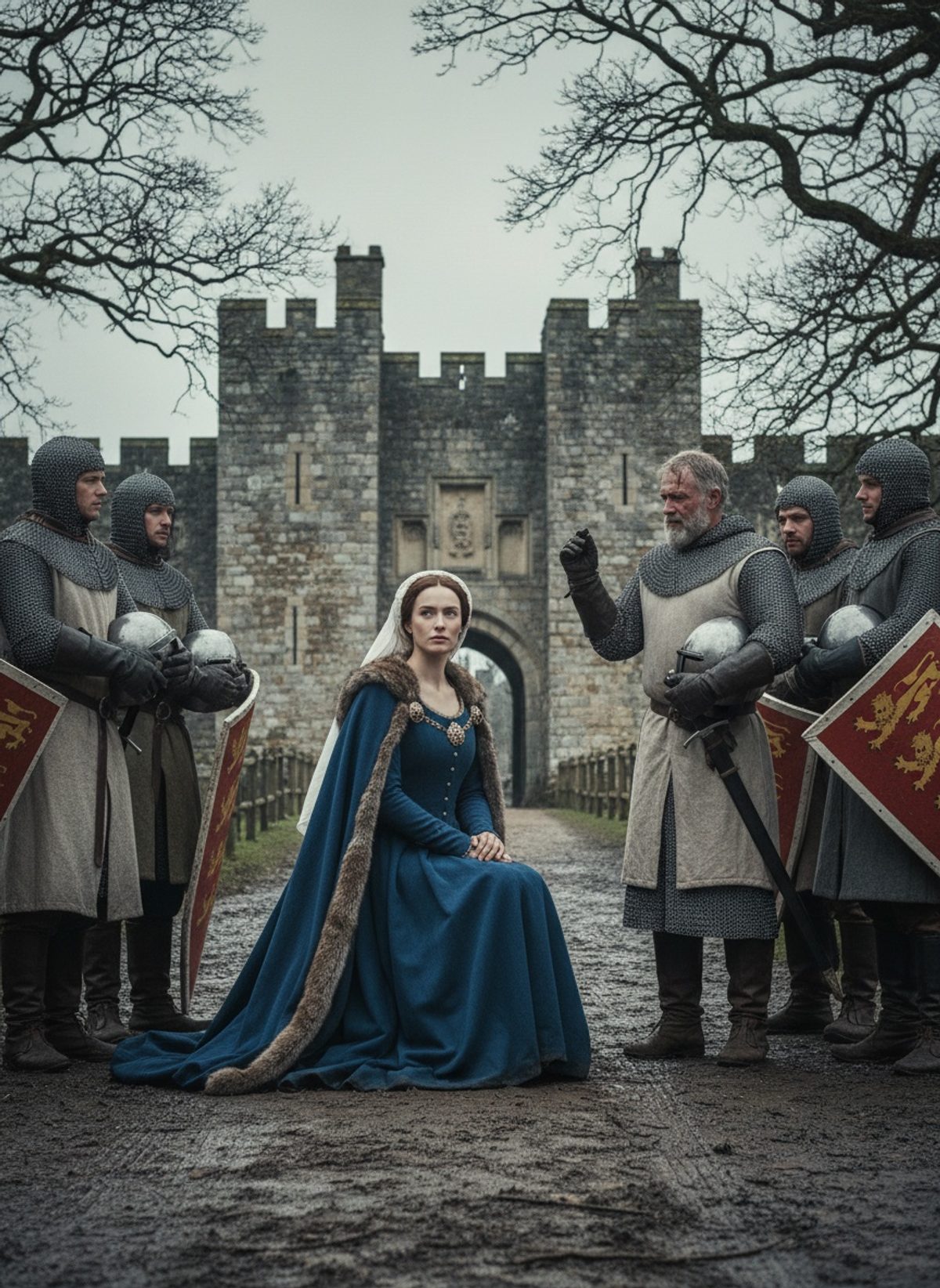
The King of Scotland lay in chains. Yet, he would soon walk free, thanks to a kneeling bishop.
A King in Chains
In 1174, the winds of fate trapped William the Lion, King of Scotland, in an English net he could not evade. An ambitious ruler, he felt the weight of his royal title reduced to the cold clasp of chains. Captured by English forces during his campaign to reclaim Northumberland—land his forebears once held—William faced a brutal reality. His kingdom and its sovereignty teetered on the edge of Henry II's mercy.
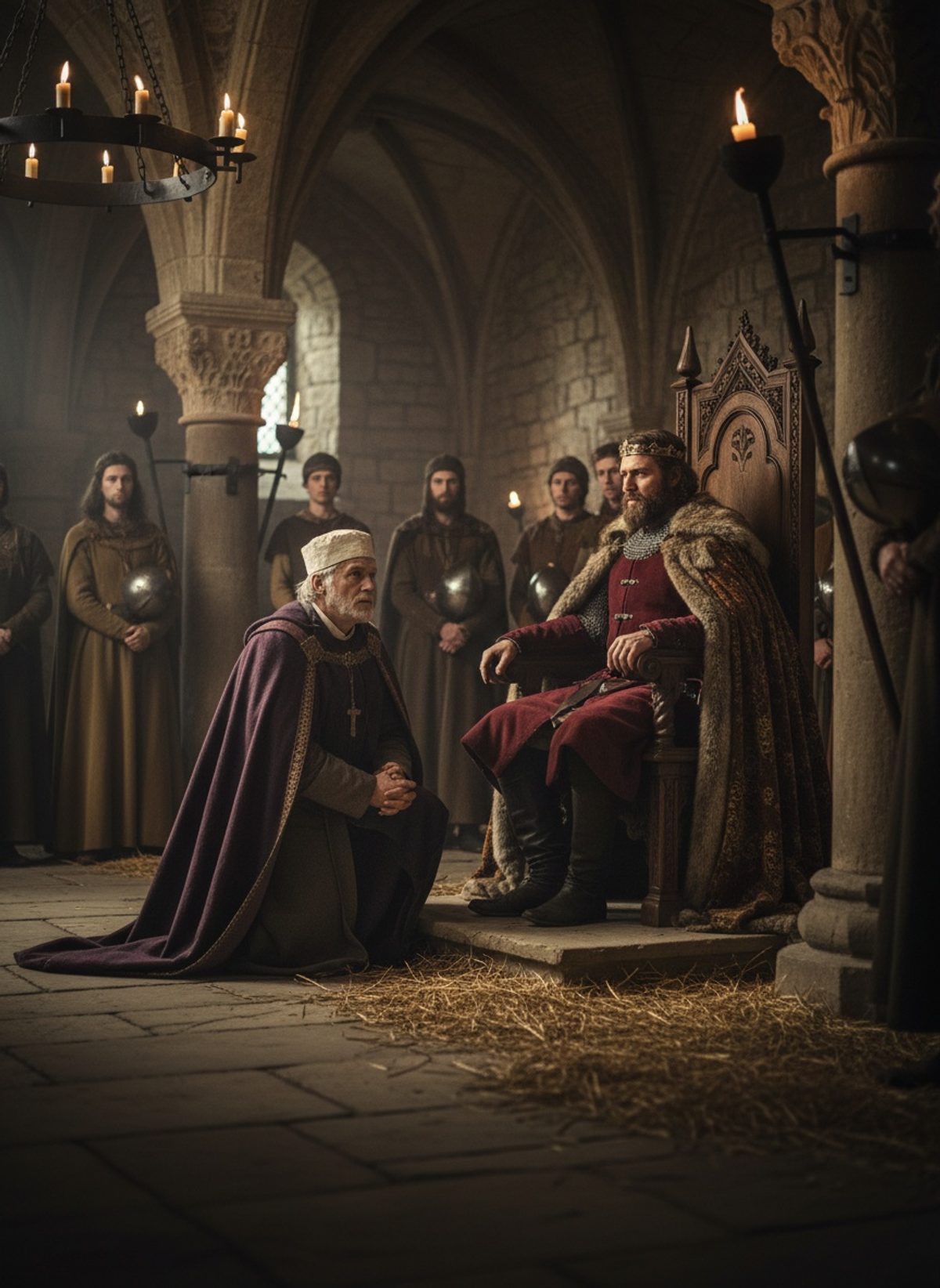
Most medieval monarchs would have relished a rival king’s capture, using it as a spectacle of power and dominance. William, however, found intercession where he least expected it. England's mighty ruler could impose humiliation and demand obeisance, but Bishop Hugh of Durham, an ecclesiastical figure known for his wisdom and diplomacy, sought to mediate. He knelt, pleading for clemency with a pacifist’s heart in a warrior's world.
The Bishop’s Gamble
The Bishop of Durham, Hugh de Puiset, was a venerable figure with a voice that often resonated where swords could not. Known as a shrewd negotiator, he had maintained a delicate balance of power between church and state. His decision to kneel before Henry II was a gamble, risking not only his reputation but the political tapestry sheathed in medieval volatility.
Read next: The Boy Who Held the Line at Crécy
In an age where alliances shifted as easily as the ocean tides, Hugh had to appeal to Henry’s sense of honor, a task akin to walking a tightrope with a fierce lion at one end and a formidable eagle at the other. His appeal was more than just formal petitioning; it was a calculated plea that invoked shared responsibility and mutual benefit—a vision of peace over vendetta. Few could anticipate whether the Norman king, whose temper matched his formidable realm, would heed the voices of mercy over power.
A Monarch’s Choice
King Henry II was not a ruler easily swayed by sentiment. His reign had been marked by the desire to strengthen his dominion over rebellious barons and encroaching regions alike. Yet, here was his opportunity to demonstrate magnanimity, transforming a potential enemy into a pawn on his expansive chessboard.
When Bishop Hugh's pleas echoed across the royal hall, it was not about the immediate triumph but an appeal to the future. Henry stood before the north-south divide—a historical frontier marred by blood and fire. William's freedom could act as a binding thread, weaving a tentative peace between the embattled nations. And so, against expectations, King Henry listened. Perhaps it was introspection or the cunning calculation of a ruler contemplating unity rather than endless conflict. Nonetheless, William walked free from one royal grasp to rule another, his fealty bought at the cost of a bishop's gamble and a king's decision for détente.
The Treaty of Falaise
William’s release was coupled with the Treaty of Falaise—a pivotal text, if not one founded in justice, then certainly in foresight. It required William to acknowledge Henry as his overlord, a stipulation that placed Scotland under the English crown’s influence, albeit tenuously. This clause turned chains into paper shackles, promising peace while slyly undermining Scottish autonomy.
The terms also demanded hostages—key figures of Scottish nobility—as insurance of William's compliance and future loyalty. The treaty, fraught as it was, provided a semblance of stability that was as delicate as the parchment it was written upon. Diplomatically brutal, it revealed the evolving nature of power; the agreement shifted borders through ink rather than arms, reshaping not just lands but legacies as well.
The Threads of History
The bishop’s intervention and the reluctant generosity of King Henry II serve as reminders of medieval diplomacy's complexity—a dance of shadows across the stone walls of power, punctuated by moments of profound human intervention. The aftermath of William's release echoed across generations, a tangible albeit fragile peace that proved pivotal in the adjoining realms' history.
The episode underscores the unpredictable nature of history’s architects: rulers, the captured, and the clergy. The seemingly inconsequential act of mercy played out on the backdrop of bishops and kings set the stage for future alliances and conflicts that would reforge the very fabric of Britain. It wasn't just a king released from chains, but an entire ethos of diplomacy realized—one where words, alliances, and yes, sometimes a single kneeling figure, hold the power to sway the destinies of nations.