October 19, 1216. The mist hung heavy over the fens, a shroud for the mourners.
The Unexpected King
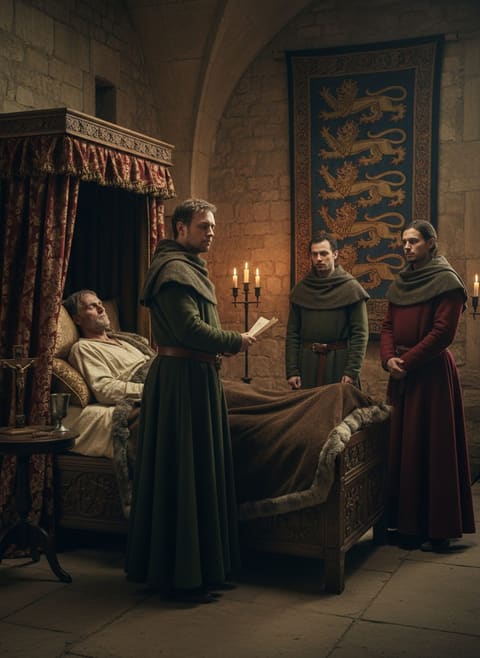
In the chilly morning light of an October day in 1216, destiny was reshaped in a humble abbey of Glastonbury. King John lay dead, his turbulent reign ended not on a battlefield, but in the quietude of his sleep. As England wrestled with the threat of conquest and internal betrayal, a boy of nine—Henry of Winchester—was crowned in haste, his royal blood offering the flicker of a claim to a throne more precarious than regal. With London under French control and England’s own barons scattered in semblances of allegiance, it was not the crown but the allegiance of those around him that pinned a nation's hope on young shoulders.
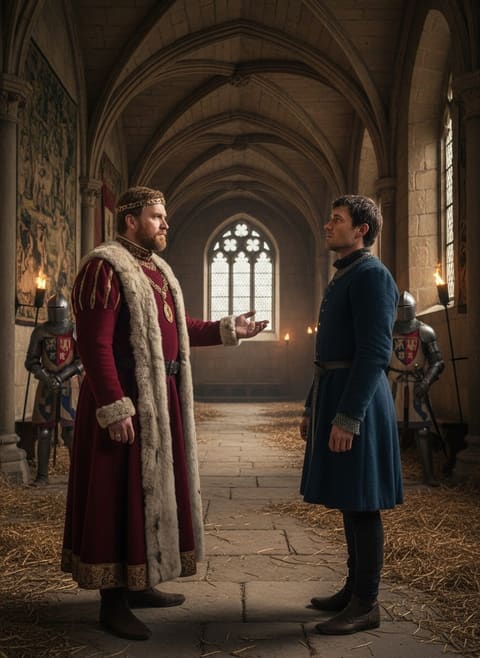
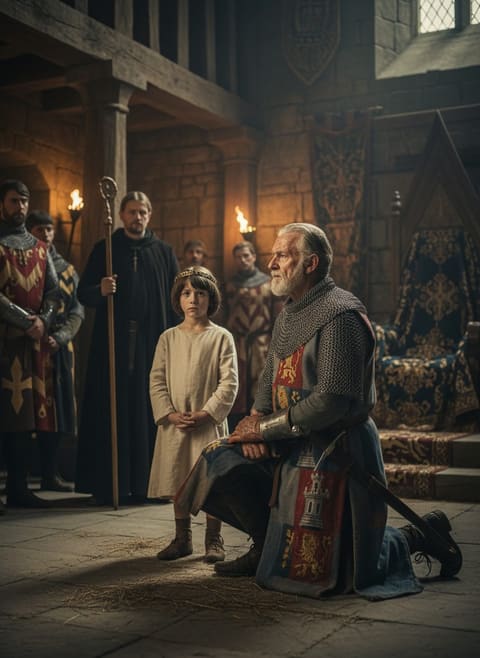
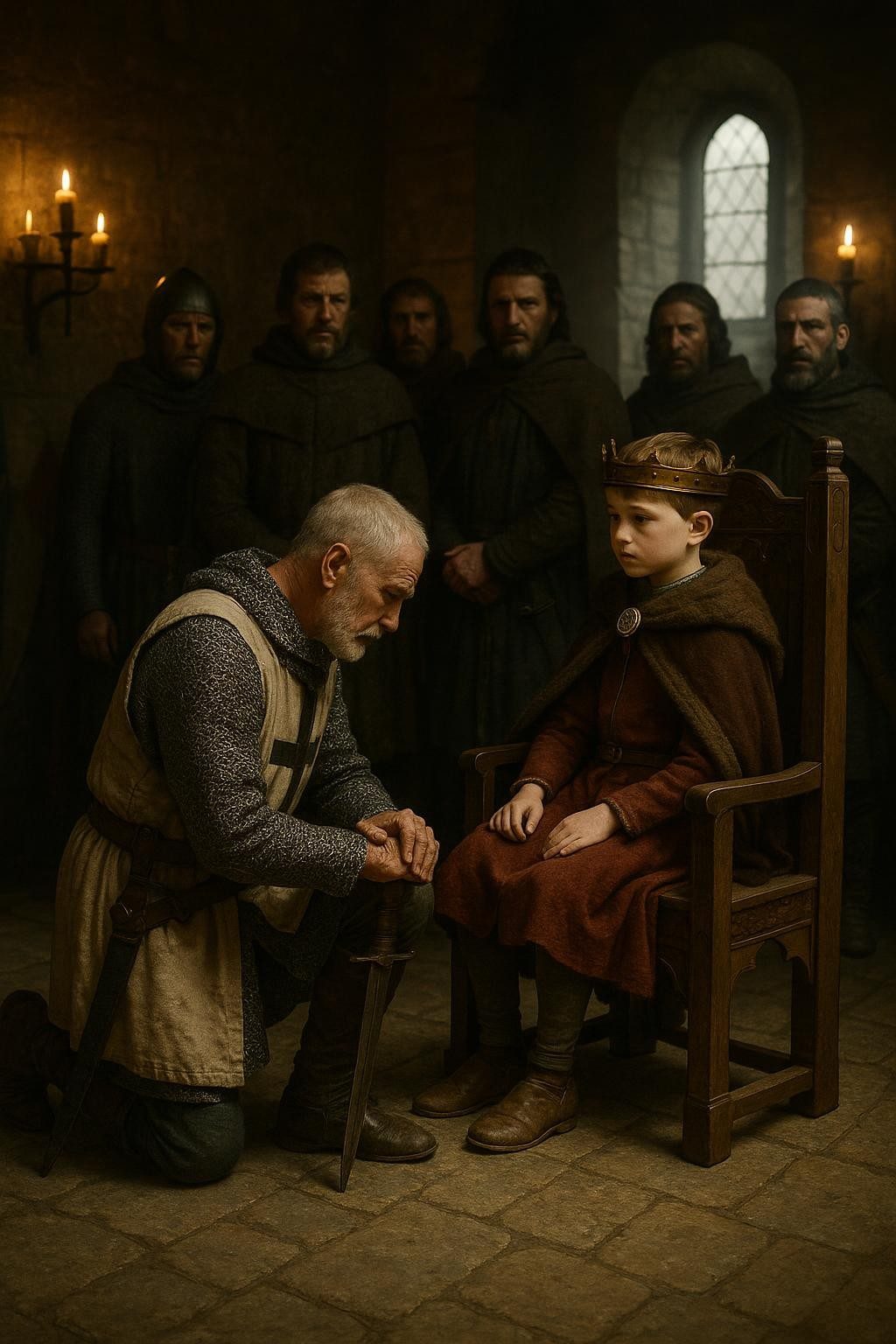
What seemed like the end of the Plantagenet line was held together by one man’s conviction. William Marshal, the legendary knight and statesman, saw in the young Henry not just a boy-king but the embodiment of England’s future. Marshal’s legendary adherence to chivalric duty now faced its greatest test. He knelt before Henry, pledged his loyalty, and immediately rose to face a country teetering on the brink of ruin. Not merely a political move, this act was a defiant declaration to the kingdom and its wavering nobles. The real battle for England's soul had begun, not with swords on a field, but in the steadfast hearts of its defenders.
The days that followed were defined by tense negotiations and strategic brilliance. As protector of the boy King, Marshal began by erasing divides, reaching out to barons disillusioned by John’s oppressive rule. England was not to be fractured by the whims of royalty or rebellion but unified under an uncontested sovereign—even one so young. Amidst the strife, a rare alliance grew between the child king and the seasoned knight, a tandem that translated into a kingdom slowly piecing itself back together.
Read next: The Day a Young Prince Knelt and Refused a Crown
Sword and Strategy
William Marshal’s years of knightly prowess were at the forefront as England found itself on the precipice of French domination. With King Louis VIII of France waiting to seize London, the fight to reclaim the capital became a symbol of English resistance. Marshal, fighting as a protector and father figure, carried out maneuvers that would foreshadow the legendary acts in chronicles yet to be penned.
Strategic patience and rallying cries drew the indecisive English barons back to their homeland’s cause. Marshal demonstrated deft diplomacy by appealing to their sense of identity and dignity. Sworn enemies were now compatriots in the face of foreign rule. The presence of Henry served as the cornerstone of this unity, his coronation in Gloucester becoming a vivid emblem of defiance. Although crowned with a silk wreath instead of a golden coronet—which remained in disputed London—his rule was recognized with a legally binding precedent that declared him Rex Angliae non dubie—undoubted King of England.
Marshal’s keen insight into human nature accomplished what violence could not. Misunderstandings that had fractured alliances were pacified under the guise of Henry, whose innocence bespoke his inability to manipulate or malign. The brilliance of this strategy lay not just on the battlefield but in positioning the boy king as a rallying banner unmarred by past mistakes.
The Triumph of Loyalty
In the following months, the essence of England's salvation lay in a series of decisive actions that culminated in the reversal of tides. In 1217, at the dawn of potential obliteration, England witnessed the confluence of loyalty and strategy at the Battle of Lincoln Fair. What unfolded there was less a clash of steel and more a tale of reconciliation, placing England firmly back in English hands.
Read next: The Day a Queen Rode Alone Into a Mutinous Army
As the country pieced itself back together, the image of William Marshal as a guardian grew larger both in lore and in political legacy. The rescue of England from French grasp was predicated not merely on marshal acumen, but the profound commitment to a single guiding principle: the duty to one's king, even if that king was merely a child. The spirit of revitalized fealty unraveled the bonds tying English nobles to French bribes, reignited their English pride, and redefined the social order around the youthful monarch.
The future Henry III would prove an enigmatic leader, navigating the kingdom into further years of conflict and unification. However, the ripples of the extraordinary events following his ascension were felt long beyond his reign. The lessons of loyalty and strategy from this era informed monarchs of times untold, preserving the fragile fabric of sovereignty amidst turmoil. This day, when a boy emerged not just as a king, but as a beacon, forms an enduring chapter in the chronicle of British sagas—a tapestry of bravery and devotion tightly woven by the unbreakable threads of chivalric loyalty.
The tale is less about the victory over foreign conquerors and more about an enduring spirit of resolve, regardless of the uncertainties of youth and the tumult of politics. It compels us to look beyond the surface, to fathom the quiet tenacity of those whose unsung valor shaped the contours of destiny. The legacy of these events serves as both a caution and an inspiration, a lesson unheeded by history at its peril.