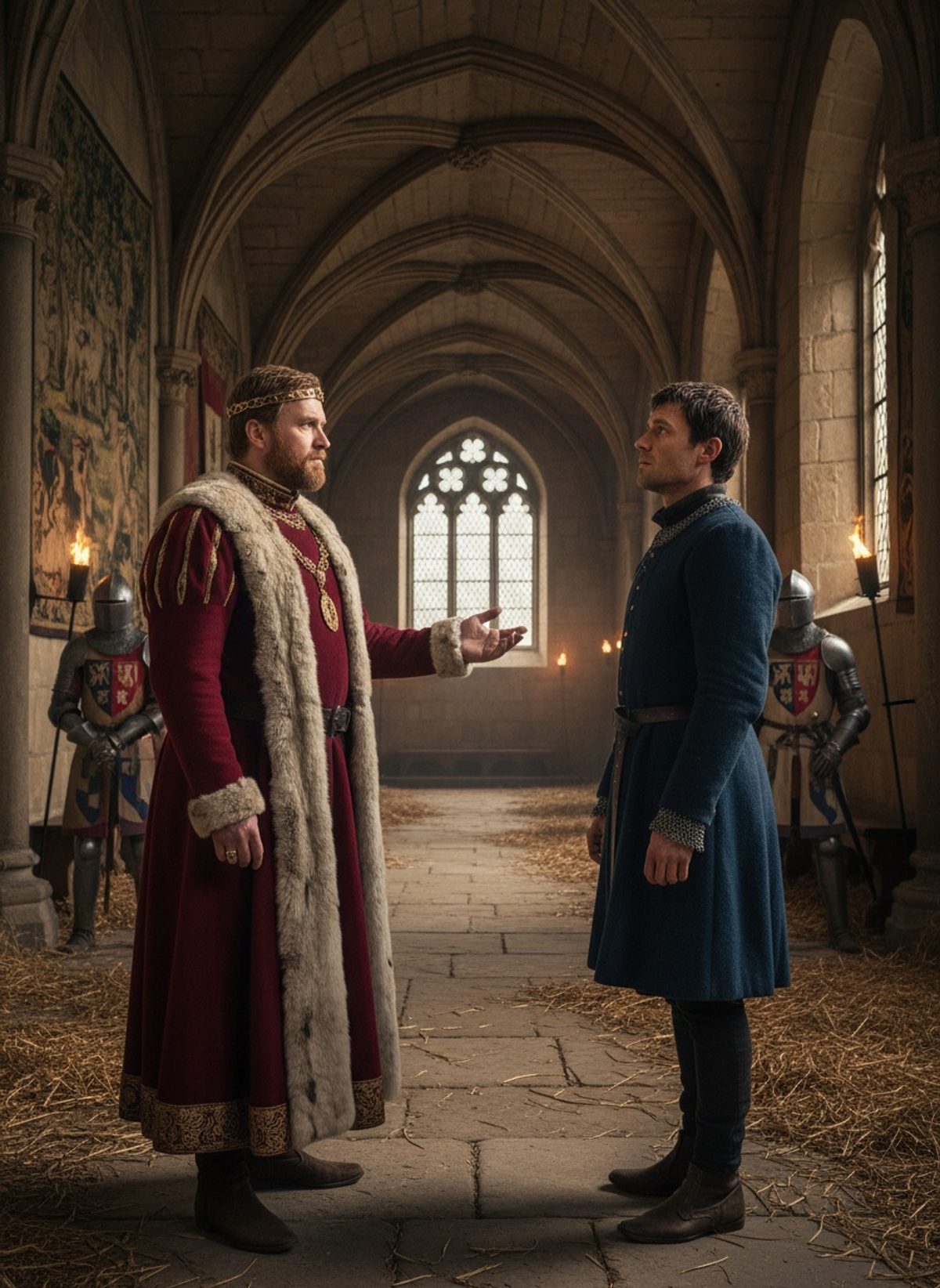
The air was wet and full of tension as the rain-soaked procession trudged through the mud-splattered alleys of Gloucester. Squires and nobles alike moved with uncertain haste, their footsteps echoing against the crumbling walls of the priory. There in the heart of medieval England, an unlikely coronation was about to unfold. A nine-year-old boy stood amidst the gathering, his expression a mixture of bewilderment and premature determination; before him lay not the gleaming insignia of royal authority, but a simple gold circlet — the best they could muster for a king without a kingdom.
The Boy Who Would Wear a Crown
With the recent death of King John on October 19, 1216, England found itself in unprecedented chaos. The French, led by Prince Louis, sat comfortably in London; an entire half of the kingdom lay in the grip of rebellious barons. Into this broken realm walked young Henry, the third of his name but all too young to grasp the gravitas of the title thrust upon him.
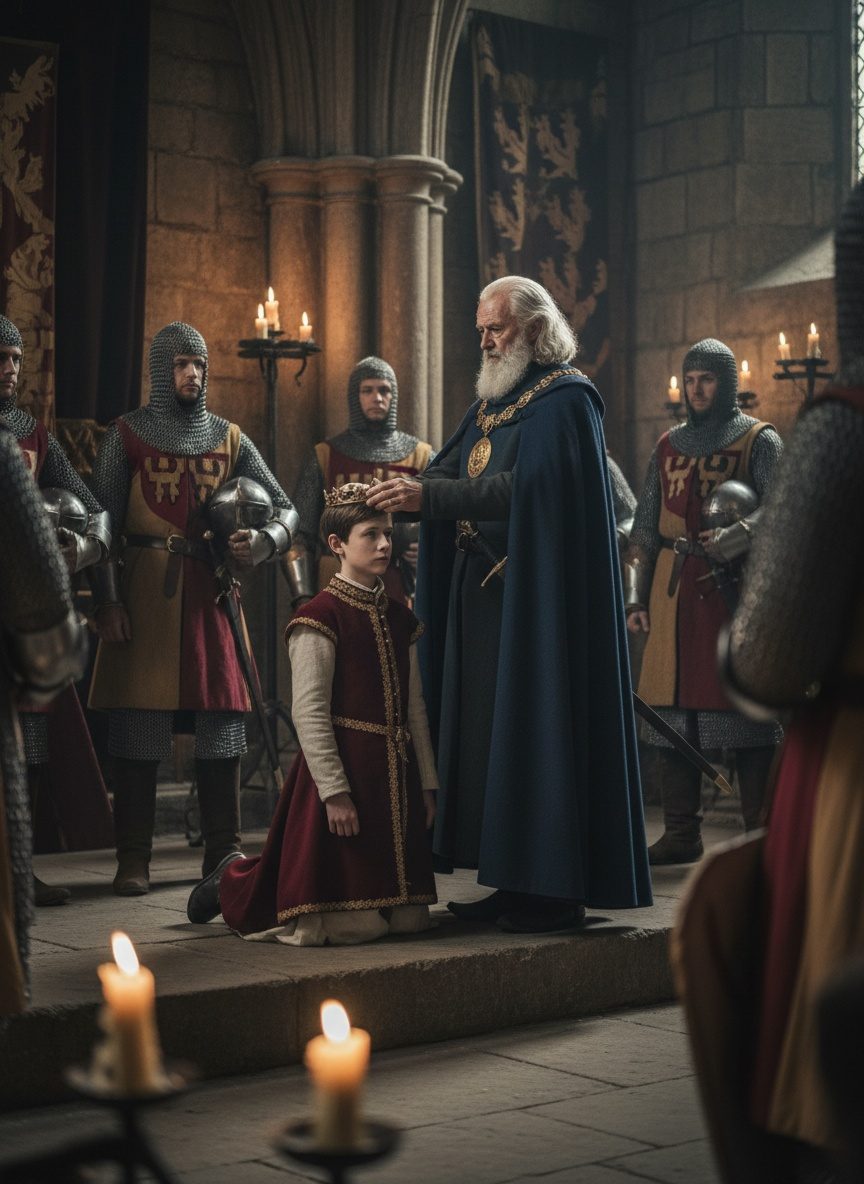
His supporters, a scrappy coalition of loyalists led by the stalwart William Marshal and the pragmatic papal legate Guala Bicchieri, quickly orchestrated his ascent to the throne. It was a bold, audacious move — and, in many eyes, a calculated gamble to restore order. It was there, in the hallowed yet weather-worn surroundings of Gloucester Cathedral, that they placed the simple circlet atop his head, symbolizing the fragile unity they sought to reforge. Those present knew that the ceremony was but a formality if the boy-king's reign was to survive the tempestuous political landscape stretching before him.
The Kingdom in Tatters
To understand the enormity of the moment, one must first peer into the shambles that was England in the fall of 1216. King John’s final years were marked by relentless wars, extortionate taxes, and failed diplomacy — his reign culminating in the ignoble signing of the Magna Carta in 1215, a document intended to curb his apparent despotic excesses. But John was not a man willing to be bound by parchment alone, and the resultant civil war saw the barons invite Prince Louis of France to claim the English throne, an act of unprecedented betrayal.
Read next: The Day a King Knelt to Wash a Beggar's Feet
The French prince's forces, bolstered by defecting English nobles, focused their efforts on key southern cities, with London, the jewel in the crown of England, succumbing to their numbers. The loyalist regions lay fragmented, stalwart but besieged in their opposition to their rebellious peers. To these loyalists, Henry’s boyish charm offered a beacon of hope. A king without the sins of his father — a king who could unite the divided nation.
A Coronation Without a Crown
The coronation itself was symbolic of the dire circumstances. Gloucester was strategically chosen, nestled away from the French-occupied capital and among territories still sympathetic to the Plantagenet cause. The fact that no crown was available spoke volumes of the realm’s fractured state. Traditionally, the crown would have been a golden emblem adorned with jewels, a circlet that encapsulated the monarchy’s supposed divine right. Instead, the simple gold ring served as a stark reminder of what had been lost and what was now at stake.
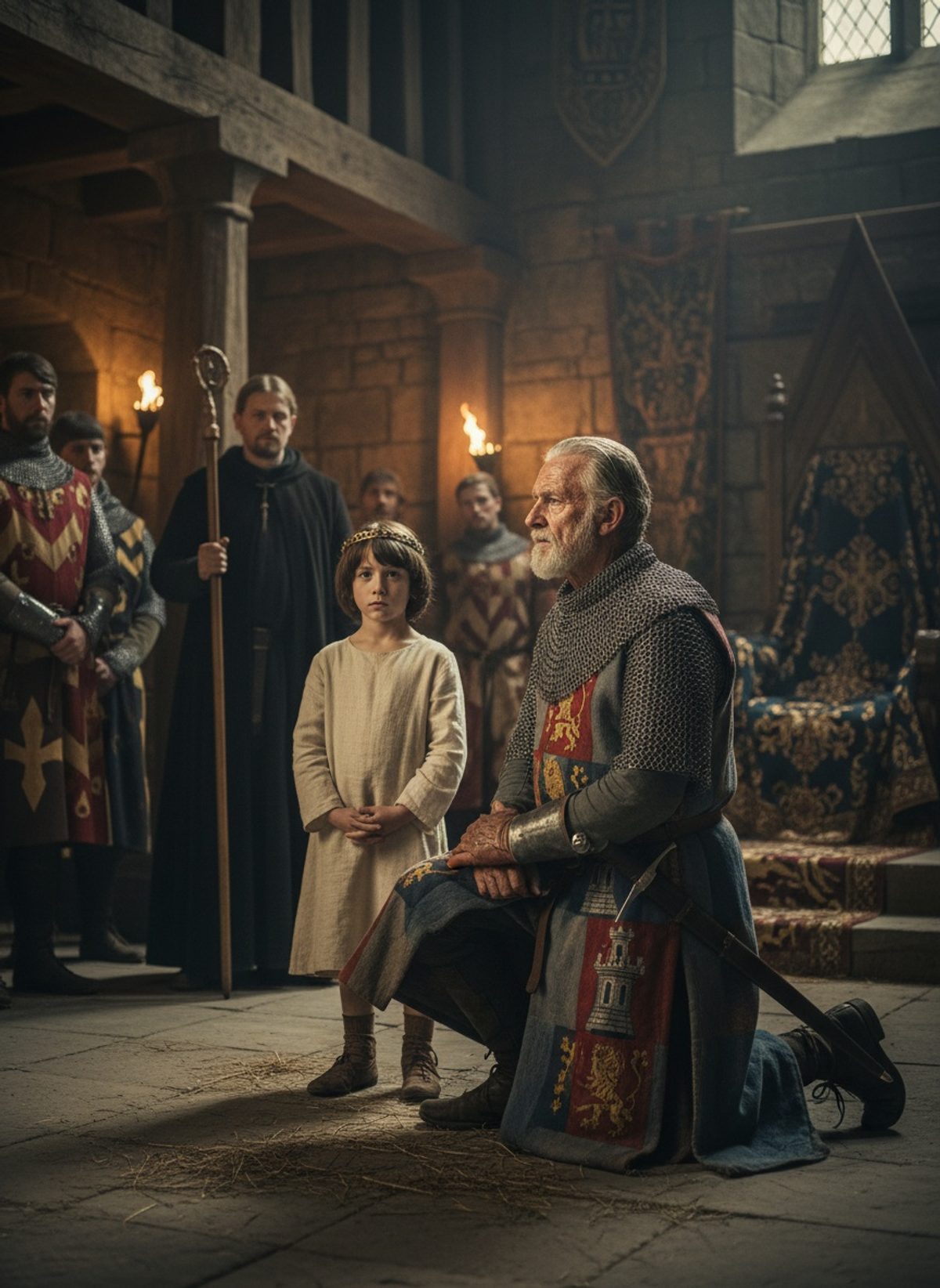
Yet, the simplicity of the ceremony was not without its message. Those who witnessed it could see promise in the small figure standing at its center. Here was a future still unwritten, a moment pregnant with potential. William Marshal, aged but vibrant with wisdom, knelt in humility as he pledged his loyalty to the new king — as did many who looked on. With threats arrayed both within and outside the land, Henry’s coronation was not just anointing a king but kindling a flame of resilience.
The Spark of Hope
In the months and years following the coronation, the struggle for England's soul would continue under the cautious stewardship of his guardians. It was not immediate triumph that characterized Henry’s reclaiming of the crown and country but endurance. Treaties and alliances were cautiously crafted, and through relentless negotiation and occasional military engagements, the French threat gradually receded.
Historians often cite the strength in spirit rather than might that carried Henry through his early years. The loyalties shaped amidst the ruins of Gloucester forged a bedrock upon which the eventual stabilizing of the realm was built. Royal supporters, outnumbered but unwavering, leveraged their teenage king’s innocent image against the rebellion-tired populace. For many, the vision of a child king was an embodiment of renewal and innocence. This sentiment turned the tide in favor of Henry and his regents, and the fractured realm began to stitch its way back into a patchwork whole.
As Henry knelt on that soggy October day, a rain-dampened circlet upon his head, few could have imagined the legacy that would stem from his youthful reign. Though his ascension was born out of turmoil, it signaled a steadfast recovery and enduring hope for the English crown. In a kingdom teetering on the brink, it was, after all, the unwavering faith in a boy that helped mend a nation on the verge of breaking.