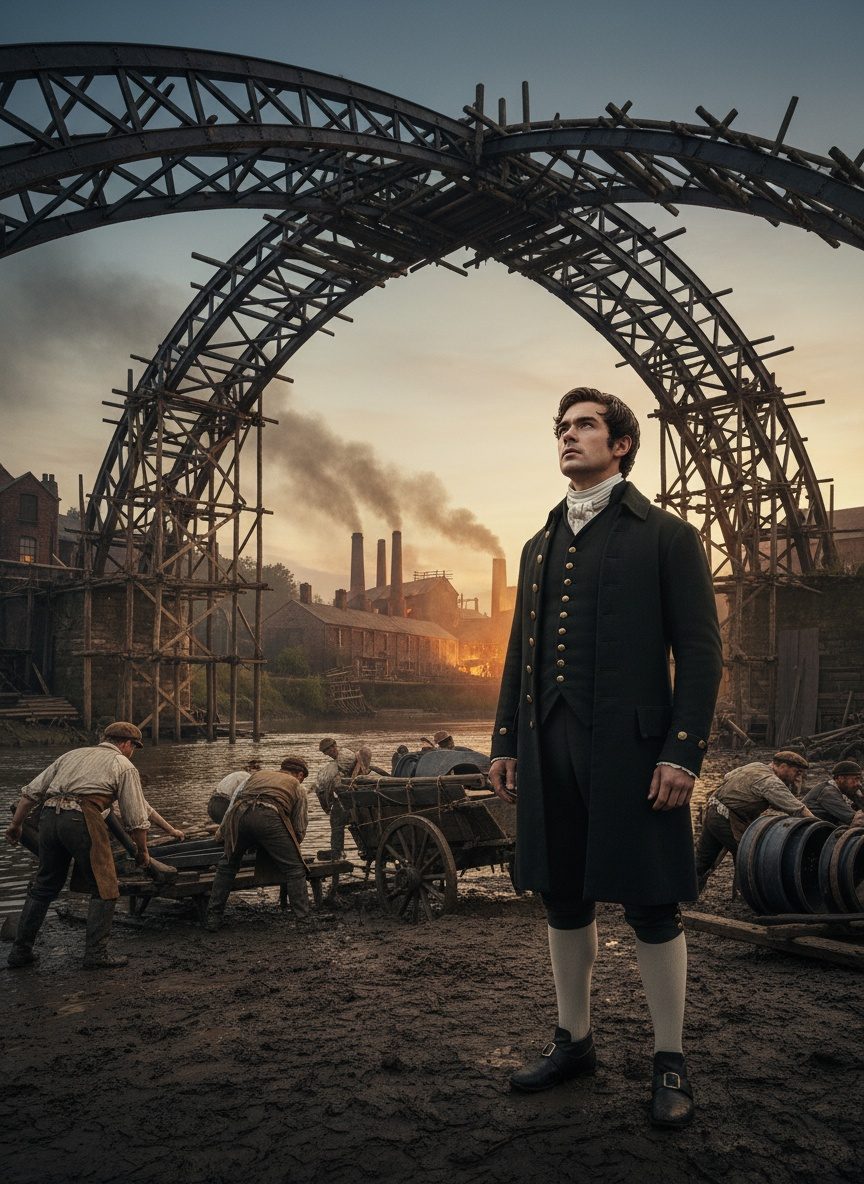
The early morning mist clung to the River Severn, a ghostly veil wrapping the tranquil waters. The rising sun cast a golden hue over the green hills of Shropshire, slowly burning away the fog to reveal the iron town of Coalbrookdale. In the distance, the rhythmic clanging of hammers echoed—a familiar symphony marking the industrious pulse of the Industrial Revolution. Yet, amidst the din of creation, there brewed an audacious plan that threatened to defy the very bounds of engineering wisdom: the world's first iron bridge.
Forging a Vision
In the summer of 1779, the ambitions of one man stirred the sleepy town of Coalbrookdale. Abraham Darby III, the innovative ironmaster of the region, envisioned a bridge unlike any seen before—a structure forged entirely of iron. At the time, bridges were constructs of stone and timber, materials whose reliability was unquestioned. Iron, while revolutionary in its potential, was yet untested in such a grand venture. Critics murmured of collapse, of ruin. Still, Darby's imagination was undeterred. He saw iron as the future, a testament to human ingenuity.
The challenge lay not only in the sheer novelty of the material but also in its construction. The bridge would span 100 feet over the River Severn, an ambitious endeavor that many claimed was doomed from the start. Yet Darby, steeped in the knowledge and resources of the Coalbrookdale Company, was determined to prove them wrong. His foundries, renowned for pouring molten iron into molds more precisely than anywhere else in England, were the birthplace of this visionary project.
The Heart of Industry
Soot-choked skies bore witness to the relentless flame of furnaces that consumed vast swaths of the surrounding forest. The air was thick with the acrid scent of coal, its dull rumble beneath the earth a reminder of untapped potential. Coalbrookdale, a cradle of industrial progress, thrived on these natural resources, its heart now set on the new, iron-clad horizon. Under Darby's leadership, the foundries grew restless, driven by the dreams of what iron could accomplish.
Read next: The Day a Mill Owner Kept Paying Wages He Could Not Afford
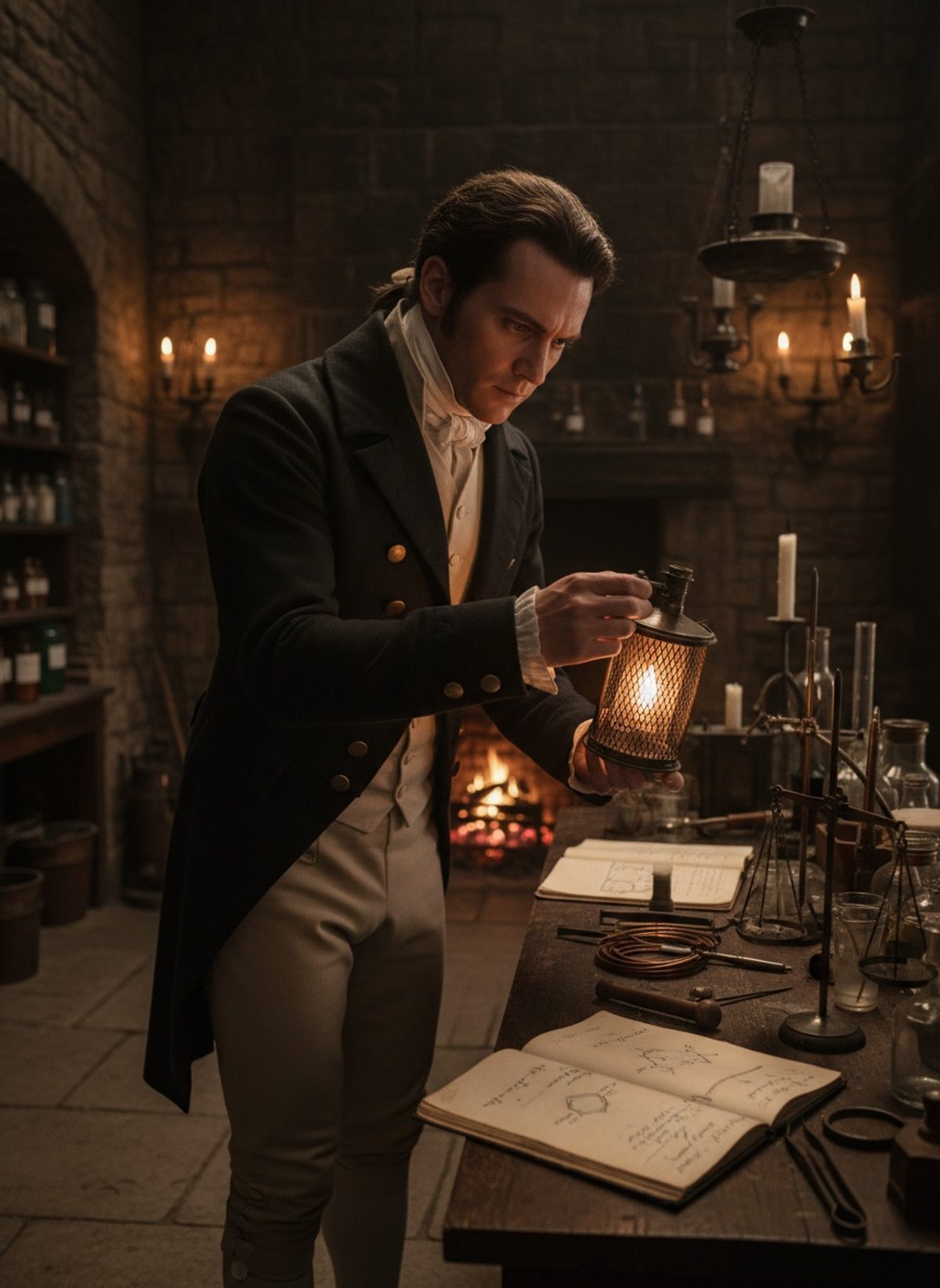
In the foundry's fiery depths, iron was transformed from raw ore to molten streams, pouring into pre-fashioned molds. The process required meticulous precision and relentless innovation. Despite the skepticism, the artisans of Coalbrookdale, guided by the steady hand of Darby, molded every iron segment with a dedication that bordered on fervor. Ingenious in its simplicity, the assembly of the bridge eschewed traditional bolts and rivets, relying instead on dovetail and mortise joints that fit the massive pieces seamlessly—an architectural feat as daring as it was precise.
Assembling Ambition
Winter's breath tinged the air as the day dawned when Darby's vision would finally stand firm against the doubts of naysayers. Onlookers from nearby towns gathered, their breath swirling in the chill of anticipation. On the banks of the River Severn, the scene unfolded like a theatrical performance, with nature and industry sharing the stage.
Piece by piece, the great iron ribs were hoisted into place over the river, each fitting snugly into the architecture of an idea. Laborers, seasoned by years of toil in the furnaces, moved with precision, their hands executing a dance choreographed with the grace of a conductor leading a symphony. The iron beams, cast and cool but still imbued with the warm hues of their creation, formed an imposing silhouette against the winter sky.
The bridge, an arch of iron lifted above the waters of Severn, stood complete. Its curves mirrored the gentle arches of the willows that lined the river's edge, a harmonious meld of nature and innovation. Against all odds, the vision had materialized. The naysayers fell silent before the tangible proof of one man's dream.
The Iron Weight of Skepticism
In the days that followed, the bridge bore witness to the incredulity of skeptics and the wonder of believers. The bustling throngs of people, carts loaded with coal and iron, treaded its path—a steady dance of industry and commerce across its span. Yet, it was the first tentative footstep that evoked the deepest emotion. The bridge, undeniably sturdy, held strong—a symbol of human ambition overcoming the inertia of convention.
Critics, their doubts now bridged by iron, spoke of it with newfound respect. Engineers from far and wide traveled to Coalbrookdale, the bridge standing as a monument to a new era. Opinions shifted as easily as the winds over the Severn, its waters now reflecting the iron edifice above. The debate over iron's viability began to mellow, casting a longer shadow of opportunity over infrastructure and innovation.
A Legacy Forged in Iron
The Iron Bridge, as it came to be known, stands today, an emblem of the Industrial Revolution's indomitable spirit, its arches sweeping gracefully across the River Severn. The bridge is more than a mere crossing—it represents the crucible of invention where ideals were tempered into reality. Darby's vision transcended its physical form, pioneering a paradigm shift in engineering and construction.
In a world often bound by familiar paths, the Iron Bridge serves as a reminder of the extraordinary power of innovation sprung from the most ordinary of places. It symbolizes the enduring impact of bold ideas—the capacity to reshape landscapes and redefine possibilities, waiting in the mold of yet another ambitious dreamer.