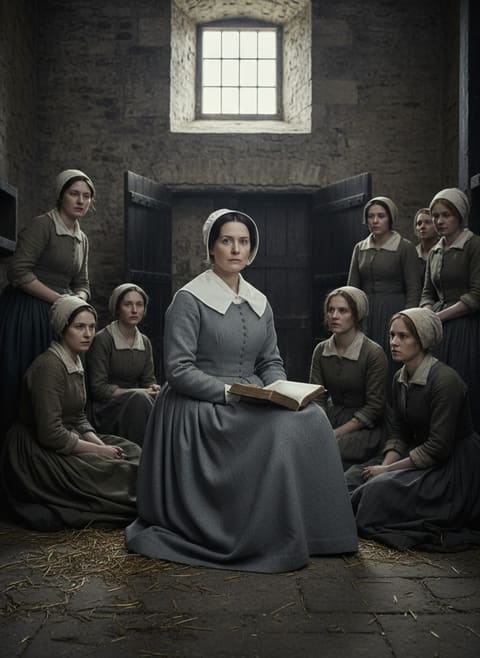
York Asylum stood as a beacon of care. Instead, it concealed a horror that changed everything.
A Quaker Obsession
In the serene, cobbled streets of 18th-century York, nestled among rows of shops and bustling tea merchants, William Tuke was a quiet presence. A man of the Society of Friends, or Quakers as they were more commonly known, Tuke was familiar with simplicity and pious devotion. Yet it was a distressing event that stirred the calm of his life—a Quaker woman had died in mysterious circumstances within York Asylum, the reputed sanctuary for the mentally afflicted.
The asylum, an ominous edifice, was meant to provide care. But what lay beyond its walls was shrouded in mystery, sealed tightly by societal indifference. Most would turn away, their curiosity stifled by fear of the unknown or blind trust in the institution. However, Tuke questioned the silence surrounding the woman's death. Why did she die? What were her last days like? The system dismissed these as questions not worth asking. But not Tuke. In a time when mental illness was an enigma wrapped in superstition and misunderstanding, Tuke's resolve to seek the truth was both daring and dangerous.
Inside the Gloom
On a fateful day in 1796, William Tuke ventured where few dared to tread. York Asylum was a fortress of iron bars and shadowed corners, both metaphorically and literally. Alone, Tuke stepped through its thresholds, determined to untangle the web of neglect and silence. There, beneath the dim, flickering light of tallow lamps, he uncovered the reality of Georgian-era mental healthcare.
Read next: The Day a Black Sailor Walked Into Court and Freed Himself
Patients were treated less like human beings and more like caged creatures, deprived of dignity and compassion. Tuke was confronted with scenes that defy belief: festered wounds left untreated, rooms that echoed with the groans of despairing souls, and the constant clattering of chains as patients were restrained like criminals. The stench of neglect permeated the air, a stark contrast to the pastoral, orderly world beyond the asylum's walls. Each step he took confirmed his growing suspicion that the death he mourned was merely one in a series of systemic failures.
The Revelation
Tuke's journey into the asylum disclosed more than just gruesome conditions; it illuminated a fundamental flaw within societal perceptions of mental illness. At the heart of his awareness was a staggering notion—humanity had abandoned these souls, cast them aside into a pit of forgetfulness. His faith, which stressed inner light and the equal value of all human beings, could not tolerate such injustice.
William Tuke grasped that the tragedy he had uncovered was both an indictment of current practices and a cry for change. He understood the necessity of advocating for a transformation that went beyond mere reform—a revolution in how the mentally ill were viewed and treated. The neglected woman whose death had brought him to this dark place became a symbol, not of defeat, but of a cause worth championing.
The Birth of a Sanctuary
Out of the shadows of York Asylum emerged a visionary proposal from Tuke. He envisioned a retreat unlike any that existed—a place where kindness, not cruelty, was the guiding principle. And so, he began to plan what would become known as The Retreat, grounded in Quaker values and dedicated to caring for the mentally ill with gentleness and respect. The concept was simple yet radical in its day: offer refuge, not incarceration; healing, not punishment.
Read next: The Day a London Clerk Walked Into Court for a Dying Slave
The design of The Retreat was to be transformative. It dismantled the walls of misunderstanding that equated mental illness with moral failing. It drove home the conviction that compassionate care could spark change. Through the establishment of this new sanctuary, Tuke planted the seeds of what would become modern psychiatric care. Here, patients roamed gardens instead of corridors and received not the lash, but the balm of empathy.
A Legacy of Change
William Tuke's brave incursion into York Asylum altered the landscape of psychiatric care, challenging the accepted norms with his revolutionary approach. His actions sparked a burgeoning awareness, culminating in a broader movement to treat mental illness with dignity. The Retreat set a new standard, steering future initiatives away from punitive measures toward holistic, humane treatment. While the immediate impact was felt within Britain, Tuke's model gradually influenced mental health care on an international scale.
The legacy of a solitary walk in 1796 reverberates even in today's understanding of mental health. It serves as a poignant reminder that change often begins with a single step—a resolute moment of defiance that speaks louder than the collective silence it disrupts. At its core, Tuke's story is a timeless lesson in compassion; one man's quest for justice led to the illumination of countless lives. And though he may not have sought fame, William Tuke's bold vision ensured he would not be forgotten.