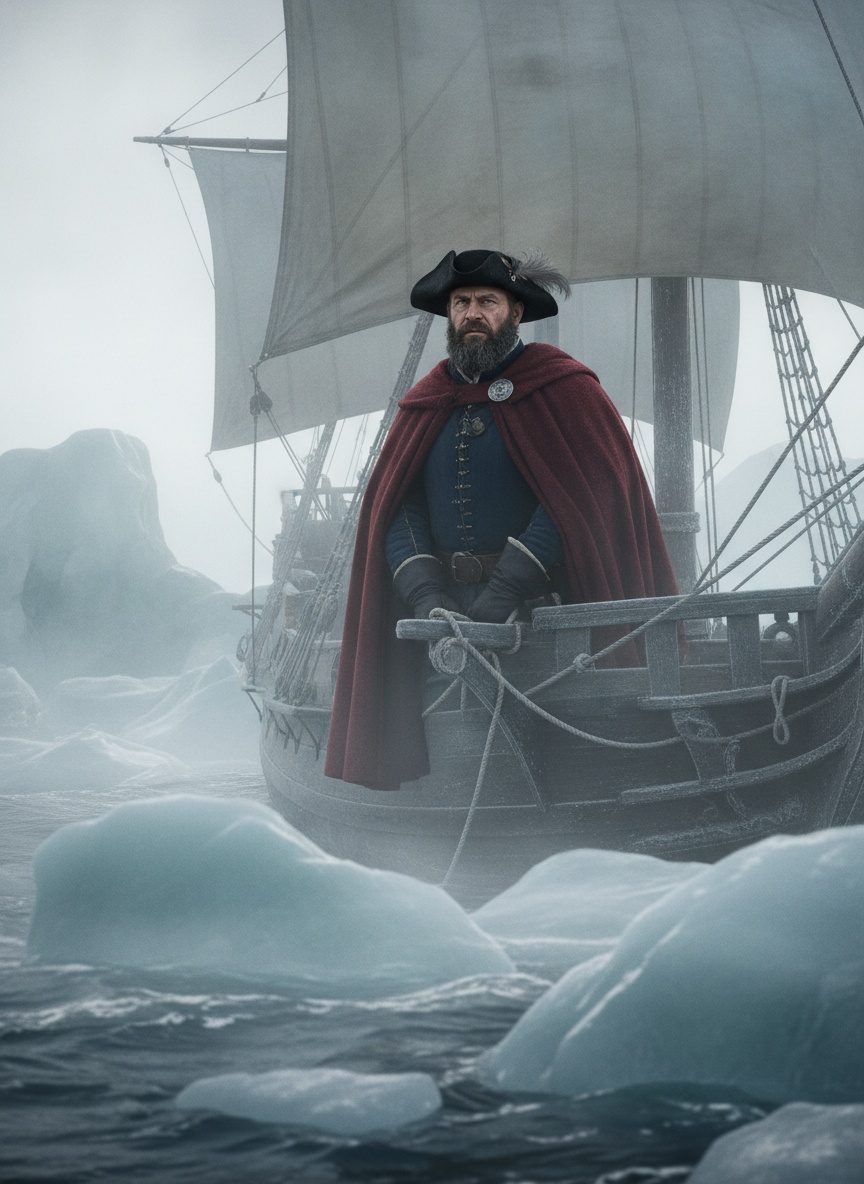
August 7, 1576. The icy waters of the Arctic lapped at the wooden hulls.
The Frozen Frontier
The wind whipped mercilessly across the forbidding seas, its icy tendrils biting into the weather-beaten faces of the sailors. On this bleak morning, the men aboard the three ships—Gabriel, Michael, and an unnamed pinnace—were about to venture into a realm governed by ice and uncertainty. At the helm was Martin Frobisher, a mariner from Devon with the tenacity of a lion and the dream of a madman, who had set his sights on navigating the legendary Northwest Passage. This elusive route promised a shorter path to Asia, a siren song that had led many brave souls to their doom but left their discoveries a step short of fruition.
Frobisher's partner in paving this uncertain path was the business-savvy Michael Lok. The financial stakes were immense, causing tension to ripple across the Elizabethan society. Each unmapped mile could potentially yield unimaginable wealth, yet the icy arms of the Arctic were equally ready to claim ships and men as they had so many times before. But Frobisher and his crew, hearts beating with the ceaseless rhythm of wanderlust, were undeterred. Their voyage was an act of sheer daring, fuelled by a yearning for glory and the nebulous whispers of gold rumored to be nestled in the icy north.
This venture into the unknown necessitated endurance and vigilance. The Arctic waters, littered with icebergs as ancient as time itself, stood as silent sentinels guarding the secrets of the North. The enigmatic fog enveloped the ships in a veil of mystery, leaving sailors to navigate by instinct and hope. It was a setting where men tested the limits of exploration, fueled by the promise of conquest over nature and new worlds.
Read next: The Day a Scots Surgeon Walked Into Timbuktu Alone
The Gold That Sparked a Dream
Upon reaching the frigid shores, Frobisher and his crew set about exploring the barren land. At first, disappointment loomed large. The landscape, stark and desolate, held treasures far different than those depicted in feverish dreams. But after days of foraging and determination, fortune at last smiled upon the expedition. The men stumbled upon something dramatic—rocks that seemed to glitter under the Arctic sun. Initial skepticism turned to feverish excitement as tests suggested these might contain gold. The hearts of men, long battered by unyielding seas and uncertainty, leapt with a newly kindled hope.
What they carried back to England would provoke a fervor not seen since the exuberant days of Columbus. In the open hearths of Devon to the splendor of Queen Elizabeth's court, tales of the discovery spread like wildfire. Frobisher was no longer just another captain; he was a lodestone for the ambitions and fortunes of many. The rumored gold was enough to propel another expedition, a gold rush to rival that of far more seasoned explorers. This windfall would ultimately prove to be fool's gold, yet even such a ruse could not quell the turbulent dreams that the tundra had inspired.
The drama of Frobisher’s journey was as much in its outcome as in the act of daring itself. His discovery—or rather, the myth of it—would linger in the minds of English adventurers for years to come, encouraging more bold voyages and laying the groundwork for what would eventually become more comprehensive explorations of Canada. Frobisher's name would become synonymous with the blend of misadventure and ambition that characterized the Elizabethan Age of Exploration.
The Shadow of Legacy
Frobisher’s exploits become enshrined in tales that echoed through England, a narrative painted with both success and shadow. While the tangible gold turned out to be illusory, the intangible wealth gained through expanded horizons was immeasurable. It was not the metal itself but the *idea* of gold that convinced Elizabethan England to invest further in exploring western lands—this drive, ignited under icy skies, fueled the future positioning of Britain as a global maritime power.
Through this journey into uncharted waters, Captain Frobisher became more than a man; he personified an era's boundless curiosity and courageous folly. His voyage was a testament to human resilience against the suffocating elements of nature's dominion and the blindness of ambition. The frozen north, with its inhospitable charm, had been pierced not just by Frobisher's ambition, but by the collective imagination he unshackled.
In an age beset with challenges of resource and conquest, the expedition had exemplified a willingness to challenge the unknown. It made the boundaries on old maps blur and gave space to new dreams etched in the hearts of explorers. Though it was not a seamless tapestry, it added texture to the rich, sprawling narrative of exploration—a narrative that would one day see the icy channels successfully navigated and Britain's imperial expanse realized. The folly of one Devon captain sowed seeds of exploration and anticipation for epochs to come, showing the power of human daring even amidst an unyielding Arctic embrace.