July 25, 306 AD. The air was still and thick with anticipation.
The Unexpected Ascent
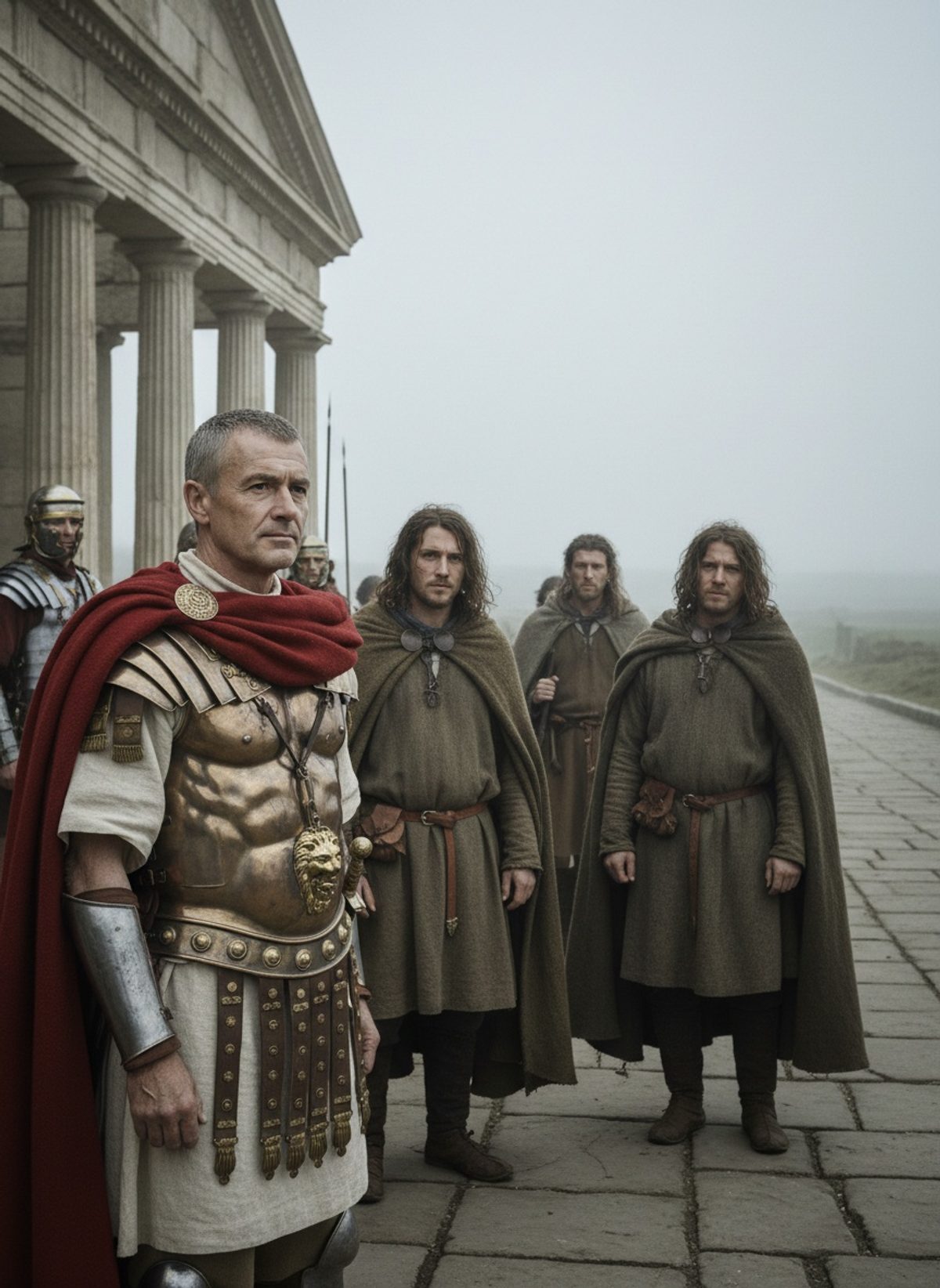
On that fateful summer day, turmoil quietly brewed within the stone confines of Eboracum, known today as York. The bustling fortress-camp had become the somber setting for an unforgiving drama. The western Roman Empire, a sprawling behemoth of power and prestige, was about to experience a shift that would echo through the centuries, and the epicenter of this transformation lay unexpectedly in Britain, not in the forum of Rome. Emperor Constantius, a Caesar among Caesars, lay on his deathbed. His breathing was labored; his time, dwindling.
Surrounding him were the watchful, expectant faces of his loyal officers and soldiers, their armor reflecting fragments of candlelight flickering against the stone walls. They were far from the heart of the empire, in a land known for its chilling fogs and rebellious tribes. Yet it was here, in this remote northern outpost, that destiny would take an unexpected turn.
A young soldier, his presence as commanding as the Empire's most resplendent gladius, stood beside the dying emperor. This was Constantine, son of Constantius, a man groomed for greatness though not yet crowned by it. As the great emperor's life waned, his loyal men took stock of their future. The Roman legions, integral fibers of the empire's unwavering authority, knew they needed a leader—and they needed him now.
Read next: The Day a Roman Soldier Defied an Emperor to Free a Province
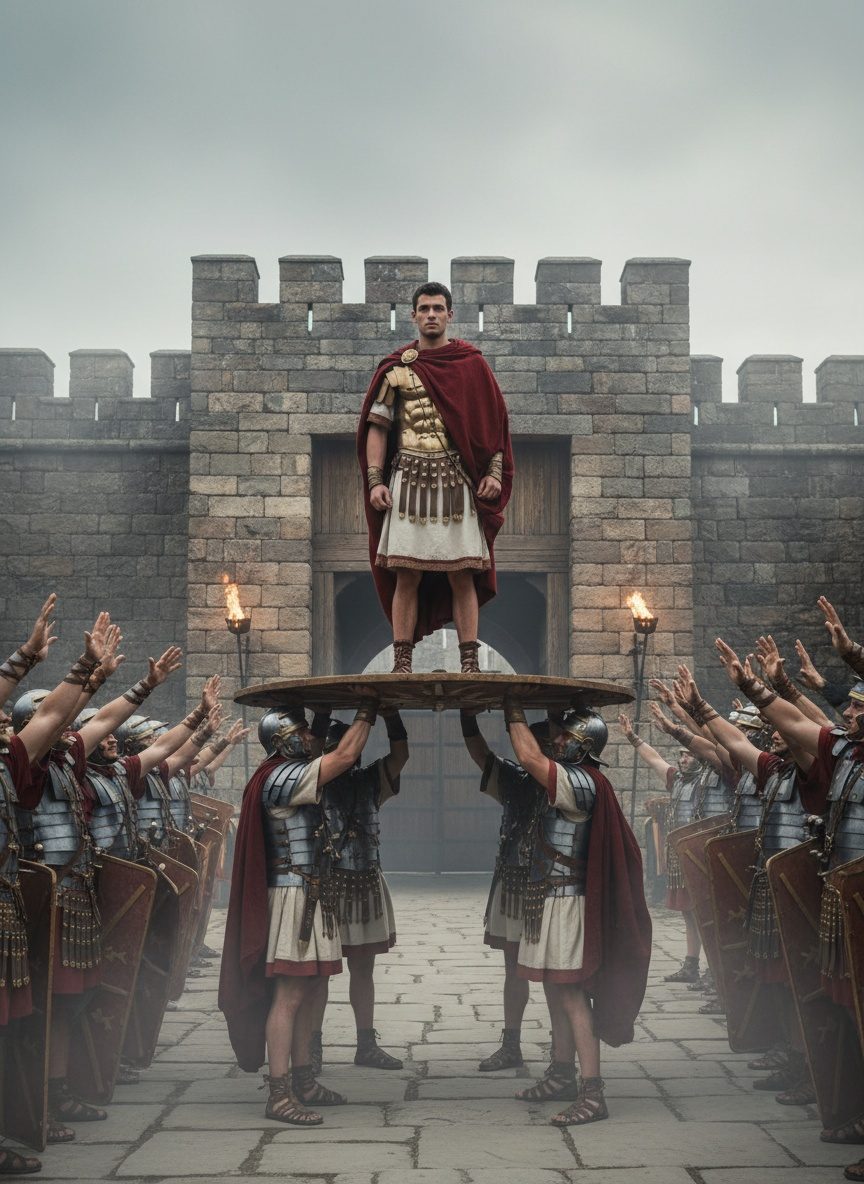
With the breath of their Caesar fading, the legions' resolve hardened. The soldiers, bound by duty and camaraderie, raised Constantine upon a shield—a traditional Roman sign of acclamation. Their powerful voices echoed through the halls, trumpeting his new role: "Caesar!" In that solemn gathering of steel and spirit, Britain had chosen its leader, showing loyalty not to the distant city on the Tiber, but to their land and to the man they trusted would carry them forward.
Britain's Proving Grounds
The decision at York set Constantine on a path that would alter the course of history, but the background to this momentous occasion is a narrative often overlooked in the annals of history. To understand why the legions in Britain would cast their lot with Constantine, one must delve into the multifaceted dynamics of Roman Britain.
Britain was more than an outpost; it was a crucial bastion protecting the empire's western flank. Conquered by the ambitious Claudius in 43 AD, the island had evolved into a microcosm of Roman civilization, with its intricate network of roads, bustling villas, and booming trade. Yet despite these advancements, it was a land perpetually on the brink—ripe with potential, but fraught with unrest.
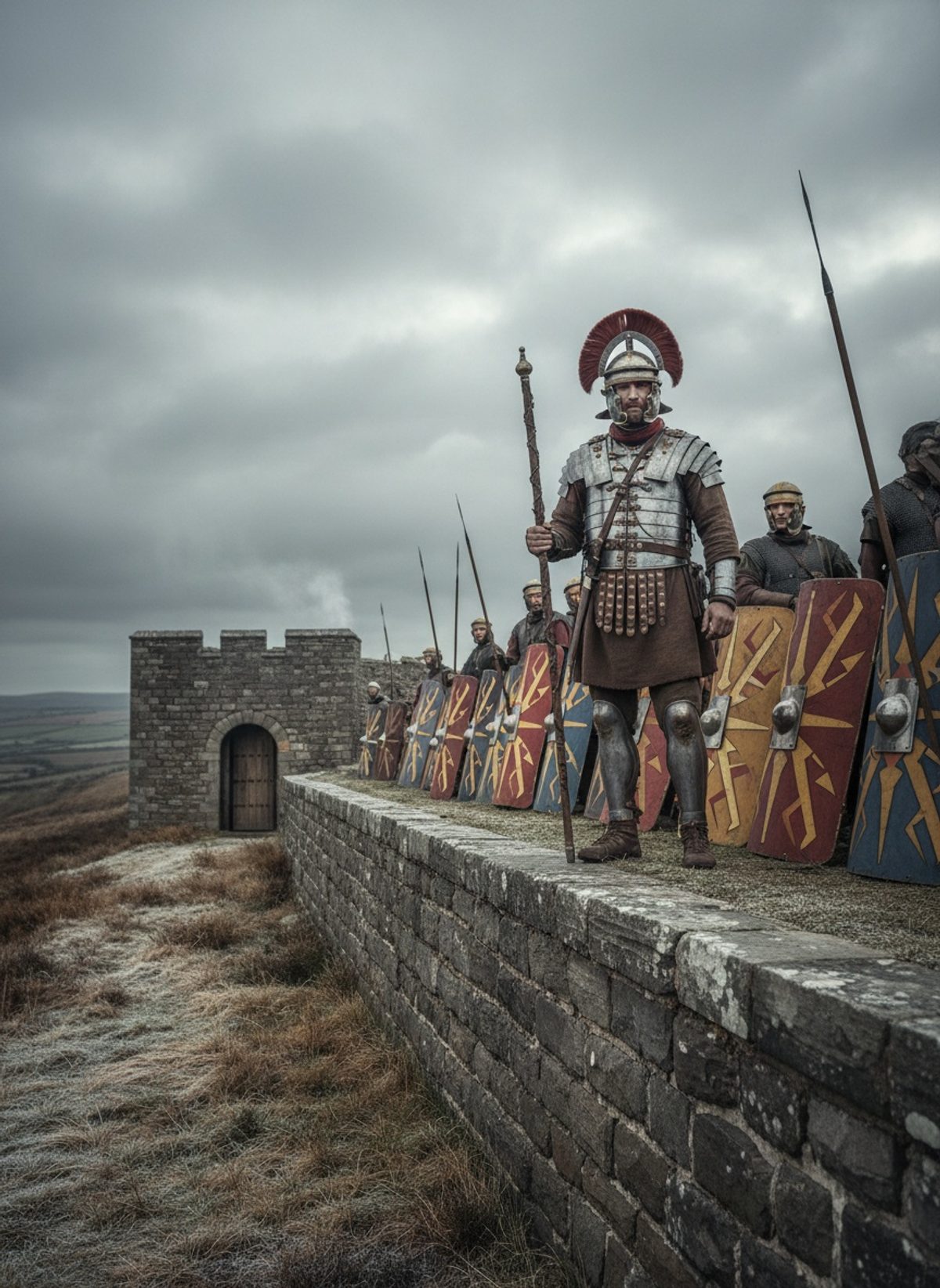
The legions stationed here were hardened by skirmishes with the Picts and battles with the recalcitrant Britons. They were far removed from the political machinations of Rome itself, aligning their loyalty with local commanders who fought alongside them rather than distant autocrats preoccupied with palace intrigue.
For these soldiers, Constantine was more than just the emperor's progeny; he was one of their own, a leader who had cut his teeth in the challenging theaters of Roman Britain. He embodied a beacon of unity against the tides of change and chaos threatening the empire. Moreover, his vision of leadership was one that seemed destined to embody both the pragmatic martial spirit of Rome and the emerging cultures of its provinces. Here in Britain, beneath the shadow of Hadrian's Wall, Constantine was not just taking command; he was becoming an embodiment of resilience, a figurehead for the future of a fracturing empire.
The Dawn of a New Era
As the crowned sun set on Constantius's life, the rise of Constantine marked the dawn of a new epoch. The shift in allegiance from Rome to their newly minted Caesar in Britain was more than a mere transfer of power; it was a glimpse into future landscapes shaped by local allegiances over centralized dictations. Constantine, the man lifted on shields, was more than a military leader or a son of an emperor. He was evolving into a unifier who would weave the fabric of a vast, diverse realm into a coherent imperial tapestry.
The significance of those events in York extends far beyond the political machinations of an ancient empire. Constantine's rise from the gloomy mists of Britain to the glistening pinnacles of power underscores a fundamental truth: the fate of empires hinges not just on the authority of Rome's brick and marble but on the strength and unity of its farthest outposts. Constantine, celebrated for his subsequent reforms, the establishment of Constantinople, and his embrace of Christianity, stands as a monumental figure of transformation; yet it was his unexpected ascendancy in distant Britain that sparked the flame of his enduring legacy.
Reflecting on that pivotal day, it is clear that history is often written in unexpected places. In Britain, a commander was chosen not just as an heir, but as harbinger of change. It exemplifies how provinces on the periphery of power can shape the heart of empires and how leadership can spring from the most unlikely soils. The echoes of Britain’s choice, forged in the logistics of Eboracum's era, continue to resonate, reminding us that sometimes, the roads to Rome lead outward, forging new worlds from distant shores.