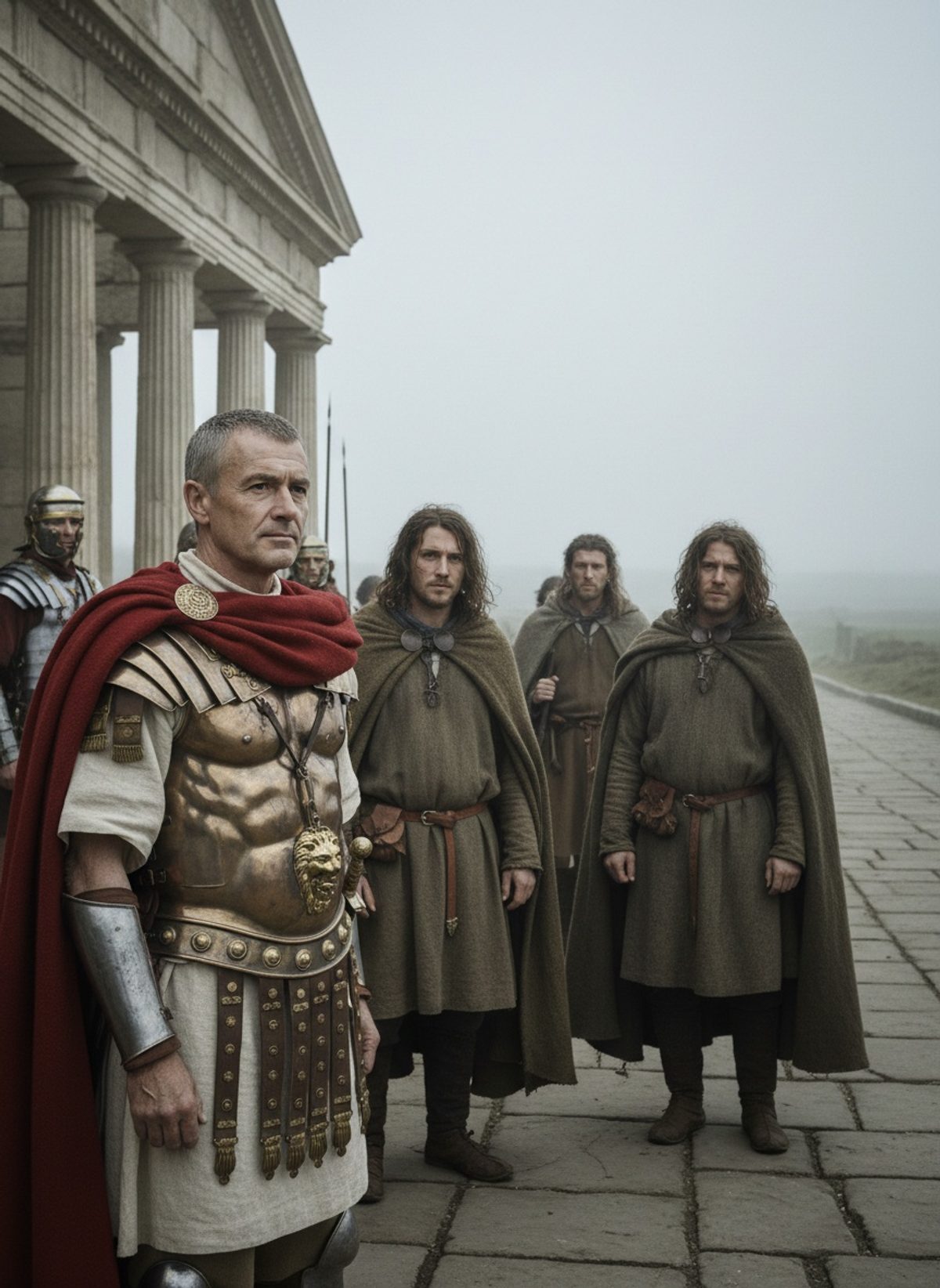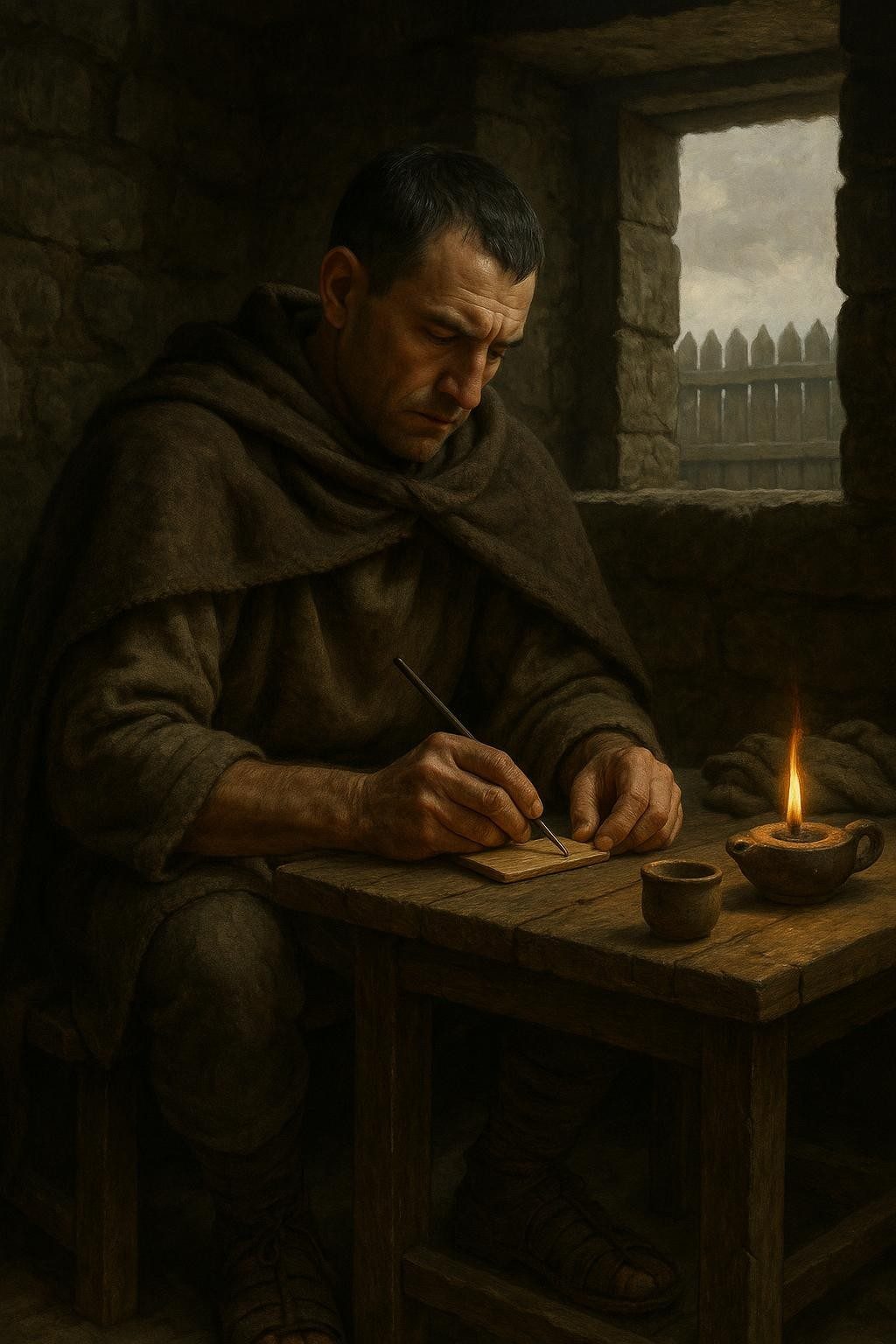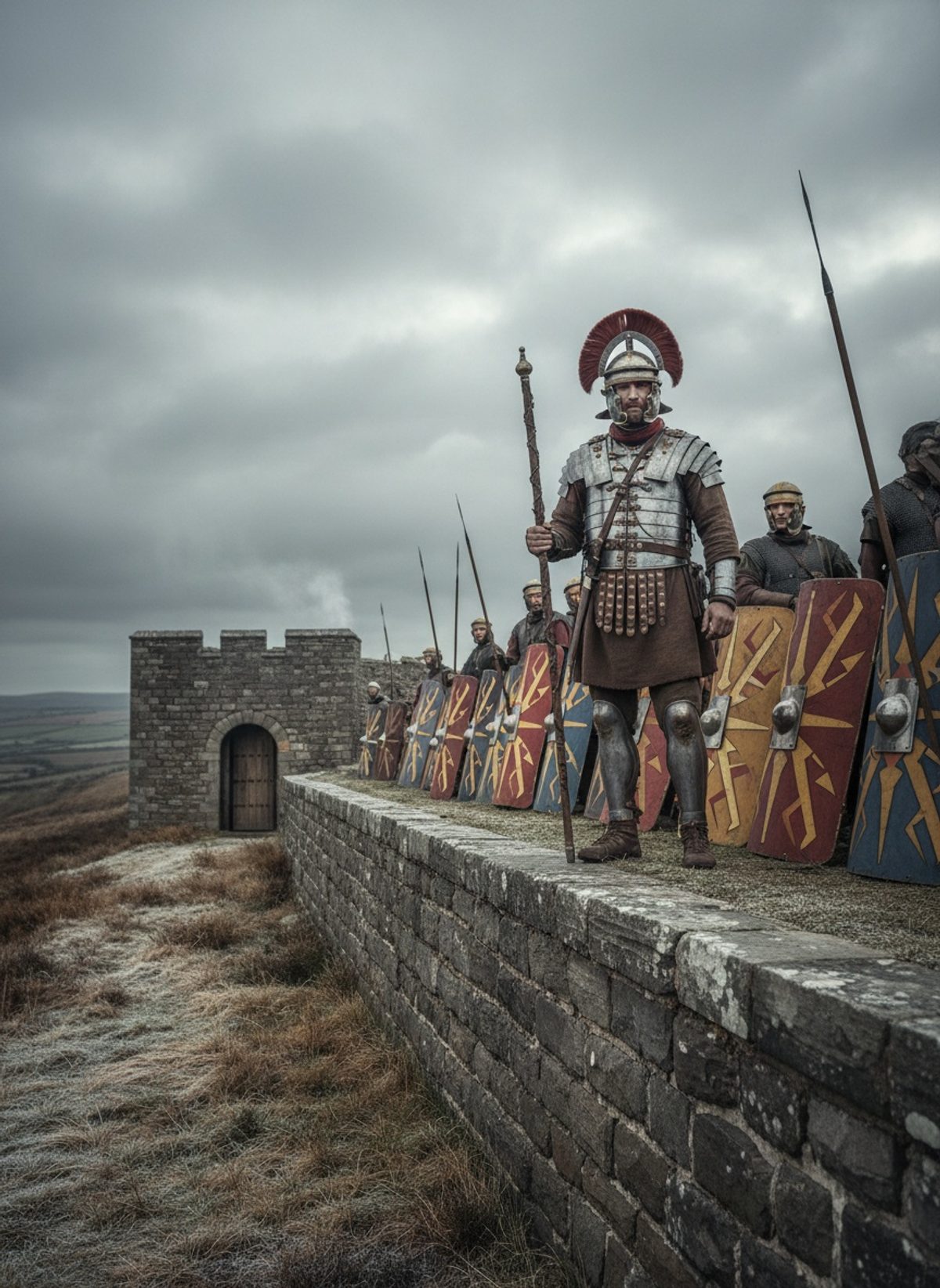
The city of York, known to the Romans as Eboracum, lay somber under a low, grey sky. A chill wind swept across the battlements, whispering through the camp with an ominous chill as if echoing some ancient knowledge of change. The stone structures of the legion’s quarters stood resolute and weathered, testaments to Roman power at the empire's distant edge. Amidst this pressing silence, an epochal moment unfurled — one that would ripple far beyond the walls of this frontier town.
A Son Rises Amongst the Stones
In the summer of 306 AD, a momentous decision was waking inside those Roman walls, against a backdrop of uncertainty and anxiety. Constantius Chlorus, the ruling Caesar of the Western Roman Empire, lay on his deathbed. Stricken with fever, his life force ebbing away, the air around him carried a heavy sense of impending loss. The legions stationed at Eboracum, veteran soldiers hardened by relentless campaigns, stood pinned by the weight of their leader's condition. From these rugged ranks stood Constantine, his son, yet to be embraced by destiny.
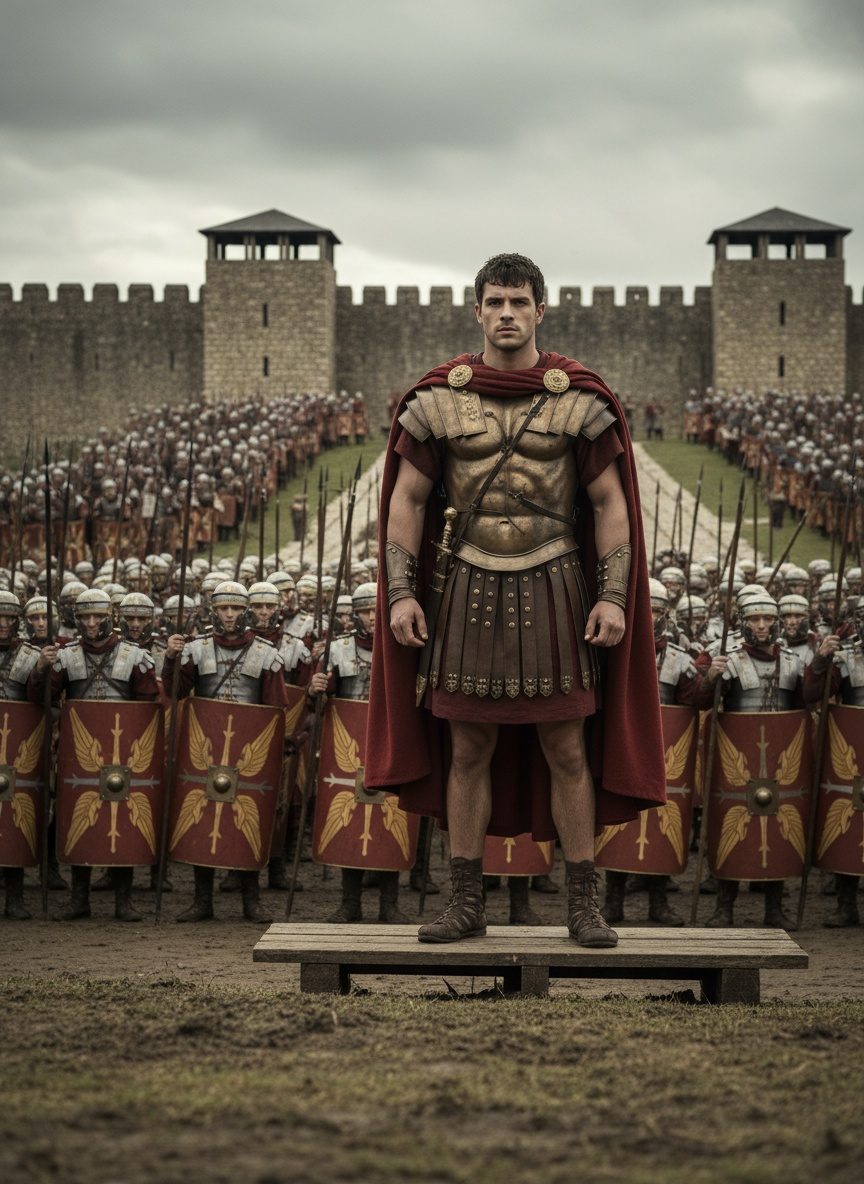
As Constantius drew his last breaths, a remarkable scene unfolded in the heart of the encampment. The soldiers, bound by a loyalty that reached beyond orders, hoisted Constantine on their shields, proclaiming him Emperor before the sun had set on his father's lifeless body. It was a dramatic declaration of allegiance, bypassing the distant will of Rome. Eboracum, nestled at the edge of the empire, became the stage for this pivotal act — a son was formally declared successor amidst the gathered legions, while an Empire slowly came to terms with the news that would alter its course forever.
The Empire's Reach Meets Its Turning Point
For Rome, Britain had always been a far-flung province shrouded in mist and legend. Even after years of conquest since 43 AD, it remained a rugged land where Romanization met with harsh terrain and unyielding locals. Yet, Eboracum stood as a stronghold, a symbol of Roman order amidst the wilderness. The proclamation that echoed on its cobbled streets on that fateful day in 306 AD cascaded far beyond its walls. The ascent of Constantine was not merely a matter of succession — it was a bold consolidation of power that sent tremors through the empire.
Read next: The Day a Roman Soldier Defied an Emperor to Free a Province
Rome, far removed both in distance and mindset, was a world of political machinations and complex alliances. Normally, decrees of succession warranted deliberation and endorsement by the Tetrarchy. However, the decisive fervor of Eboracum’s legions marked a departure from protocol — they had preempted the politics, placing the empire's fate in the hands of a man who was already proving to be his father’s equal in ambition and acumen. Constantine's elevation reflected a shift, one that was being silently echoed in the waning stability of the four emperors' rule.
The Winds of Political Change
With Constantine proclaimed emperor, the theater of Roman power shifted notably. For the first time, the winds of change were not sweeping through the heart of the empire, but from its peripheries. Eboracum, a city shaped by the sword and the plow, witnessed these winds firsthand. Soldiers returned to their posts with a newfound loyalty cemented in their hearts — they had acted, perhaps unknowingly, as makers of history. Constantine, the resolute figure they had chosen, would not remain just the Emperor of Britain. As he grew into his imperial role, his strategies and reforms would eventually mold the Western Roman Empire’s very nature.
Constantine’s proclamation didn’t just rouse the ranks at Eboracum; it lit a beacon that drew the attention of distant corners of the empire. His vision extended beyond the horizon of Britannia, steering Rome through internal and external conflicts with a clarity of purpose that aligned with his newfound authority. The political compass had been subtly reset, aligning with the ambitions of a new leader whose ideas of unification would redefine Roman identity.
A Legacy Etched in Stone
Eboracum held its breath between the now and what was to come; the decision it witnessed was destined to reverberate throughout Roman history. This wasn’t just a matter of settling a disputed succession. The proclamation made here, in the shadow of its noble stonework and amidst the chilled breaths of the north, would lead to a series of battles, alliances, and reforms that would transform the Roman world.
Constantine would go on to lay the foundations of a new empire, ending the tetrarchic division and fostering the rise of a single power. His conversion to Christianity and the subsequent policies would steer the cultural and religious trajectory of Europe and the occidental sphere for centuries to follow. Eboracum, with its simple declaration, etched its name into the annals of history as the birthplace of an emperor who would leave an indelible mark upon the world.
The Anticipation of Change
The day Constantine was raised on shields at Eboracum was more than a historical footnote; it was the dawn of new realities. This moment in a distant northern city presaged transformations that unfurled across continents. As Constantine stepped from the shadow of his father to claim his mantle, the narrative of Western civilization itself was set on a new course.
The stones of York, silent witnesses, could have foretold the pivotal role they played in shaping antiquity's future. Beyond the obvious implications of an emperor's ascension, the events that day spoke to a broader truth. Change seldom announces itself from the halls of absolute power — it often stirs first where people least expect it, among the loyal and steadfast, gathered under a grieving sky at the edge of a world. Such is the nature of humanity’s endless narrative, where the turning points are as unpredictable as they are profound.