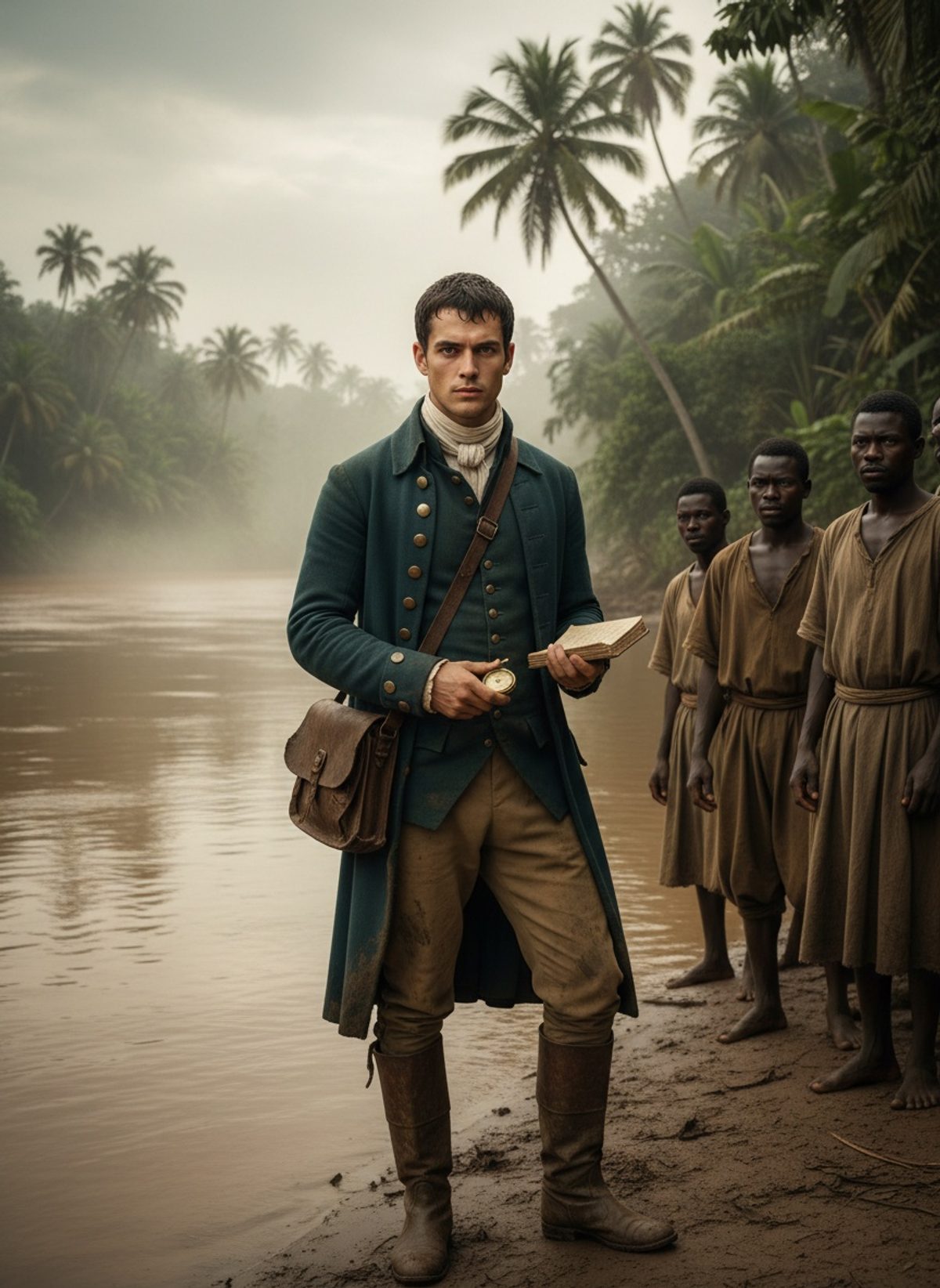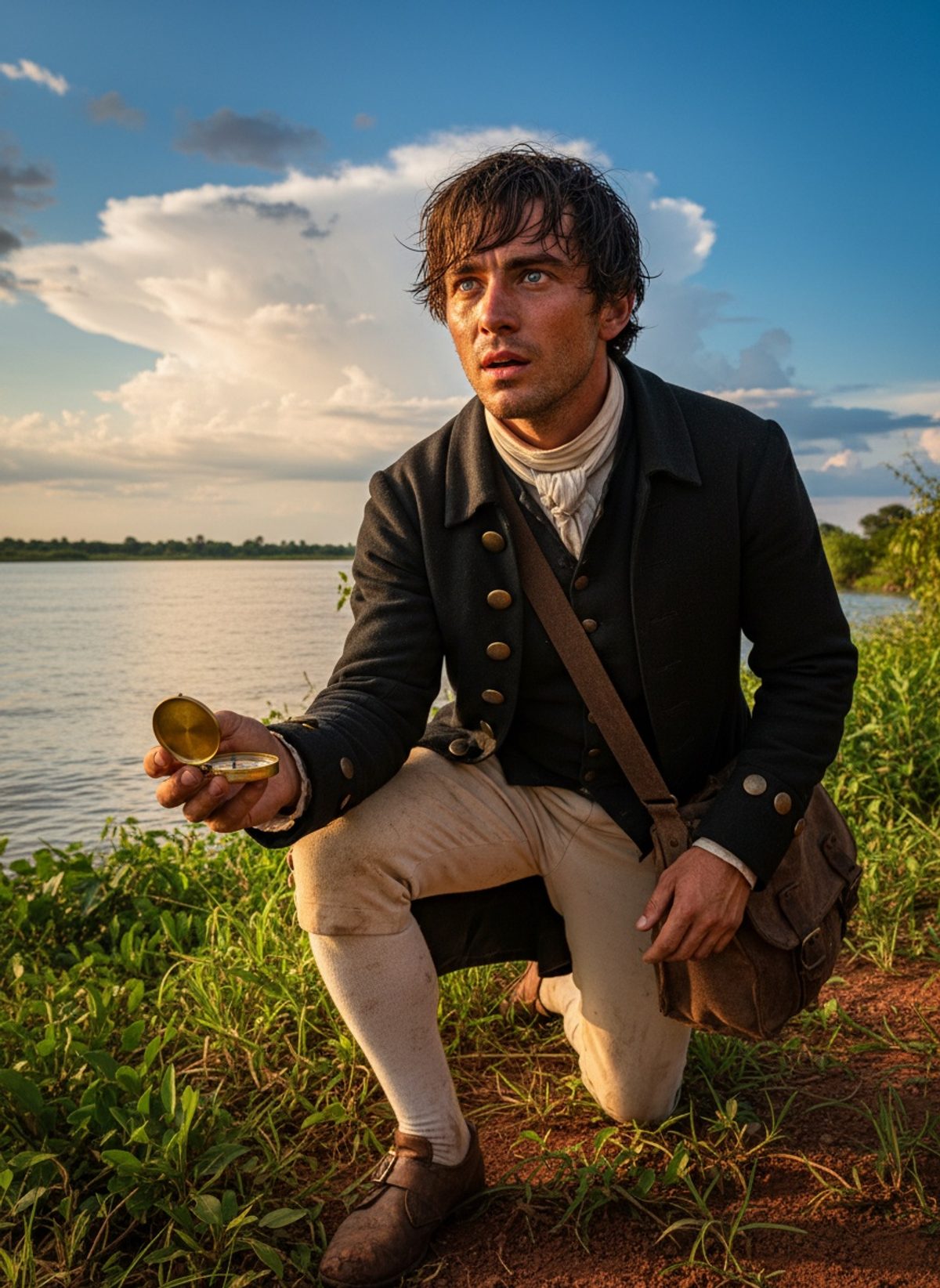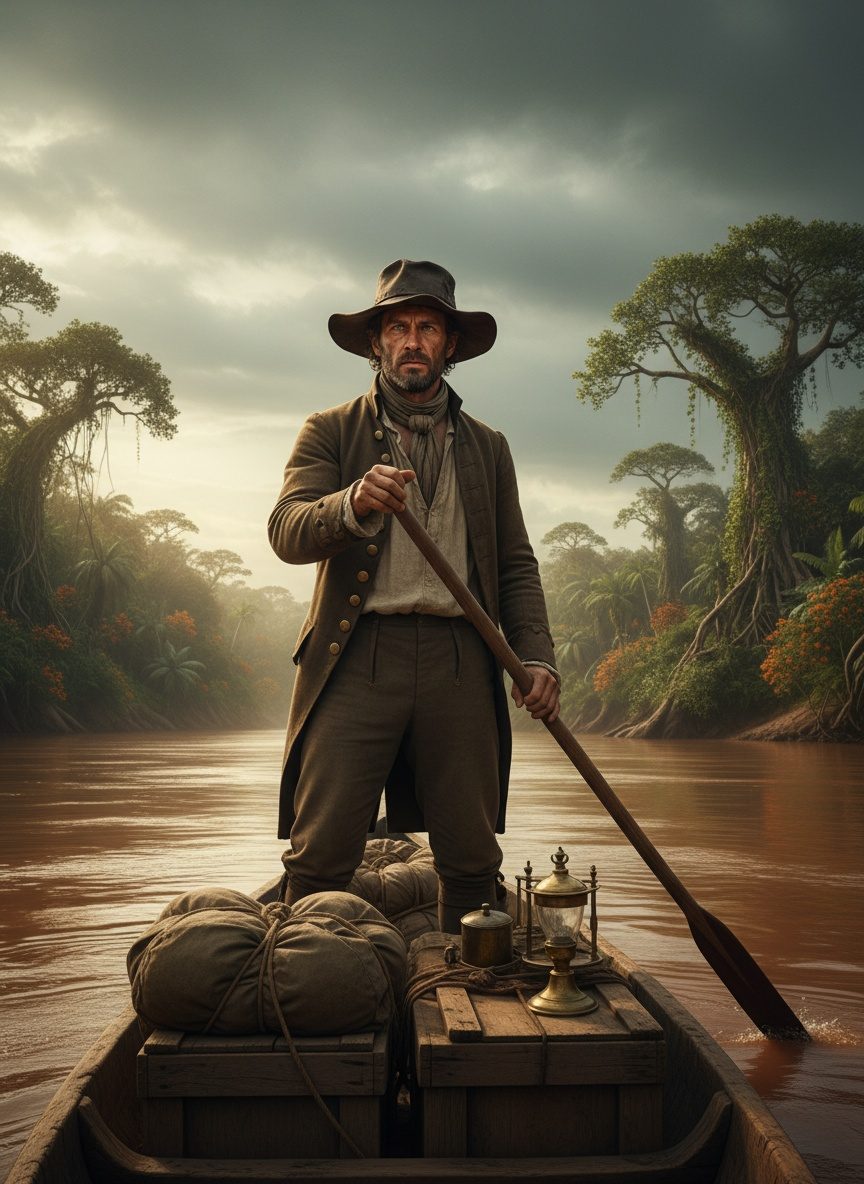
July 28, 1805. The oppressive heat shimmered above the rolling grasses of West Africa.
The Unyielding Heart of the Georgian Adventurer
Scottish doctor Mungo Park was not the type of man to easily relent. Yet here he was, one figure guiding a band of weary men through the harsh wilderness of West Africa. Park had a singular purpose: to find the fabled source of the River Niger and map its course. Many had tried and failed before him, but Park’s resolve was as steadfast as the battered compass he clutched. A decade earlier, he had ventured into this same impenetrable heart of Africa, facing capture and starvation. Few might have blamed him for staying home this time, basking in the relative safety of Scottish shores. The allure of the unexplored, however, had once again set his heart pounding with the rhythm of adventure.
The Shadows of Failure Looming Large
In 1795, Mungo Park had embarked on his first expedition to chart the Niger, funded by the African Association, an organization intent on unraveling Africa’s mysteries. The terrain had been unforgiving, the dangers ever present—a proverbial cauldron of trials. Despite six months roving through sands, hostile tribes, and the perilous snares of the unknown, Park returned home with his spirit unbroken, though his mission incomplete. His tales of lush riverbanks, strange flora, and accounts of the majestic river fed the European hunger for knowledge like never before. But Park himself felt the sting of incompletion. He needed to return.
Into the Abyss Once More
And so, armed with a heart full of yearning, Park set out again in 1805. He led an expedition of thirty men from various walks of life—soldiers, guides, and fellow explorers—along the eternally shifting scenery of West Africa. Day by day, the heat pressed against their skins like an unwelcome acquaintance, and the rains offered little reprieve, swathing the paths in a perpetual swamp. Fever, their unseen enemy, stalked them like a wraith, picking off each member one by one. Park pressed on, driven not by madness but by a desperate need to complete the rivulet of dreams he had begun to chart ten years prior.
Read next: The Day a Scots Surgeon Walked Into Timbuktu Alone
Around them, the world whispered secrets. The land was harsh and beautiful, and at every turn, it mocked their frailty. Through dense forests, across alien rivers, and among people who might offer refuge—or hostility—the expedition trudged forward.
Alone in His Pursuit
As the fever claimed his compatriots, Park found himself alone. Yet, his focus narrowed, driven by the singularity of his mission. The burden was immense, but within him burned the fire of determination. The shadow of failure beckoned him to surrender to the impossible odds. Yet, his eyes remained set on the horizon, as if expecting the very contours of Africa to yield the river’s birthplace to him alone. This was uncharted land, each footstep potentially the first taken by any man from his world.
Even as friends fell, Park's resolve never wavered, steadied by the maps he drew and the meandering course of the river he traced on parchment. Each day, his compass guided him through the thick foliage, a relic of a world far off.
The Undying Legacy of Mungo Park
Mungo Park’s relentless pursuit eventually led him to face insurmountable challenges with the quiet dignity of a man who knew his fate. While some will argue the ultimate success of Park’s mission, his ventures seeded knowledge and fueled future explorations. Other men and other missions would flesh out the details he first etched on the cultural memory. Park’s journeys did not merely shape maps; they expanded the horizons of what lay beyond Europe’s line of sight, dazzling an age that had just begun to hunger for the unexplored.
In retrospect, Park’s journey speaks to the irony of exploration—one man's end becomes the beginning of paths trodden again and again until the unknown becomes familiar. Through trials that seem unimaginable today, it was the beating heart of discovery that summoned Mungo Park back into the wilderness. Even in the fact of defeat, his story affirms the relentless pursuit of knowledge in the face of adversity, a universal thread through the fabric of human history.