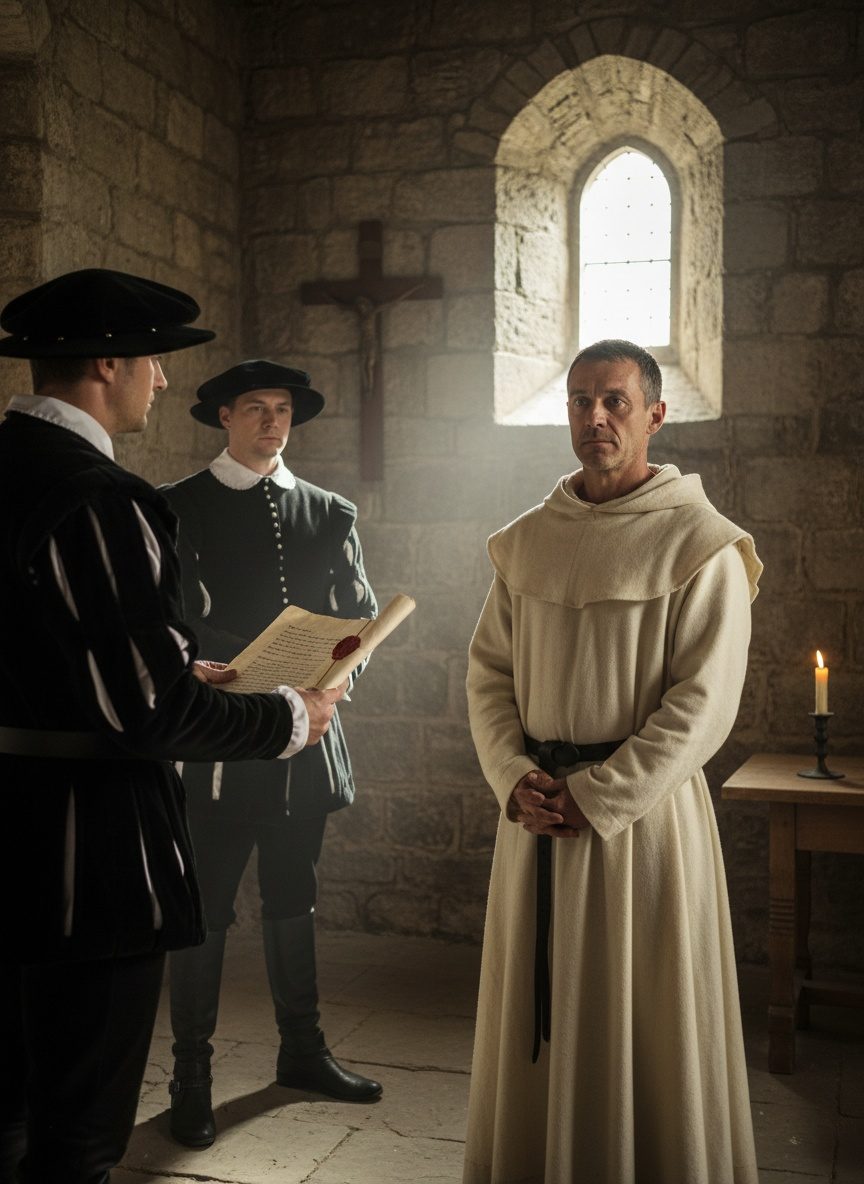
The cold stone pressed against his knees as Prior John Houghton looked up at the imposing figure of King Henry VIII. The dim light of the chamber cast flickering shadows around them, but the atmosphere was charged with the palpable tension between monarch and monk. Before Houghton lay the parchment that demanded his submission, the oath that would declare Henry the supreme head of the Church in England. Yet, Houghton's gaze remained steady, his hands unwavering. He was not here to bow to temporal power but to stand in the light of his convictions, even if it led him to the gallows.
A King's Decree and a Monk's Defiance
The year was 1537, and England was in the throes of religious upheaval. Henry VIII, in his quest for sovereignty over the Church and his own marital affairs, had severed England’s ties with the Papacy. The Act of Supremacy in 1534 was the hammer that shattered the Catholic hegemony, demanding unwavering loyalty to the king and recognition of his religious authority. The dissolution of monasteries quickly followed, but few offered as stout a resistance as the London Charterhouse, home to the Carthusian monks.
Among these was Prior John Houghton, a devoted leader whose life was steeped in the quiet austerity and spiritual reflection characteristic of the Carthusian order. Known for their contemplative life and strict observance of silence outside of worship, the monks found themselves thrust into a storm that promised no silence. Houghton, esteemed for his serene courage and unyielding faith, became the first sign of quiet rebellion against Henry's religious demands.
Yet, this defiance was not born of reckless ambition. Houghton's denial came from a place of deep-seated devotion. When summoned to swear the oath of supremacy, Houghton approached the matter with deliberate choice, aware this placed him on a razor's edge between life and death. His refusal was not merely a solitary act of defiance; it was a gust of wind against the tide Henry sought to control. In the silence of the monastery corridors, whispers of fortitude stirred, igniting the embers of resistance within others who viewed the oath as a betrayal to their spiritual belief—a betrayal to God.
Read next: The Day a Stuart King Walked Calmly to His Own Execution
The Charterhouse stood as a fortress of devotion amidst the unraveling English Reformation. In choosing to defy, Houghton and his brethren held true to their creed; they lived in a world untouched by the passing fancies of men whose power was earthly. For Houghton, the choice was clear, and his path was paved with the teachings inscribed upon his heart—teachings that bound him more securely than any allegiance to a mortal king.
The Journey to the Scaffold
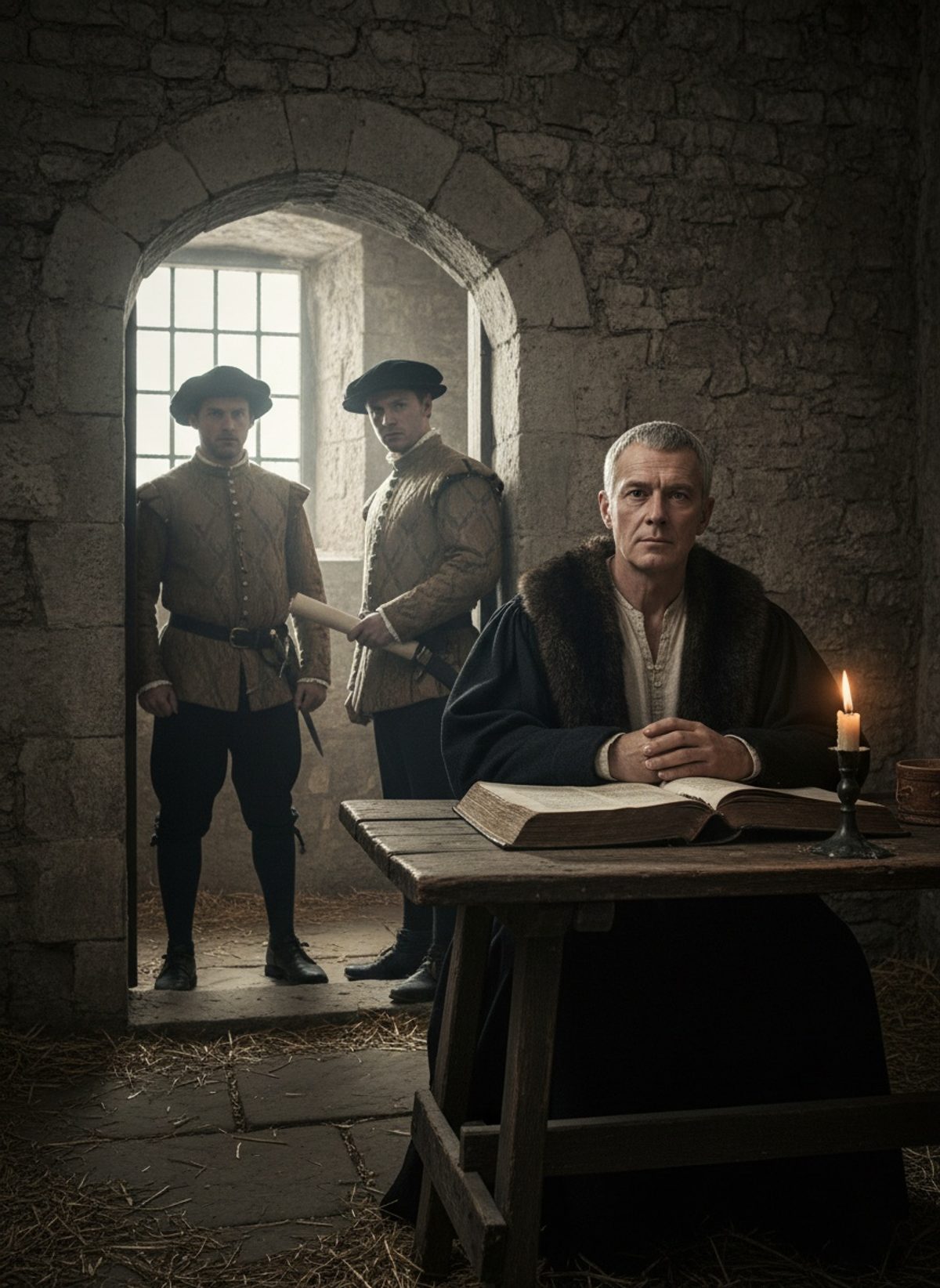
As word of Houghton's decision spread, the ripples of his defiance caught the attention of the court. Surrounded by other Carthusian monks who shared his conviction, Houghton became both a leader and a symbol. The consequences for defiance were well known; yet as he stood in the cold draft of his cell, the path ahead was clear. The quiet dignity with which he carried himself belied the turbulence of the age, as Houghton prepared his soul for what lay ahead.
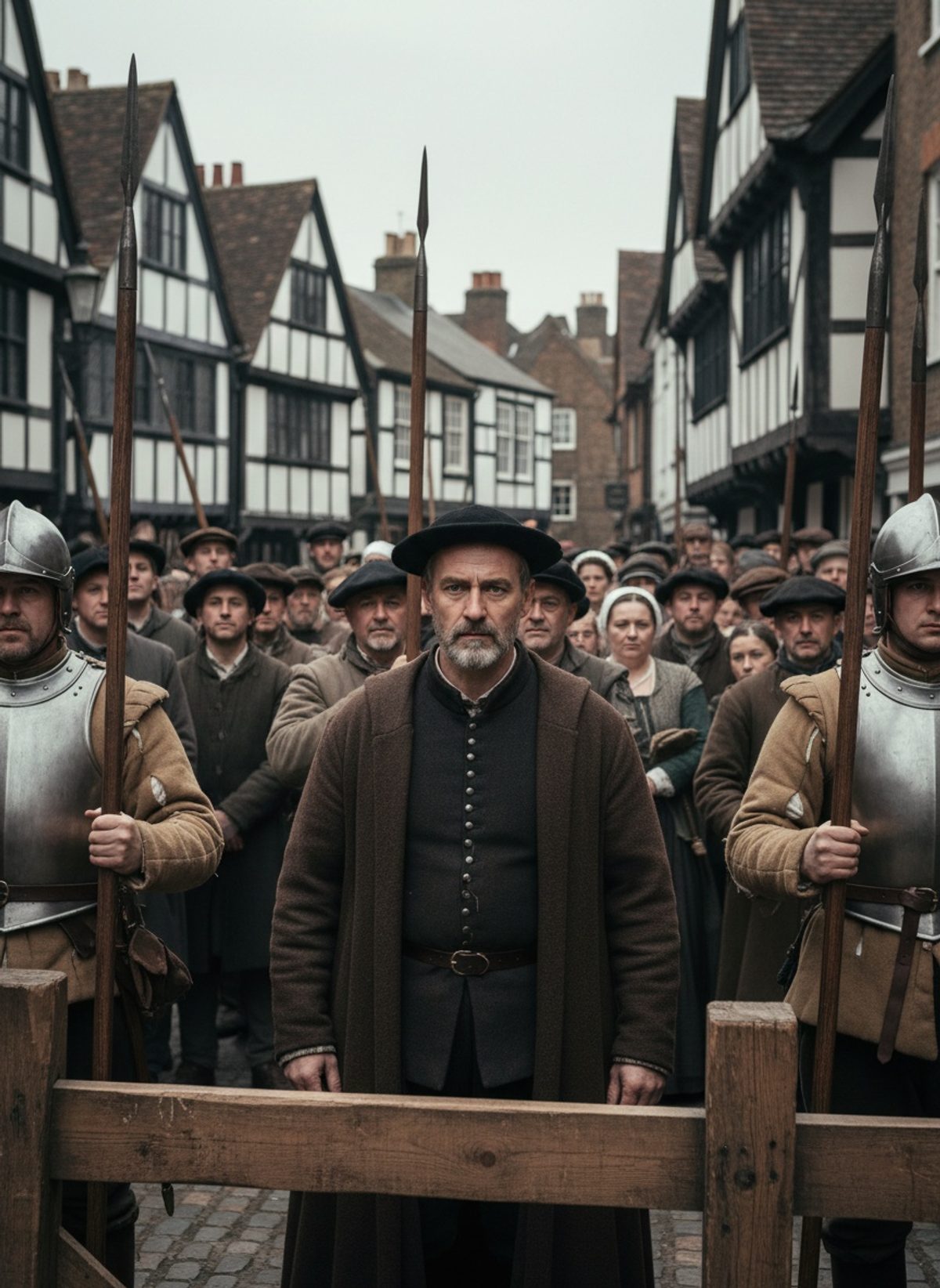
The morning of his execution arrived with a somber inevitability. Led from the Tower of London, his footsteps carried a resonant echo through the cobbled streets as a reminder of the steadfast heart being led to the scaffold that day. Crowds gathered, drawn by a mix of awe and an inexplicable curiosity about this monk who dared to defy a sovereign so resolute and powerful.
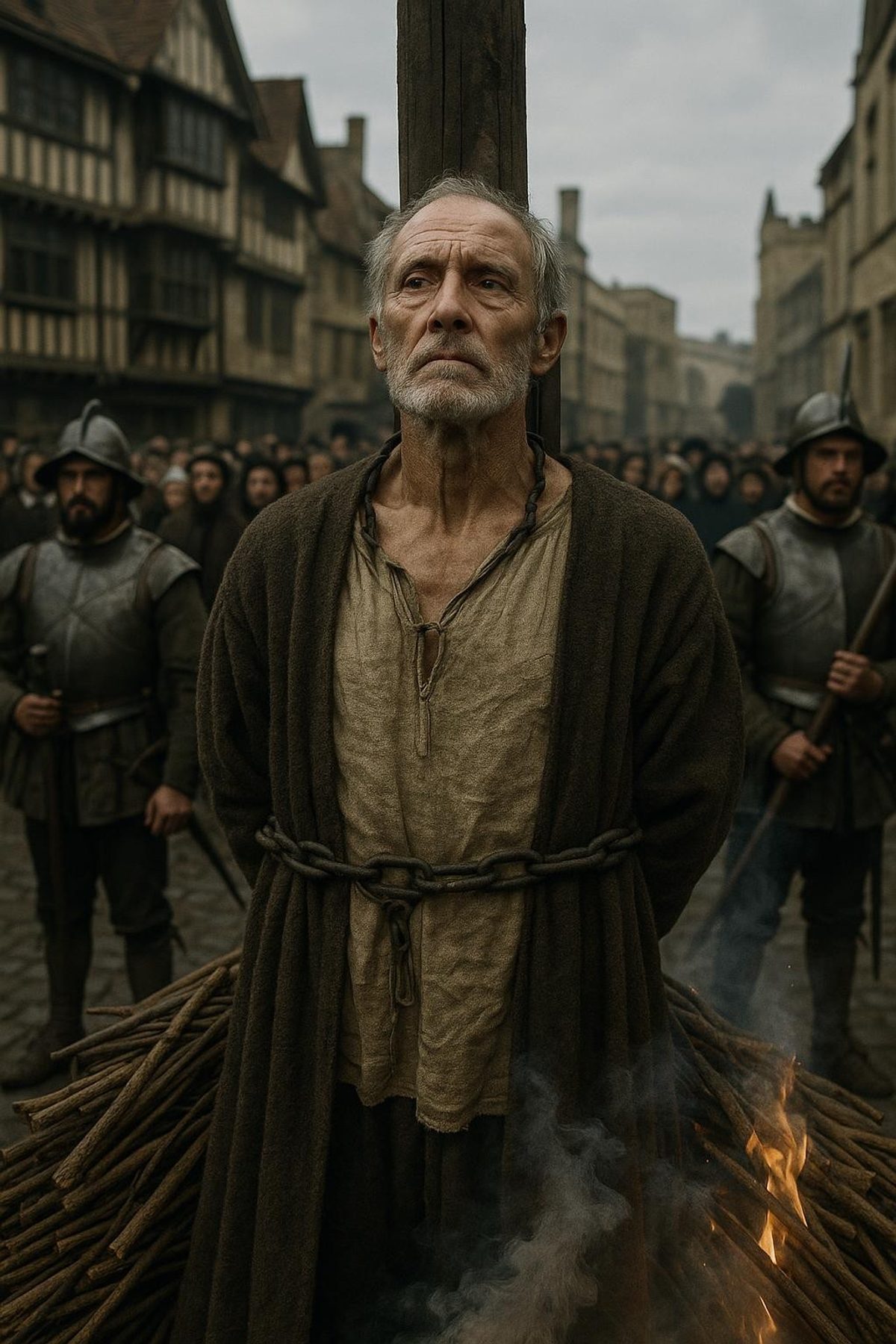
John Houghton had no ill to speak of his king. Instead, he offered prayers for Henry’s soul, a final blessing upon the monarch whose decree would end his life. It was a gesture of remarkable grace that did not go unnoticed. Soon, he found himself under the shadow of the infamous Tyburn Tree, the cobblers still cool beneath his feet.
Within those final moments, Houghton’s countenance remained composed. As spectators watched, they observed not a man in fear, but a figure of profound peace. His voice, when he spoke the last prayer, did not waver. Crucifix in hand, he met his fate with a serenity that echoed louder than the tolling of the execution bell. This monk, orphaned in choice but not in faith, became a martyr whose memory would linger far beyond his earthly years.
The Stark Legacy Amidst Religious Change
Henry VIII's reign is often marked by its grand shifts and transformative reforms, but within the annals of history, the quiet resistance of a lone monk offers a poignant juxtaposition. This small act of defiance at the hands of an indomitable king echoes through the centuries as an enduring testament to the strength of personal conviction. In a world where the crown held the might of command, John Houghton exemplified that the strongest chains were those of one’s belief.
What transpired at the Charterhouse was more than a stand against a sovereign’s mandate. It was a reflection of an internal struggle, a nation caught between old faiths and new. Houghton and his fellow monks represent the unwavering spirit at odds with England's religious metamorphosis. Their steadfastness serves as a reminder of the cost of clinging to principles when the very ground beneath them trembled with upheaval.
Today, the tale of Prior Houghton’s confrontation with Henry VIII provides a haunting narrative of courage against the tides of change. As the pages of history turn, it serves as a reflection on the nature of power, faith, and the complex tapestry woven by those who choose to speak their truth at any cost. In the quiet halls of time, the echoes of Houghton's final prayer for peace and conscience remain, a whispered reminder that the true legacy of belief is measured not in consequence, but in conviction. This story is not just engrained in the inflexibility of its characters but stands as an enduring reflection of the unyielding human spirit.