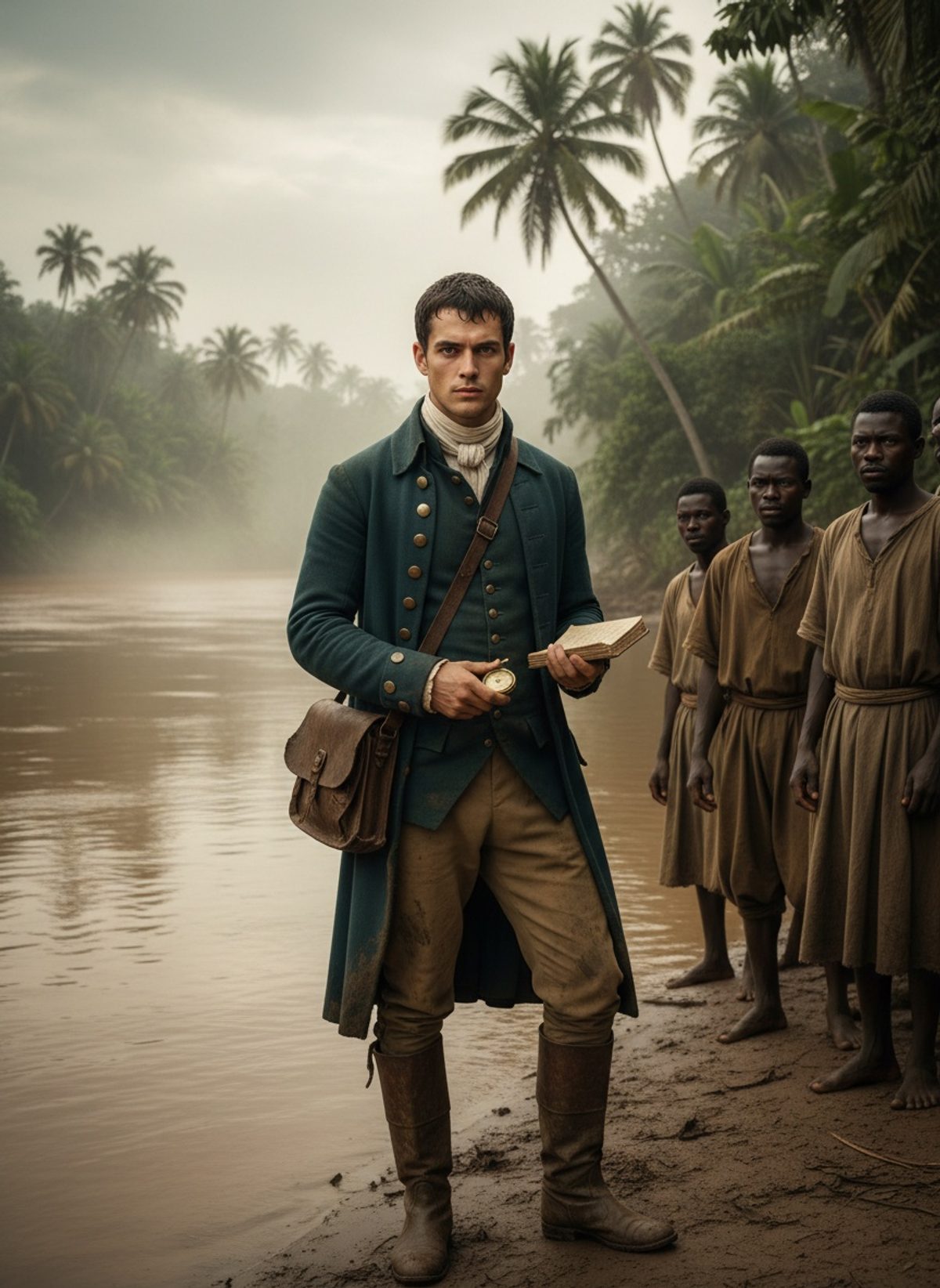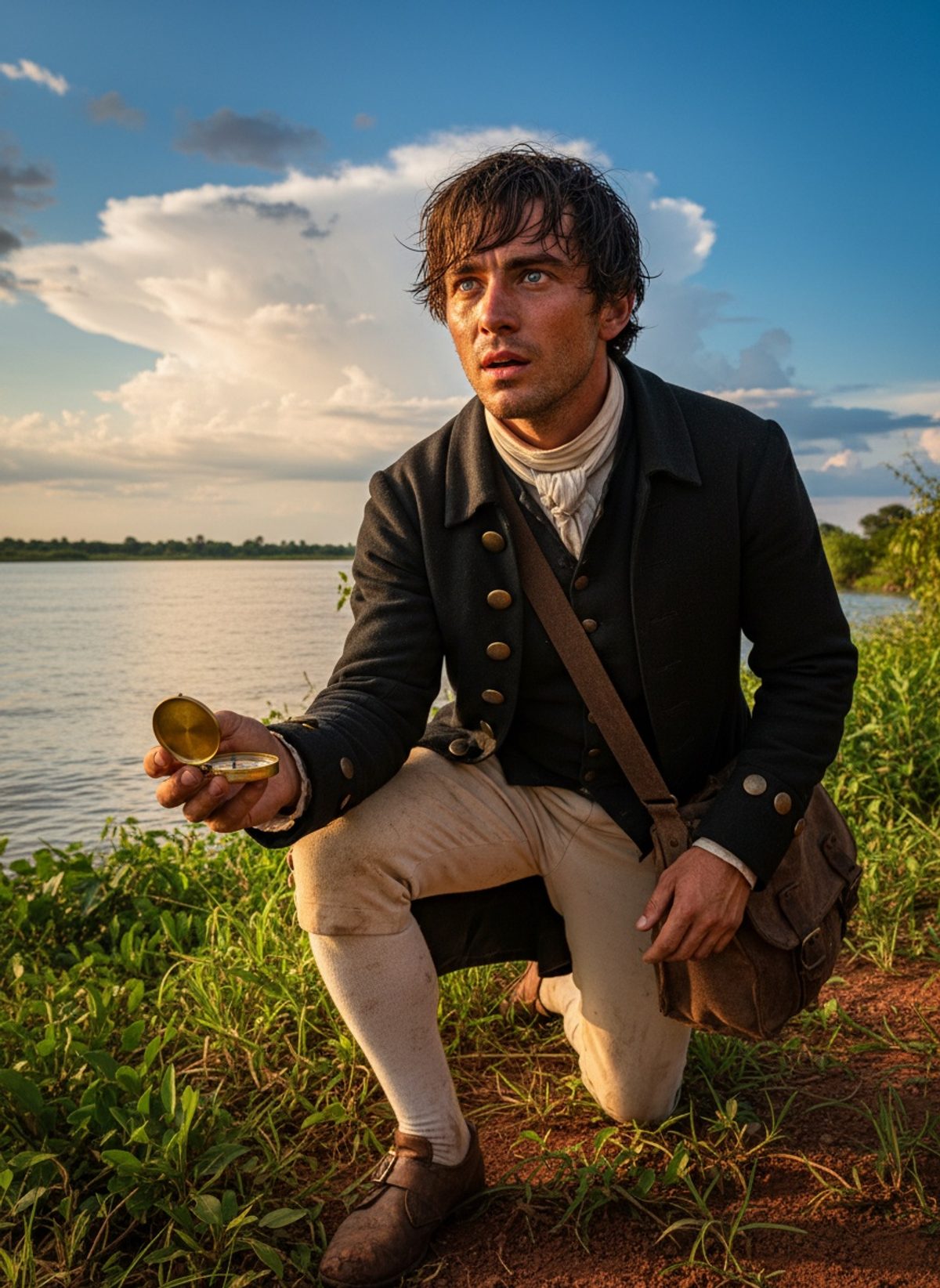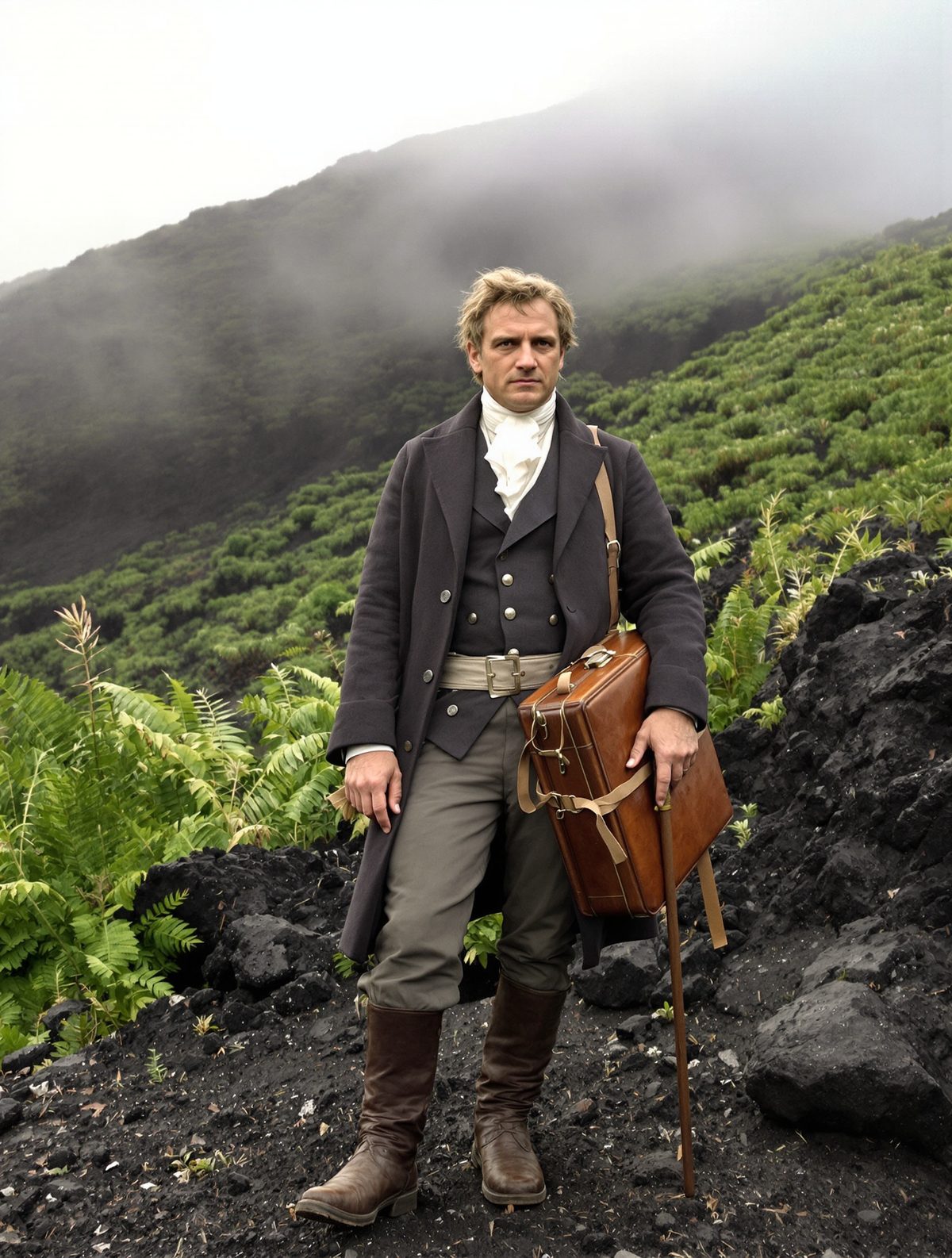
The Maui breeze whispers tales upon the summit of Mauna Kea, where David Douglas met his enigmatic fate on July 12th, 1834. The vast Hawaiian skies were the last to witness a story steeped in both triumph and mystery — the story of a Scottish botanist whose legacy enriched the tapestry of plant science but whose last days remain shrouded in intrigue.
A Grizzled Scotsman in the Wilderness
Born into modest beginnings in Scone, Scotland, in 1799, David Douglas would transform his curiosity into an indelible mark on botanical exploration. As a youthful apprentice at the Botanical Garden in Glasgow, Douglas’s intrinsic love for flora earned the attention of luminaries like Sir William Hooker. By 1823, the Royal Horticultural Society had dispatched him to North America, a landscape fraught with both abundant flora and untold dangers.
Douglas thrived amidst the staggering challenges of the wild. Whether navigating treacherous rapids or surviving grizzly bear encounters, his unyielding spirit saw him through. With collection sacks burdened by vast botanical specimens, Douglas documented over 200 new species, one of the most impressive botanical feats of the 19th century. His enduring legacies, the Douglas fir and the Saponaria glabra (Douglas' Catchfly), among many others, continue to thrive globally, their simple yet tenacious beauty reflecting the explorer’s own nature.
The Allure of Isolation: Hawaii Beckons
In 1834, Douglas found himself on the verdant shores of Hawaii, driven by an unrelenting quest for new and exotic species. Though best known for his North American expeditions, much of which he spent documenting the lush Pacific Northwest, it was the remote Pacific islands that both captivated his imagination and heralded his untimely demise.
Read next: The Day a Scots Surgeon Walked Into Timbuktu Alone
Hawaii presented an enchanting paradox — isolated yet brimming with unique flora, untouched by the hand of established European botany. The island of Hawaii, teeming with unknown possibilities, promised him the discovery of species unfathomable to the gardens of Great Britain. Yet, this paradise held its secrets close, veiled behind folklore and an environment as unpredictable as it was breathtaking.
A Fatal Encounter With the Volcano’s Shadow
Douglas’s journey led him to ascend Mauna Kea, Hawaii's majestic volcanic peak. The legend is as chilling as the volcanic air atop its slopes — a man who had stared death so many times in the eye, known to have used quick reflexes to deter charging bears, was found dead in a pit trap. The very ground that was his confounding end acted as a canvas of natural suspense, his demise cloaked in conflicting accounts.
Some stories whispered of cattle traps, constructed by locals to ensnare feral bulls; others murmured darker tales of foul play, involving an escaped convict named Edward "Ned" Gurney, observed in Douglas’s company not long before his death. The pit, ostensibly built to capture animals for survival, ensnared a man whose life’s work was to understand the untamed — its unfathomable depth rendered as the graveyard of curiosity unyielded.
The Mystique of His Final Days
David Douglas’s last moments remain a source of both fascination and speculation. He was found with bruises and a bull goring his lifeless body. Did the great botanist stumble tragically into a hunter's trap, or was he pushed as some village murmurs suggested? The enigma was as elusive as the man himself, whose own journals hinted at confrontations and a resolve to return to England — a return that fate cruelly denied.
Though contemporary accounts and chance remarks from Hawaiian locals provided fragments of the story, the complete tale of Douglas’s death is likely among those natural mysteries he spent his lifetime attempting to solve. It is a conundrum as entwined with nature’s inscrutable ways as the flora he catalogued.
The Enduring Legacy of a Forgotten Pioneer
Today, David Douglas is venerated as a pioneer of botany, his name bestowed upon the ubiquitous Douglas fir — a silent, steadfast giant watching over many landscapes. Yet, even as his discoveries seeded gardens and forests across Britain, it remains those shadowy ridges of Mauna Kea that hold the last whispers of David Douglas’s story.
His life serves as a testament to undeterred exploration and a reminder of nature’s poignant unpredictability. In a time where the world seems quantifiable, Douglas’s tale endures as an anomaly, a vivid reminder of humanity’s continual dance with the great unknown.
In an age where science often peers coldly into nature’s heart, reflecting on Douglas’s story encourages us to understand exploration as an act of humility. His path etched across the landscapes stands as a cryptic invitation to engage with our world not only with knowledge but with wonder — an embrace of the mystery that lies beneath the surface, much like the hidden depths of Hawaiian earth which holds a Scottish dreamer fast in its grasp.