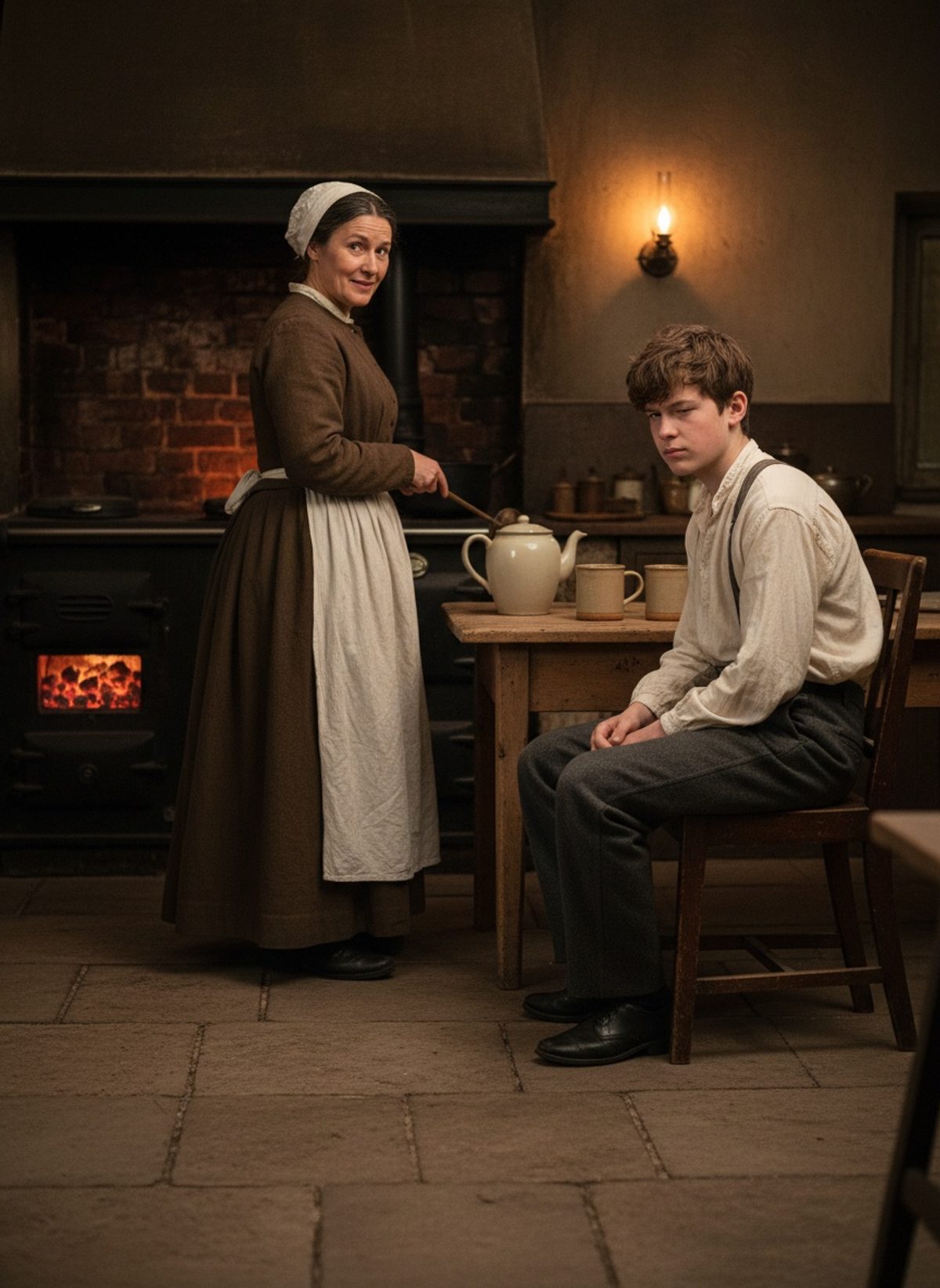
In this sacred place, perched upon the rugged coastline of Scotland, a group of weary but resolute Scottish nobles convened for a historic encounter. Their gathering was not just a meeting of minds and ambitions, but an act of sheer defiance. At stake was nothing less than the survival of their nation, held in the balance against the relentless ambitions of King Edward II of England.
The scene within the abbey walls was one of intense determination. Among the lords and barons, a humble clerk found himself tasked with a burden that seemed almost divine in its weight. This was no ordinary assembly; their objective was to birth a document that would speak not only the language of kings and empires but of peoples and nations. A message that would reverberate beyond the ironclad borders of Scotland and reach into the very heart of the Papacy, reshaping history as it went.
The Quill and the Cause
The challenge was monumental. The clerk, whose name remains uncelebrated, was driven by the collective urgency of the assembly's cause. The year was 1320, and Scotland had endured the ravages of war for a generation. English forces had swept through the land, leaving a trail of destruction and despair in their wake. The relentless incursions had worn down the spirit of the land’s defenders yet ignited an unyielding flame of resistance in their hearts.
In the dim light of Arbroath Abbey, under the watchful eyes of their sainted patrons, the nobles gave voice to their unanimous understanding: subservience was not an option. What emerged from this gathering was the Declaration of Arbroath, a document striking in both its eloquence and its boldness. Addressed directly to Pope John XXII, it was no mere plea for intervention but a fervent assertion of sovereignty.
Read next: The Day a Scots Village Chose Its Own Name and Kept It
The document proclaimed that as long as a hundred of them remained alive, they would never yield to English rule. It articulated not just a refusal to submit to external domination but a resolute commitment to liberty and justice. The clerk's skilled hand danced across the parchment, capturing the impassioned words that spoke of freedom, unity, and an irrevocable determination to choose their own destiny.
A Defiant Declaration
The Declaration of Arbroath was unlike any declaration or petition that had come before. It was both a demand and a mission statement, intricately weaving diplomatic language with an abiding conviction for self-determination. Crafted with exquisite precision, it was clear in its message: Scotland was a nation unto itself, with all the rights and privileges afforded to any kingdom under heaven.
The document carried more than just the collective seal of Scottish nobility; it bore the raw sinews of a nation's will. It did not merely protest subjugation, but proclaimed a vision of governance by the people, for the people's own sake. Here, in the hallowed halls of Arbroath, the idea of popular sovereignty flickered into life centuries before it would be widely acknowledged across the globe.
In dispatching the Declaration to the pontiff, the Scots cleverly sought to circumvent King Edward II’s influence, aiming to draw on the moral authority of Rome to legitimize their struggle. By appealing to the Pope, the Scots effectively internationalized their cause, converting their plight into a matter of universal justice rather than a mere regional dispute.
It was a remarkable maneuver, demonstrating an astute understanding of the geopolitics of the time. The declaration reframed the conflict not as a feud between rival kingdoms but as a quintessential battle for the freedom of a sovereign people, tapping into the Papacy's responsibility to arbitrate between conflicts in Christendom.
The Legacy of Arbroath
When Pope John XXII received the Declaration, he faced not just a parchment inscribed with ink, but the indomitable spirit of a people fighting for their survival. It was an appeal that could not be easily ignored, and the subsequent lifting of Edward’s excommunication of Robert the Bruce signaled a recognition of Scotland’s position.
The actions at Arbroath affirmed that even the smallest clerk wielding a quill could change the course of history. This unique declaration didn't just unite the nobility but rallied the people under a common identity—and presented Scotland’s cause in a just light to the world. Such a calculated, brilliantly diplomatic strike was akin to besting an empire with a single sheet of parchment.
Reflecting on this moment in time, one might see it not merely as an insular victory but as the voice of a nascent modernity, one that reverberates through centuries of struggles for national self-determination and human rights. The clerk who penned those resolute words at Arbroath Abbey unwittingly contributed to a legacy that extends far beyond the borders of Scotland—a legacy humanity continues to write to this day in every declaration of freedom and every stand for autonomy. As modern history unfolds, the echoes of 1320 remind us that the most powerful empires can be halted not by force alone, but by the enduring words that capture the human spirit.