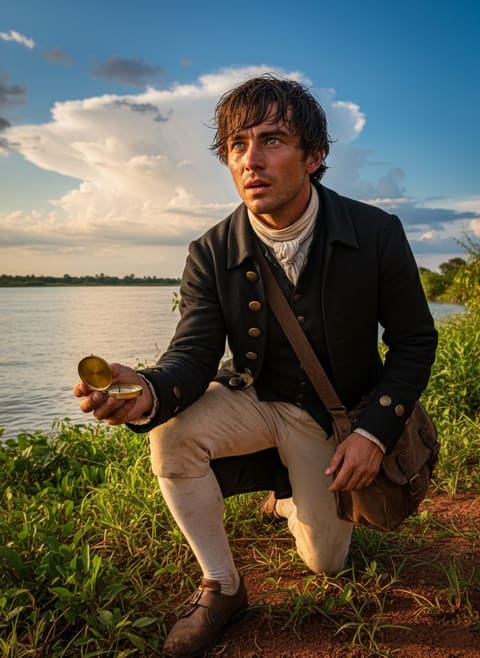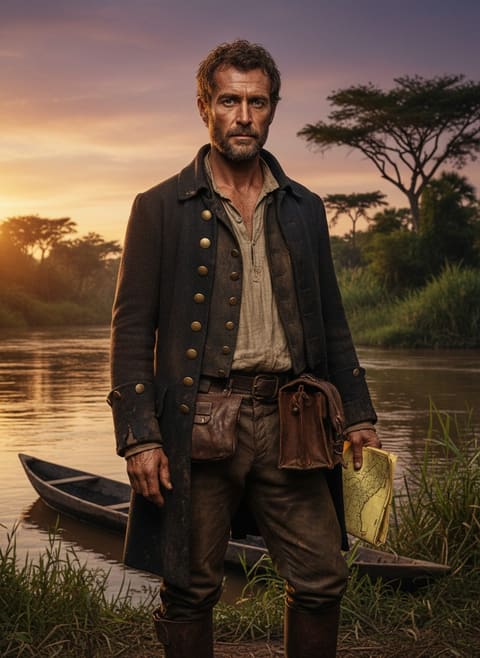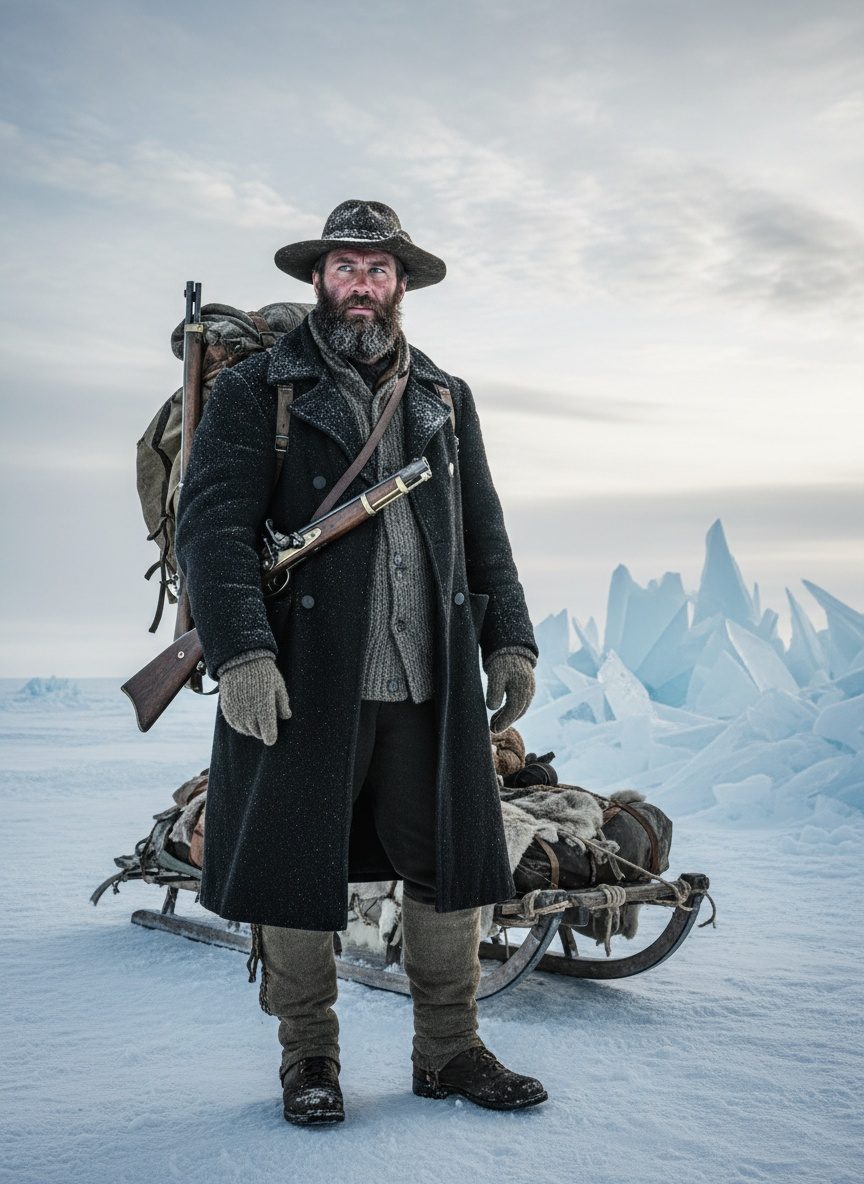
Under the vast and indifferent Arctic sky, the ice sheet stretched unbroken to the horizon, a vast expanse of silence that swallowed the sound of each crunching footstep. The wind, a constant companion, whispered tales of abandonment and despair across the frozen wilderness. This tableau of desolation held within it a tightly knitted mystery: the vanishing of HMS Erebus and HMS Terror, the ships of Franklin's lost expedition. It was into this formidable emptiness that a singular figure ventured—John Rae, a Scottish doctor from Orkney, dared to walk where ships could not sail, shouldering the burdens of solitude and harsh climate in pursuit of a truth that had evaded the might of the Royal Navy.
A Quiet Determination: The Journey Begins
Few would have bet on John Rae when he set out across the Arctic ice in 1850, alone with just a rifle and a sled, determined to solve a mystery that had confounded Britain's greatest explorers. Born in 1813 on the windswept, remote Orkney Islands, Rae was no stranger to harsh environments. He had grown up with the sea in his blood, the edge of civilization at his feet. Trained as a doctor at the University of Edinburgh, his medical skills would serve him well, but it was his intimate understanding of survival in extreme conditions that set him apart.
In contrast to the Royal Navy’s failed forays with grand assemblages of ships bristling with provisions and men, Rae embraced minimalism. His respect for the indigenous peoples of the Arctic, the Inuit, and their way of life provided him insights others dismissed. Rae mastered the art of dogsled travel and understood the necessity of hunting for sustenance rather than solely relying on supplies ferried from thousands of miles away.
As Rae trekked across the ice, he was accompanied by a small group of indigenous guides, whose expertise proved invaluable. Yet it was his solitary conviction, a calm resolve in the face of daunting obstacles, that marked his journey. Rae listened to the land, read the ice like a map, and followed whispers of information shared in Inuit oral histories. What might have seemed a haphazard collection of anecdotes to others became a trail of evidence leading to the truth for Rae.
Read next: The Day a Devon Captain Charted the Pacific and Changed the World
The Discovery: Unearthing Answers on the Ice
The isolation of the Arctic amplified each discovery, making every bone fragment or word of testimony a potential clue. Rae's diligent approach was reminiscent of piecing together a vast, icy puzzle. In April 1854, after years of painstaking effort, he reached the shores of Pelly Bay. There, he encountered a group of Inuit who spoke of white men they’d encountered years before. These wanderers were skeletal survivors of Franklin’s crew, whose ships had become beset in the ice, a gripping saga of endurance turned tragic.
The Inuit recounted stories of starvation and death, their accounts validated by the shattering discovery of human remains along the shore, gnawed bones which hinted at the desperate extremity of cannibalism. Rae, armed with facts rather than conjecture, took these unsettling revelations back to Britain. Unlike the embellished tales beloved back home, this was a sober account of hubris and misjudgment cut down by the merciless Arctic environment.
Rae’s findings shook Victorian society. Not only had the Royal Navy's search and rescue attempts been fruitless, but the reality of cannibalism challenged the heroic narrative desperately clung to by the public and pushed a reluctant nation to face the harsh truth. Nonetheless, Rae’s revelations were instrumental in reshaping the understanding of polar exploration, spotlighting the critical importance of survival skills over naval might.
Read next: The Day a Devon Sailor Mapped the Roof of the World Alone
A Legacy in the Permafrost
John Rae returned to Britain bearing not only news of Franklin’s party’s demise but also maps of unmapped territories and insights that anticipated the opening of the Northwest Passage. Despite transforming the archaeological and geographical wisdom of the day, his reputation suffered in his lifetime due to the nature of his findings. The Victorian refusal to accept the grim fate he uncovered left Rae sidelined by history—a resilient outcast who was derided rather than celebrated.
Rae’s methodologies presaged modern techniques of exploration, championing local knowledge and sustainable travel long before they became canonized preferences. It reminds us today of the weight narratives carry and how they shape public memory. His story, once obscured in the icy mists of time, is a testament to the resilience of truth in the face of denial. Amidst shifting icebergs and glacial silence, John Rae’s dedication and empathy shine, reclaiming a place in the tapestry of exploration that history nearly wrote over.
The tale of John Rae is more than just the tale of a man versus nature; it is an unyielding endeavor against the biases of his age. It highlights the power of listening and learning, of questioning the status quo, and the courage it takes to stand alone with the truth as your only companion. His legacy calls for a re-evaluation: of the stories we choose to tell, and more importantly, those we choose to believe.