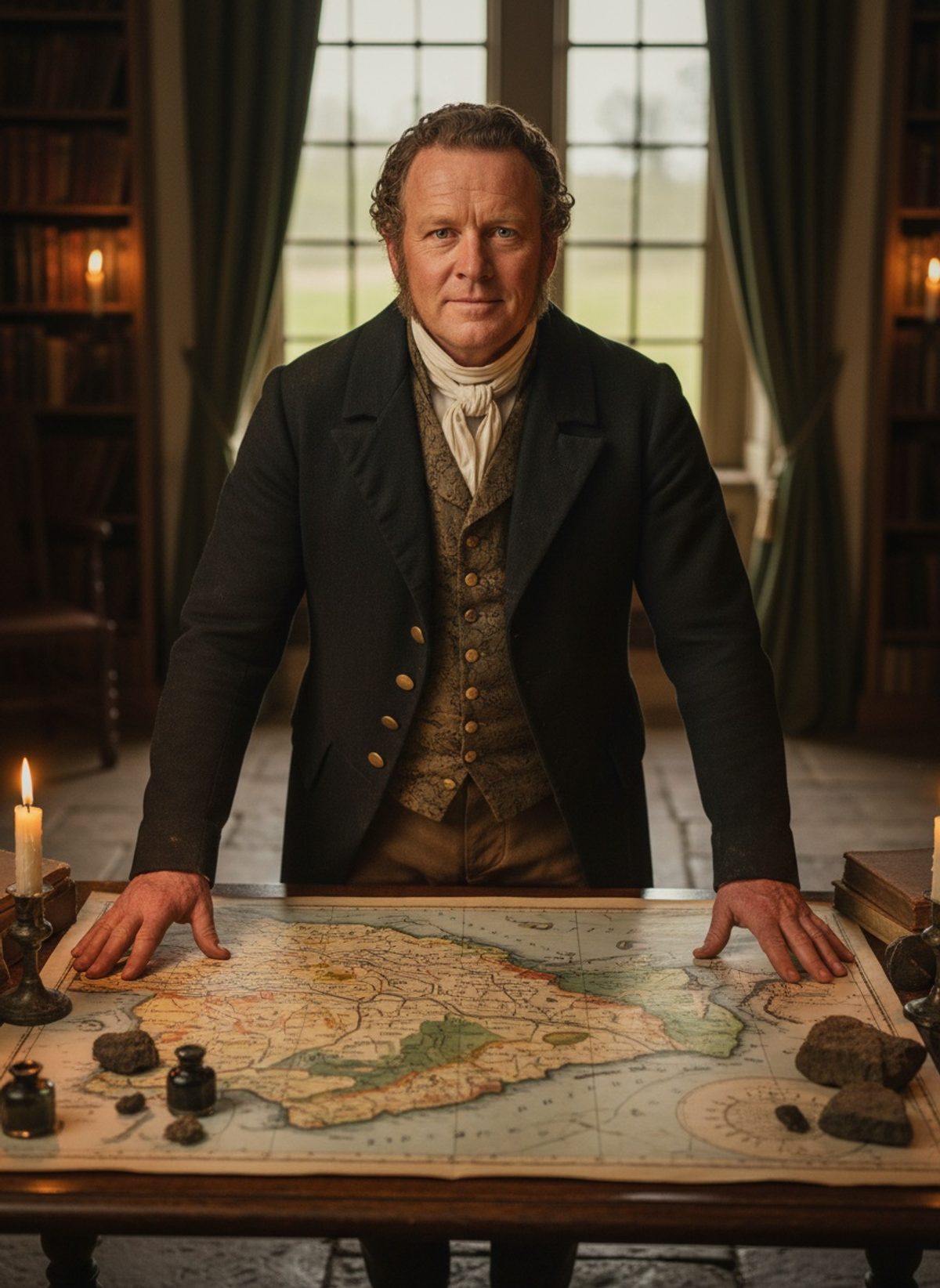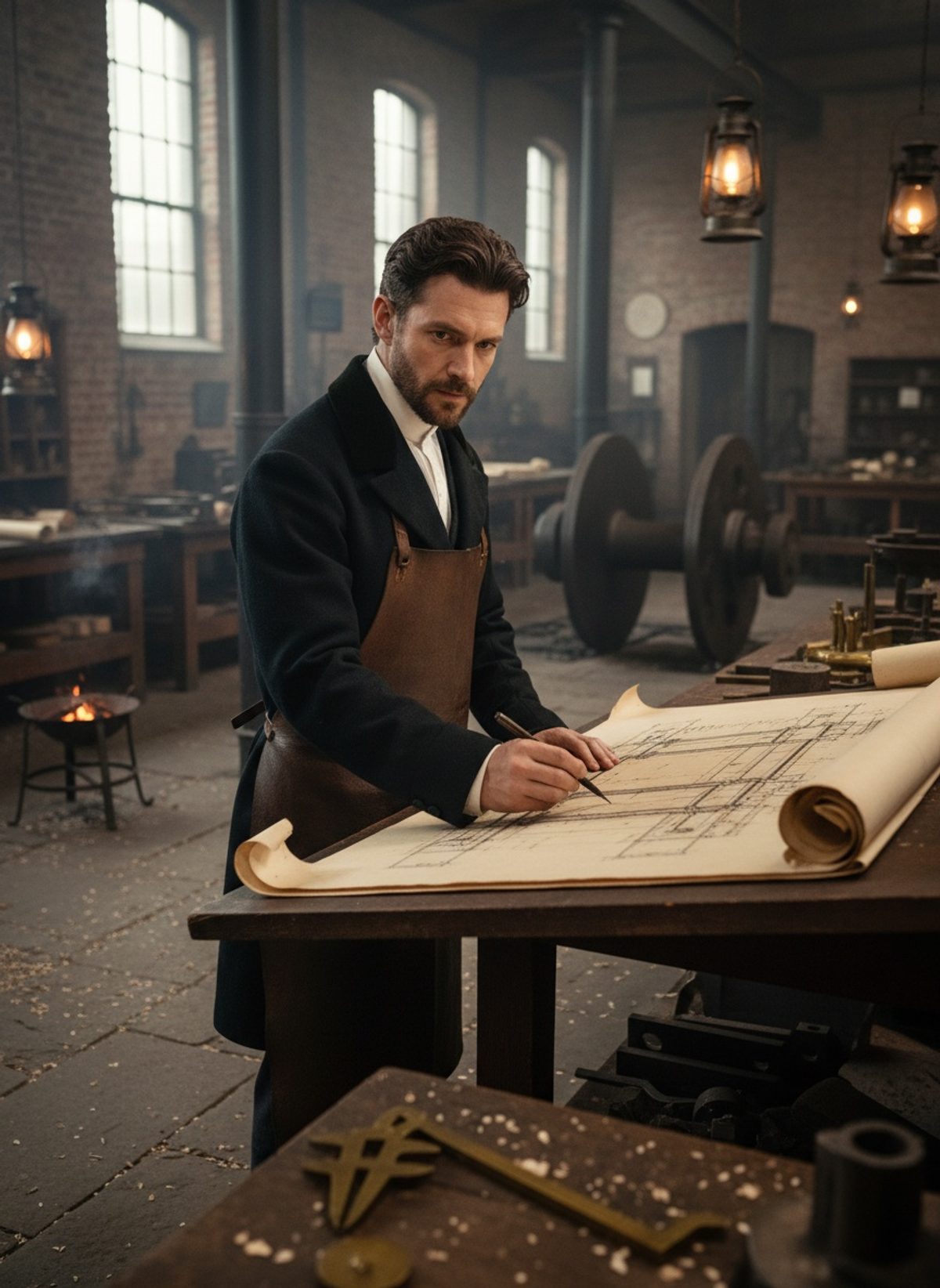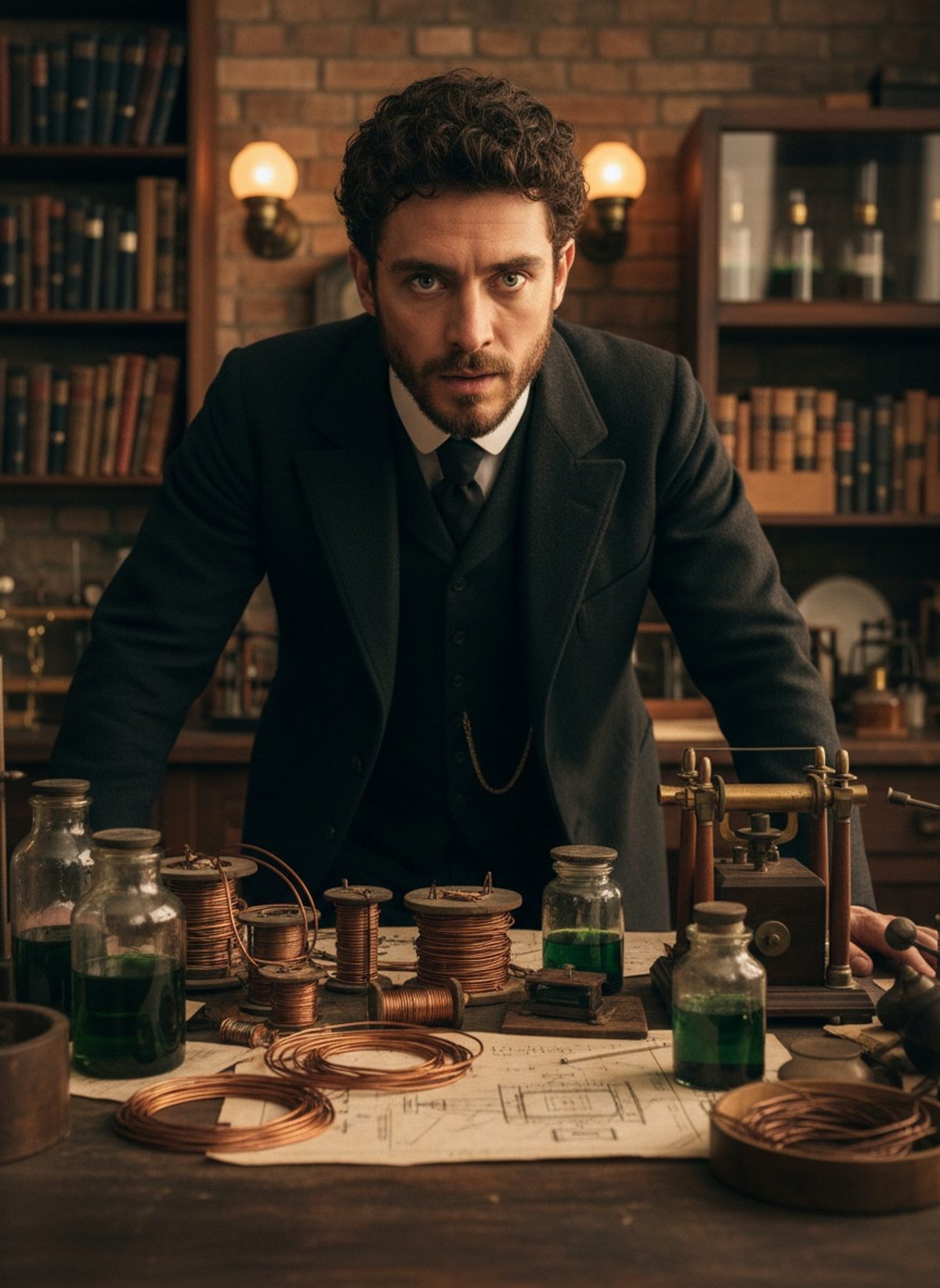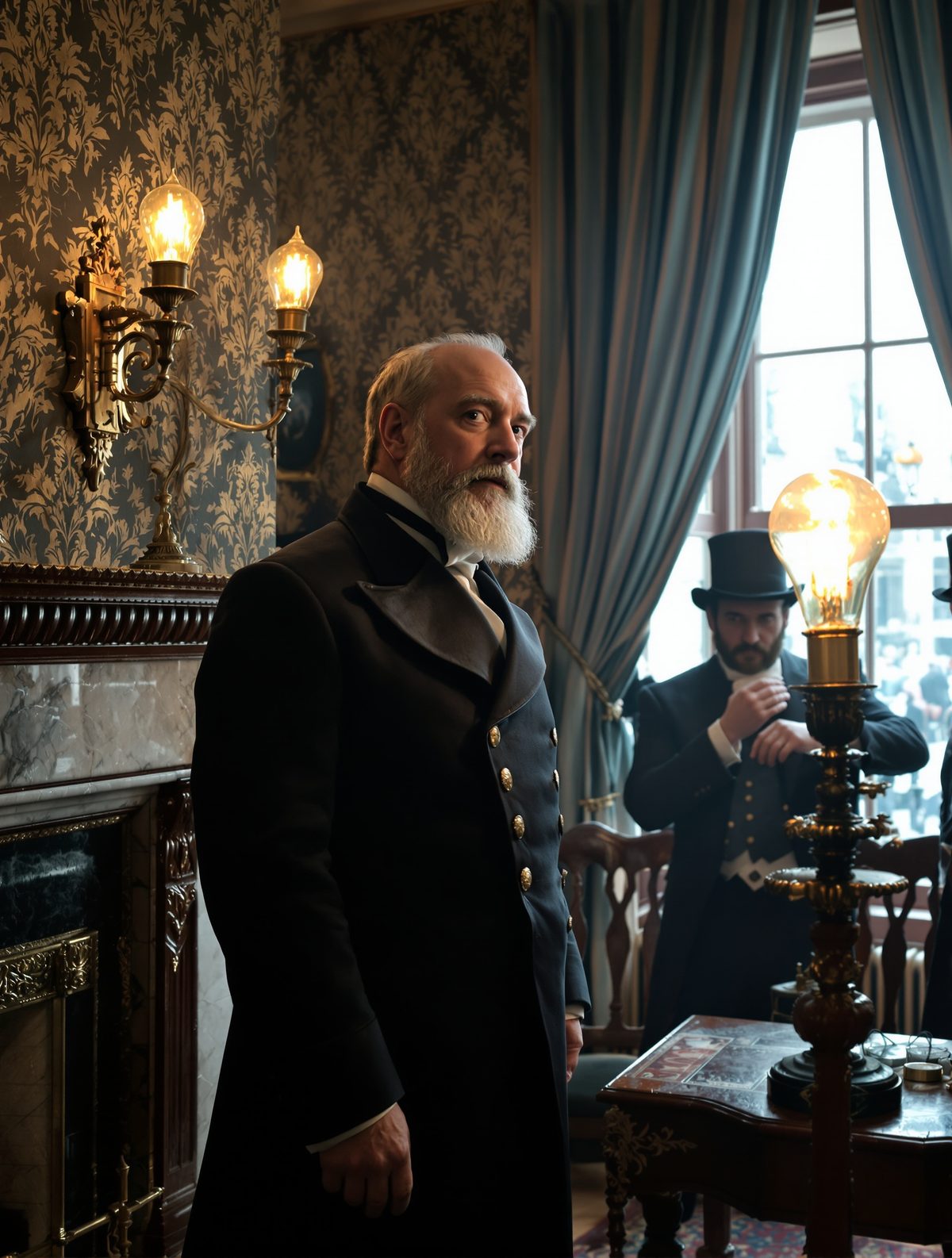
Picture a chilly evening in early December 1878 in the industrial town of Sunderland, England. The air is thick with coal smoke, and the streets are dimly lit by flickering gas lamps. Residents hurry home, clutching collars tighter against the biting wind. Inside one modest home on Pallion Road, however, a different scene unfolds. The weaver’s son-turned-chemist, Joseph Swan, stands beside a curious contraption. With the flick of a switch, he transforms his parlor into a beacon of light, casting a warm glow where shadows once ruled. History is illuminated before the onlookers, though few grasp its full significance. This moment marks the dawn of a new era, ignited by the incandescent light bulb — not by the celebrated Thomas Edison but by an unassuming Englishman whose contribution was nearly eclipsed by transatlantic acclaim.
The Alchemist of Sunderland
Joseph Wilson Swan was born into humble beginnings on October 31, 1828, in the northeast of England. This industrious region, steeped in coal mining and shipbuilding, shaped his early life and ambitions. Swan’s journey from a young weaver’s son to a pioneering chemist began through an apprenticeship at the firm Hudson and Osbaldiston, where he was inspired by chemistry. This field would later become the backdrop of his most significant work.
Before Swan delved into electrification, he made noteworthy contributions to photography, inventing a dry plate process that advanced the fledgling art form. His inventive mind was constantly at work, leading him to explore the realms of light and electricity. As gas lamps dominated cities, belching out carbonaceous fumes, the inefficiencies of such lighting systems sparked Swan’s quest for a cleaner, safer, and more effective solution.
Lighting Up the North
By late 1878, Swan had made considerable progress. Utilizing carbonized paper filaments housed within a vacuum-sealed bulb, he achieved a lasting glow without combustion — an innovation he aptly named the ‘Ediswan’ lamp. Unlike Edison, who focused on a high-resistance bulb boasting thin carbonized bamboo filaments, Swan’s strategy lay in minimizing the filament’s temperature to enhance durability.
Read next: The Day a Miner's Son Gave the World Safe Light
In January 1879, Swan captured local headlines after illuminating a lecture theater in Newcastle upon Tyne with his incandescent bulbs. This public demonstration prompted both awe and skepticism, as the gathering marvelled at the steady stream of light, free from soot, air pollution, and the constant flickering that characterized gas illumination.
But it was the spectacle at his Sunderland home in December that drew increased attention. British papers heralded Swan’s success, with 'The Sunderland Echo' proclaiming the “modern Prometheus” of their age. Such accolades, however, were local echoes compared to the international stage Edison commanded.
The Streets of Gateshead, Aglow
Fast forward to February 1880. Along Mosley Street in Newcastle, Swan’s incandescent lights flicker to life above the doorways of shops and pubs. Here, Joseph Swan’s revolution began its outward expansion. This street became one of the first in the world to be orally illuminated electrically — a radical departure from the prevailing gas lighting systems.
The Mosley Street installation, though modest in scope, embodied the onset of a transformative period. Swan partnered with a local engineering firm to produce both improved bulbs and the dynamos needed to power them. Though less publicized than his demonstrations, this move established a framework that paved the way for large-scale urban electrification.
A Duel Across the Atlantic
While Swan lit up corners of England with his incandescent miracles, the world's gaze turned to the brash and ambitious inventor across the Atlantic. In Menlo Park, New Jersey, Thomas Edison was pursuing similar breakthroughs. In 1879, Edison’s team fashioned a bulb that would go on to dazzle America, casting him as the torchbearer of the electrical age.
However, by the time Edison filed his key patent for an electric lamp in January 1880, Swan had already demonstrated a working bulb in public and exhibited at several gatherings. Unbeknownst to many then and now, Swan received a British patent as early as December 1878 for his incandescent lamp, effectively beating Edison in filing — albeit Edison's aggressive legal battles later overshadowed Swan's precedence.
Legacy Forged in Light
Despite foreign fervor for Edison, Swan’s dedication bore fruit. In December 1880, the Savoy Theatre in London became the first public building in the world to be lit entirely with electricity, showcasing Swan’s bulbs. This achievement paralleled the cultural prominence of Edison’s subsequent lighting of the Paris Opera House, yet garnered limited fanfare by comparison.
Swan’s encounters with Edison extended into corporate partnerships, forming the ‘Ediswan’ electric company, which reconciled their parallel patents and technological advances. In an unexpected twist, the collaborators effectively dispelled any legal rivalries and shared in lighting towns and cities across the globe.
Why It Still Matters
Joseph Swan’s triumph of quietly bringing light to Victorian England, years ahead of its time, serves as a profound reminder of unsung heroes in the relentless march of progress. His work laid the foundation for modern electric lighting and fundamentally altered how societies operated after sundown.
As we reflect on the luminescent victory of a humble scientist over daunting industrial shadows, it behooves us to remember: history often reserves its brightest accolades for the loudest voices. Yet the true luminaries — like Swan, who turned dreams into enduring realities — continue to light our way, even from the overlooked pages of history.