Noel Chavasse was a soldier. But he was also much more than that.
The Mud of Passchendaele
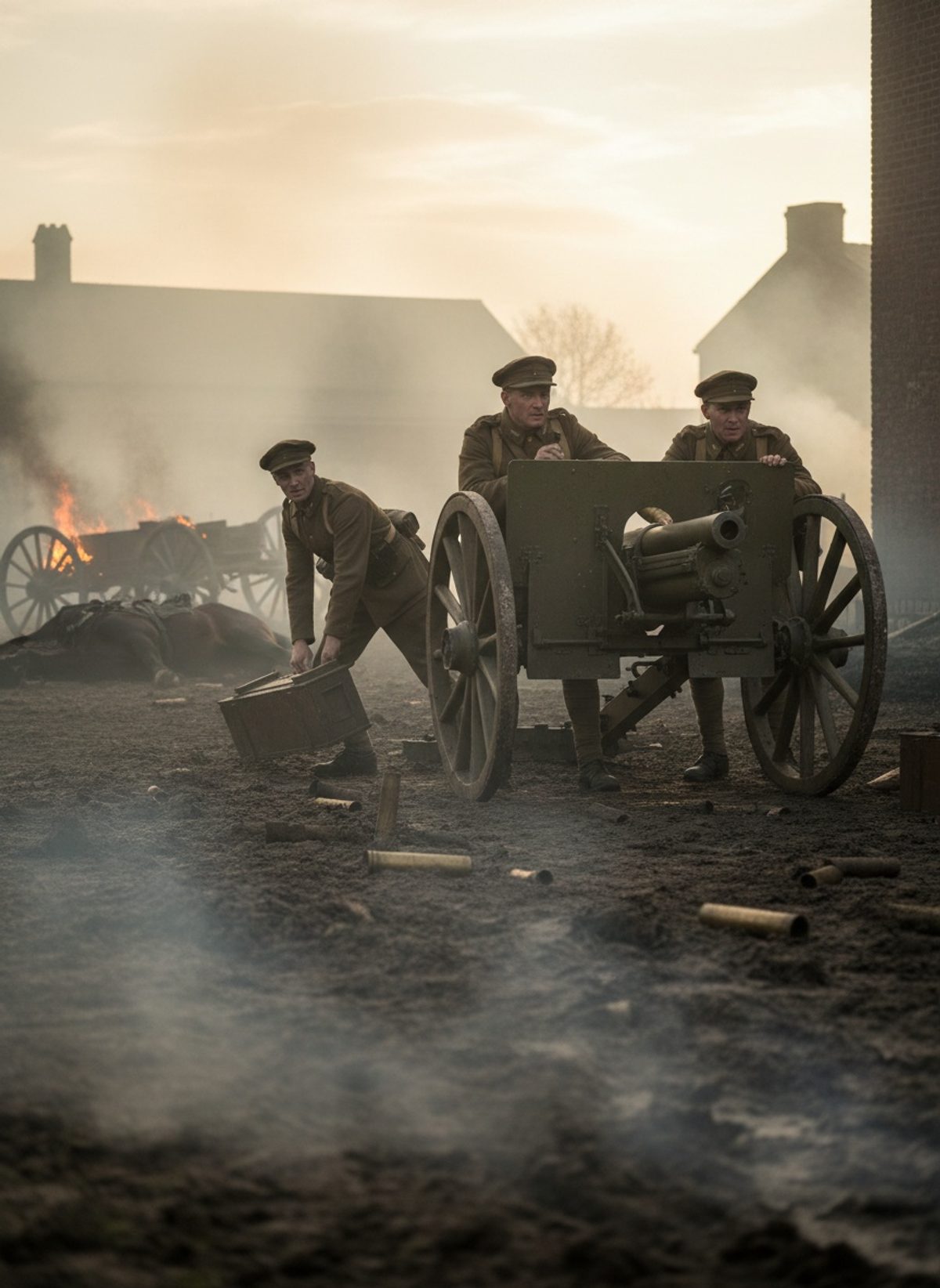
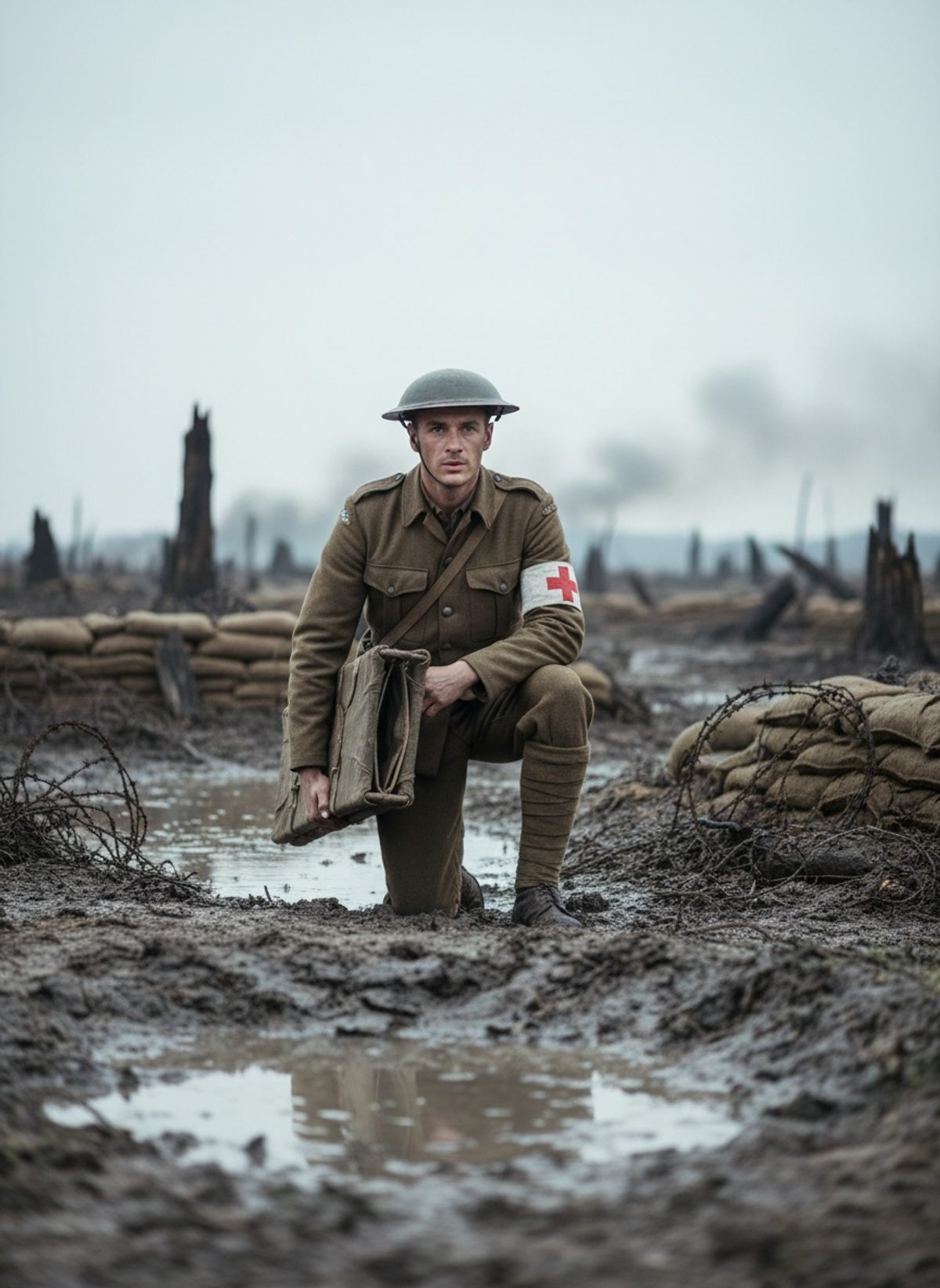
The Battle of Passchendaele epitomizes the hellish conditions of World War One. Officially known as the Third Battle of Ypres, this pivotal 1917 confrontation was one of the most gruelling and harrowing episodes in the Great War. The battlefield was a quagmire, pounded relentlessly by artillery, transforming the land into a sucking morass capable of swallowing men whole. Visibility was minimal, made worse by the persistent rain and mounting fog of destructive shellfire. It was amid this chaos that Captain Noel Chavasse, a man who could have remained safely behind the lines, ventured again and again.
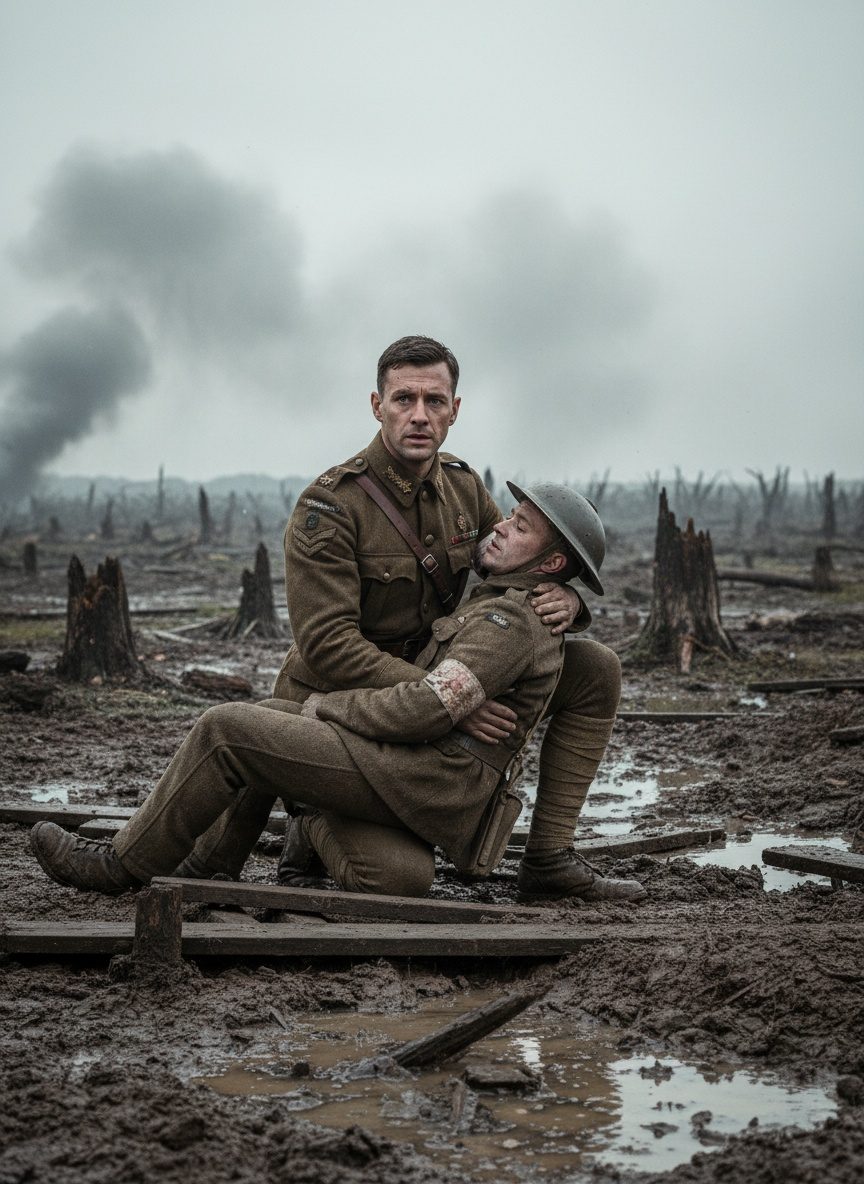
As a medical officer and a stretcher bearer, Chavasse's role was not one of offense but one of mercy. He was stationed with the Liverpool Scottish, and his task was to save lives – an extraordinary challenge when the very earth beneath one's feet seemed an enemy. It was here that Chavasse demonstrated an almost superhuman bravery, repeatedly crossing into no man’s land, the ominous space between the trenches, to rescue the fallen soldiers who lay there, stranded and forgotten amid the mud and constant rifle fire.
A Medal Earned, and Adored
Before the horrors of Passchendaele, Noel Chavasse had already etched his name in history. He was awarded his first Victoria Cross for conspicuous bravery at the Battle of Guillemont in 1916. Words on paper can scarcely do justice to his courage that day. As gunfire tore the air and men cried out in agony, Chavasse worked tirelessly for days without rest. He tended to more than twenty wounded men, keeping up his efforts in a relentless drive against all the odds. But it was in the treacherous trenches of Passchendaele that his indomitable spirit shone brighter, where one Victoria Cross proved insufficient to capture the full measure of his heroism.
Read next: The Day a British Padre Carried the Dying From No Man's Land
The Victoria Cross, the highest and most prestigious award for gallantry in the face of the enemy to British and Commonwealth forces, is not given lightly. For one man to earn it twice during the same war is nearly unheard of; for a medic, it is unprecedented. Yet Noel Chavasse's actions compelled recognition. His dedication was a beacon of humanity in a war often devoid of it. He did not haul men to safety for glory or accolades but out of an unwavering sense of duty and compassion.
Into No Man’s Land
The clamor of war provided a dissonant soundtrack to Chavasse’s inexhaustible efforts in October 1917. No Man's Land was an eerie, deathly expanse—a buffer of devastation separating warring trenches, a place of unimaginable dread where only the brave or foolish dared linger. And yet, time and time again, Chavasse entered this hellish landscape, crawling on his stomach, beckoned by the groans of the wounded. He showed little regard for his own safety, driven by a singular purpose to save his fellow men.
Chavasse demonstrated an intuitive medical skill as he executed impromptu life-saving measures, improvising as needed under dire conditions. Stories recount him carrying soldiers on his back, leveraging brawn and determination to rip men from death’s embrace. Many of his rescues were initiated under the cover of darkness, using the kisses of moonlight to guide him as artillery lit the horizon. The mud, though, recognized neither ally nor foe—the ultimate equalizer, unrepentant in its grasping reach, slowing his efforts at every turn.
A Final, Unyielding Stand
Noel Chavasse’s body bore the marks of his devotion. He was wounded multiple times, an inevitable cost for his dogged trips into the nightmare that was No Man’s Land. The injuries spelled peril, yet still, he pressed on. During the fateful week that secured his second Victoria Cross, he ignored medical advice to evacuate for treatment and returned to the field, determined to aid his compatriots awaiting rescue.
Ultimately, it was not the shell that found him, but the compounded toll of injury and infection that sealed his fate. Chavasse succumbed to his wounds on 4 August 1917—an irreparable loss to those who knew him and a tactical blow to the ethos he embodied. His service was a profound statement about selflessness and the binding spirit of duty, a narrative so powerful it defies time, lingering in the annals of history, forever casting a shadow much larger than his physical form.
A Question of Legacy
Why does Noel Chavasse’s story still resonate beyond the echo of a century's passing? His actions confronted the starkest truths of human experience against the backdrop of humanity's darkest hour. They remind us that even amid the destruction of war, there is space for courage and profound empathy. Chavasse’s legacy challenges us to question how we might act when called upon to serve something greater than ourselves and to realize that heroism is often woven silently into the ordinary fabric of life, waiting for extraordinary moments to reveal itself.