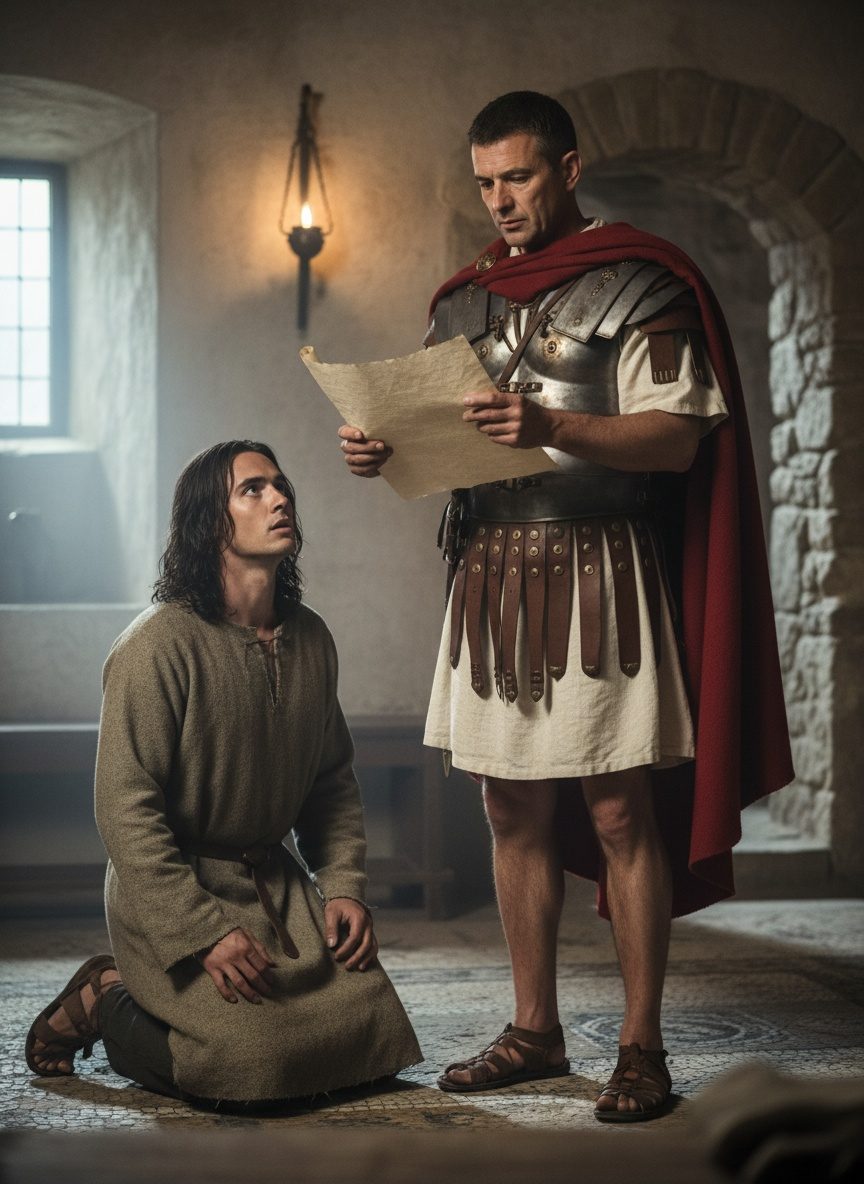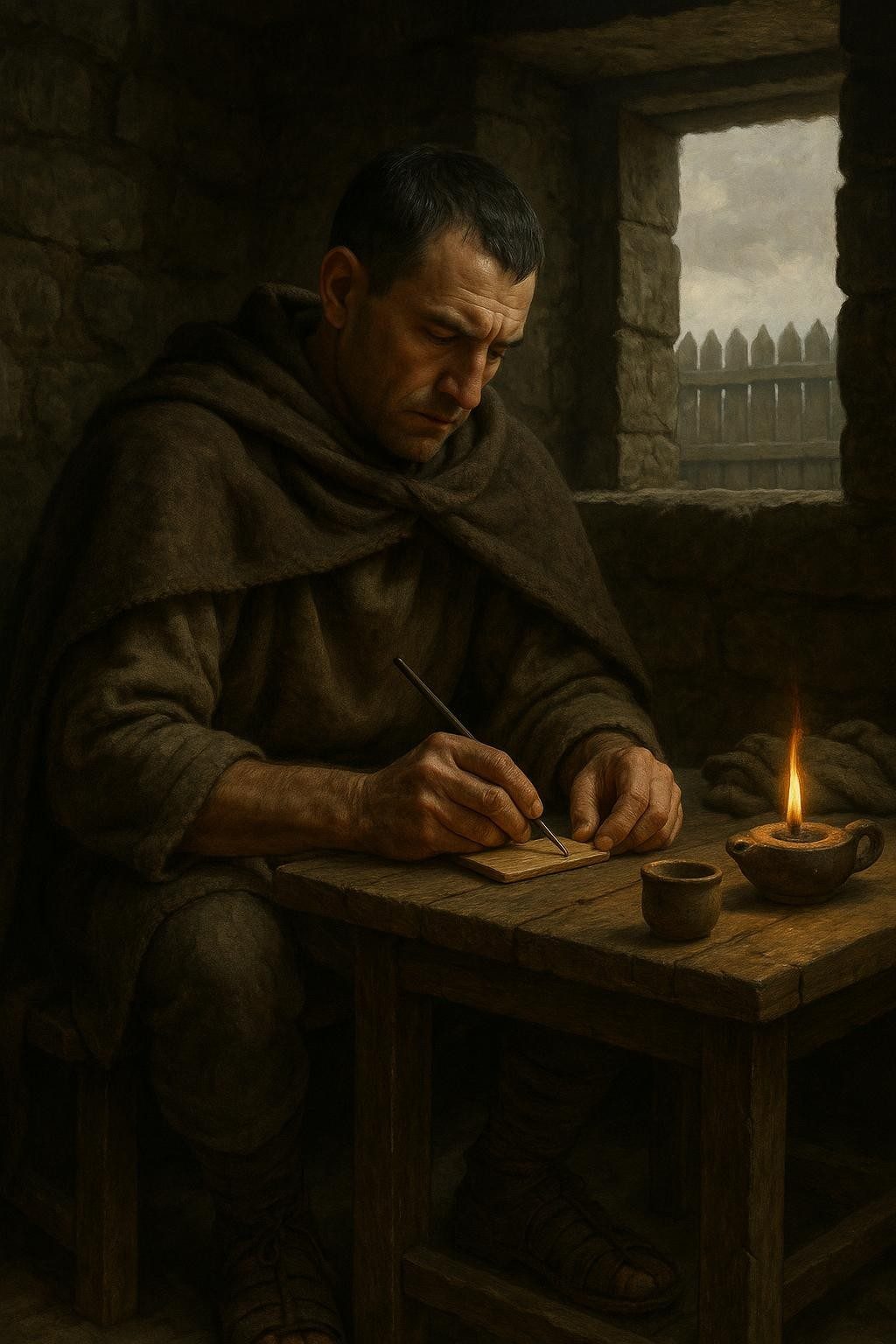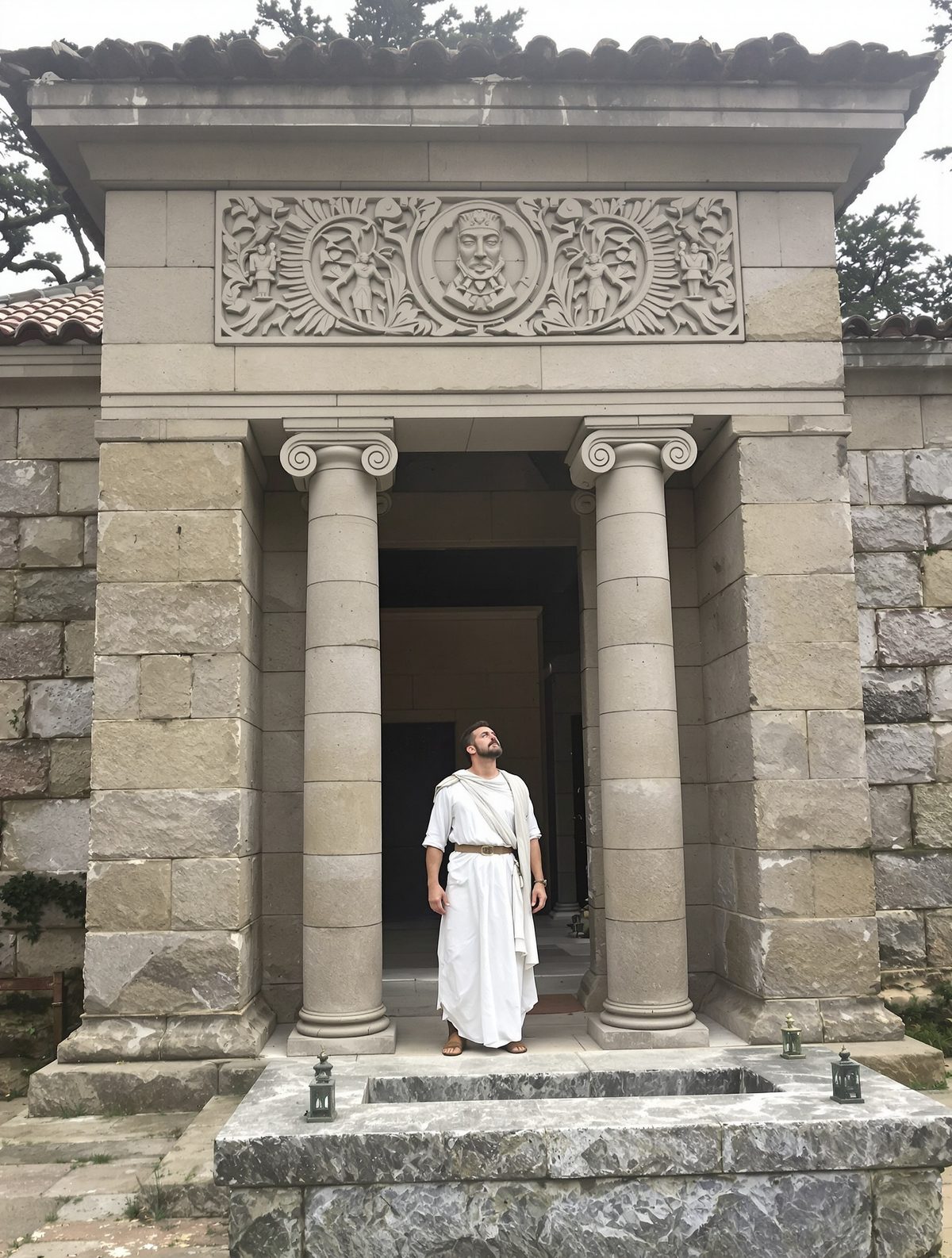
Deep in the heart of the ancient Forest of Dean, where whispers of the past dance among the rustling leaves, lies a story that defies the might of Rome. This is the tale of a Roman commander, a land shrouded in mystery, and a deity as old as the hills — the British god Nodens. At Lydney in modern-day Gloucestershire, amid sacred springs and the chime of pagan rituals, an extraordinary temple was built; not to honor Jupiter or Mars, but to venerate a god known to the locals as a healer. This is the moment when Rome, the conqueror, bowed its head to Britain's ancient spirit.
The Unlikely Patron
It was the early 4th century AD, and the Roman Empire still held sway over much of Britannia. Enter Gaius Julius Decimus, a commander of notable rank stationed in this misty frontier. With a soldier's practicality and an official's station, Decimus might have been expected to reinforce Roman supremacy through conventional acts of worship to the mighty deities of his homeland. Yet Decimus was different. Struck either by local superstition or genuine belief, his decision to erect a splendid temple to an unfamiliar god marks him as one of the most open-minded officials of his time.
Why would a Roman commander build a temple for a Celtic god? Decimus, according to surviving inscriptions, was a man with a vision that transcended traditional Roman religious expectations. The peculiar nature of this syncretic act points to cultural exchanges that characterized the vibrant tapestry of Roman Britain, where conquerors and natives often shared more than stories — sometimes, they shared their gods.
The Splendor of Lydney
Perched atop a hill with sweeping views of the meandering River Severn, the Lydney Temple complex, also known as the Temple of Nodens, was more than just a place of worship; it was an architectural marvel. Built around AD 364-370, the site included a temple, a bathing suite, guest houses for pilgrims, and other facilities hinting at the site's importance. Archaeological evidence reveals mosaic floors adorned with aquatic motifs — fitting for a god associated with healing waters.
Read next: The Day a Yorkshire Valley Swallowed a Roman Legion
The site's strategic position likely drew pilgrims from across the empire, creating a multicultural assembly of worshippers. Lydney's temple, a place where Roman and local cultures mingled, was a testament to the pragmatic Roman approach to religion: if a god delivered, he deserved a temple.
Nodens, The Enigmatic Healer
Who exactly was Nodens, the enigmatic god honored by this Roman structure? The god of healing, dreams, and the sea, Nodens was a deity intricately tied to the landscape of ancient Britain. His name echoes across time, closely resembling the Gaulish deity Nodens, suggesting a shared Celtic heritage. The association with healing resonated throughout a world riddled with ailments, attracting those seeking cures or divine insight.
What's fascinating is that Nodens wasn't just an isolated provincial idol. His worship likely involved elaborate rituals, and votive offerings unearthed at the site hint at a bustling center of spiritual activity. Objects like carved statuettes of dogs, symbols associated with healing, point to a well-established cult catering to both local and Roman needs.
Remarkable Discoveries
If these stones could talk, they'd recount tales of faith and desperation. Among the most captivating relics are the "curse tablets" discovered at Lydney. These lead sheets inscribed with pleas for divine retribution reveal the worries and grievances of ordinary people. "May the person who has stolen my cloak be accursed," reads one. These artifacts shine light on a world where divine intervention was sought eagerly and often.
The site also yielded a magnificent bronze plaque known as the “Nodens’ Dog,” a figure believed to have stood at the temple entrance. Its elegantly modeled form harks back to the symbolic guardian dogs associated with Nodens, offering protection to the sacred space.
A Legacy of Unity
The temple's narrative is not merely about an isolated instance of cultural synthesis but an enduring legacy of unity. Today, the intriguing ruins of the Lydney Temple remind us of the power of inclusivity. In a world often divided by borders and beliefs, the story of Nodens and his Roman ambassador speaks to the capacity for understanding and respect across cultures.
As we ponder the remnants of this Romano-British wonder, it invites reflection on our own era's divisions and challenges. Just as Decimus found common ground in the Celtic god, perhaps we, too, can find ways to bridge the differences and celebrate the rich tapestry of our collective heritage. In that, the healing power of Nodens reaches across the millennia, whispering ancient truths through the silent stones.