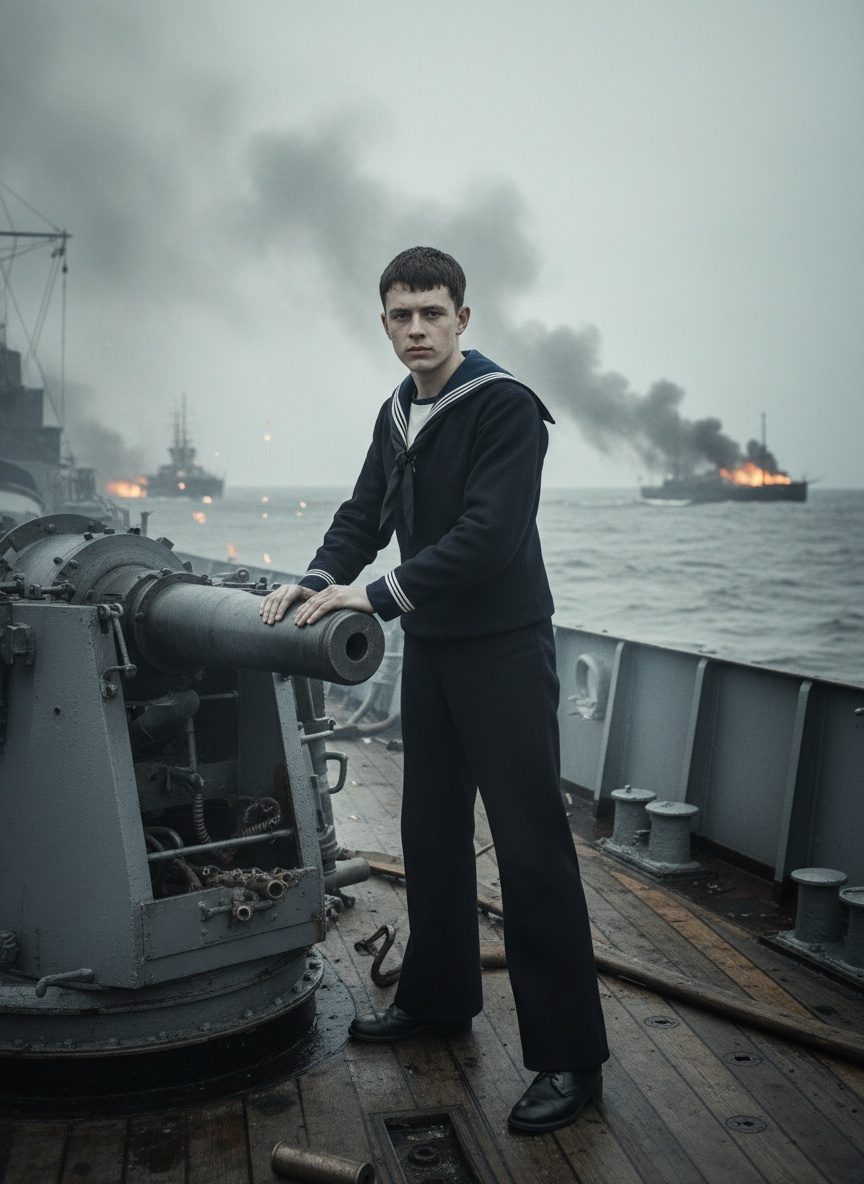
In the mist of early May 31, 1916, unforgiving winds whipped up the North Sea into a formidable adversary, casting a cloak of anonymity over the waves upon which history was about to be made. Picture the young Jack Cornwell, a mere sixteen years old, standing aboard the HMS Chester, as an orchestra of cannon fire began to play its deadly symphony. It was a day that would uncover unspeakable horror but also an indomitable spirit born from a small London suburb. Here, amidst chaotic bedlam and plumes of acrid smoke, the world found a hero forged in the crucible of war — one whose quiet courage would echo across the annals of time.
The First Shots: Dawn of Destruction
The Battle of Jutland was not just an encounter; it was the largest naval battle of World War One, with the British Grand Fleet clashing against the German High Seas Fleet. Waves of metal titans, 250 ships in total, disrupted the steady rhythm of the ocean with gun turrets poised and ready. Shortly after noon, the HMS Chester, a light cruiser of the British fleet, came upon a screen of German warships and was soon caught in the crosshairs.
For Jack Cornwell, assigned to the forward gun turret, this was his first taste of combat. He was a boy amongst men, having left behind the simplicity of his life in Leyton for the calls of duty and adventure. As the sun climbed higher, the air became thick with the taste of salt and the promise of chaos. What came next was a scene of unimaginable horror—German shells finding their mark, sending shrapnel rattling through the ship like metal rain.
A Boy's Stand: Alone Amidst Ruin
When the German salvos found HMS Chester, they did so with terrifying precision. Explosions rocked the cruiser; bodies were thrown across the deck like discarded marionettes, never to rise again. Yet, amidst the devastation, one figure stood defiant. Young Jack Cornwell remained at his post, the world around him a blur of chaos and carnage.
Read next: The Night a Teenage Gunner Held the Bridge at Arnhem
Jack had already been struck by shrapnel, the hot iron biting savagely into his small frame. His condition was critical, yet abandoning his post was not a thought that entered his mind. Facing foreboding circumstances most adults would shy away from, he displayed a fortitude that belied his tender years. Jack Cornwell wasn't just holding a line of defense; he was grasping onto the very essence of duty — a testament to unbroken spirit amidst unbearable suffering.
Earning the Victoria Cross: A Nation's Testament
By the time reinforcements arrived, the HMS Chester appeared a sombre ghost of its former self. Amongst the great loss of life, a grievously wounded Jack Cornwell was found still standing by his gun against all odds. He was swiftly evacuated, but his battle for life was one he would ultimately lose on June 2, 1916. Within the span of these days, Britain found a new hero.
In acknowledgement of his extraordinary bravery, Jack Cornwell was posthumously awarded the Victoria Cross, the highest military decoration granted for valour "in the face of the enemy." The citation poignantly remarked, "His age, his condition, and his devotion to duty...could not have been surpassed." In life and in death, Jack became a beacon, igniting a nationwide spirit of perseverance.
The National Impact: A Story Untold
Jack Cornwell's story transcended the battlefield, reaching into the hearts of those back home in Britain. His image, emblazoned across newspapers and recruiting posters, served both as an inspiration and a grim reminder of the cost of war. What many don't realize is that Cornwell had become something of a catalyst. His sacrifice notably influenced the Boy Scout movement, which bore new vigor in instilling duty and loyalty into Britain's youth.
King George V emphasized Cornwell's example in his calls to see increased support for sailors' families and dependency. The nation, struck by reverence for Jack's valor, helped fund a hospital wing in his name, solidifying his legacy both through memory and tangible contribution.
A Legacy Beyond His Years
As we reflect today on the steel determination of young Jack Cornwell, we question what compels such unwavering courage in the face of almost certain death. Cornwell did not fight for personal glory; he fought because he understood the weight of duty beyond oneself. While many of us face challenges of far lesser magnitude in our modern lives, Jack’s story reminds us of the profound difference one individual can make.
Thus, Jack Cornwell is more than a footnote in the history of World War One. To remember him is to celebrate a legacy of quiet courage, faced by a boy standing resolutely in the maelstrom. May his story encourage us all to face our personal battles with the same tenacity, standing firm at our posts, against life's unceasing cannonade.