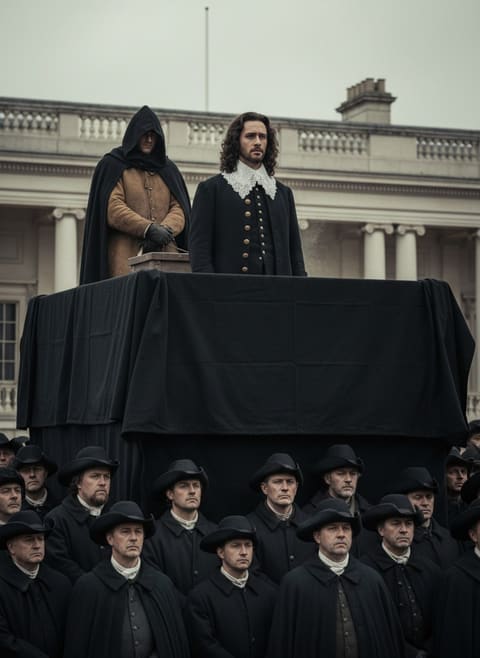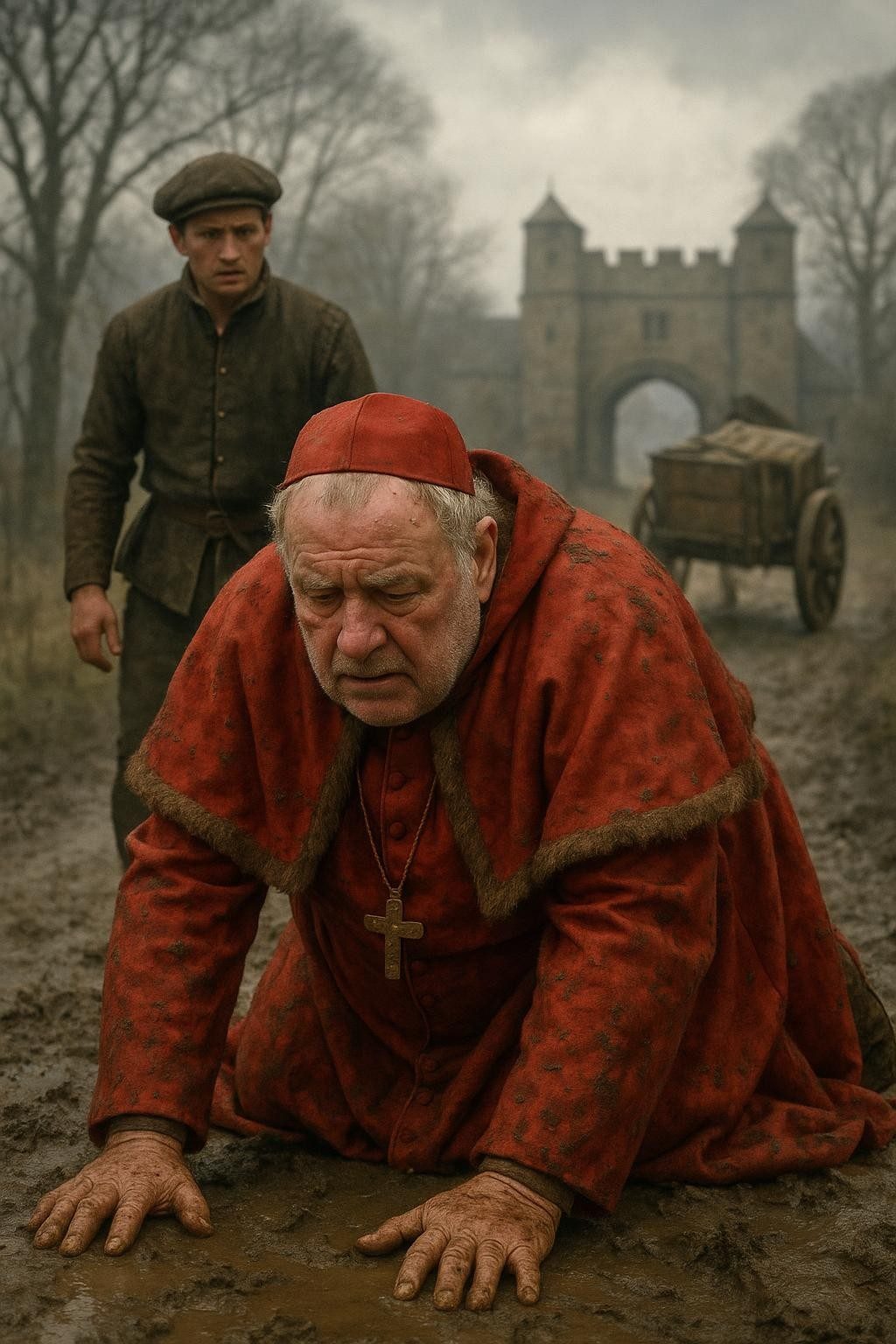
The rain-soaked road glistened under a steel-gray sky as Thomas Wolsey, once the most powerful man in England, knelt among the autumn mud of Cawood. The winds of fate had turned merciless and cold, whistling through the skeletal branches overhead. His fingers clawed the mire, a mixture of earth and his own tears washing over them. Stripped of power, of title, and of hope, he bowed his head not to a king but to despair, seeking only a solitary peace in his final resting place. Yet, this moment of profound humiliation held a hidden significance. It was here, in the mire and misery, that the essence of England's future teetered on the precipice.
The Rise of a Commoner's Star
The story of Wolsey's ascent is as remarkable as his fall. Born the son of a butcher, Wolsey's bright mind and boundless ambition propelled him to the heights of Tudor power. His appointment as Archbishop of York and later as Cardinal by Pope Leo X marked only the beginning of his rise. At the heart of King Henry VIII's court, Wolsey wielded influence with a shrewdness that left even seasoned nobles in awe. From managing England's foreign policy to orchestrating elaborate court ceremonies, his imprint was everywhere.
For fifteen years, Wolsey stood as the king’s favoured right hand, overseeing the Reformation of the clergy, administering justice, and raising armies. His wealth—and lifestyle—were often compared to royalty itself. Such was his control that many believed he, not Henry, truly governed England. However, like Icarus, Wolsey flew too close to the sun, burning his wings on the king’s growing dissatisfaction and the impossible task placed upon him: securing an annulment for Henry's marriage to Catherine of Aragon.
The King's Displeasure
King Henry VIII was a man of changing whims and explosive temperament. When the winds of favour shifted, they left devastation in their wake. Wolsey's failure to secure the pope's annulment approval stoked Henry's ire. By 1529, the king’s demeanor had cooled towards him, and the whispers of the court turned into zephyrs of betrayal, heralding Wolsey's swift downfall. The majesty of Hampton Court, Wolsey's grand architectural contribution, echoed the hollow promise of permanence—a stark reminder that power built on royal favour was a turret of sand.
Read next: The Day a Tudor Chancellor Chose Death Over a Royal Lie
Henry's rebuke was swift and unforgiving. Stripped of his titles of Lord Chancellor and Cardinal, Wolsey found himself isolated and betrayed by those he once commanded. The vast estates and revenues he amassed vanished like a specter at dawn. Yet, his crucible was not yet complete. The crown's loyalists charged him with treason—a stain threatening more than mere disgrace.
The Muddy Road to Redemption
On that fateful November day in 1530, en route to London to face what would likely be certain execution, Wolsey's health failed him. At Cawood, a final retreat before his imminent arrest, he paused—a shadow amongst ancient stones. His body surrendered to illness, yet his spirit flickered with an unexpected resilience. Embracing the defunct dreams of grandeur, Wolsey, kneeling in that despised mud, faced a truth—the end came not just as a punishment but as a deliverance.
Read next: The Day a Tudor Bishop Refused to Crown a Usurper
As history records, Wolsey's life slipped away at Leicester Abbey several days after his arrest, the treason charges never to be tested. Yet, in that instant of humbled reflection in the mud, England was offered a vision—a world where diplomacy, not dogma, could chart a realm’s course. The power that once manipulated courts and councils found its voice in quieter, lasting reforms that would echo through the Reformation's painful birth.
Lessons from the Disgraced
In the mud and mire of Cawood lies a tale not just of one man's fall but of an England on the edge of reformation. Just as Wolsey bridged the gap between the old chivalric order and the new, his legacy speaks to the transient nature of power and the unshakeable force of principle. Through humility and contrition, he unwittingly paved the way for the Church of England's emergence and, ultimately, the modern British state. Henry VIII’s rift with Rome might have occurred regardless, but without Wolsey’s earlier reforms, the transition might have been more volatile, more violent—a different saga altogether.
Thus, the mud-slicked tale of Thomas Wolsey stands as an enduring reminder: in the chronicles of history, even the grandest ascents are shadowed by the inevitable falls. And sometimes, it is not in the courts of kings where true power lies, but in the muddy humility of contrition, where genuine redemption for a nation may begin to take root.