The sky over Brussels in 1915 lay heavy with the dull grey of impending rainfall. The city, once vibrant with the clatter of busy streets and the laughter of café terraces, was stifled by the oppressive stillness of German occupation. What sounds were left—the clop of horses on cobblestone, distant metallic clangs, and the soft murmur of drawn conversations—were muted, as if Brussels herself were holding her breath. It was in this hushed theater of war that life and death played their own silent drama, hidden within the stone walls of a small hospital led by a woman of quiet, unwavering courage.
The Nurse of Brussels
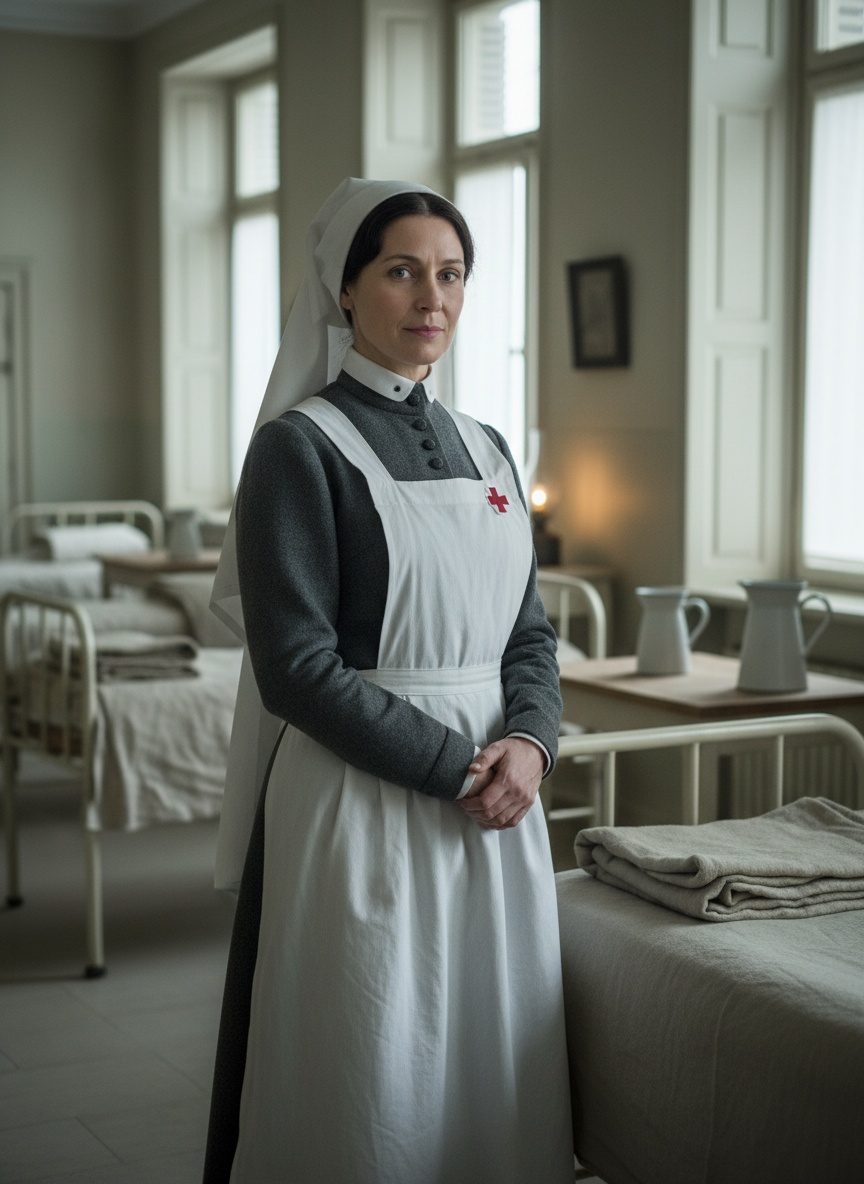
Edith Cavell was a woman for whom the ordinary bounds of duty were never constraints but mere starting points. Born in Norfolk, Edith grew into a determined and skilled nurse, her vocation forged in the heart of healthcare’s tangible magic—the power to heal and to comfort. Yet in a city under the shadow of war, she transformed from caregiver to clandestine rescuer, spiriting Allied soldiers away from capture and certain peril. With the German army entrenched around Brussels, Edith’s hospital became a secret artery through which over two hundred young men found their freedom.
This hospital was unlike any other. Its façade unassuming, its corridors echoing with the faint rustle of piqué sheets and the gentle hush of nurses on dutiful rounds, the essence of normalcy it projected was a well-crafted illusion. Beneath, in the realm of flickering oil lamps and conspiratorial whispers, plans were hatched and lives saved. Edith did not act alone, for she was a part of a network of couriers and contacts, each as devoted to the cause as the next. Her hospital served as the beating heart of this operation, her leadership its steady rhythm.
In the quiet spaces of the night, under the watchful eyes of the German patrols, Edith would escort soldiers dressed as civilians, gliding from shadow to shadow through the heart of occupied Brussels. Few knew of these clandestine missions and fewer still of Edith’s direct participation. She bore the weight of each escape as a personal triumph and accepted the risk of her eventual arrest with a serenity that belied the stakes involved. In a world twisted by war, her choice was stark yet simple: To stand idle while lives hung in the balance, or to act decisively and damn the consequences.
Read next: The Day a Cornish Surgeon Walked Into a Condemned Cell
The Arrest and the Trial
Eventually, the meticulously woven threads of her audacious enterprise began to unravel, betrayed by an informer whose name has slipped into obscurity but whose impact was acute and deadly. Edith Cavell was arrested, and the simple mechanics of occupying law ground into motion—a relentless machine from which there seemed no escape. Her trial was swift, aided by the blunt machinery of military justice that had little patience for nuance or mercy. Edith’s only defense lay in the truth of her actions, to which she calmly attested.
The courtroom was small, its atmosphere dense with the palpable tension of accusation and the bitter scent of desperation. A creaking wooden fan turned lazily overhead, failing to stir the air that held an almost electric charge. Edith stood there, her figure a model of composure amidst the turbulence. Her confession was stark, lacking in embellishments or excuses. She had helped them escape. She would do it again. There was no cowering, no plea for leniency. She embraced the inevitable with a poise that confounded her captors and inspired those around her.
Despite international outrage and appeals for clemency from several quarters, the wheels of justice churned inexorably towards their grim conclusion. The verdict was preordained, execution assured. Edith Cavell had known from the outset the possible cost of her actions—including her life. Yet in the courtroom cloaked in the somber hues of fate, she stood unbroken. Her composure during this trial foreshadowed the dignity with which she would meet her end.
A Pivotal Moment of Courage
The morning of Edith Cavell’s execution dawned quietly; a final heavy mist clung stubbornly to the Belgian landscape. The gray light that filtered through held a resigned sort of tranquility, nature itself preparing to witness a moment immortal and profound. Edith walked to the place appointed, her steps unhurried, seemingly at peace with the world and its imperfections. A century later, those who think of her might ponder what thoughts flitted through her mind as she took those measured steps.
Read next: The Day a Vicar's Son Walked Into a Debtor's Cell and Freed Them All
There was little ceremony as the appointed squad took their positions. No fanfare preceded the solemn proceedings executed with military precision. Yet in that fleeting span of heartbeats, an eternity unfurled—time enough for contemplation, for remembrance, for peace. To the onlookers, it appeared every bit as ghastly as the word execution implies. Yet in Edith’s calm acceptance, there was something profoundly human, a quiet defiance that transcended the base reality of what was soon to follow.
For those who recount her tale, for those who have drawn succor from her courage, Edith Cavell’s name stirs more than historical recognition; it conjures the notion of valor devoid of ostentation, a bravery rooted in empathy and conviction. Her actions remind us that the compass of moral duty may guide us into perilous waters, yet the dangers therein reveal not our weaknesses but our capacity for steadfast courage.
In reflecting upon Edith’s life and sacrifice, we find ourselves imprinted with an indelible truth—that the measure of heroism is not found solely in grand deeds but in the uncompromising choices made in service to others. The story of a Norfolk nurse who walked a lone trail into the jaws of war, knowing full well the price she might pay, continues to bear relevance. It speaks to the timeless human quest for dignity in adversity, and the enduring power of one resolute soul amidst the chaos of conflict.