Most people believed Queen Elizabeth would retreat. She had every intention of proving them wrong.
Royal Resolve Amidst the Storm
In the summer of 1588, England's skies brooded under the threat of the formidable Spanish Armada. The imposing fleet, dispatched by King Philip II of Spain, promised invasion and conquest. With ships as numerous as the stars, military might that eclipsed the English forces, and the fiery zeal of a religious mission, they appeared invincible. For many, the instinct was to flee or to find solace in prayers. But as whispers of imminent doom spread across the realm, a strikingly different vision unfolded at Tilbury, a small and unassuming English town.
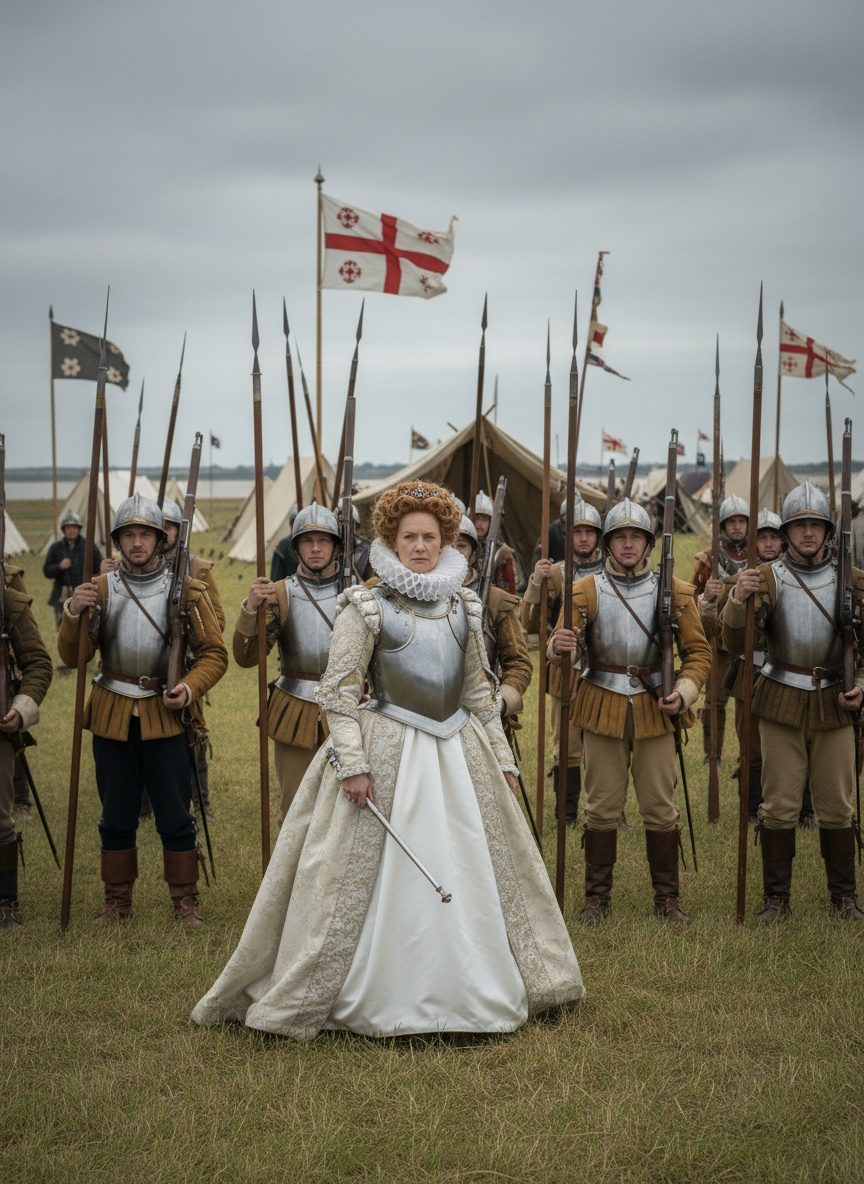
Elizabeth Tudor, the queen with a heart of steel, had no intention of cowering in her palace. Against the counsel of her most trusted advisors and amidst mounting pressure to seek refuge and safety, she made a choice that would echo through history. The queen donned a breastplate of polished steel, mounted a steed, and rode directly into the heart of the English military camp stationed to defend the nation’s shores. There, standing with resolute calm against a backdrop of an impending storm, she transformed into a beacon of courage and defiance.
The sight of Elizabeth clad in armour was as symbolic as it was unprecedented. English monarchs were no strangers to the battlefield, but for a queen, entrapped by the gender constraints of the era, such a bold act defied norms and expectations. Her carriage, adorned with the sheen of polished steel and the permanence of her presence, spoke volumes to the assembled troops and, in spirit, to the nation. Here stood a monarch ready to share the burdens of battle, embodying courage by example, and ruddering a kingdom through the turbulent seas of war.
Read next: The Day Britain Voted to Keep a King — and Lost Him Anyway
The Speech that Ignited Hearts
An army of men stood shoulder to shoulder, thousands strong, swords and shields reflecting flickers of sunlight. Their queen, like a seasoned general, addressed them. Her voice, unyielding and firm, broke the tense silence and filled the air, weaving its way into the annals of timeless rhetoric. With a few decisive words, she dispelled doubts, inspired loyalty, and fueled the fire of resistance against the encroaching Spanish Armada.
Elizabeth’s speech was no mere diplomatic exercise. It was a rallying cry that transcended the ordinary constraints of political oratory. She spoke of trust and shared destiny, intertwining her fate with that of her soldiers. Her declaration of having "the heart and stomach of a king" cast aside any whisper of frailty or fear. It was a bold declaration that she was not just England’s sovereign by birthright, but its commander by divine providence.
As Elizabeth stood there, her auburn hair flowing defiantly in the wind beneath the relatively plain helmet, she became an enduring symbol of England's resilience. This moment, against the swirling backdrop of geopolitical tension, etched itself into the collective memory of the nation. It served as both the calm before the storm and, symbolically, the turning of the tide. Her speech, replete with elegant defiance, prepared her troops mentally and emotionally for the battle loomed on the horizon.
Amidst the clamor of her fervent words, it was not just troops who responded. The spirit of a nation—emboldened and fortified by the sight of such strength from their ruler—rose with newfound vigor and resolution. This union echoed along the coast and across the country—ordinary citizens and soldiers alike took the promise of victory and wore it as their armor.
Tide Turned by Will
The Armada's attempted invasion, as fate would have it, would never reach the banks of Tilbury, Elizabeth’s defiant words resonating like a spell cast from afar. For while the Spanish fleet boasted sheer numbers and power, it was terribly unprepared for the swirling tempest of England’s weather and its fierce naval resistance. Aided by the erratic and ferocious English Channel winds, the once-feared Armada met its unraveling not only by the cannon fire of the English fleet but by nature’s own hand.
Unexpected as it was, the winds of providence tore through the Spanish formations, scattering them in disarray, and sealing their defeat before they could ever reach the shores Elizabeth was determined to defend. The eventual victory at sea bore with it the promise of enduring peace on land, a triumph crafted through gallant defense bolstered by the rallying spirit of a queen unwilling to yield.
Long after the storm had settled and the sea returned to its usual calm, the impact of Elizabeth’s stand at Tilbury endured. It fortified the burgeoning narrative of England as a nation unconquerable, instilling a sense of identity marked by resilience and zeal for independence. It echoed through the corridors of history as a testament to the power of leadership and the strength drawn from rallying belief. It was a moment etched into the hearts of the English people, a reminder of the days when the courage of one woman stood as the shield of a nation.
This legendary standoff mattered far beyond the bounds of its immediate victory. It marked a shift in global dynamics and shaped the destiny of England, setting it on a course of maritime prowess that would herald an age of exploration and expansion. Beyond all else, it taught all who dared to stand on the precipice of peril that sometimes the greatest armor is the unyielding will of the human spirit, indelibly scribed by a sovereign unafraid to lace words with steel.